How Tempo Changes In Piano Performance
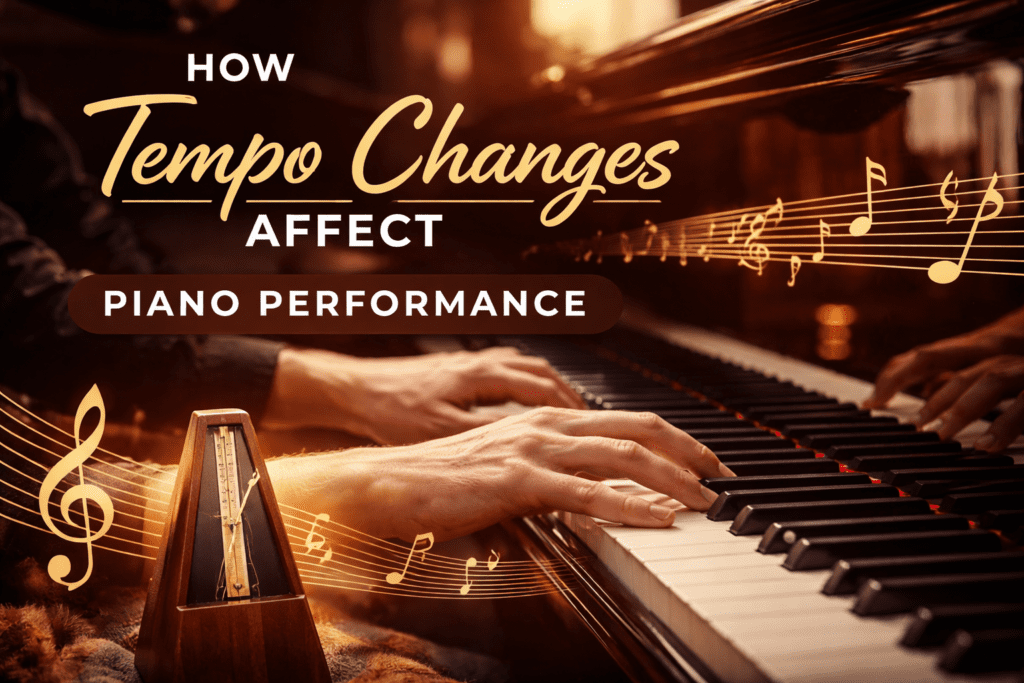
Music is not only about playing the correct notes; it is also about timing, expression, and interpretation. One of the most powerful musical elements that shapes how a piece is performed is tempo. Understanding tempo changes in piano performance is essential for pianists who want to bring emotion, movement, and life into their music.
Tempo determines the speed at which a musical piece is played, but it also influences how listeners experience the music emotionally. Skilled pianists do not simply maintain one speed throughout a piece. Instead, they use subtle tempo variations to highlight musical phrases, create tension and release, and communicate deeper musical meaning.
For piano students and professional musicians alike, learning how tempo works and how to control tempo changes can significantly improve overall musical performance.
What Is Tempo in Piano Music?
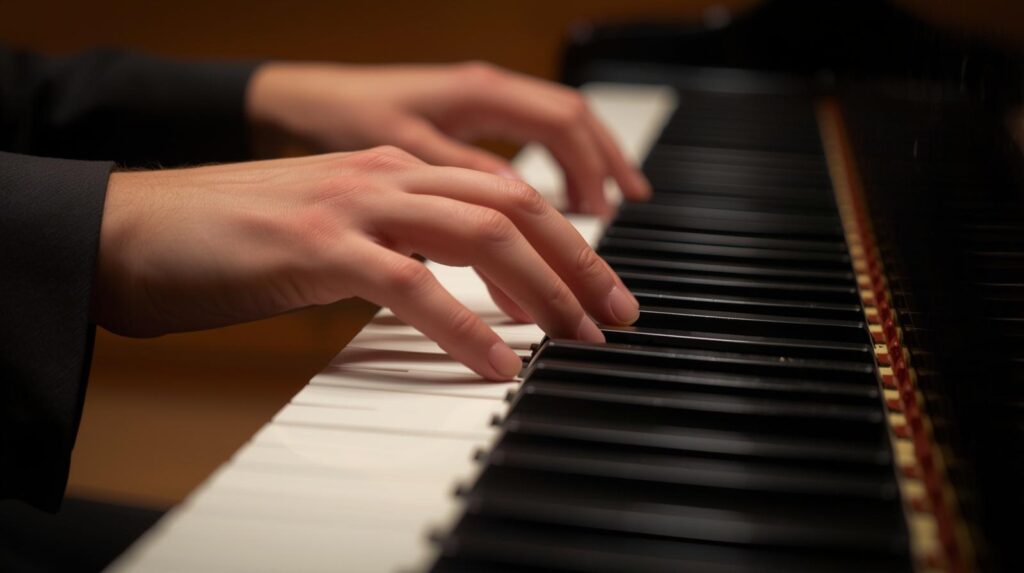
Tempo refers to the speed or pace of a musical composition. It tells the performer how fast or slow the music should be played. In written music, tempo is usually measured in beats per minute (BPM) and is often indicated at the beginning of a piece.
Composers also use traditional Italian tempo markings to describe the character and speed of the music. Some of the most common tempo indications include:
- Largo – very slow and broad
- Adagio – slow and expressive
- Andante – a comfortable walking pace
- Moderato – moderate speed
- Allegro – fast and lively
- Vivace – lively and bright
- Presto – extremely fast
These tempo markings provide guidance to performers, but they do not always mean the tempo should remain constant. Many compositions include intentional tempo variations, which are essential for expressive piano playing.
Because of this, understanding tempo changes in piano performance becomes an important skill for pianists who want to perform music accurately and expressively.
The Importance of Tempo Changes in Piano Performance
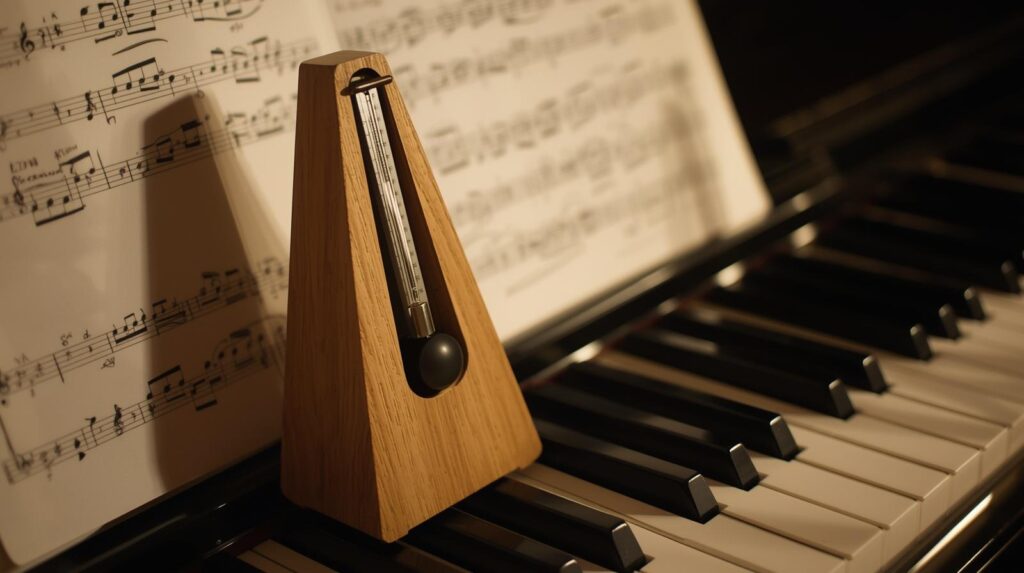
Tempo changes play a critical role in shaping musical interpretation. If a pianist performs a piece with completely rigid timing, the music may sound mechanical and lack emotional depth.
Using tempo changes effectively allows pianists to:
Enhance Musical Expression
Music is often compared to storytelling. Just as speakers naturally change their speaking speed to emphasize certain words or emotions, musicians adjust tempo to make the music feel expressive and meaningful.
Highlight Musical Structure
Many piano compositions are built around phrases and sections. Slight tempo adjustments can help clarify the beginning and ending of musical phrases.
Build Emotional Intensity
Increasing tempo can create excitement and energy, while slowing down can create calmness or emotional depth.
Emphasize Important Musical Moments
Tempo changes can highlight key moments within a piece, such as transitions between sections or the final cadence.
For these reasons, mastering tempo changes in piano performance is essential for developing strong musical interpretation.
Common Types of Tempo Changes in Piano Music
Composers use specific terms and symbols to indicate tempo changes within a musical piece. Understanding these markings helps pianists perform the music as intended.
Ritardando indicates a gradual slowing down of tempo. It is commonly used near the end of a musical phrase or at the conclusion of a piece to create a sense of resolution.
Accelerando means gradually increasing the speed of the music. This technique is often used to build excitement or lead into a dramatic section.
Rubato is one of the most expressive tempo techniques in piano performance. It allows the pianist to slightly stretch or compress time for expressive purposes while maintaining the overall structure of the piece.
A fermata symbol indicates that a note or rest should be held longer than its written value, allowing the performer to create a moment of pause or emphasis.
All these techniques are fundamental aspects of tempo changes in piano performance, helping pianists add expression and musical depth.
How Tempo Changes Influence Musical Expression
Tempo changes can dramatically alter how a piano piece feels emotionally. Even a small adjustment in tempo can transform the mood of the music.
For example:
- Slow tempos often convey sadness, reflection, or tranquility.
- Moderate tempos create a balanced and natural musical flow.
- Fast tempos bring excitement, energy, and intensity.
A skilled pianist carefully balances these tempo variations so the music flows naturally rather than sounding forced.
When tempo changes are used effectively, they allow the performer to communicate emotion directly to the audience.
The Relationship Between Tempo and Piano Technique
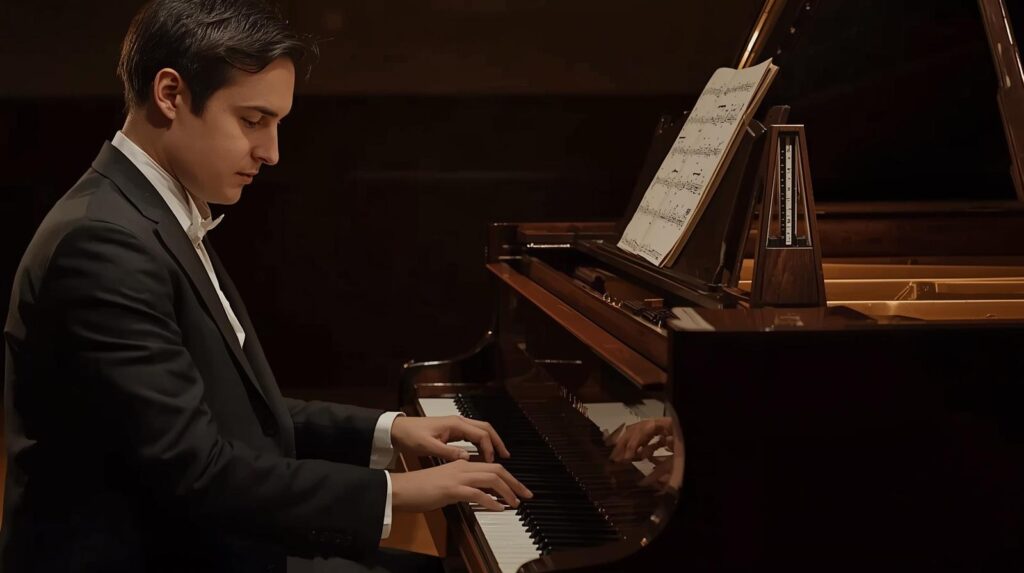
Tempo changes are not only about musical expression—they also affect piano technique.
When playing at different tempos, pianists must adjust their:
Finger Control
Fast passages require precise finger coordination, while slower passages demand careful control of tone and articulation.
Hand Movement
At faster tempos, efficient hand movement becomes essential to avoid tension and maintain accuracy.
Pedaling Technique
Tempo changes often require adjustments in pedal usage to maintain clarity and musical balance.
Dynamic Control
Tempo shifts frequently occur alongside dynamic changes, requiring pianists to manage both speed and volume simultaneously.
Because of these technical demands, practicing tempo changes in piano performance helps pianists develop stronger overall technique.
Practicing Tempo Changes Effectively
Learning to control tempo changes requires consistent practice and attention to detail. Here are some proven strategies pianists can use.
Practice with a Metronome
Using a metronome helps maintain a steady tempo and improves rhythmic accuracy. Pianists can gradually increase or decrease the tempo to develop control.
Start at a Slow Tempo
Beginning practice at a slower tempo helps build accuracy and muscle memory before increasing speed.
Break the Music into Sections
Practicing smaller sections of a piece makes it easier to manage tempo changes without losing control.
Record and Analyze Your Playing
Listening to recordings of your practice sessions helps identify uneven tempo changes or timing issues.
Focus on Musical Phrasing
Understanding where phrases begin and end makes it easier to apply natural tempo variations.
These techniques help pianists develop confidence and control when performing tempo changes in piano performance.
Challenges Pianists Face with Tempo Changes
While tempo changes enhance musical expression, they can also present challenges for performers.
Some common difficulties include:
- Maintaining rhythmic stability during accelerando passages
- Avoiding excessive slowing during ritardando sections
- Keeping consistent tempo when transitioning between sections
- Coordinating tempo changes when performing with other musicians
Overcoming these challenges requires practice, patience, and strong rhythmic awareness.
Tempo Changes in Different Piano Styles
Tempo changes are used differently depending on the musical style.
Classical Piano
Classical composers such as Mozart, Beethoven, and Chopin frequently used tempo markings to shape musical expression and structure.
Romantic Piano Music
Romantic composers often used rubato to create expressive and flexible performances.
Jazz Piano
Jazz musicians frequently experiment with tempo variations and rhythmic freedom during improvisation.
Modern and Film Music
Contemporary piano music often uses tempo shifts to enhance emotional storytelling.
Understanding how tempo is used across musical styles helps pianists adapt their interpretation and improve their performance.
Tips for Mastering Tempo Changes in Piano Performance
Developing strong tempo control requires both technical skill and musical understanding.
Some helpful tips include:
- Carefully study tempo markings in the sheet music
- Listen to professional recordings of the piece
- Practice difficult passages slowly before increasing speed
- Keep the rhythm steady even during expressive tempo changes
- Develop strong counting and timing skills
With regular practice, pianists can use tempo changes in piano performance to make their playing more expressive and engaging.
Tempo is one of the most powerful tools available to musicians. Beyond simply determining speed, tempo shapes musical expression, emotional impact, and overall performance quality.
Understanding and mastering tempo changes in piano performance allows pianists to interpret music more effectively, highlight musical phrases, and create dynamic performances that connect with listeners.
By studying tempo markings, practicing with careful control, and developing musical awareness, pianists can greatly improve their playing. For students who want structured guidance, enrolling in a piano lessons online can be an excellent way to learn tempo control, rhythm accuracy, and expressive piano techniques from experienced instructors.
Online piano lessons provide flexible learning, step-by-step instruction, and practical exercises that help students apply these concepts directly to their piano practice.
sensitivity, pianists can transform their playing from technically correct to truly expressive.
Tempo changes bring life to music, turning written notes into meaningful and memorable performances.
Intersted in learning music with us? Register now
For more information and exciting resources about learning music, visit our website at The Mystic Keys. For more music content and exciting offers follow us on
Facebook, Instagram, YouTube, LinkedIn, Twitter, Pinterest, and Threads.