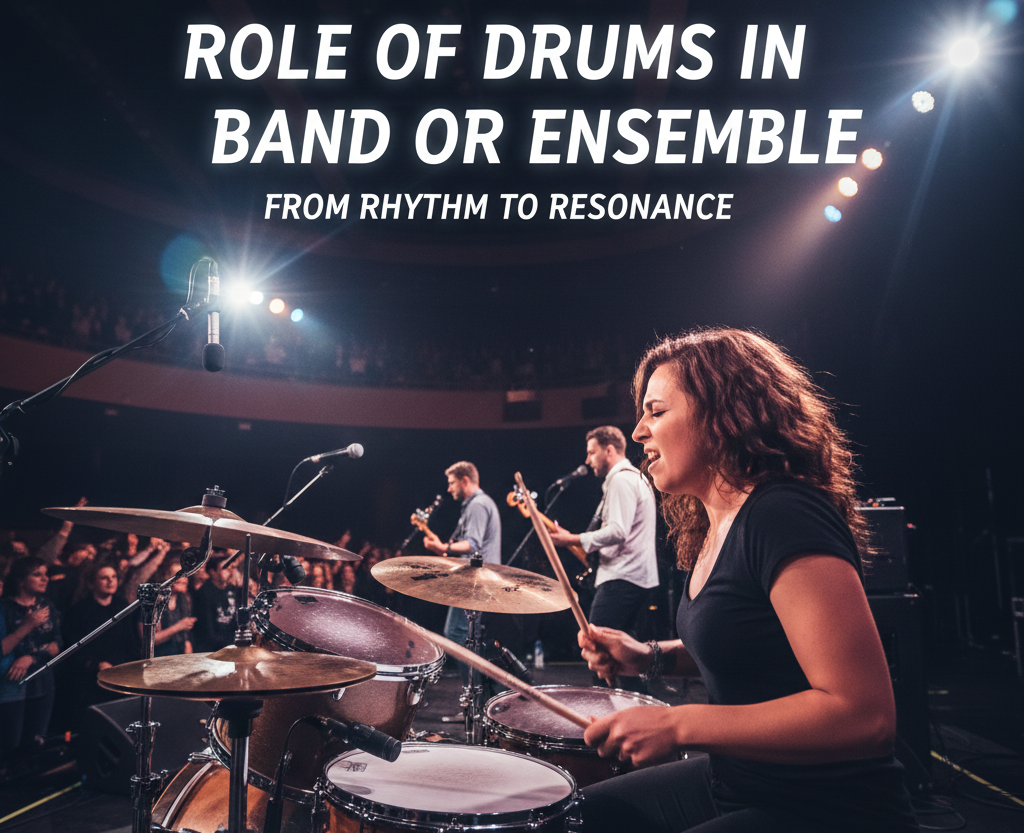
Role of Drums in Band or Ensemble | From Rhythm to Resonance
Music, at its core, is movement shaped by sound. While melody and harmony give music its emotional color, rhythm gives it life. The role of drums in a band or ensemble goes far beyond keeping time—they stand at the center of this rhythmic force, an instrument both ancient and endlessly modern. Drums serve as the pulse, the anchor, and often the unspoken guide that shapes how music breathes, grows, and connects with its listeners.
Understanding the role of drums reveals why nearly every musical culture and contemporary ensemble depends on them so deeply.
The Role of Drums as the Rhythmic Foundation
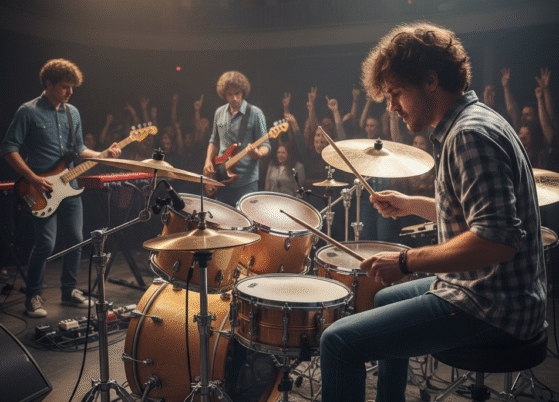
At the most fundamental level, drums provide rhythm—the structured flow of time that allows music to exist coherently. Without rhythm, melodies would float aimlessly, and harmonies would lose their sense of direction. Drums organize musical time into beats and measures, offering a stable framework within which other instruments can operate.
In a band or ensemble, the drummer establishes tempo from the very beginning. Whether the music is slow and reflective or fast and energetic, the drumbeat determines its pace and consistency. This rhythmic foundation allows musicians to synchronize their parts, ensuring that the performance feels unified rather than scattered. As a result, the drummer often becomes the silent leader, guiding the ensemble without words, using rhythm as a shared language.
Connecting Individual Instruments into a Unified Sound
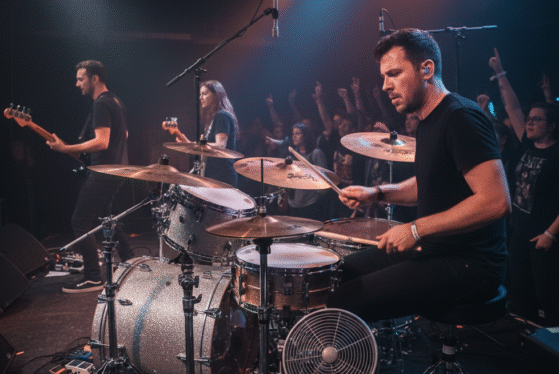
Drums play a crucial role in binding the ensemble together. While each musician may focus on their own melody or harmony, the drumbeat provides a central reference point that keeps everyone aligned. By emphasizing certain beats or transitions, the drummer signals changes in sections, dynamics, or intensity, helping musicians anticipate what comes next.
During live performances, subtle variations naturally occur. A skilled drummer listens attentively to the ensemble, adjusting rhythm and feel to maintain balance. This interaction transforms multiple individual performances into a single, cohesive musical experience, ensuring that the band feels more like a conversation than a collection of separate voices.
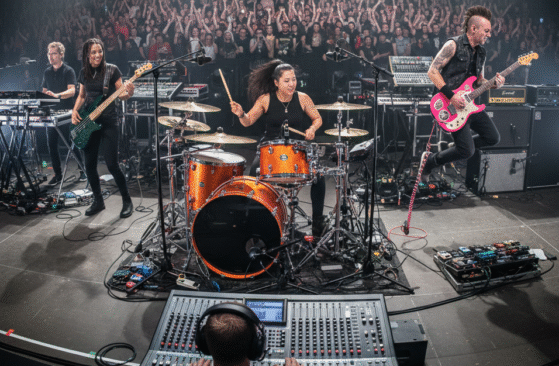
The Role of Drums in Shaping Dynamics and Energy
Drums are powerful tools for controlling musical energy. A soft brush on a snare can create intimacy, while a thunderous kick and crash cymbal can ignite excitement. Through variations in volume, texture, and rhythm, drummers influence how the music rises and falls emotionally.
In many compositions, drums mark climactic moments, transitions, or dramatic pauses. A gradual buildup of rhythmic intensity heightens anticipation, while a sudden drop to silence can create tension. In this way, drums shape not just how music sounds, but how it feels, guiding listeners through an emotional journey.

Supporting Musical Expression Across Genres
One of the most remarkable aspects of drums is their adaptability. From jazz and rock to classical, folk, fusion, and electronic music, percussion evolves to match the stylistic demands of each genre. In jazz ensembles, drummers engage in subtle conversation with other instruments, using improvisation and swing to enhance expression. Rock and pop bands rely on drums to drive momentum and reinforce catchy structures, while orchestral and traditional ensembles use percussion to add depth, color, and dramatic emphasis.
This versatility allows drums to remain relevant across cultures and eras. Techniques and instruments may change, but the core purpose remains the same: to support and elevate musical expression.

Acting as a Bridge Between Rhythm and Emotion
Although drums are primarily rhythmic, their impact is deeply emotional. Human beings instinctively respond to rhythm, often physically, through tapping, clapping, or dancing. Drums tap into this primal response, creating a direct connection between music and the body.
In a band or ensemble, this emotional influence is invaluable. The drummer’s choices—whether to play aggressively, gently, steadily, or unpredictably—can dramatically alter the mood of a piece. In many ways, drums translate emotion into motion, allowing listeners to feel music rather than simply hear it.

The Role of Drums in Guiding Transitions and Flow
Music is rarely static; it moves through verses, choruses, bridges, solos, and endings. Drums play a key role in guiding these transitions smoothly. A fill, a rhythmic shift, or a change in groove signals what comes next, preparing both musicians and listeners for the upcoming section.
These moments may seem subtle, but they are essential to maintaining clarity and flow. Without such cues, compositions risk sounding repetitive or disjointed. Through rhythmic storytelling, drums help shape the overall architecture of a performance.
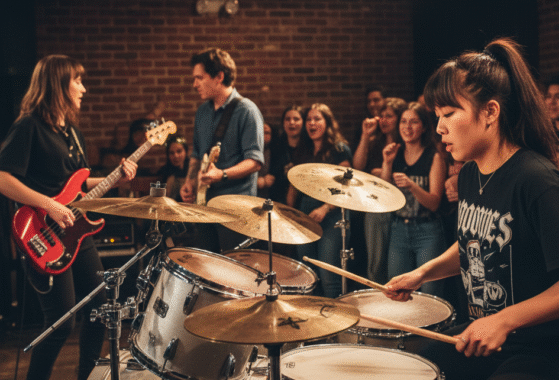
Conclusion | The Heartbeat of the Ensemble
In a band or ensemble, drums are not merely an accompaniment—they are the heartbeat that sustains musical life. They provide structure without rigidity, power without dominance, and guidance without overshadowing other voices. Through rhythm, energy, and emotional depth, drums unite musicians and audiences alike in a shared experience of time and sound.
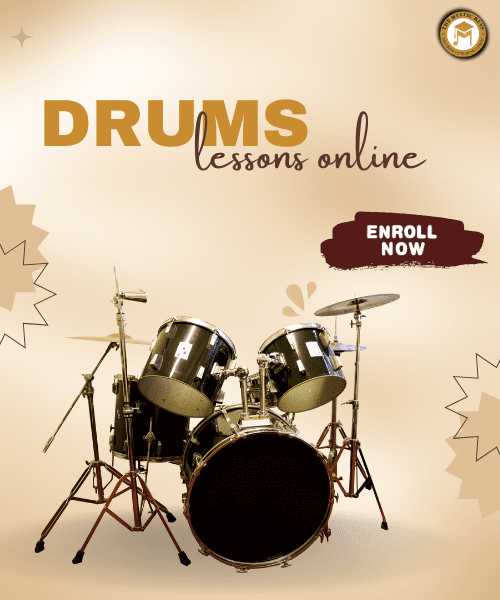
For those looking to master this vital instrument, Drums Lessons Online offer the perfect way to learn, practice, and develop skills from anywhere in the world. At The Mystic Keys, aspiring drummers can explore these lessons with expert guidance, ensuring that their rhythm not only supports music but also inspires it.
Ultimately, the role of drums goes beyond technical function. They remind us that music begins with rhythm, lives through movement, and resonates most deeply when its heartbeat is strong, steady, and alive.
For more information and exciting resources about learning music, visit our website at The Mystic Keys. For more music content and exciting offers follow us on
Facebook, Instagram, YouTube, LinkedIn, Twitter, Pinterest, and Threads.