How to Prepare for the Trinity Piano Exam – The Ultimate Step-by-Step Guide
Preparing for the Trinity Piano Exam is a journey that builds far more than just exam success. When you prepare for the Trinity Piano Exam correctly, you develop technical excellence, musical understanding, performance confidence, and expressive playing—skills that stay with a pianist for life.
At The Mystic Keys, we specialize in structured and result-oriented Trinity Piano Exam preparation, guiding students from Initial Grade to Grade 8 through a clear, proven system. This detailed guide will walk you through everything you need to know to prepare for the Trinity Piano Exam the right way, ensuring confidence, consistency, and outstanding results.
What Makes the Trinity Piano Exam Unique?
Unlike many traditional music exams, Trinity focuses on real musicianship and performance skills, not just theory or memorization.
Key highlights of the Trinity Piano Exam:
Performance-focused assessment
Flexible syllabus and piece choices
Encourages creativity and musical expression
Options for improvisation and own-choice pieces
Suitable for both classical and contemporary learners
This makes Trinity an excellent choice for students who want to play music confidently, not just pass exams.
Choosing the right grade is one of the most important steps in exam preparation.
Step 1: Choosing the Right Trinity Piano Grade
Many students struggle because they choose the wrong grade—either too easy or too difficult.
You should consider:
Reading ability (not just playing by ear)
Scale and technical control
Past exam experience
Practice consistency
At The Mystic Keys, we conduct personal skill assessments before registration, ensuring students attempt the most suitable grade for confident success.
Step 2: Understanding the Trinity Piano Syllabus in Detail
Trinity values musical storytelling, not mechanical playing.
2. Technical Work
Technical work includes:
Scales
Arpeggios
Exercises (grade-specific)
Purpose:
Develop finger strength
Improve coordination
Build fluency across the keyboard
At The Mystic Keys, technical practice is integrated into daily routines so it feels natural—not stressful.
3. Sight Reading
Sight reading tests your ability to:
Read music quickly
Maintain rhythm
Play fluently without stopping
Key strategies:
Scan key signature and time signature
Identify tricky rhythms
Keep a steady pulse
Regular sight-reading practice gives students a huge advantage in the exam.
4. Aural / Improvisation / Musical Knowledge
Trinity offers flexibility:
Aural tests
Improvisation (highly encouraged)
Musical knowledge discussion
This allows students to choose what suits their strengths best.
Step 3: Creating an Effective Daily Practice Plan
A successful Trinity Piano student follows a structured practice routine, not random playing.
Ideal Daily Practice Structure
1. Warm-ups (5–10 minutes)
Finger independence exercises
Relaxation and hand posture
2. Technical Work (10–15 minutes)
Scales and arpeggios
Even tone and metronome use
3. Pieces Practice (20–30 minutes)
Slow practice
Section-by-section improvement
Expression and phrasing
4. Sight Reading & Aural (5–10 minutes)
Consistency matters more than long practice hours.
Step 4: Developing Musical Expression (Very Important for Trinity)
Trinity examiners reward expressive musicianship.
Focus on:
Dynamic contrast
Tone control
Articulation clarity
Musical phrasing
Students trained at The Mystic Keys are taught to perform pieces like live concerts, not exam exercises.
Step 5: Overcoming Common Trinity Piano Exam Challenges
Playing too fast
Focus on control and clarity
Ignoring dynamics
Mark dynamics clearly in your score
Weak sight reading
Practice daily—even for 5 minutes
Exam nervousness
Mock exams and performance training help
Step 6: Mock Exams & Final Exam Preparation
Before the actual exam:
Conduct full mock exams
Perform pieces without stopping
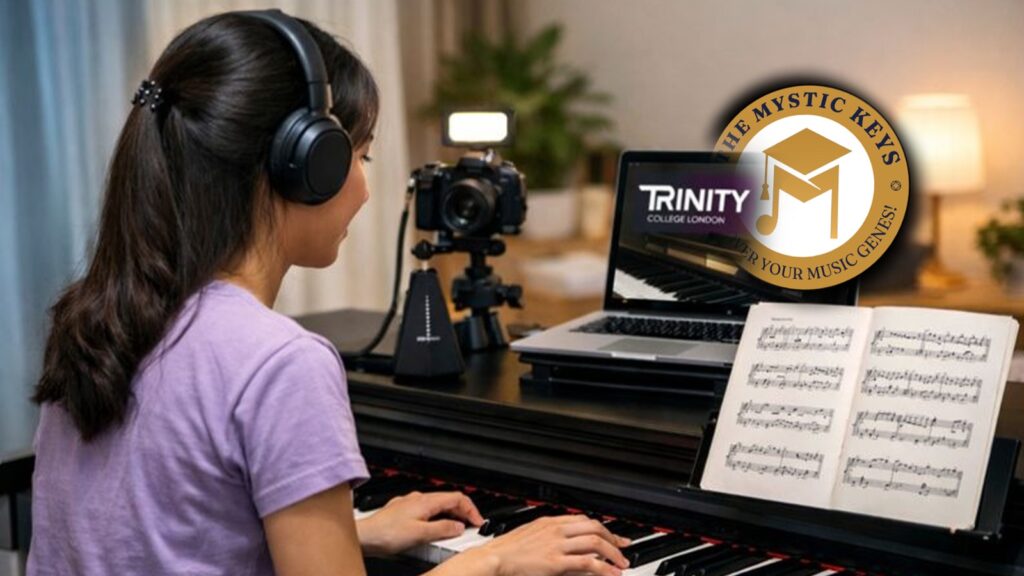
Practice camera setup for online exams
Learn how to recover from mistakes smoothly
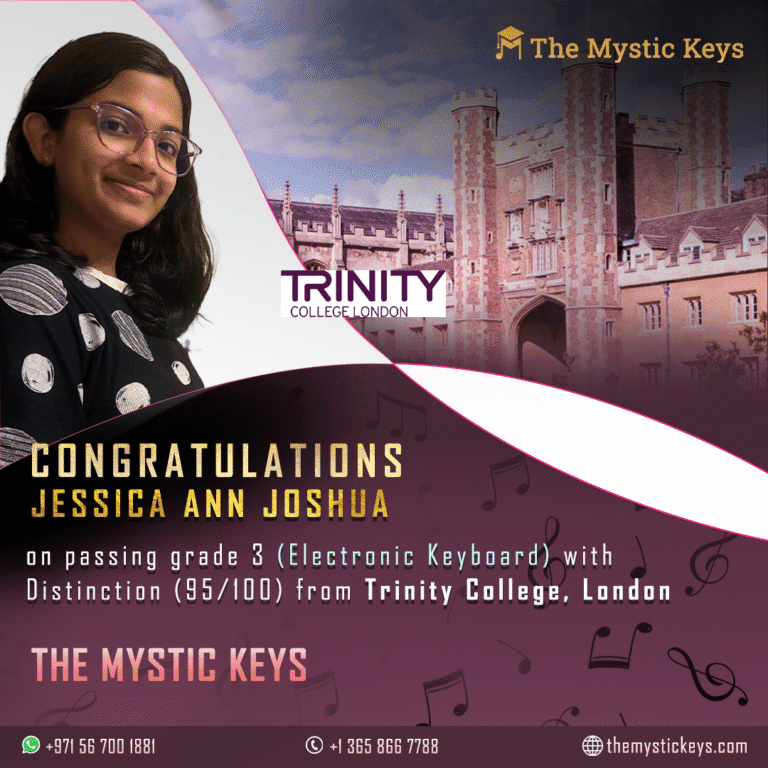
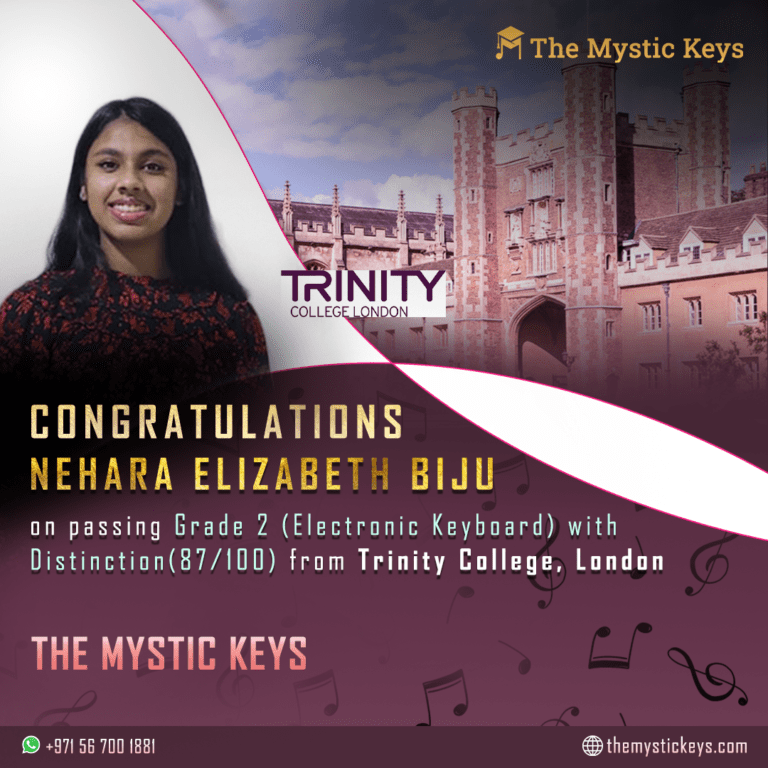
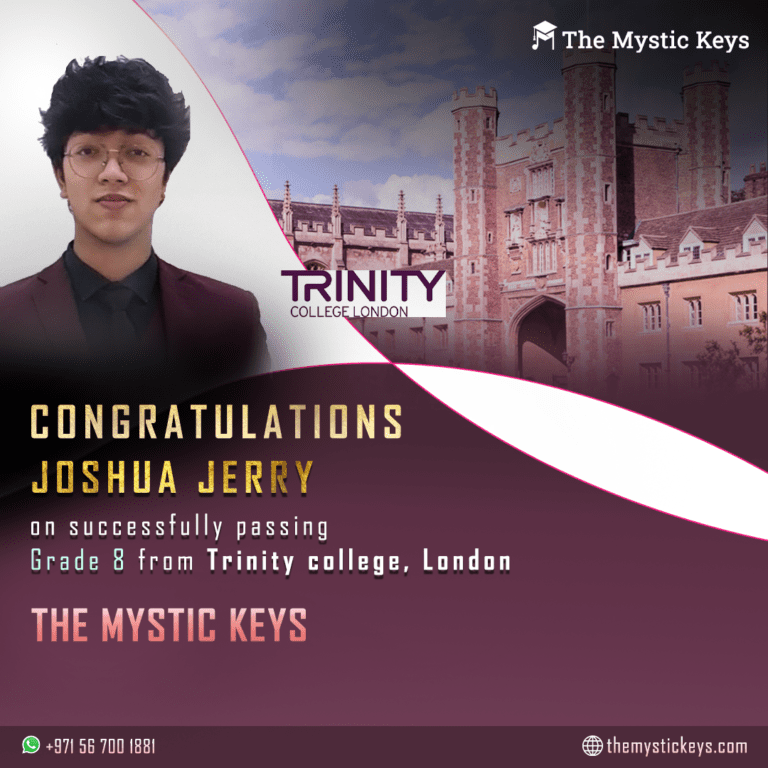
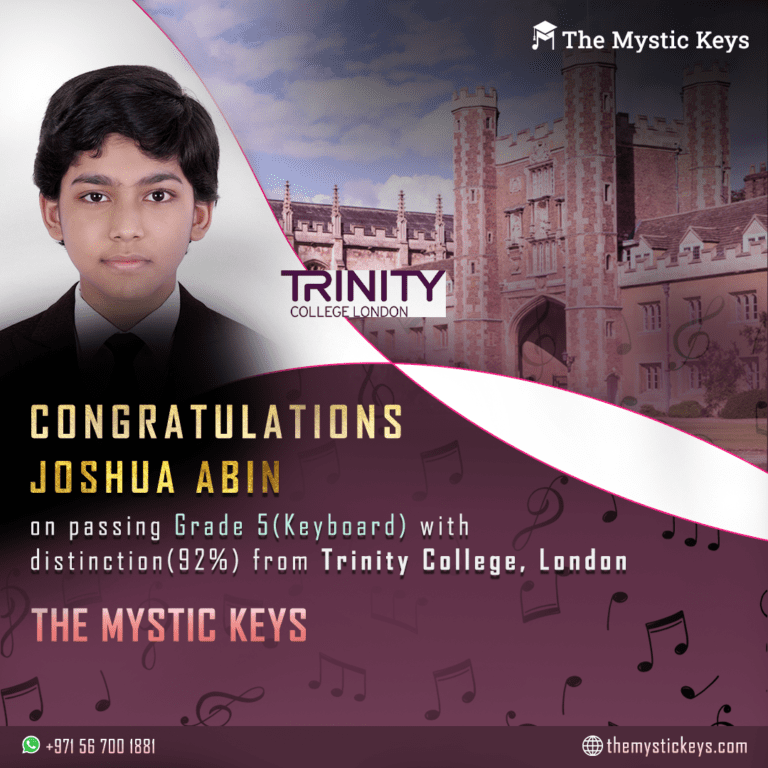
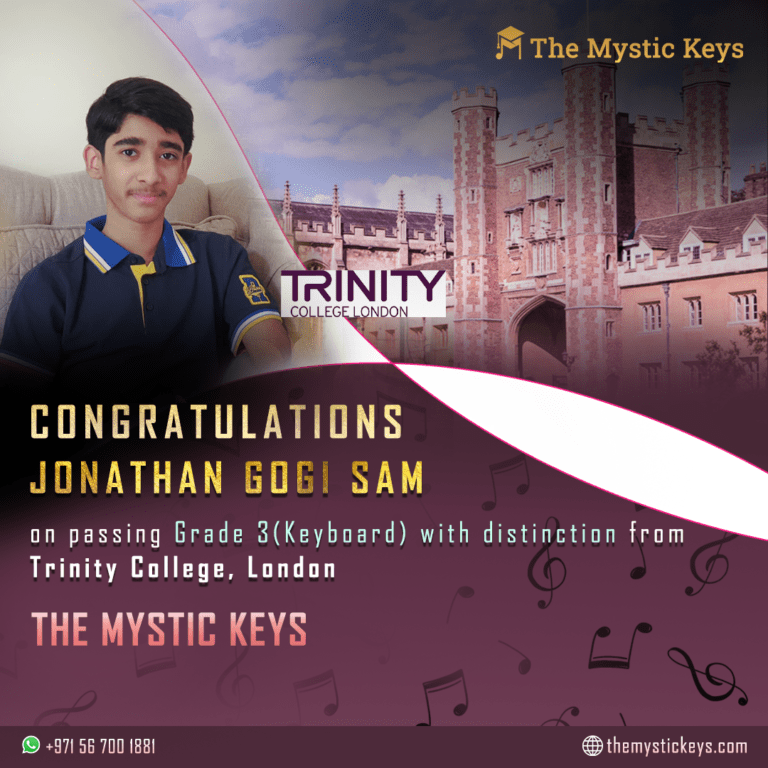
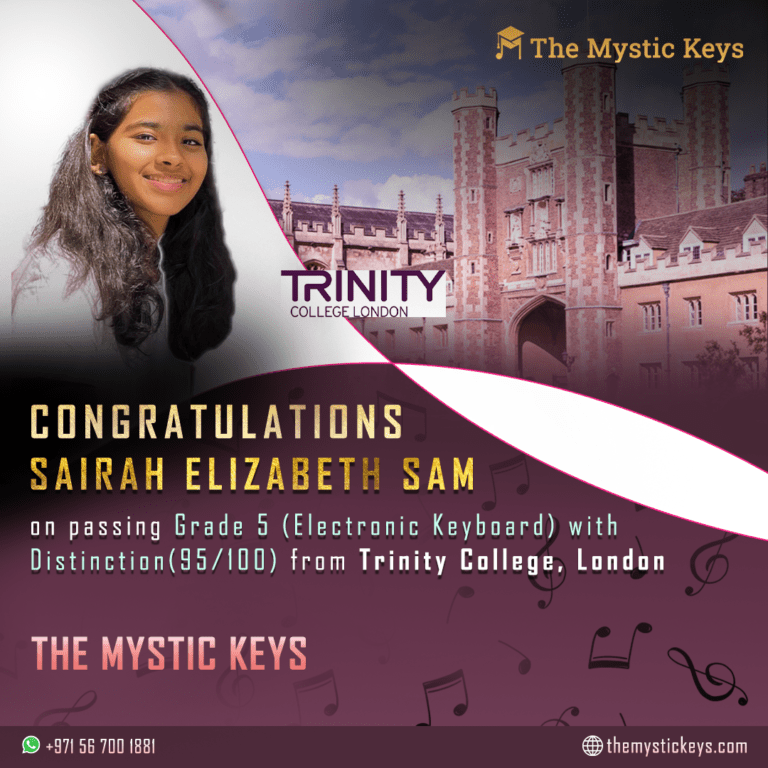
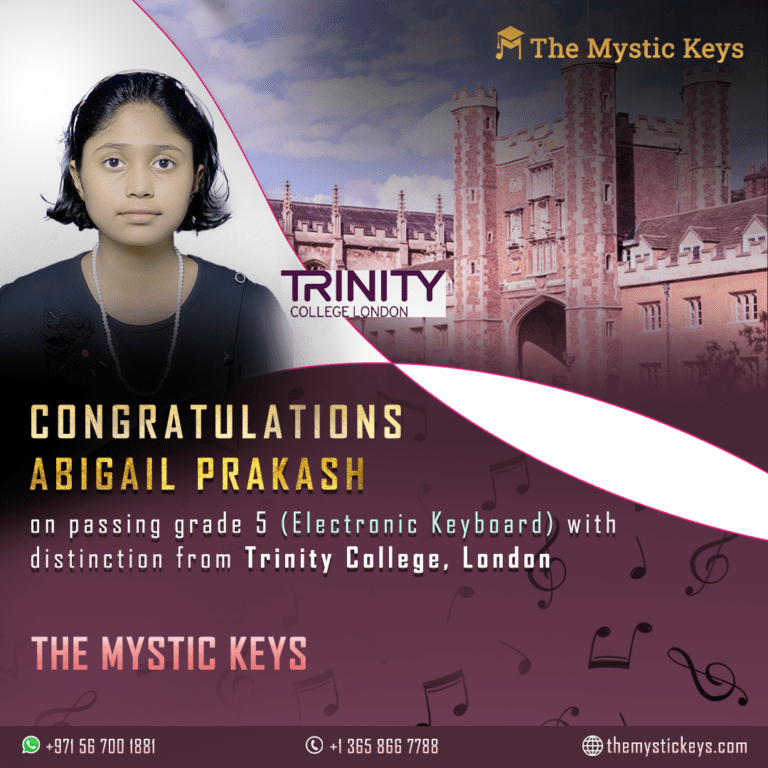
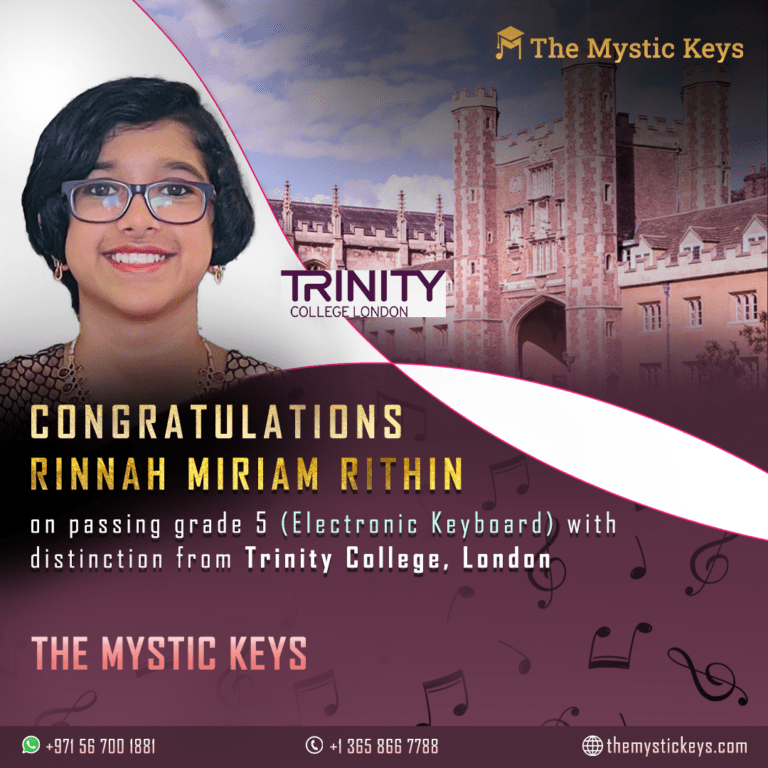
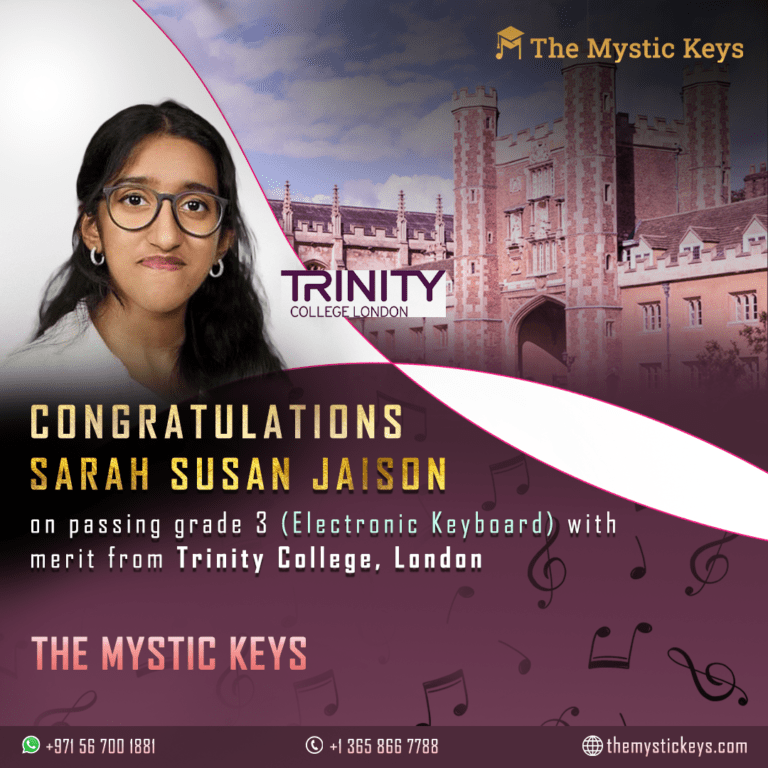
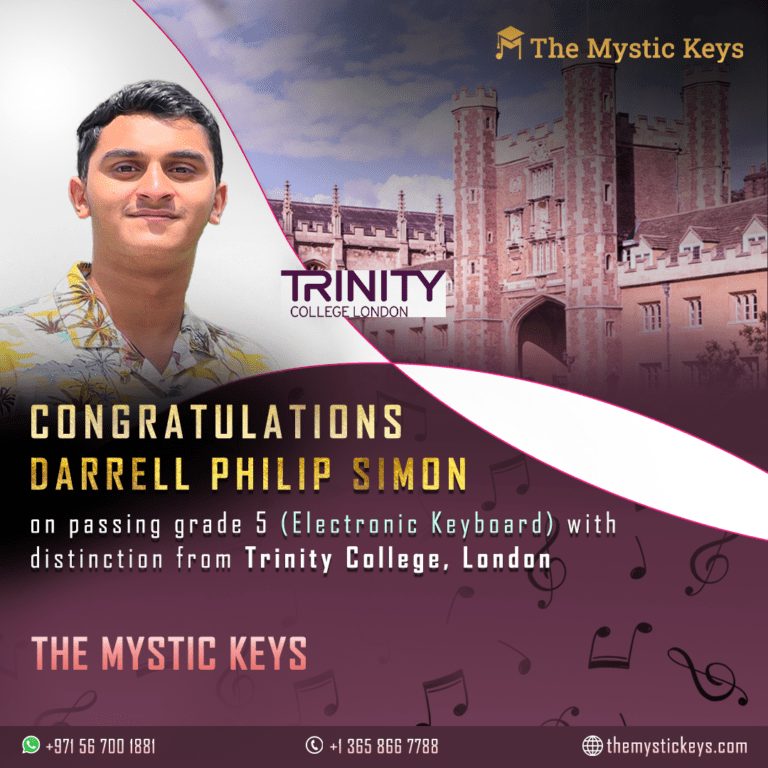
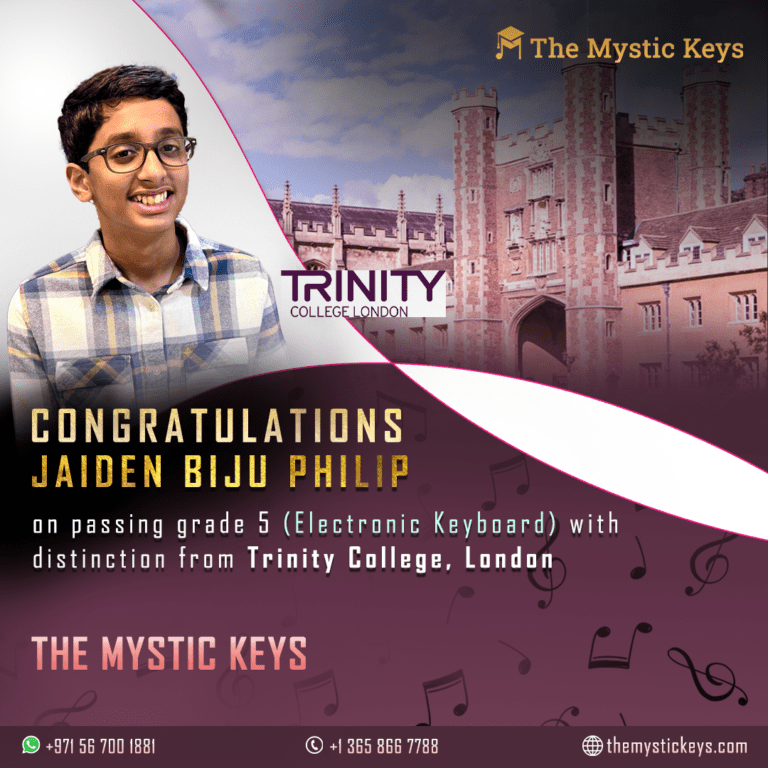
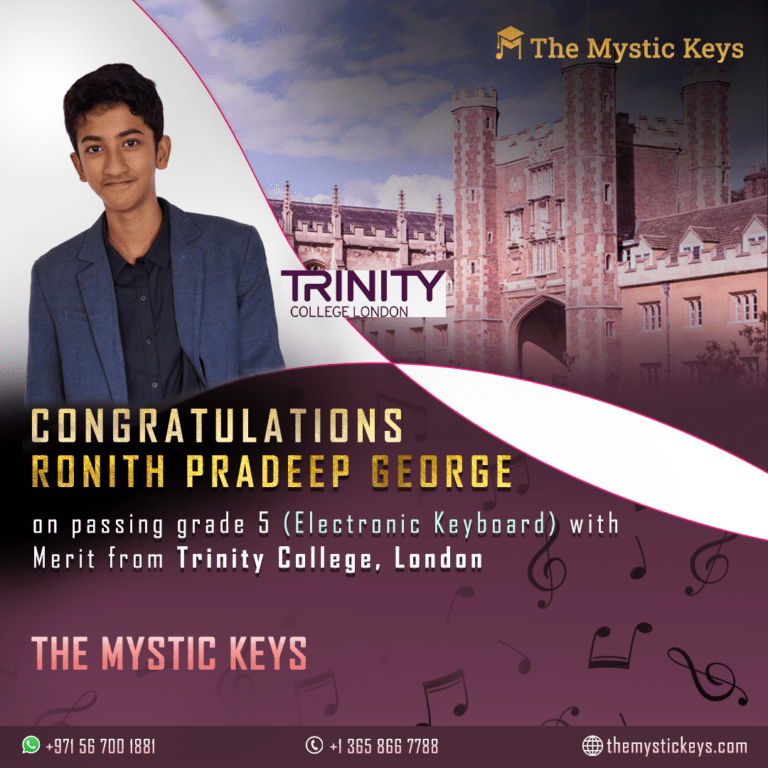
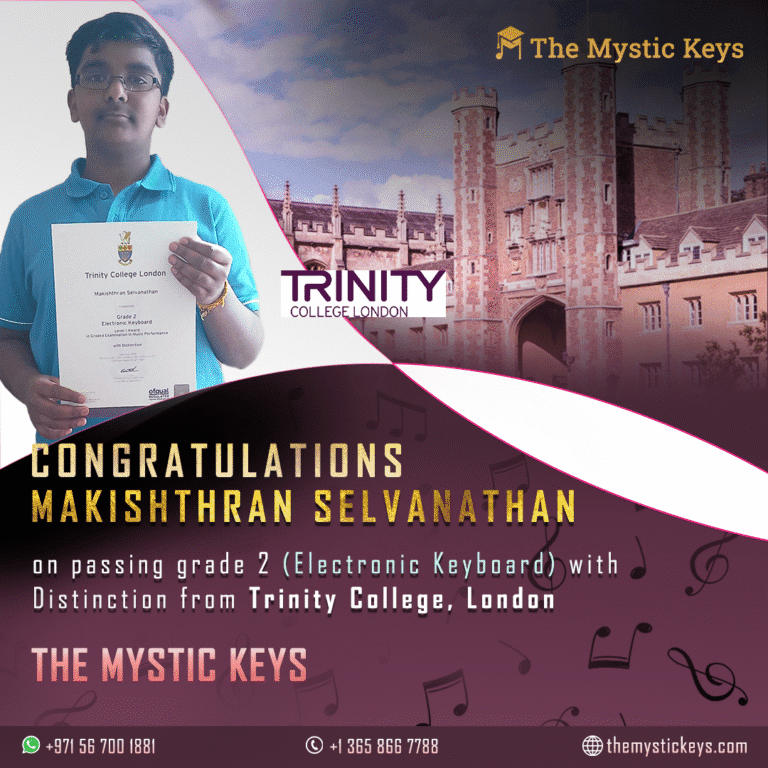
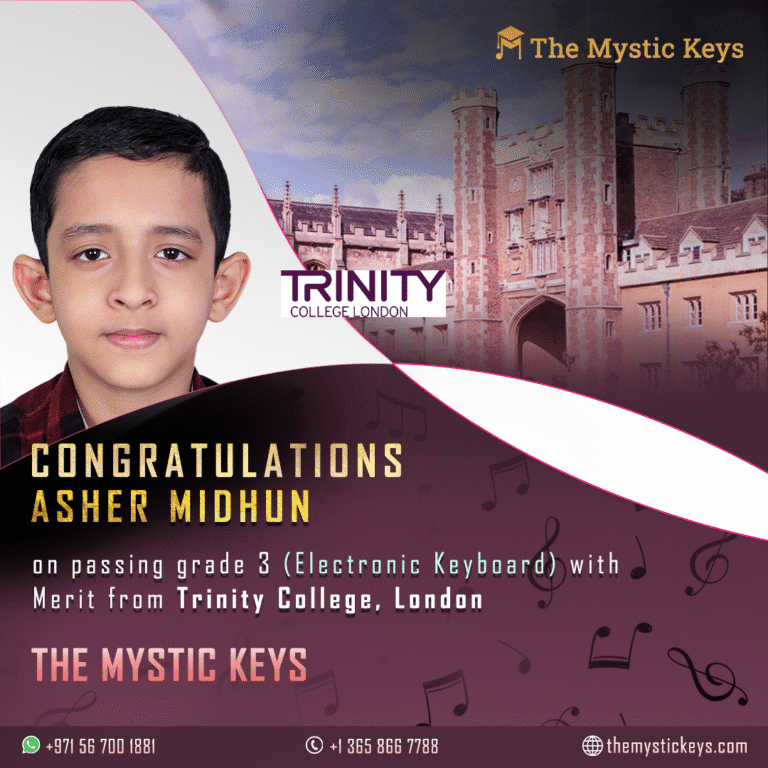
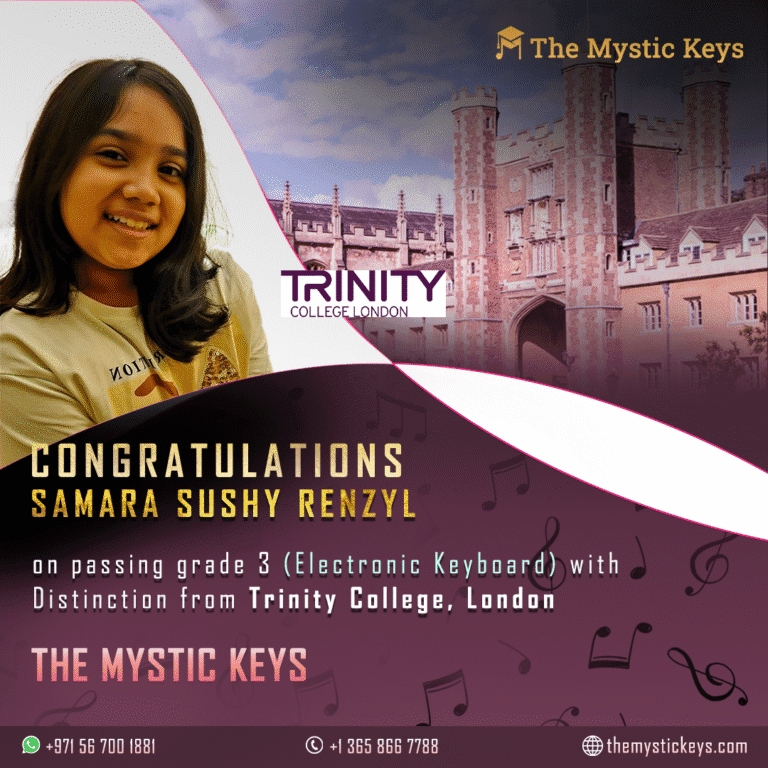
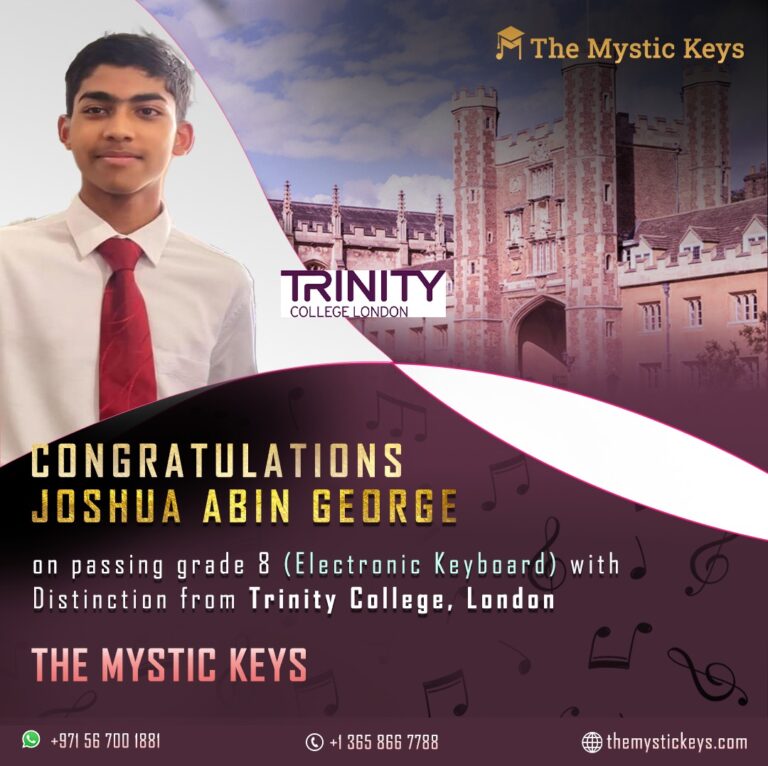
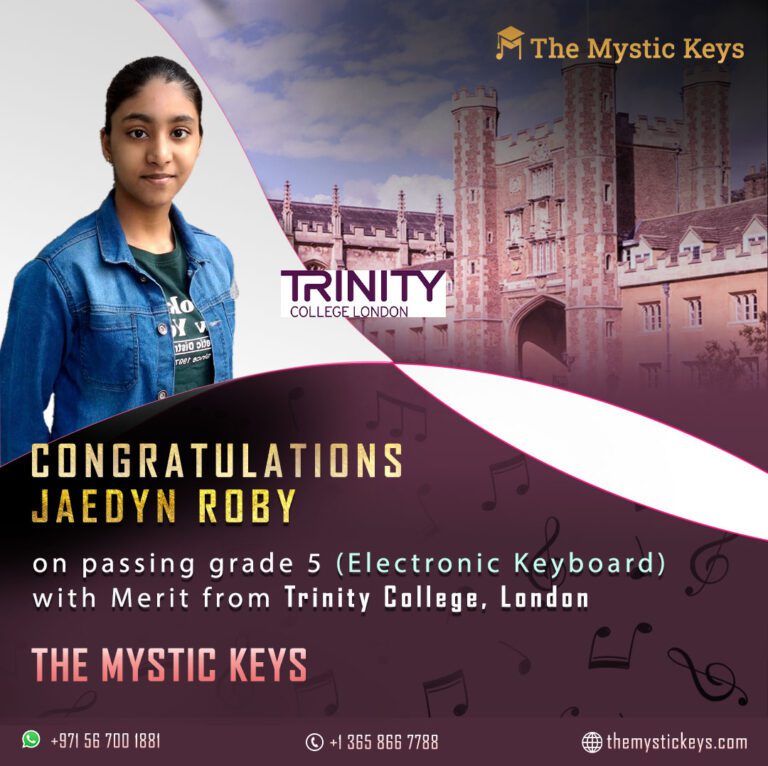
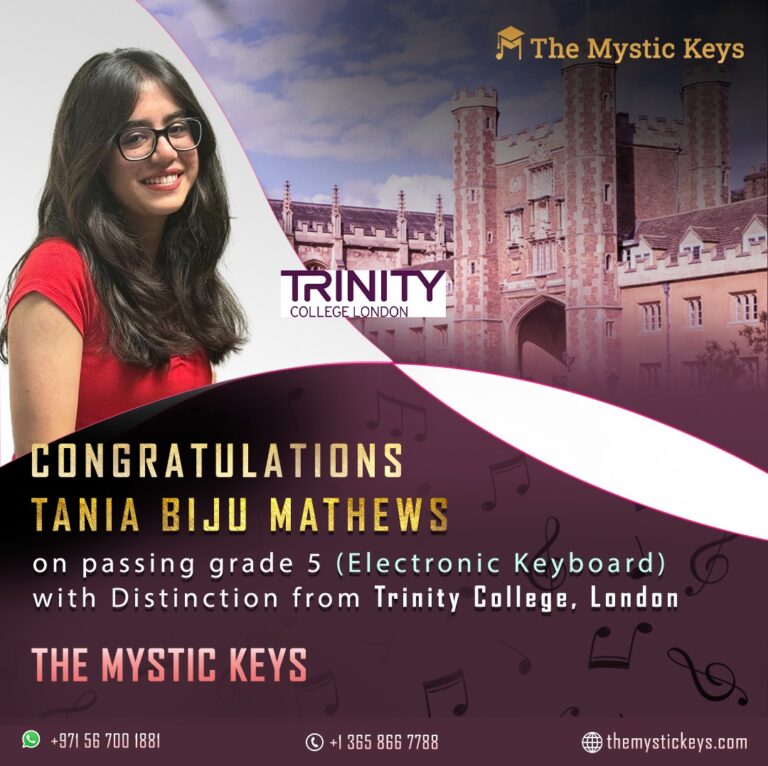
At The Mystic Keys, mock exams are a key part of our preparation system. Here are some of our students who have done great at Trinity Piano Exams
Online vs In-Person Trinity Piano Exams
Trinity offers:
Digital exams (video submission)
Face-to-face exams
Each has its own preparation strategy. Our faculty trains students for both formats, including recording techniques and performance presentation.
Why Choose The Mystic Keys for Trinity Piano Preparation?
What sets us apart:
Experienced Trinity-focused piano teachers
One-to-one personalized online lessons
Grade-specific exam planning
Performance-based teaching approach
Proven student results across grades
We don’t just help students pass exams—we help them become confident musicians. For details on certification from Trinity College London, read this blog
Preparing for the Trinity Piano Exam is a rewarding musical journey when done correctly. With structured guidance, disciplined practice, and expressive performance training, success becomes natural—not stressful.
Begin your Trinity Piano Exam preparation with The Mystic Keys today and experience professional, flexible, and result-driven music education.
Intersted in learning music with us? Register now
For more information and exciting resources about learning music, visit our website at The Mystic Keys. For more music content and exciting offers follow us on