Practice Piano Quietly at Home with Simple Smart Strategies
Learning the piano is one of the most joyful musical journeys a person can begin. Yet for many learners and parents, one common concern quietly follows that excitement: How can I practice piano regularly at home without disturbing others? Finding the right balance between consistent learning and maintaining a peaceful environment often becomes an important part of the musical journey.
Apartments, shared living spaces, work-from-home routines, sleeping children, and even sensitive neighbors can make practice feel complicated. The encouraging truth is that consistent piano practice does not require a perfectly silent house or a dedicated studio room. With a few thoughtful adjustments and smart habits, it becomes completely possible to build strong practice routines while keeping the environment calm and comfortable for everyone.
Let us explore some practical and realistic strategies that help pianists continue their progress peacefully at home.
Understanding Why Quiet Practice Matters
Before choosing solutions, it helps to understand why quiet practice becomes important in many households.
Modern homes often function as multi-purpose spaces. Someone may be attending online meetings while another person studies nearby. Younger children may nap during the day, and elderly family members often prefer quieter surroundings. Even enthusiastic learners sometimes feel hesitant to repeat the same passage many times when they worry about disturbing others.
Rather than reducing practice time, the goal should be to adapt the practice approach so learning continues confidently and consistently. Quiet practice is not about playing less. Instead, it is about practicing more thoughtfully and efficiently.
Once this shift in mindset happens, solutions become easier to apply.
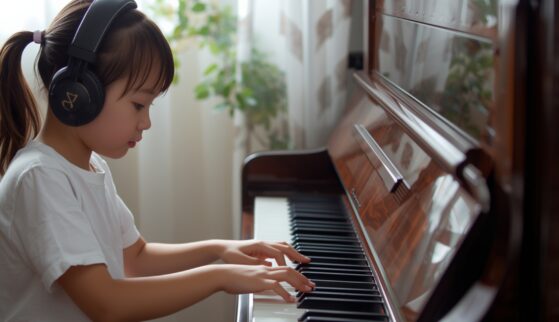
Using Digital Tools to Practice Piano Quietly and Comfortably
One of the biggest advantages modern learners enjoy today is access to digital keyboards and pianos with built-in volume control options.
Unlike acoustic instruments, digital pianos allow complete flexibility in managing sound levels. Volume adjustment helps learners continue practice at any hour of the day without affecting others in the household. Even late evening sessions become possible when sound levels remain controlled and balanced.
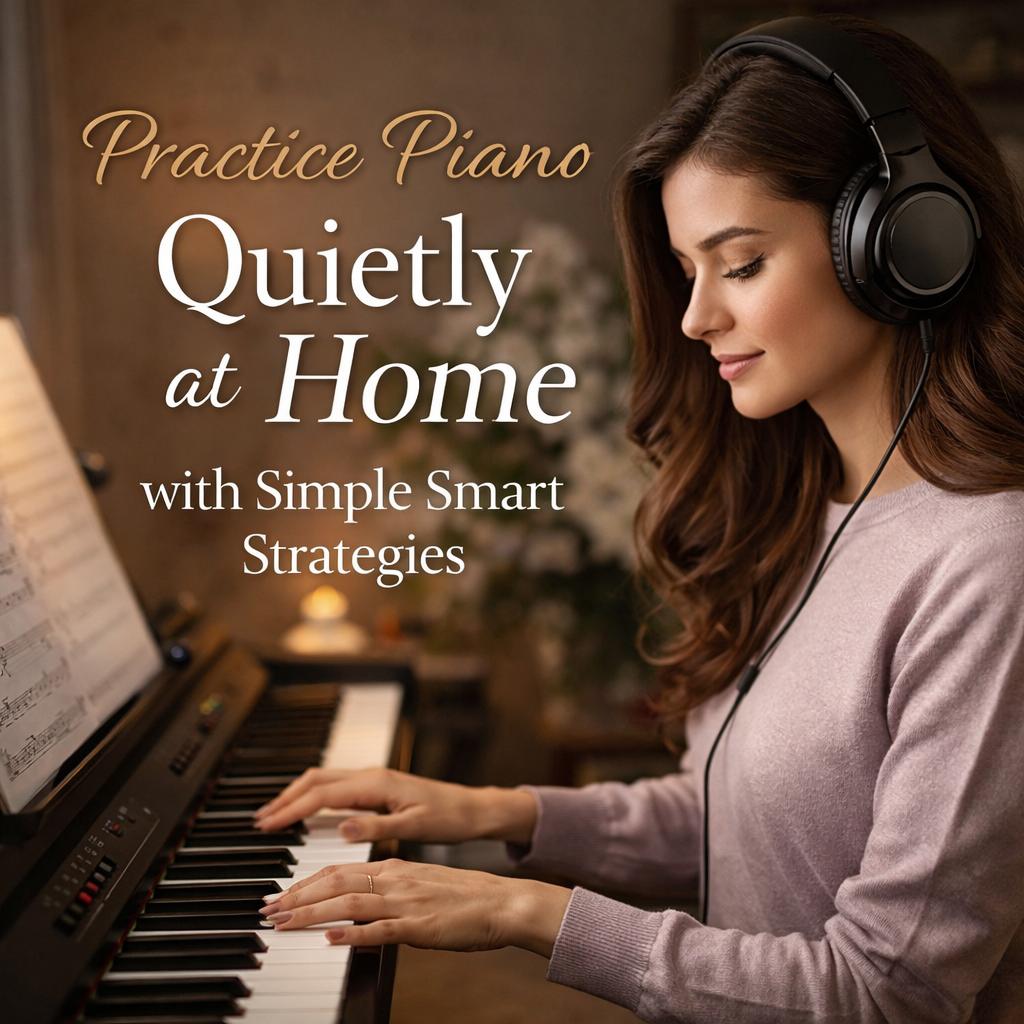
Headphones add another layer of convenience. Practicing with headphones allows players to focus deeply on tone clarity, rhythm accuracy, and finger movement without external distractions. Many students actually notice improved concentration during headphone practice because the listening experience becomes more personal and immersive.
As a result, practice becomes both quieter and more effective at the same time.
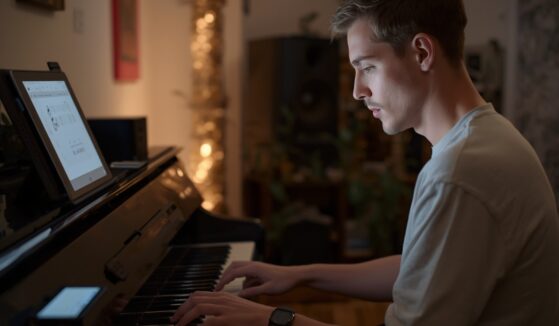
Choosing the Right Time for Practice Sessions
Sound management at home is not only about equipment. Timing also plays an important role.
Every household naturally has quieter and busier hours. Identifying those calm windows during the day makes a noticeable difference. Early morning sessions often work well for some learners, while others prefer afternoon practice before evening routines begin. In many homes, short structured practice blocks fit comfortably between daily responsibilities.
Consistency matters more than duration. Even fifteen minutes of focused playing at the right time can produce better results than a long but interrupted session.
Over time, family members also begin to adjust naturally to a predictable practice schedule.
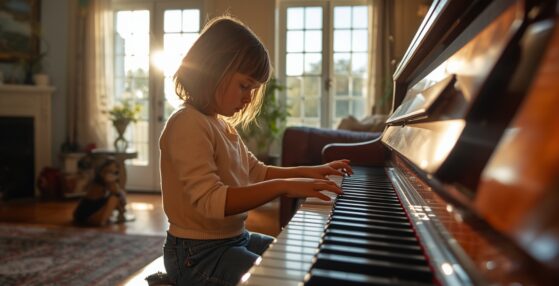
Learning to Practice Piano with a Controlled and Gentle Touch
Interestingly, effective piano practice does not always require loud playing.
Soft-touch practice helps develop finger control, hand balance, and expressive awareness. When learners intentionally reduce their playing volume, they become more attentive to articulation and phrasing. This encourages deeper listening habits and improves musical sensitivity.
Playing gently also strengthens technique because it requires greater precision from the fingers rather than relying on force. Many professional musicians regularly include soft-touch exercises as part of their training routine.
Quiet playing therefore becomes an advantage rather than a limitation.
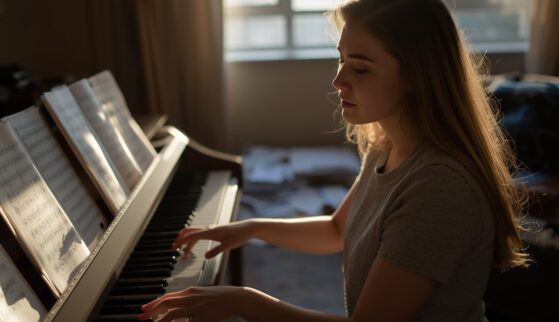
Creating a Dedicated Space to Practice Piano Quietly at Home
A small dedicated practice space can significantly improve both focus and sound control.
This space does not need to be a separate room. A thoughtfully arranged corner with minimal distractions often works just as well. Placing the keyboard slightly away from shared walls can reduce sound transmission. Soft furnishings like curtains, carpets, or cushions naturally absorb sound reflections and help maintain a calmer environment.
When learners associate a particular area with music practice, concentration improves automatically. Over time, that corner becomes a familiar and motivating space for daily learning.
Even simple adjustments can make practice sessions feel more organized and peaceful.
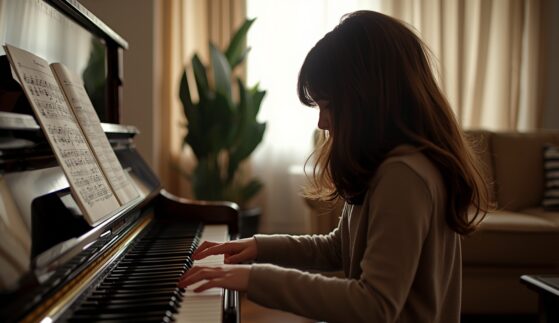
Using Short Sessions to Practice Piano More Effectively at Home
Long practice hours are not always necessary for steady improvement. Structured short sessions often produce stronger progress.
Breaking practice time into smaller focused segments allows learners to repeat difficult passages quietly and patiently without fatigue. This approach works especially well in homes where continuous playing for long durations may not be practical.
Short sessions also make it easier to return to the keyboard multiple times throughout the day. Each return strengthens muscle memory and builds confidence gradually.
Consistency begins to replace pressure, which makes learning more enjoyable.
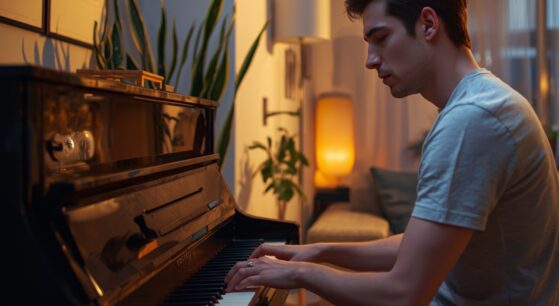
Practicing Mentally Away from the Keyboard
One of the most powerful quiet practice strategies does not involve sound at all.
Mental rehearsal helps learners visualize hand movement, note patterns, and rhythm structures without touching the instrument. Reading sheet music silently while imagining finger placement strengthens memory retention and improves performance readiness. Listening carefully to recordings of the same piece can also deepen musical understanding.
Many advanced musicians rely heavily on mental practice during preparation stages. This technique allows learning to continue even when playing the instrument is not possible.
Silent preparation supports confident playing later at the keyboard.

Communicating with Family Members About Practice Time
Support from family members plays an important role in maintaining regular practice routines.
Open communication helps everyone understand the importance of consistent learning. When practice timing becomes predictable, interruptions reduce naturally. Family members often become encouraging partners in the learning journey once they recognize how meaningful the routine is.
A cooperative environment makes quiet practice easier and more enjoyable for everyone involved.
Music grows best where encouragement exists.
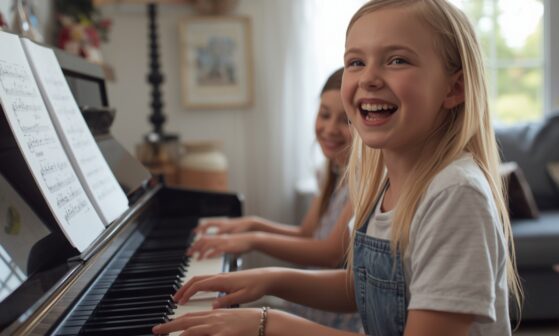
Turning Quiet Practice into a Long-Term Habit
Quiet practice is not just a temporary adjustment. It can become a valuable lifelong skill for musicians.
Learning to control sound levels improves listening awareness, strengthens technical accuracy, and builds disciplined routines. These habits support better performance confidence over time. Students who develop quiet practice techniques early often become more independent learners later.
Instead of viewing sound limitations as obstacles, they can be seen as opportunities to practice smarter.
With patience and creativity, meaningful piano progress can continue in any home environment.

Final Thoughts
Practicing piano at home does not require perfect conditions. It simply requires thoughtful planning, flexible strategies, and consistent effort. With the right guidance and encouragement—such as structured support through Piano Lessons Online from The Mystic Keys—learners can continue building confidence and musical skills comfortably from their own homes.
Digital tools, timing adjustments, gentle playing techniques, and structured routines together create a supportive practice experience that fits naturally into everyday life. When learners adapt their approach instead of reducing their commitment, improvement becomes steady, meaningful, and enjoyable.
Music learning thrives not because the environment is perfectly silent, but because the learner stays consistent and motivated throughout the journey.
And sometimes, the quietest practice sessions lead to the strongest musical growth.
For more information and exciting resources about learning music, visit our website at The Mystic Keys. For more music content and exciting offers follow us on
Facebook, Instagram, YouTube, LinkedIn, Twitter, Pinterest, and Threads.