Popular Instruments | Bizarre Origins That Shaped Music
Music feels timeless. When we hear a guitar cry, a piano whisper, or a drum thunder, it’s easy to imagine these popular instruments arriving fully formed—almost divinely gifted to humanity. They seem so refined, so perfectly suited to human emotion, that their existence feels inevitable.
But the truth is far messier, stranger, and far more fascinating. Many of the world’s most popular instruments did not begin as tools for concerts or compositions. Some were born out of rituals, others emerged from war or survival, while a few came into existence through boredom, curiosity, or pure accident. Their early forms were shaped by superstition, necessity, and experimentation rather than artistry or elegance.
So let’s rewind time and explore how the familiar sounds we cherish today—and the popular instruments that create them—emerged from surprisingly bizarre and unexpected beginnings.
When Survival Came Before Sound | The Primitive Roots of Music
Long before music became entertainment, it was a necessity—and many popular instruments trace their origins to this urgent need. Early humans didn’t create instruments to perform on a stage; they created them to communicate, coordinate, and survive. Sound was one of the few tools powerful enough to travel across distance and danger, making it invaluable in a world without language or technology.
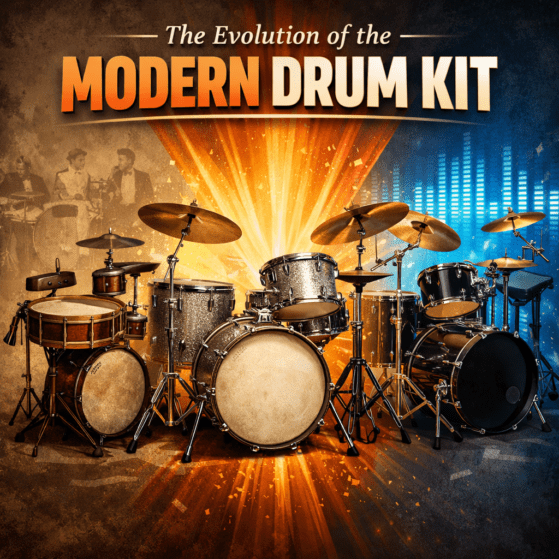
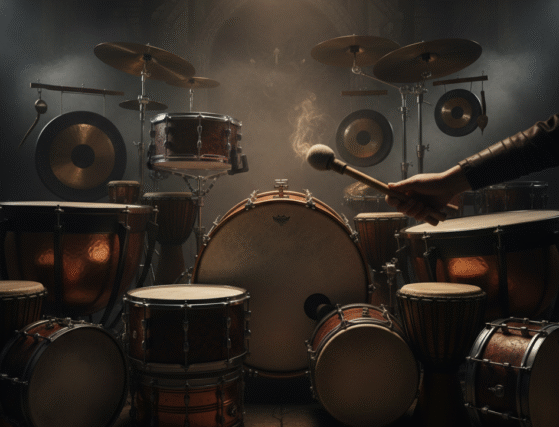
Drums, now among the most popular instruments across cultures, were initially less about rhythm and more about reach. Hollowed logs and stretched animal skins produced sounds loud enough to warn tribes of approaching predators or rival groups. Over time, these warning signals evolved into repeated patterns, and those patterns slowly became music. What began as an alarm transformed into art.
This pattern—function first, beauty later—appears repeatedly in the history of popular instruments, reminding us that the sounds we cherish today were once shaped by survival rather than song.

Popular Wind Instruments and the Haunting Origins of the Flute
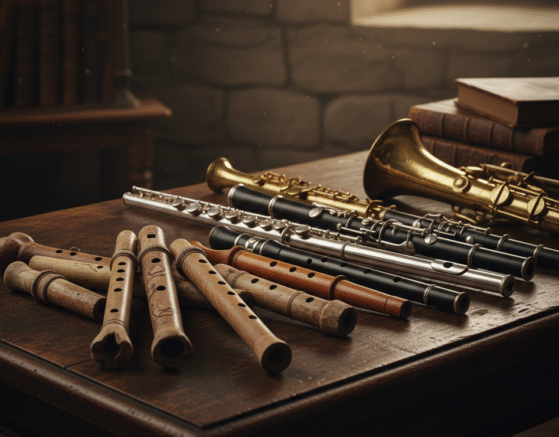
The flute’s origins are among the oldest and eeriest in musical history. Archaeological discoveries reveal flutes made from bird bones and even mammoth tusks dating back over 40,000 years. These were not polished instruments made for performance halls—they were survival artifacts.
Early humans discovered that blowing across hollow bones produced sound. At first, this may have been accidental, but repetition turned curiosity into craft. Some anthropologists believe these bone flutes were used in rituals, possibly to mimic animal calls during hunts or to communicate with spirits during ceremonies.
What’s unsettling is the intimacy of these instruments. Breath passing through bone—sometimes human bone—creates a haunting connection between life, death, and sound. Today’s sleek metal flutes carry this ancient lineage, though their origins remain deeply primal.
Popular Percussion Instruments and the Dark Power of the Drum
While drums now symbolize rhythm and celebration, ancient cultures used them for far more intense purposes. Communities treated drums as instruments of control, using them to regulate labor, guide soldiers on the battlefield, and assert authority.
In warfare, drummers set the marching pace and transmitted commands when voices failed to carry across distance. During rituals, especially in early civilizations, people believed drumming could summon gods, drive away evil spirits, or push participants into trance-like states. These repetitive beats did more than create music—they actively shaped thought, emotion, and behavior.
Because drums could influence the human mind so powerfully, societies both revered and feared them. Even today, deep percussion physically grips the body, echoing the same dominance over the human nervous system that drums held thousands of years ago.
The Piano | A Mechanical Experiment Gone Right
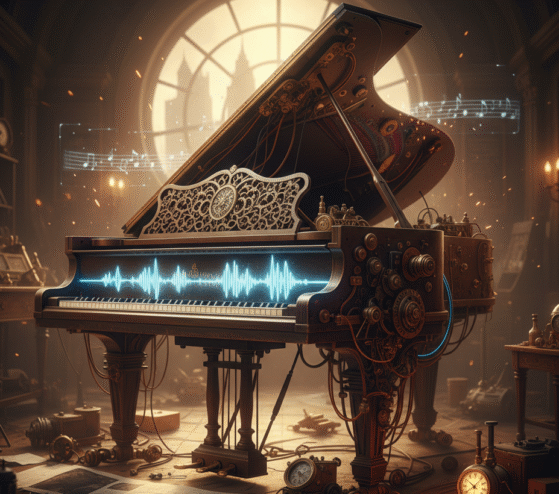
The piano feels refined, elegant, and almost aristocratic—but its origin was rooted in frustration. Before the piano, keyboard instruments like the harpsichord dominated Europe. The problem? They lacked dynamic control. Notes were either loud or soft, with no emotional nuance in between.
Bartolomeo Cristofori, an Italian instrument maker in the early 1700s, attempted to solve this by engineering a keyboard that responded to touch. His invention allowed musicians to play both softly (piano) and loudly (forte), depending on how hard the keys were struck.
At first, the instrument was considered clunky and impractical. It took decades before composers recognized its expressive potential. What started as a mechanical experiment slowly became the emotional centerpiece of Western music.
Popular String Instruments and the Ever-Changing Identity of the Guitar
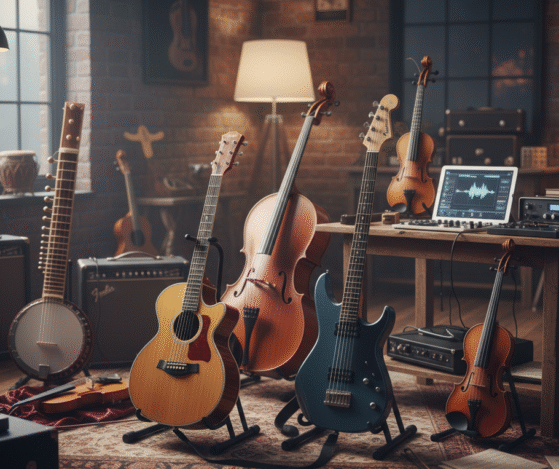
The guitar’s journey is one of constant reinvention. Its ancestors include ancient stringed instruments used in royal courts, religious ceremonies, and storytelling traditions across the Middle East and Europe.
Originally, guitars were quieter instruments meant for intimate settings. They weren’t designed for large audiences or dramatic performances. Over time, as music moved from palaces to public spaces, the guitar evolved—becoming louder, sturdier, and more expressive.
The real transformation came much later with electrification. What was once a gentle accompaniment tool became the symbol of rebellion, identity, and raw emotion. The guitar didn’t change overnight—it adapted to human culture as it shifted and fractured.
The Violin | An Accident of Shape and Sound
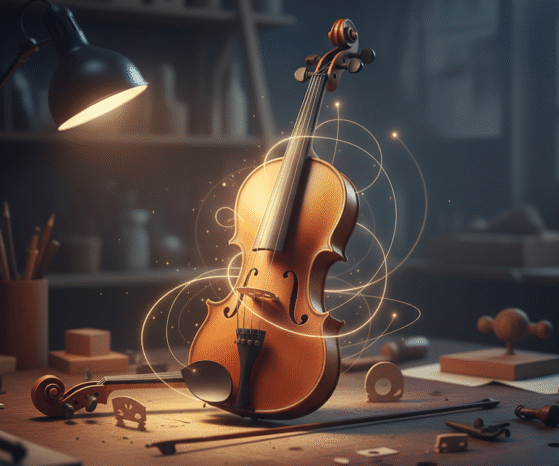
The violin’s iconic form looks deliberate, almost mathematical—but its design was the result of trial, error, and countless small adjustments. Early bowed instruments varied wildly in size and shape, often producing inconsistent tones.
Luthiers in 16th-century Italy experimented obsessively with curves, wood thickness, and string tension. The now-famous violin shape emerged not from theory, but from hands-on tinkering. Each modification responded to sound rather than aesthetics.
What’s remarkable is that this “accidental perfection” has barely changed in hundreds of years. The violin stands as proof that some of the best designs come from listening rather than planning.
Wind Instruments and the Art of Imitation
Many wind instruments came into being through imitation—specifically, the imitation of nature. Early humans shaped literal animal horns into tools for signaling across valleys or during hunts, producing sounds that rang loud, raw, and unmistakable.
As time passed, people actively worked to control and refine these sounds. They carved holes to change pitch, redesigned mouthpieces to shape tone, and replaced bone with wood and eventually metal. Despite these changes, musicians never abandoned the original goal: projecting sound across vast spaces.
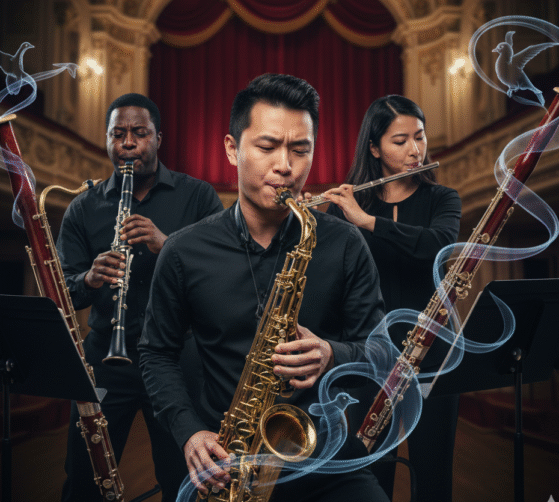
Even today, instruments like trumpets and saxophones carry the bold, commanding voice of their ancient ancestors, proving that their earliest purpose still breathes through every note.
From Strange Beginnings to Familiar Sounds
What unites all these instruments is not elegance, but experimentation. Humans did not create them as masterpieces from the start. Survival, ritual, curiosity, and necessity actively shaped each one. Music emerges, in this sense, as a natural byproduct of being human—of our constant urge to communicate, to feel deeply, and to connect within a chaotic world, a truth we continue to explore and celebrate at The Mystic Keys, our online music platform.
The next time you hear a familiar melody, remember this: every beautiful sound carries a strange history. Bones, battles, mistakes, and moments of discovery all played their part in shaping it.
And that may be the most musical truth of all.
For more information and exciting resources about learning music, visit our website at The Mystic Keys. For more music content and exciting offers follow us on
Facebook, Instagram, YouTube, LinkedIn, Twitter, Pinterest, and Threads.