Piano Grade Levels Explained (Beginner to Advanced)
Understanding piano grade levels is one of the most important steps for anyone beginning or continuing their piano journey. Whether you are a parent enrolling a child, a beginner starting fresh, or an adult returning to music after years, knowing how piano grade levels work brings clarity, confidence, and direction.
Piano grade levels provide a structured pathway for musical growth. They help students progress gradually, build strong foundations, and measure improvement in a meaningful way. Rather than guessing what to learn next, learners follow a sequence designed to develop technique, musical understanding, and performance skills over time.
This guide explains piano grade levels from beginner to advanced, what each stage includes, and how students can move forward confidently at their own pace.
What Are Piano Grade Levels and Why They Matter
Piano grade levels are structured stages of learning used worldwide to assess a student’s technical skills, musical understanding, and performance ability. These levels are commonly followed by music boards such as ABRSM, Trinity, and others, though the learning progression remains similar across systems.
The purpose of piano grade levels is to:
Provide a clear learning roadmap
Set realistic expectations at each stage
Encourage steady and balanced development
Help teachers and students track progress
Prepare students for performances and examinations
Rather than rushing into advanced music, grade levels ensure that essential skills are developed properly before moving forward.
How Piano Grade Levels Are Structured
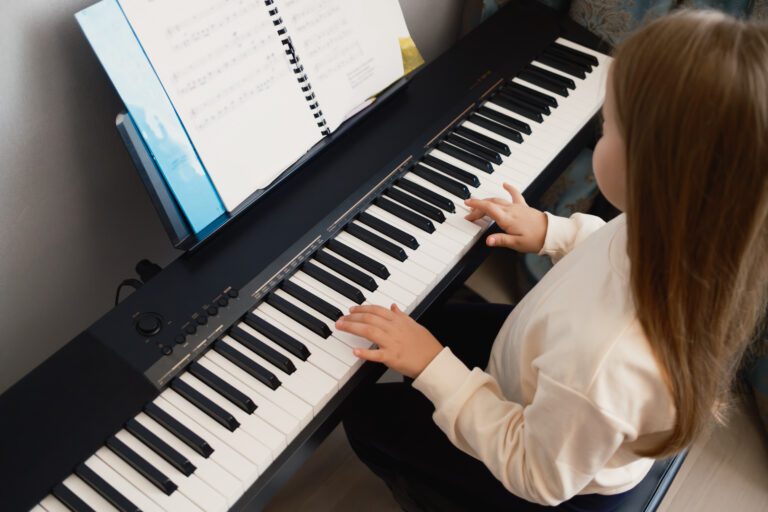
Most piano learning systems follow a progression that starts with beginner foundations and advances through increasing levels of complexity. While exam boards may label grades numerically, the learning journey can broadly be divided into three main stages:
Beginner level
Intermediate level
Advanced level
Each stage focuses on specific skills, gradually increasing technical demands and musical depth.
Beginner Piano Grade Levels: Building the Foundation
The beginner stage is where the most important habits are formed. At this level, students are introduced to the piano in a structured and supportive way.
What Students Learn in Beginner Piano Grade Levels
In beginner piano grade levels, learners focus on:
Correct sitting posture and hand position
Basic finger coordination
Understanding the keyboard layout
Reading simple music notation
Playing with both hands separately and together
Basic rhythm and timing
Simple dynamics and articulation
The goal is not speed or complexity, but comfort, confidence, and clarity.
Typical Skills Developed at Beginner Level
Students gradually become comfortable with:
Playing simple melodies
Recognizing notes on the staff
Maintaining steady tempo
Using correct finger numbers
Listening carefully to their own playing
This stage builds the foundation that supports every future level of piano learning.
Early Grade Piano Levels: Strengthening Core Skills

After the absolute beginner phase, students move into early grade piano levels, often associated with initial graded exams.
Focus Areas in Early Piano Grade Levels
At this stage, piano grade levels emphasize:
Improved hand coordination
Playing hands together more confidently
Introduction to basic scales
Simple chord patterns
More detailed musical expression
Improved rhythm accuracy
Students begin to understand that piano playing is not just about notes, but about musical storytelling.
Musical Growth at This Stage
Learners start to:
Play longer pieces
Develop finger independence
Read music more fluently
Recognize patterns in melodies and chords
Gain confidence performing for others
These skills prepare students for more demanding musical challenges ahead.
Intermediate Piano Grade Levels: Developing Musical Independence
Intermediate piano grade levels mark a significant shift in learning. Students are no longer just following instructions; they begin to think like musicians.
What Changes at Intermediate Piano Grade Levels
At the intermediate stage, piano grade levels introduce:
More complex rhythms
Wider hand movement across the keyboard
Faster and more detailed scales
Stronger dynamic control
Introduction to different musical styles
Greater emphasis on expression and phrasing
This stage requires patience and consistent practice, as pieces become more technically demanding.
Skills Students Develop at Intermediate Level
Students learn to:
Balance melody and accompaniment
Interpret musical markings independently
Maintain consistent tempo
Play with improved tone control
This is often where learners feel challenged, but also deeply rewarded.
Music Theory and Piano Grade Levels

As students progress through piano grade levels, music theory becomes increasingly important. Theory helps learners understand what they are playing, not just how to play it.
How Theory Supports Piano Progress
Music theory at different grade levels includes:
Key signatures
Time signatures
Scale construction
Chord structures
Musical form
Basic harmony
Theory strengthens sight-reading, improves memorization, and allows students to learn new music faster.
Advanced Piano Grade Levels: Mastery and Musical Depth
Advanced piano grade levels represent a high level of musical maturity. Students at this stage have developed strong technical foundations and focus on artistic expression.
What Defines Advanced Piano Grade Levels
At advanced levels, piano grade levels emphasize:
Advanced technical control
Complex rhythmic structures
Sophisticated musical interpretation
Wide dynamic range
Stylistic accuracy
Performance confidence
Pieces become longer, more expressive, and technically demanding.
Skills Required at Advanced Level
Advanced students are expected to:
Perform challenging repertoire
Interpret music independently
Control tone and touch precisely
Understand stylistic differences between composers
Perform confidently in front of an audience
This stage prepares students for professional performance, teaching, or advanced musical study.
How Long Does It Take to Progress Through Piano Grade Levels

One of the most common questions about piano grade levels is how long progression takes. The answer varies depending on several factors.
Progress depends on:
Practice consistency
Quality of instruction
Individual learning pace
Age and prior experience
Motivation and goals
On average, students may take:
Several months to complete beginner levels
One to two years to move through intermediate levels
Multiple years to reach advanced levels
Progression is not a race. Steady, mindful learning leads to lasting success.
Piano Grade Levels for Children vs Adults
Piano grade levels apply to both children and adults, but the learning experience differs slightly.
Children and Piano Grade Levels
Children often:
Develop technique gradually
Benefit from structured routines
Grow alongside the grade system naturally
Adults and Piano Grade Levels
Adult learners:
Understand concepts more quickly
Progress efficiently with focused practice
Benefit from goal-oriented learning
Appreciate structured grade systems
Both age groups can successfully progress through piano grade levels with the right guidance.
Common Myths About Piano Grade Levels

There are several misconceptions surrounding piano grade levels that can discourage learners unnecessarily.
Common myths include:
Higher grades mean better musicianship
Everyone must follow the same pace
Exams are mandatory for progress
Beginners cannot enjoy real music
In reality, piano grade levels are tools for guidance, not limitations. Musical enjoyment and personal growth matter just as much as grades.
Choosing the Right Pace for Piano Grade Levels
Every learner’s journey through piano grade levels is unique. Some may progress quickly, while others take more time to solidify skills.
The best pace is one that:
Builds confidence
Prevents burnout
Encourages enjoyment
Maintains technical accuracy
A strong foundation is far more valuable than rushing ahead.
The Role of Guided Learning in Piano Grade Progression

Guided instruction plays a crucial role in navigating piano grade levels successfully. Structured lessons provide:
Personalized feedback
Clear learning goals
Technique correction
Motivational support
Balanced skill development
With guidance, students avoid common mistakes and build confidence at every stage.
Conclusion: Understanding Piano Grade Levels with Confidence
Piano grade levels offer a clear and structured pathway from beginner to advanced learning. They help students build skills step by step, develop musical understanding, and gain confidence over time.
Whether you are just starting or advancing through higher levels, understanding how piano grade levels work allows you to set realistic goals and enjoy the learning journey fully.
For learners seeking structured guidance and steady progress, Piano Lessons Online at The Mystic Keys provide expert instruction tailored to every stage of piano learning.
Intersted in learning music with us? Register now
For more information and exciting resources about learning music, visit our website at The Mystic Keys. For more music content and exciting offers follow us on
Facebook, Instagram, YouTube, LinkedIn, Twitter, Pinterest, and Threads.