Breakthroughs Come After the Slow Phase
In today’s digital age, YouTube has become one of the most popular platforms for learning almost anything—from cooking and fitness to coding and music. For aspiring pianists, thousands of free piano tutorials are just a click away. This naturally leads to an important question many beginners ask: is YouTube enough to learn piano?
The short answer is that YouTube can be a helpful starting point, but it is rarely sufficient on its own for structured, long-term piano learning. To understand why, it is important to look beyond convenience and examine how real musical skill develops, what YouTube does well, and where it falls short.
Why So Many Beginners Turn to YouTube for Piano Learning
The appeal of YouTube for piano learners is easy to understand. It is free, accessible, and filled with visually engaging content. Beginners often feel more comfortable watching a video than committing to formal lessons.
Common reasons learners choose YouTube include:
No financial commitment
Ability to learn at any time
Exposure to many teaching styles
Visual demonstration of songs and techniques
Quick access to popular music tutorials
For absolute beginners, this can feel like the perfect solution. Watching someone play and copying hand movements gives an immediate sense of progress. However, early comfort does not always translate into long-term growth.
What YouTube Is Actually Good At for Piano Learning
To be fair, YouTube does offer genuine value for piano learners when used correctly. It can support learning in several meaningful ways.
YouTube works well for:
Song inspiration and motivation
Visual demonstrations of hand positioning
Exposure to different musical styles
Supplementary practice ideas
Reinforcement of concepts already learned
For learners who already have some foundation, YouTube can act as a useful library rather than a complete learning system. The problem begins when learners try to rely on it as their only source of instruction.
Why Learning Piano Requires More Than Watching Videos
Piano is not just about pressing the right keys. It involves posture, hand shape, finger strength, timing, reading music, listening skills, and musical expression. These elements must develop together.
When learners try to learn piano on YouTube alone, several critical issues appear:
No feedback on mistakes
No correction of posture or tension
No progressive skill structure
No accountability or assessment
No adaptation to individual learning pace
Videos cannot observe the learner. They cannot adjust based on confusion, physical strain, or misunderstanding. As a result, learners often reinforce bad habits without realizing it.
The Illusion of Progress in YouTube Piano Tutorials
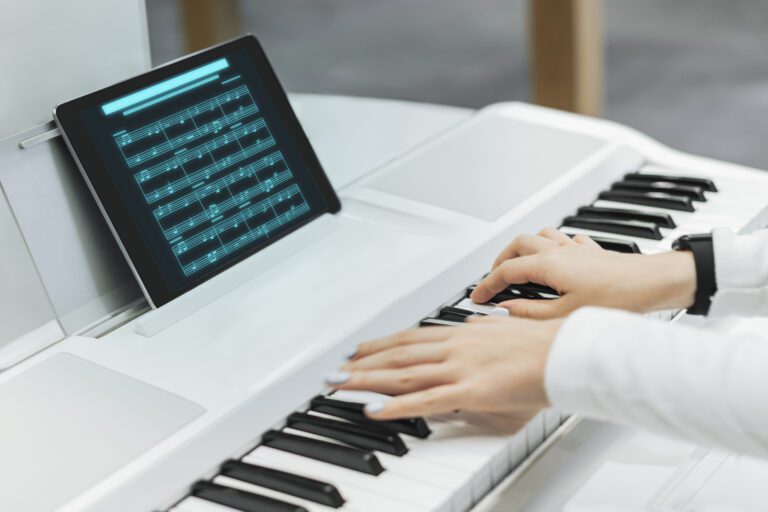
One of the most common problems with YouTube-based piano learning is the illusion of progress. Many tutorials focus on teaching specific songs rather than foundational skills.
This creates situations where learners:
Memorize patterns without understanding music
Struggle to play outside familiar songs
Cannot read sheet music confidently
Feel stuck after initial excitement fades
Playing a song does not necessarily mean learning piano. True learning means transferable skills that apply across styles, keys, and musical situations.
Lack of Structured Progression
A major reason YouTube is not enough to learn piano effectively is the lack of structured progression. Piano skills must be built in a specific order.
YouTube tutorials are often:
Randomly organized
Designed for views, not learning paths
Focused on quick results
Missing foundational explanations
Without a clear roadmap, learners often jump between topics, skip essential basics, or attempt advanced material too early. This leads to frustration and uneven development.
No Feedback Means No Correction
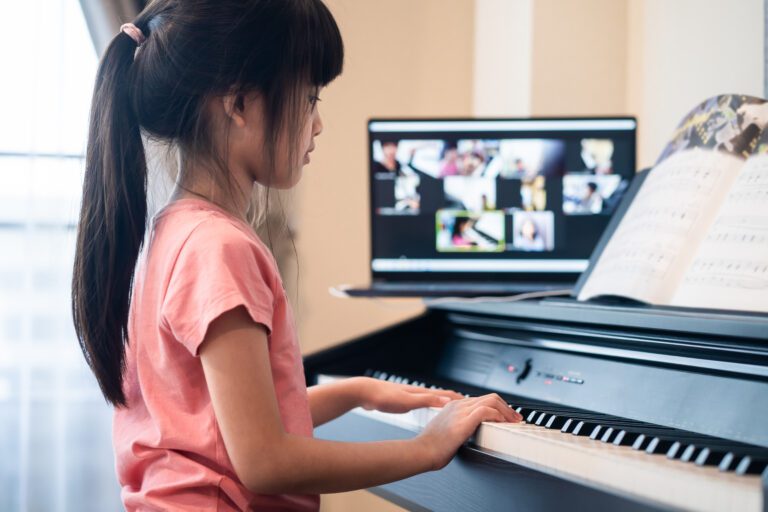
Feedback is essential in music learning. Even small mistakes in finger positioning, wrist movement, or timing can limit progress if left uncorrected.
When learning piano on YouTube:
Mistakes go unnoticed
Tension becomes habitual
Rhythm issues persist
Musical expression is overlooked
A learner may practice consistently yet improve very little because errors are never addressed. This is one of the main reasons self-taught pianists often hit a plateau.
Posture and Technique Are Easily Mislearned
Piano technique is subtle. Proper posture, hand shape, and arm movement protect against strain and enable fluid playing.
YouTube tutorials cannot:
Adjust camera angles for individual learners
Detect tension or stiffness
Over time, poor technique can slow progress, cause discomfort, and even lead to injury. These issues are far easier to prevent than to fix later.
Music Theory Is Often Skipped or Oversimplified
Another limitation of YouTube piano learning is the lack of structured music theory education. Many tutorials avoid theory to keep content simple and entertaining.
This leads to learners who:
Depend on visual patterns
Avoid reading music
Cannot transpose or improvise
Theory is not optional—it is what turns memorization into musicianship. Without it, progress remains limited.
Motivation Without Direction Can Fade Quickly
YouTube provides motivation, but motivation alone does not sustain long-term learning. Without guidance, learners often feel lost after the beginner phase.
Common emotional challenges include:
Feeling overwhelmed by choices
Losing confidence after mistakes
Not knowing what to practice next
Comparing progress to others online
Structured learning provides clarity and purpose, which YouTube alone cannot offer.
When YouTube Can Be Useful in Piano Learning
Despite its limitations, YouTube does have a place in a well-rounded piano education when used intentionally.
YouTube works best as:
A supplementary resource
A tool for inspiration
A reference library
A way to explore styles and repertoire
When combined with proper instruction, it enhances learning rather than replacing it.
What Most Successful Piano Learners Actually Use
Learners who make steady progress typically follow a balanced approach that includes:
Structured lessons
Progressive curriculum
Regular feedback
Guided practice goals
Occasional external resources like YouTube
This combination ensures both skill development and creative exploration.
The Role of Guided Learning in Piano Progress
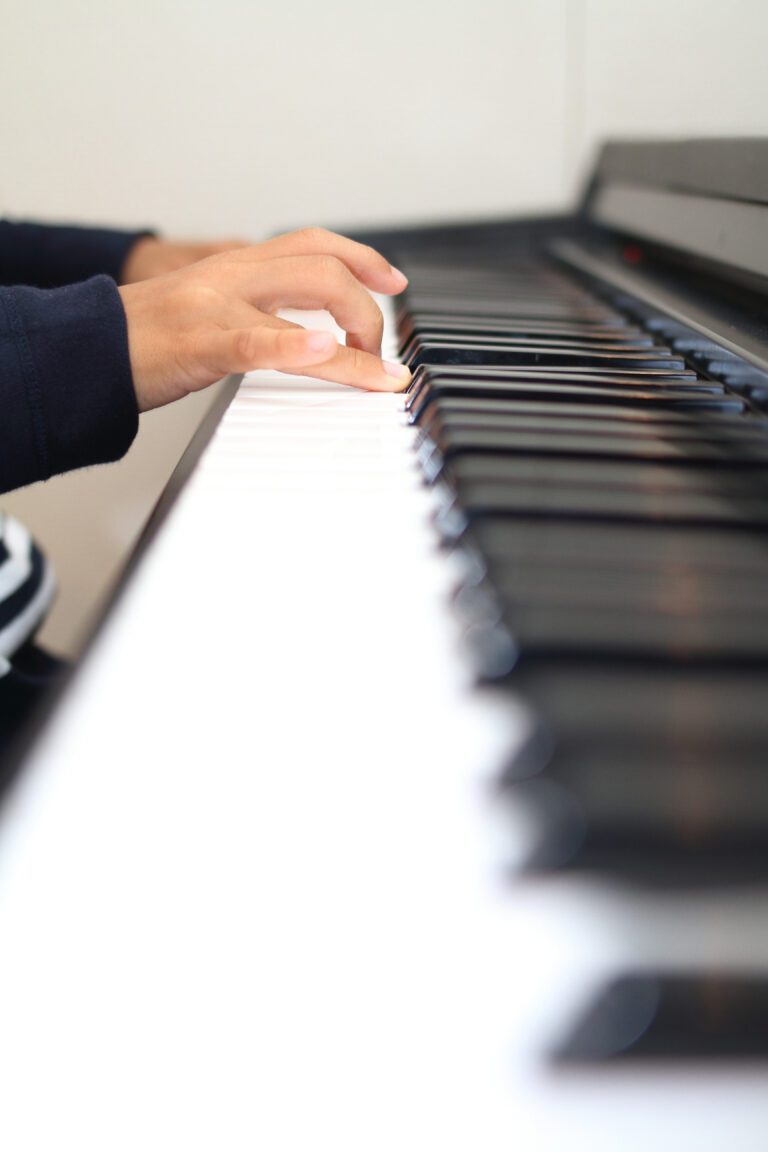
Guided instruction provides:
Personalized pacing
Immediate correction
Clear learning goals
Strong technical foundations
Long-term musical confidence
It helps learners understand not just what to play, but why they are playing it.
Online Learning Done the Right Way
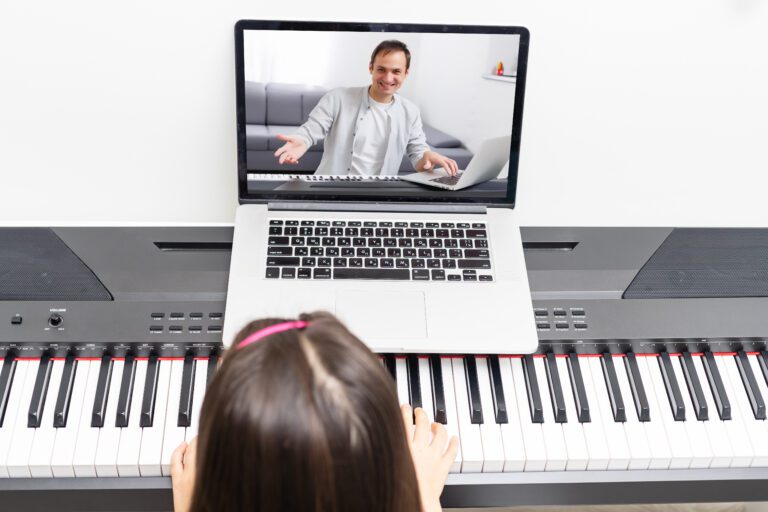
Modern learning does not mean choosing between technology and teaching. The most effective piano education blends both.
Well-designed online lessons offer:
Structured progression
One-to-one feedback
Flexible scheduling
Clear practice plans
Accountability and motivation
This approach retains convenience while preserving quality.
Conclusion: Is YouTube Enough to Learn Piano?
YouTube is a valuable resource, but it is not enough on its own to truly learn piano. It can inspire, demonstrate, and support learning, but it cannot replace structure, feedback, and personalized guidance.
For beginners who want real progress—not just temporary results—combining inspiration with proper instruction is essential. Piano learning is a journey that rewards clarity, patience, and direction.
If you are serious about developing strong fundamentals, musical understanding, and long-term confidence, Piano Lessons Online at The Mystic Keys provide structured learning that goes far beyond what random videos can offer.
Intersted in learning music with us? Register now
For more information and exciting resources about learning music, visit our website at The Mystic Keys. For more music content and exciting offers follow us on
Facebook, Instagram, YouTube, LinkedIn, Twitter, Pinterest, and Threads.