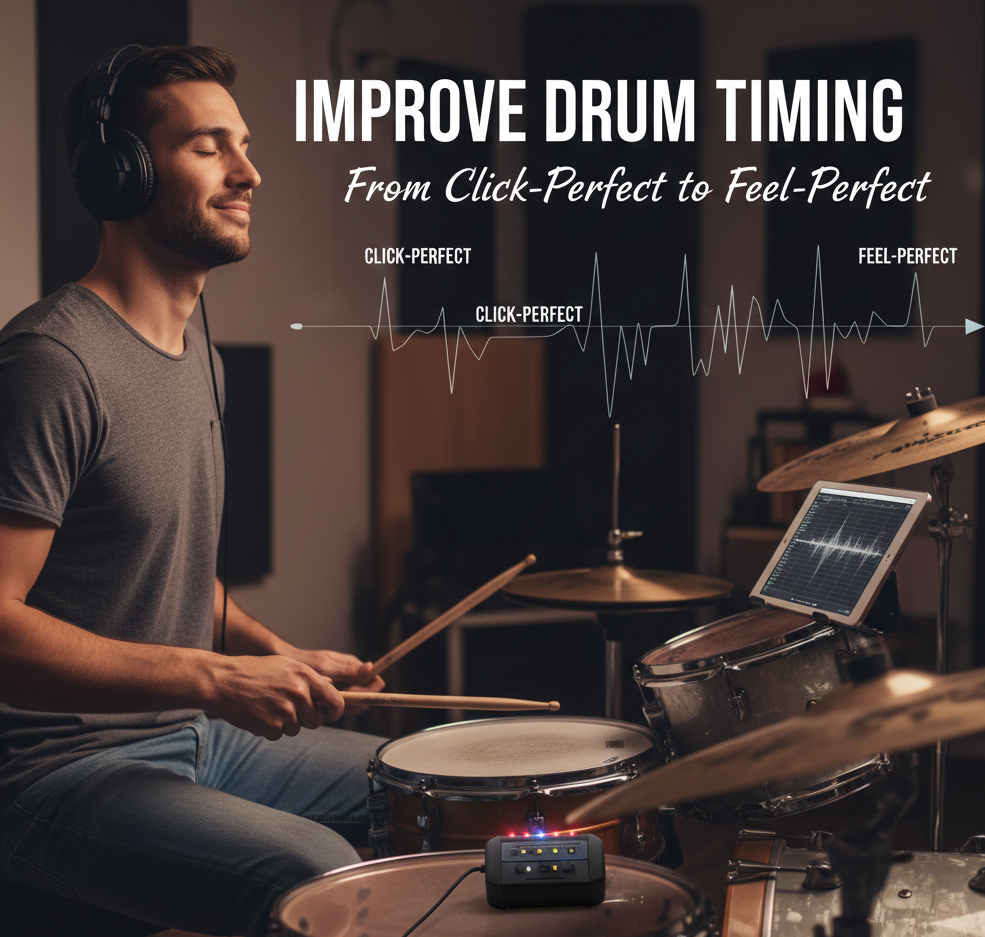
Improve Drum Timing | From Click-Perfect to Feel-Perfect
Timing and groove are the invisible forces that separate a technically good drummer from a truly great one. You can play blazing fast fills, complex polyrhythms, and impressive chops—but if your time wobbles or your groove doesn’t feel right, the music won’t breathe. Learning how to improve drum timing is what turns impressive playing into dependable playing. Groove is what makes people nod their heads without thinking, while timing is what makes a band trust you enough to relax and lean into the music.
The good news is that timing and groove are not mysterious talents you’re either born with or not. They’re skills—deeply human ones—that can be trained, refined, and internalized over time. Improving them isn’t about playing more notes or practicing harder; it’s about listening better, feeling deeper, and learning to sit comfortably inside the music.
Let’s break down how to do that.
Understanding the Difference Between Timing and Groove
Before trying to improve either, it helps to understand how timing and groove relate to each other—and how they differ.
Timing is accuracy. It’s your ability to place notes consistently in time, whether that’s locked perfectly to a click or floating intentionally around it. Groove, on the other hand, is feel. It’s how those notes sit within the time. Two drummers can play the same beat at the same tempo, yet one feels stiff while the other feels alive.
Think of timing as the skeleton and groove as the body language. One without the other feels incomplete. When you focus on improving timing, you create reliability. When you focus on groove, you create emotion. The magic happens when both coexist naturally.
Improve Drum Timing by Strengthening Your Internal Pulse
At the heart of great timing is a strong internal pulse. This is the sense of time you carry even when no external reference—like a metronome—is present.
One of the most effective ways to develop this internal clock is by simplifying your playing. When you strip a groove down to its essentials, you give your mind space to focus on consistency. Playing a basic kick-snare-hi-hat pattern for several minutes without variation can be surprisingly revealing. You’ll start to notice where you rush, where you drag, and where your focus drifts.
Another powerful approach is to count out loud while you play. Vocalizing subdivisions—especially during slow tempos—forces your brain to actively engage with time rather than letting your hands run on autopilot. Over time, this practice builds a strong mental grid that stays with you even when you stop counting.
As your internal clock strengthens, you’ll feel less dependent on external cues and more confident anchoring the band from within.
Improve Drum Timing by Changing How You Use the Metronome
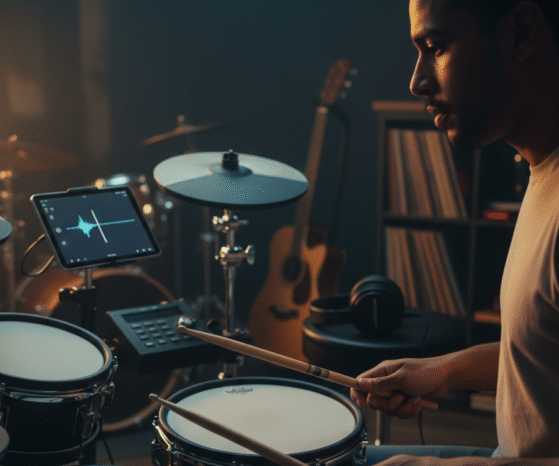
The metronome is often misunderstood. Many drummers treat it like a judge—something that exposes mistakes rather than helps solve them. In reality, the metronome is a conversation partner.
Instead of trying to “chase” the click, aim to relax into it. Start by placing the click on every quarter note and focus on making your strokes feel effortless and even. Pay attention to how your body reacts—tension is often the real enemy of good time.
Once that feels comfortable, experiment with removing information. Set the metronome to click only on beats two and four, or even just once per bar. This forces you to hold time internally while still checking your accuracy periodically. If you drift, don’t get frustrated—notice how you drift. Awareness is progress.
Over time, the metronome stops feeling like a rigid ruler and starts feeling like a reference point you can lean into or away from with intention.
Improve Drum Timing Through Subdivision Awareness and Feel
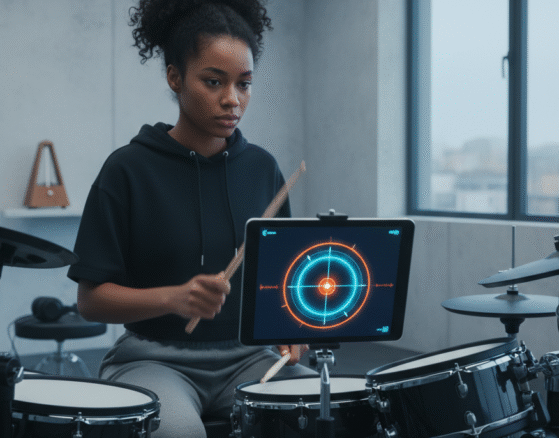
Groove lives in the space between the beats. That space is shaped by subdivisions—eighth notes, sixteenths, triplets—and how comfortably you feel them.
A drummer with strong groove doesn’t just know where the beat is; they know exactly where every subdivision sits in relation to it. This is why practicing subdivisions slowly is so important. Playing sixteenth notes at a slow tempo can feel awkward, but that discomfort is where growth happens.
Try focusing on one subdivision at a time. Let your hi-hat or ride carry a steady subdivision while your kick and snare interact with it. Over time, your body learns to feel these rhythmic layers simultaneously, which adds depth and pocket to even the simplest beats.
As your subdivision awareness improves, your playing naturally becomes more grounded and intentional—key ingredients of great groove.
Relaxation | The Hidden Key to Better Time
Tension is the silent killer of timing and groove. When your body is tight, your time becomes rigid. When your mind is anxious, your groove disappears.
Great drummers look relaxed because they are relaxed. Their movements are efficient, their grip is loose, and their breathing is steady. This physical ease allows micro-adjustments to happen naturally, keeping the groove alive.
Pay attention to your shoulders, wrists, and jaw while you play. If you notice unnecessary tension, slow down. Groove doesn’t come from force; it comes from flow. Sometimes the biggest improvement in your timing comes not from practicing more, but from learning to let go.
Playing With Music, Not Just Exercises
Practicing alone is essential, but groove truly develops when you play with music—and especially with other musicians.
When you play along to records, you’re absorbing feel in real time. You’re learning how drummers sit behind or ahead of the beat, how they respond to vocals, and how they shape time dynamically across a song. Choose music with strong pocket and resist the urge to overplay. Try to blend with the recording rather than stand out.
Playing with other musicians takes this a step further. Groove becomes a shared responsibility. You learn to listen, react, and adjust. Sometimes your job is to push the energy forward; other times it’s to lay back and let the music breathe. These subtle choices can’t be learned in isolation—they’re felt in context.
Recording Yourself and Listening Honestly
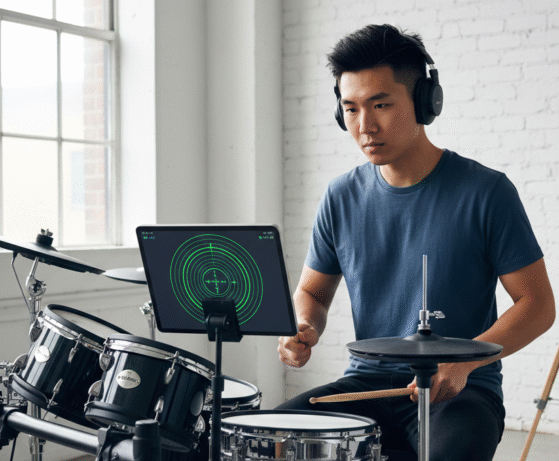
One of the most uncomfortable yet effective tools for improving timing and groove is recording yourself.
What feels good while playing doesn’t always sound good from the outside. Listening back reveals patterns you might not notice in the moment—slight rushing during fills, inconsistent hi-hat placement, or a snare that doesn’t quite sit right.
Approach these recordings with curiosity rather than judgment. You’re not looking for perfection; you’re looking for tendencies. Once you identify them, you can address them intentionally in your practice.
Over time, this feedback loop sharpens your awareness and accelerates your growth dramatically.
Letting Groove Become a Feeling, Not a Concept
At some point, timing and groove stop being things you actively think about and start becoming things you feel. This shift happens gradually, through repetition, listening, and experience.
The goal isn’t mechanical perfection. It’s trust—trust in your internal clock, trust in your body, and trust in the music. When that trust is there, your playing relaxes, your time settles, and your groove becomes undeniable.
Great groove doesn’t shout. It pulls people in.

Final Thoughts
Improving your timing and groove on the drums is a long-term journey, not a quick fix. It asks for patience, honesty, and a willingness to slow down. But the rewards are immense. As your time becomes steadier and your groove deeper, everything you play—no matter how simple—starts to feel better.
At The Mystic Keys, our Drums Lessons Online are designed around this exact philosophy. Instead of rushing through patterns or focusing only on speed, the emphasis is on building solid time, deep groove, and musical awareness that actually translates into real playing situations.
And in the end, that’s what drumming is really about: making the music feel good.
For more information and exciting resources about learning music, visit our website at The Mystic Keys. For more music content and exciting offers follow us on
Facebook, Instagram, YouTube, LinkedIn, Twitter, Pinterest, and Threads.