How to Learn Hindustani Classical Music: A Beginner’s Roadmap
Learning Hindustani Classical Music is a transformative journey that strengthens your voice, sharpens your musical understanding, and connects you to one of the oldest and most expressive musical traditions in the world. If you’re wondering how to learn Hindustani Classical Music, the challenge often begins with understanding where to start, what to practise, and how to progress. This complete roadmap will guide you step-by-step — from foundational notes to advanced improvisation — with everything you need to know before starting your classical music training.
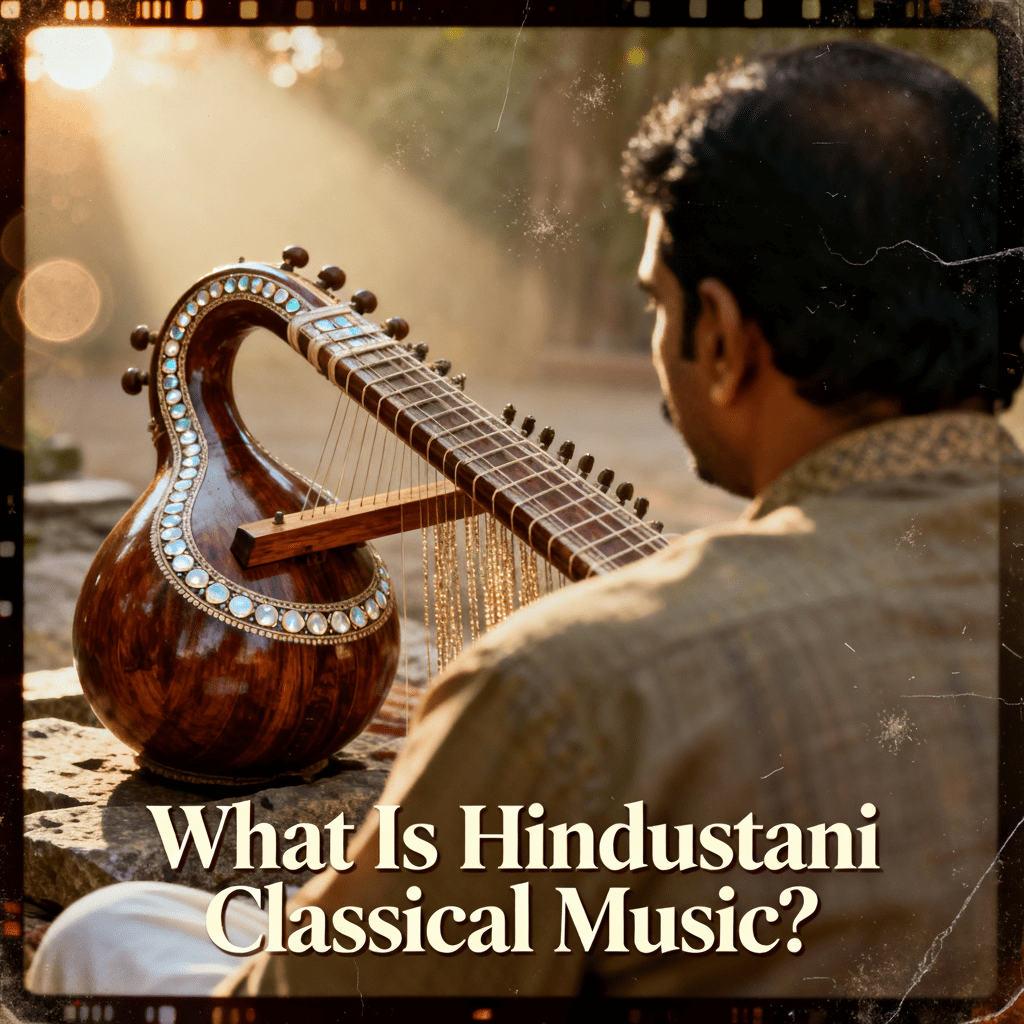
What Is Hindustani Classical Music?
Hindustani Classical Music is the traditional classical music system of North India, rooted in ancient Vedic chants, folk traditions, and Persian influences, evolving over more than 2,000 years into a refined art form that balances strict musical rules with deep personal creativity. It is built on two pillars: Raga, the melodic framework that defines mood, emotion, scale, allowed notes, characteristic phrases (pakad), time theory, and movement (chalan), and Tala, the rhythmic cycle that organizes beats into patterns of claps (tali), waves (khali), and repeating cycles such as Teentaal (16 beats), Keharwa (8 beats), Dadra (6 beats), and Rupak (7 beats). Unlike Western classical music, Hindustani music encourages improvisation, where the artist expresses the raga through alaap (slow emotional unfolding), sargam patterns, bol-alaaps, fast taans, and rhythmic creativity called layakari, making every performance unique. This music system is also deeply linked with spirituality, nature, and emotion—many ragas reflect times of day (like morning Bhairav or evening Yaman), seasons, or states of mind such as devotion, peace, romance, or meditation. Over centuries, different gharanas (schools of music) such as Gwalior, Kirana, Jaipur, Patiala, Agra, and Mewati developed their own techniques and styles, influencing voice production, taan patterns, and improvisation methods. Hindustani Classical Music is respected worldwide because of its scientific structure, emotional depth, spiritual connection, and the legendary artists who shaped it, including Bhimsen Joshi,Kishori Amonkar,Pandit Jasraj,Kaushiki Chakraborty,Rashid Khan,Zakir Hussain, and Hariprasad Chaurasia.
Why Learn Hindustani Classical Music?
Learning Hindustani Classical Music offers lifelong benefits for singers, musicians, and even those who simply want to strengthen their voice and musical understanding, because it develops perfect pitch, improves breath control, refines vocal tone, and builds a deep awareness of swaras and rhythm while also enhancing creativity through improvisation. Unlike many modern genres, Hindustani classical training builds the voice from the foundation—starting with correct pitch (Sa), steady tone, clear pronunciation, and proper breathing—giving learners the ability to sing devotional songs, Bollywood songs, ghazals, bhajans, worship songs, and semi-classical compositions with ease and confidence. It also sharpens listening skills, increases musical memory, and strengthens the connection between the mind and the voice, which helps in every style of singing. Beyond the technical benefits, classical music is known for its calming and meditative effect; practising ragas daily reduces stress, improves focus, and brings emotional stability, as each raga carries a specific mood such as peace, devotion, love, or energy. Hindustani Classical Music also helps learners understand the science behind music—how notes interact, how ragas create emotion, and how rhythm structures compositions—making them stronger performers and more knowledgeable musicians. For children, it boosts concentration and discipline, while for adults it becomes a powerful tool for self-expression and inner balance. Because classical training makes your voice flexible, strong, and stable, all professional singers—from Lata Mangeshkar and Shreya Ghoshal to Arijit Singh—have relied on this foundation to achieve mastery. In short, learning Hindustani Classical Music not only makes you a better singer but also improves your emotional well-being, creativity, confidence, and musical intelligence, making it one of the most rewarding journeys for any aspiring performer or music lover.
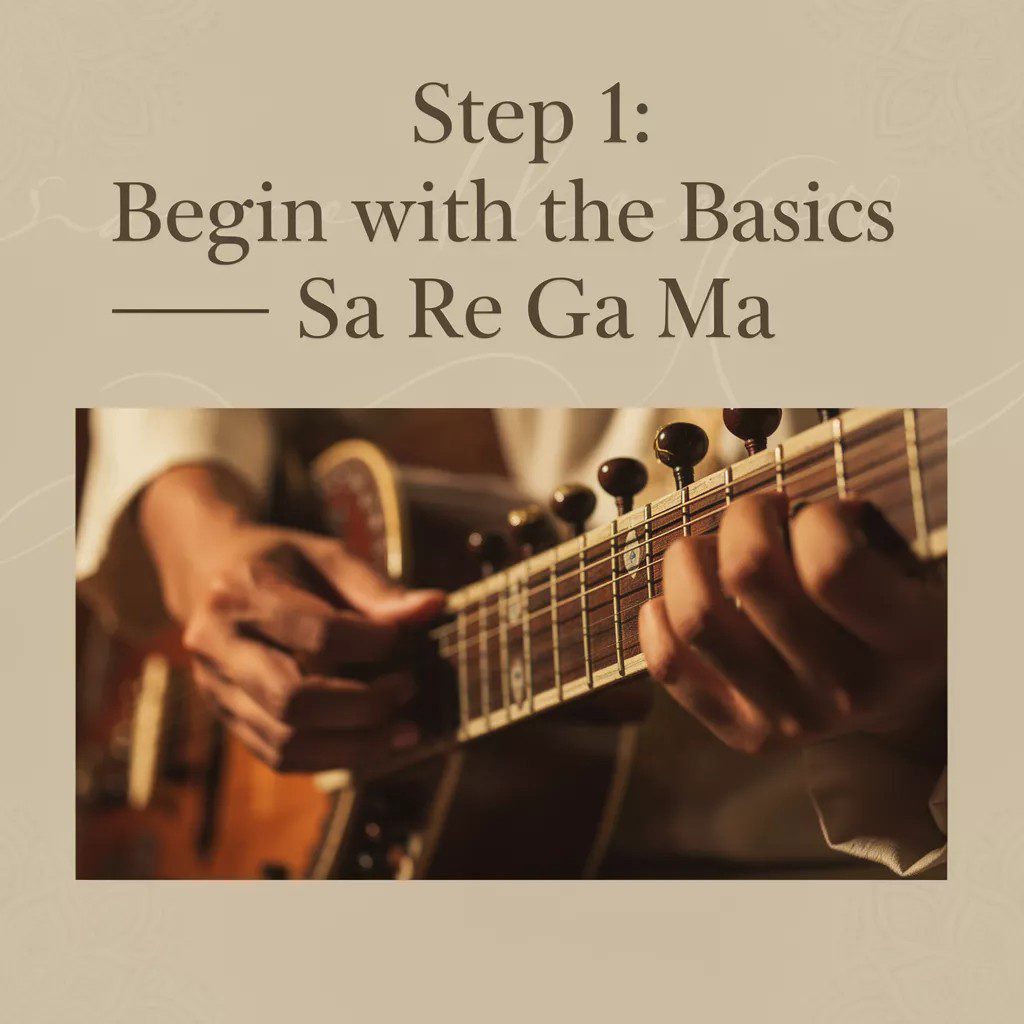
Step 1: Begin with the Basics — “Sa Re Ga Ma”
Every beginner starts by learning the Sargam, which includes 7 basic notes:
Sa
Re
Ga
Ma
Pa
Dha
Ni
Sa (Higher octave)
What you must learn at this stage:
Correct pitch (find your “Sa”)
Holding notes steady without shaking
Singing with a tanpura or tanpura app
Hearing the difference between each note
This foundational stage usually takes a few days to a couple of weeks, depending on your ear training.
Step 2: Practise Alankars (Patterns for Voice Training)
Once you know the notes, the next step is Alankars — musical patterns that train the voice.
Why Alankars are important:
Improve voice flexibility
Strengthen breath control
Build speed and clarity
Enhance pitch accuracy
Prepare you for raga improvisation
Alankars basically act like “workouts” for your voice. Practising them consistently for 10–15 minutes daily builds a strong foundation.
Step 3: Understand the Concept of “Raga”
A Raga is the heart of Hindustani Classical Music.
It is not just a scale but a combination of:
Rules
Allowed notes
Emotional expression
Time of performance
Characteristic phrases (Pakad)
Best ragas for beginners:
Yaman – Calm, evening raga
Bhoopali / Bhupali – Simple pentatonic raga
Khamaj – Light classical feel
Durga – Devotional and peaceful tone
These ragas are the foundation for almost all beginner-level training.
Step 4: Learn Basic Talas (Rhythmic Cycles)
Tala is the rhythm backbone of Indian music.
Important beginner talas:
Teentaal – 16 beats
Keharwa – 8 beats
Dadra – 6 beats
Understanding tala helps you:
Stay in rhythm
Sing compositions correctly
Perform confidently
Keep time during bandish or bhajan singing
Clapping (tali) and waving (khali) exercises are the first step.
Step 5: Learn Your First Bandish
A bandish is the first structured composition beginners learn. It teaches:
Raga expression
Tala alignment
Improvisation
Dynamics and mood
Proper singing technique
Common beginner bandishes:
“Eri Ali Piya” in Yaman
“Dhira Dhira” in Bhoopali
This is where classical music starts becoming more artistic and expressive.
Step 6: Develop Voice Culture & Techniques
Voice culture refers to training your voice to sound smooth, powerful, controlled, and expressive.
Important techniques:
Akar Practice – Singing “aaa” to strengthen tone
Breath control – Essential for long alaaps or taans
Meend – Smooth glides between notes
Murki – Fast, delicate ornamentation
Gamak – Strong oscillation for heavy emotional impact
Voice projection – Singing with clarity and openness
These techniques make classical singing stand out from regular singing.
Step 7: Explore Improvisation
Improvisation is what makes Hindustani Classical Music unique.
Types of improvisation you will learn:
Alaap (slow, free-flow expression)
Sargam (improvising with notes)
Taans (fast passages)
Bol Alaap (improvising using the words of the bandish)
Bol Taans (fast improvisation using lyrics)
With improvisation, you begin to sound like a real classical performer, not just a learner.
Step 8: Learn Under a Qualified Guru
Even though online videos help, classical music requires corrections, personalised feedback, and guidance.
A good teacher will:
Set your correct pitch
Guide you on which ragas to learn first
Improve your technique
Help you avoid wrong habits
Build your confidence
Mystic Keys, for example, offers structured classical vocal training for students of all levels.
How Long Does It Take to Learn Hindustani Classical Music?
Learning time varies based on practice and consistency.
Approximate timeline:
1–3 months: Basic notes + alankars
6 months: Beginner ragas + simple bandishes
1 year: Good strength, improved pitch, confidence
3–5 years: Strong classical foundation + improvisation skills
Learning Hindustani Classical Music is a beautiful combination of discipline, creativity, and deep emotional expression. With the right roadmap, proper guidance, and consistent practice, anyone can learn and master this art. Whether you want to perform professionally, sing for worship, or simply improve your voice, starting with clear steps will help you build a strong foundation.
For more information and exciting resources about learning music, visit our website at The Mystic Keys. For more music content and exciting offers follow us on