How Long Does It Take to Play Violin Confidently?
Many beginners start their musical journey with the same question: how long does it take to play violin confidently? The violin is known for its expressive beauty, but it is also one of the most challenging instruments to master. Unlike instruments with fixed notes, the violin requires precise finger placement, strong listening skills, and consistent practice to develop a confident sound.
The timeline for learning violin depends on several factors such as practice habits, guidance, motivation, and learning methods. While some students may feel comfortable within a year, others may take longer to build strong technical and musical foundations. The key is understanding that confidence on the violin is not just about playing the right notes, but about tone, posture, expression, and control.
This guide will help you understand realistic expectations, stages of learning, and practical steps to progress faster and more effectively.
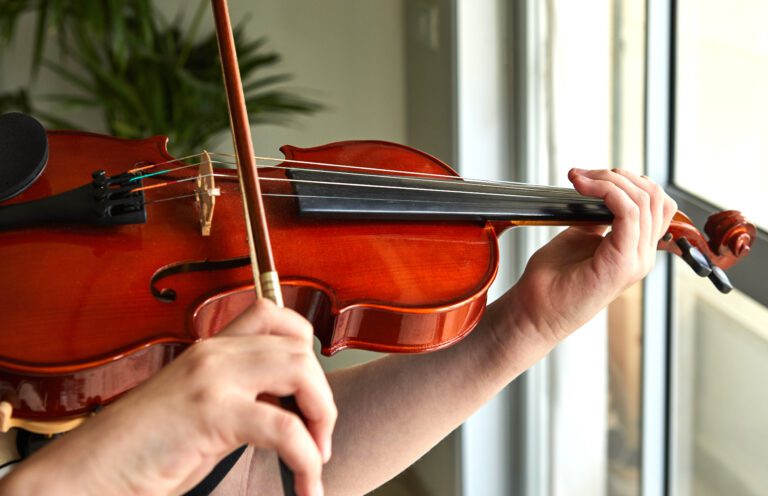
Understanding What “Playing Violin Confidently” Really Means
Before answering how long does it take to play violin confidently, it is important to define what confidence means in violin playing.
Confidence does not mean perfection. Instead, it includes:
• Playing with steady rhythm and good posture
• Producing a clear, consistent tone
• Reading basic sheet music comfortably
• Performing simple songs without fear
• Controlling bowing and finger placement
• Playing in front of others with ease
A confident violinist may still make mistakes, but they continue playing smoothly and musically.
Factors That Influence How Long It Takes to Play Violin Confidently
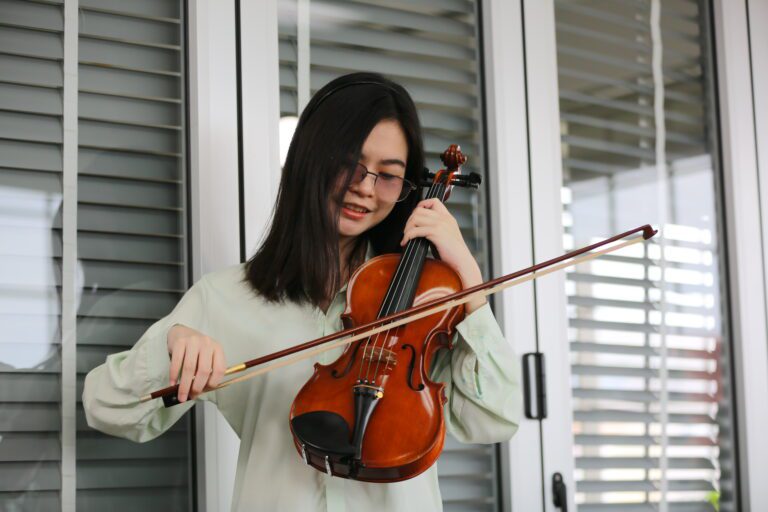
1. Practice Consistency
The biggest factor affecting how long it takes to play violin confidently is practice consistency. Students who practice regularly progress much faster than those who practice occasionally.
Daily practice helps:
• Strengthen muscle memory
• Improve pitch accuracy
• Build bow control
• Develop listening skills
• Increase finger speed and coordination
Even 20 to 30 minutes of focused daily practice is more effective than long, irregular sessions.
2. Quality of Guidance
Learning with structured guidance significantly shortens the learning curve. A teacher can correct posture, tone, and technique early, preventing bad habits.
Without guidance, beginners often:
• Hold the violin incorrectly
• Develop poor bow control
• Struggle with intonation
• Lose motivation
Guided learning creates a clear path and improves confidence faster.
3. Age and Learning Approach
Many people wonder if children learn faster than adults. The truth is both can succeed, but their approaches differ.
Children often:
• Develop natural muscle memory
• Learn by imitation
• Build strong foundations early
Adults often:
• Understand theory faster
• Practice with discipline
• Learn with structured goals
Both can achieve confidence with the right training.
4. Musical Background
Students who already play another instrument or have singing experience may learn violin faster. They already understand rhythm, pitch, and musical structure.
However, beginners without prior experience can still progress steadily with consistency and patience.
5. Motivation and Goals
Clear goals accelerate learning. Students who want to perform, join orchestras, or play for personal joy often stay more motivated.
Examples of goals:
• Performing at school or church
• Playing favorite songs
• Passing graded exams
• Joining ensembles
Motivation plays a major role in how long it takes to play violin confidently.
A Realistic Timeline: How Long Does It Take to Play Violin Confidently?
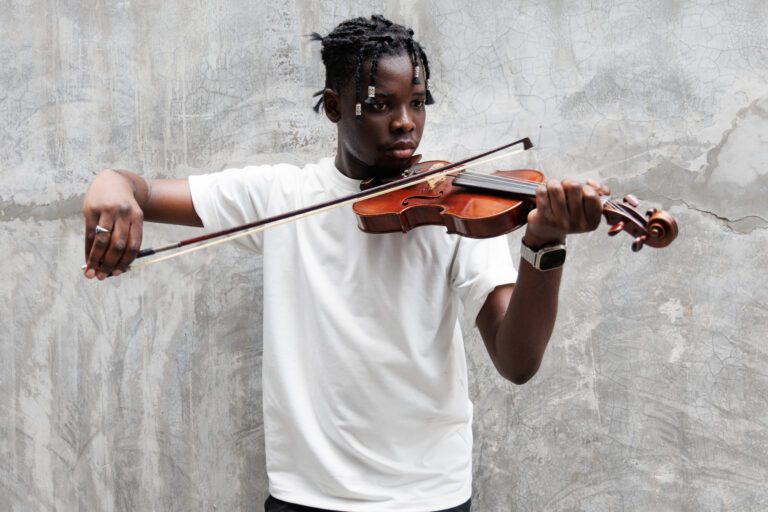
First 3 Months: Building the Foundation
During the first few months, students focus on:
• Proper posture and violin hold
• Bow grip and basic control
• Open string practice
• Simple rhythms
• Introduction to finger placement
At this stage, sound may be rough, but this is normal. Confidence begins by developing comfort with the instrument.
Key milestone:
Students can play simple melodies slowly with guidance.
3 to 6 Months: Early Musical Confidence
Students start:
• Playing beginner songs
• Learning basic scales
• Reading simple sheet music
• Improving tone
• Controlling bow pressure
By this stage, students begin feeling more comfortable and less hesitant.
Key milestone:
Playing simple songs with steady rhythm.
6 to 12 Months: Growing Control and Expression
This is when many beginners begin to feel confident. They develop:
• Better pitch accuracy
• Stronger finger control
• Smoother bowing
• Basic dynamics and expression
Students can perform short pieces for friends or family.
Key milestone:
Playing beginner to early intermediate pieces confidently.
1 to 2 Years: Strong Beginner to Intermediate Level
Students at this stage:
• Play more challenging pieces
• Improve tone quality
• Develop vibrato
• Learn shifting basics
• Perform in small concerts or recitals
This is often when students truly feel they can play violin confidently in many situations.
Key milestone:
Performing confidently in front of others.
2 to 4 Years: Advanced Confidence
Long-term learners:
• Play advanced repertoire
• Develop personal style
• Master tone production
• Perform in ensembles or orchestras
Confidence becomes natural and expressive.
How to Learn Violin Faster and Build Confidence

Set Clear Practice Goals
Instead of random practice, focus on:
• Tone
• Rhythm
• Technique
• Musical expression
Goal-based practice accelerates growth.
Use Structured Practice Routines
A balanced routine includes:
• Warm-ups
• Scales
• Technical exercises
• Repertoire
• Listening practice
This structured approach reduces frustration.
Record Your Playing
Recording helps you:
• Identify mistakes
• Track progress
• Build self-awareness
Listening to recordings builds confidence over time.
Perform Regularly
Even small performances:
• Reduce stage fear
• Build musical confidence
• Improve focus
• Strengthen memory
Perform for friends, family, or online.
Learn Music Theory Alongside Violin
Theory improves:
• Sight reading
• Understanding of music
• Memory
• Musical interpretation
Students who understand theory often progress faster.
Common Challenges That Slow Down Progress
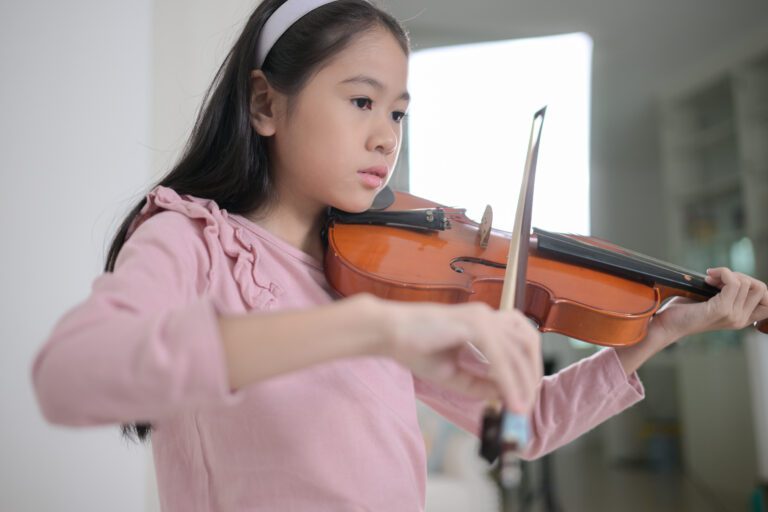
Understanding these challenges helps answer how long it takes to play violin confidently.
Poor Posture
Bad posture leads to:
• Pain
• Slow progress
• Weak tone
Correct posture from the beginning is essential.
Inconsistent Practice
Irregular practice causes:
• Slow improvement
• Frustration
• Loss of confidence
Consistency is more important than duration.
Unrealistic Expectations
Many beginners expect quick results. The violin requires patience.
Confidence grows gradually.
Comparing Yourself with Others
Every student learns at a different pace. Comparing progress reduces motivation.
Focus on personal growth.
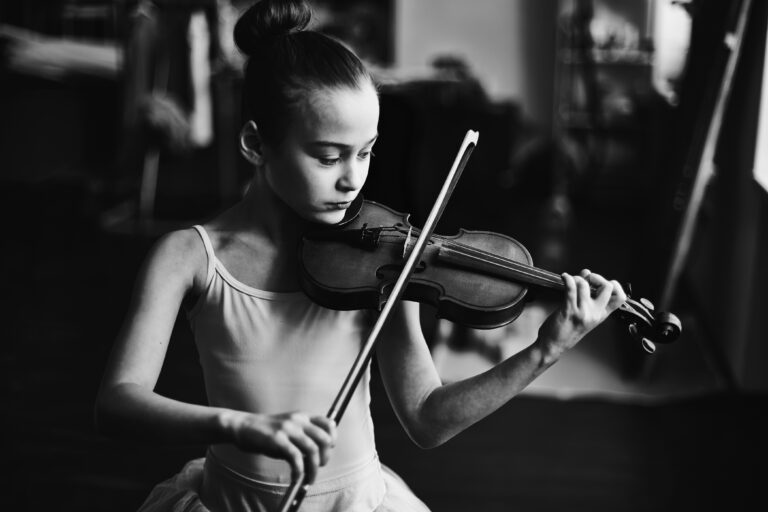
Benefits of Becoming a Confident Violin Player
Confidence in violin playing offers:
• Strong concentration
• Emotional expression
• Discipline
• Creativity
• Performance skills
• Mental resilience
It also improves listening and cognitive abilities.
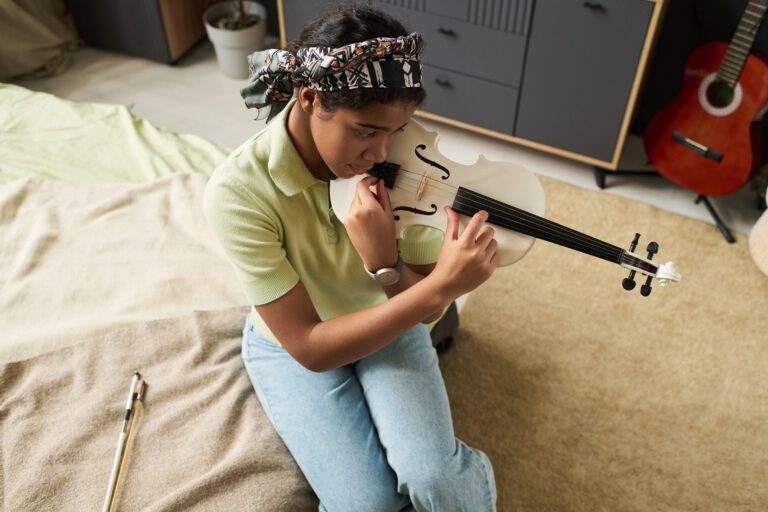
How Online Learning Is Changing Violin Education
Today, structured online programs provide:
• Flexible schedules
• Expert guidance
• Performance opportunities
• Global exposure
• Personalized feedback
This makes learning faster and more accessible.
Students can track progress and build confidence in a supportive environment.
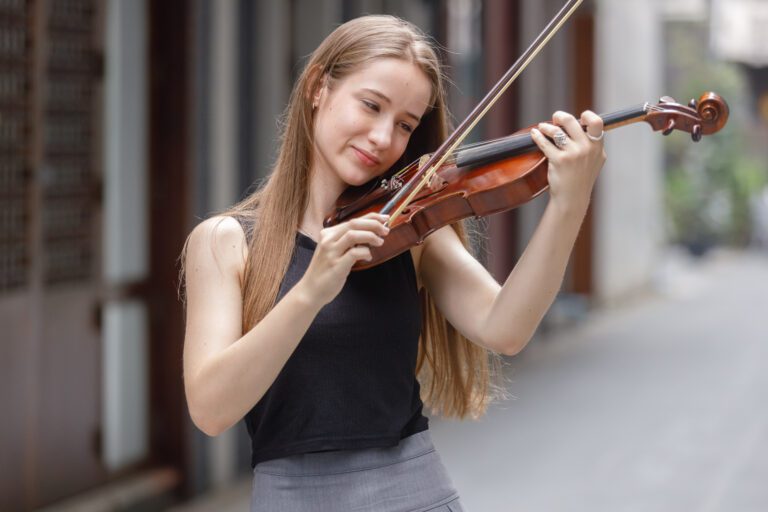
Signs You Are Becoming a Confident Violinist
You know you are progressing when:
• You enjoy practice
• You recover quickly from mistakes
• Your tone improves
• You perform without fear
• You play musically, not mechanically
Confidence is both technical and emotional.
Conclusion
So, how long does it take to play violin confidently? For most beginners, basic confidence develops within 6 to 12 months with consistent practice and structured learning. Strong confidence and expressive playing may take 2 to 4 years. The exact timeline depends on dedication, guidance, and mindset.
The most important thing is not speed but steady growth. With the right approach, anyone can become a confident violinist and enjoy the beauty of music throughout their life.
If you want a guided and structured path to build confidence faster, explore Violin Lessons Online and start your musical journey with expert mentorship and personalized learning
For more information and exciting resources about learning music, visit our website at The Mystic Keys. For more music content and exciting offers follow us on
Facebook, Instagram, YouTube, LinkedIn, Twitter, Pinterest, and Threads.