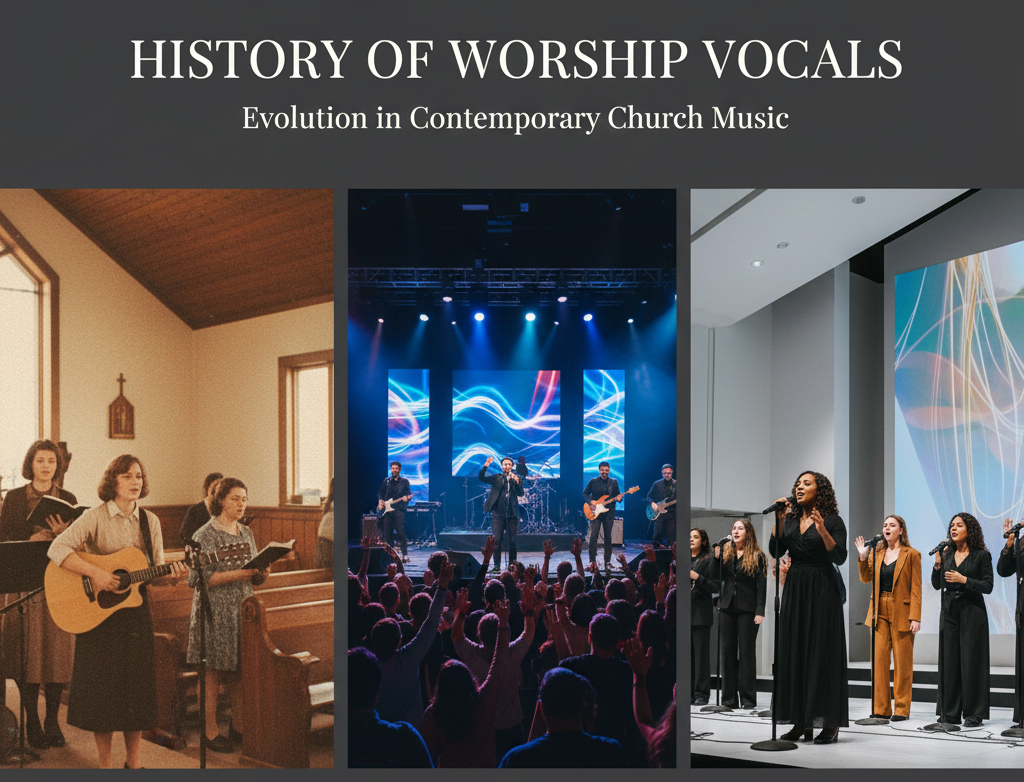
History of Worship Vocals in Contemporary Church Music
Modern worship vocals might sound like a relatively new phenomenon, but they are shaped by centuries of musical evolution, global influences, and shifting cultural expectations—roots that trace the History of Worship Vocals across ancient chants, gospel expressions, and modern pop-inspired praise. Today’s worship leaders—belting high notes, guiding congregations with emotional crescendos, echoing airy harmonies, or following the atmospheric flow of bands like Elevation Worship or Hillsong—are part of a long story that began long before contemporary Christian music ever hit a recording studio.
Below is a deep dive into how worship vocals developed, transformed, and grew into a signature sound that dominates churches across the world today.
Early History of Worship Vocals | Chant and Congregational Singing
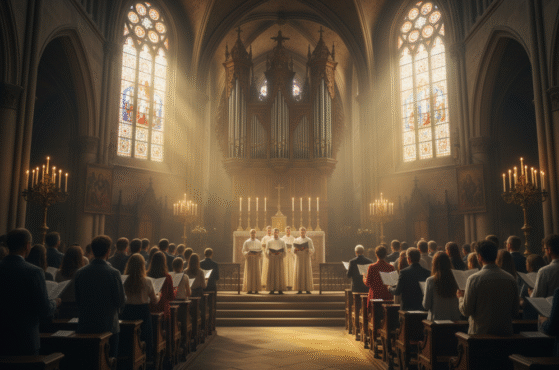
The earliest Christian worship relied mainly on the human voice. Without instruments or amplification, singing became the primary way to express prayer and devotion. Gregorian chant in the medieval era shaped this practice with calm, meditative lines sung in unison. The focus was on reverence rather than performance, with few vocal embellishments and clear, simple lyrics.
As Christianity spread, different regions cultivated unique vocal styles—Byzantine chant with its rich ornamentation, Ethiopian chant with its rhythmic drive, and the polyphony of European cathedrals where multiple vocal parts intertwined. The Renaissance brought choral complexity, and by the time the Protestant Reformation encouraged congregational singing, worship vocals had already begun shifting toward songs that were more accessible for everyday believers. This laid the foundation for the participatory singing churches know today.
Gospel Influence and the Rise of Emotion-Driven Singing
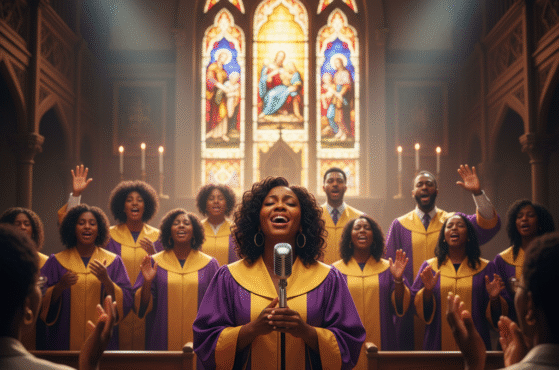
No movement shaped the History of Worship Vocals more dramatically than gospel music. Emerging from African American spirituals, early gospel introduced power, vibrato, call-and-response, and emotional intensity into Christian expression. Voices became instruments of passion and storytelling, and singers were encouraged to pour their hearts into each note.
The vocal techniques pioneered by legends like Mahalia Jackson—rich chest voice, soulful slides, bold declarations—became the DNA for countless worship leaders decades later. Even contemporary Christian singers such as CeCe Winans or Israel Houghton draw heavily from gospel phrasing and improvisation. The idea that worship vocals could be expressive, heartfelt, and stylistically vibrant owes everything to these deep gospel traditions.
The Birth of Contemporary Christian Music
By the late 20th century, the influence of popular music began shaping church worship. Acoustic guitars, soft rock rhythms, and conversational melodies entered sanctuaries during the “Jesus Music” era of the 1970s. Vocals became gentler, simpler, and more personal, mirroring styles heard on the radio.
Artists like Amy Grant and Michael W. Smith helped bring a pop sensibility to Christian music, where worship vocals leaned toward storytelling, warm tone, and singable choruses. Instead of choral formations, a single leader or a small vocal team guided congregations. This era laid the groundwork for the modern worship leader as both musician and spiritual guide.

The Hillsong Influence and the New Vocal Aesthetic
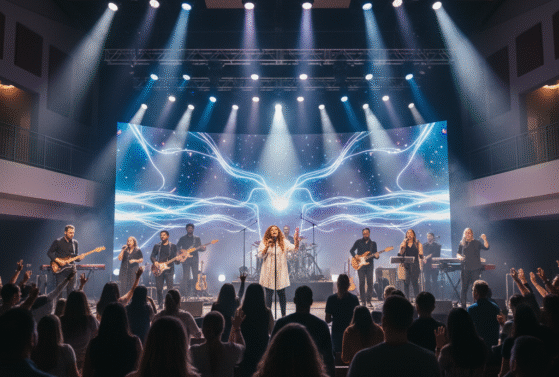
In the late 1990s and early 2000s, a new sound began shaping global worship culture. Hillsong Church introduced long, soaring melodies, gentle breathy tones, and atmospheric vocal layering. The focus shifted toward creating immersive spaces where singing felt intimate yet powerful. Worship leaders became known for airy high notes, emotional rises, and expressive phrasing that mirrored mainstream pop and indie artists.
This sound spread globally through songs like “Oceans (Where Feet May Fail)” and “Mighty to Save.” Rather than choir-driven fullness, the emphasis was on individual voices guiding the collective sentiment. Many modern singers today—whether in small churches or stadium gatherings—trace their vocal style to the Hillsong era.
History of Worship Vocals and the Global Influence of Pop
As worship music became more recorded and widely shared, pop culture began shaping vocal styles even more clearly. With this growing influence, churches started looking to well-known pop songs that highlighted minimalism, emotional vulnerability, and soaring vocal power. Because of that, the breathy tone in Billie Eilish’s “Ocean Eyes” soon inspired the soft, atmospheric sound heard in many modern worship ballads. In a similar way, the anthemic rise of Coldplay’s “Fix You” echoed through countless worship bridges, guiding vocals toward emotional release. Alongside these trends, the smooth phrasing in Ed Sheeran’s “Perfect” and the clean simplicity of Justin Bieber’s “Love Yourself” also shaped the way worship leaders built melodic flow.
Together, these influences made worship vocals feel more relatable to younger listeners who were already immersed in global pop culture. As a result, churches began embracing vocal dynamics that felt cinematic, spacious, and deeply expressive. This shift encouraged worship singers to move freely between softness and strength, often within the same song.
The Band Era | Worship as Collaborative Sound
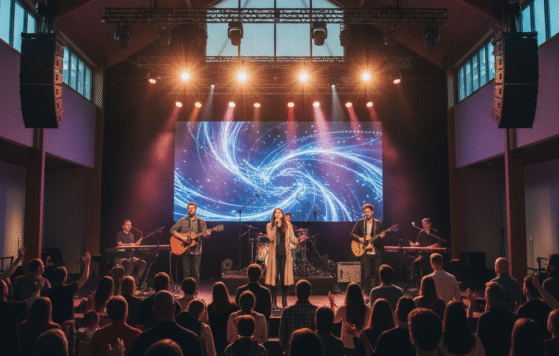
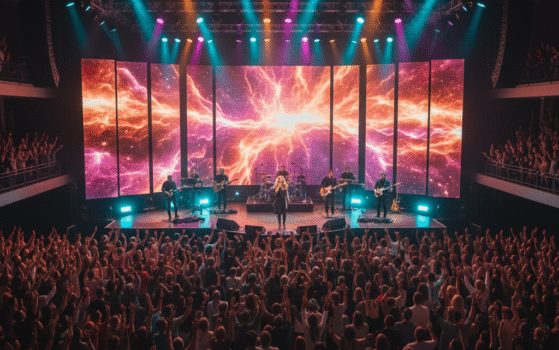
As full worship bands became standard, the history of worship vocals shows how vocal arrangements grew increasingly complex over time. Harmonies, background vocalists, and repeated refrains became central to the worship experience. Unlike earlier eras where a single cantor led the room, modern worship often relies on layered voices echoing, answering, and building emotional depth. The use of microphones, in-ear monitors, and high-quality sound systems further shaped how vocals were delivered.
This evolution allowed worship vocalists to adopt more delicate techniques—whispers, falsettos, intimate confessions—without losing audibility. On the other end of the spectrum, worship anthems could swell into powerful belts reminiscent of pop-rock performances. The goal was never performance for its own sake, but the sound undeniably carried contemporary musical influence, reflecting centuries of vocal development documented in the history of worship vocals.
Diversity of Vocal Styles in Today’s Church
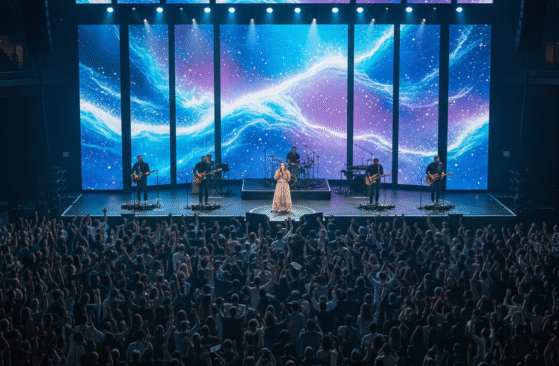
In the present day, worship vocals span an incredibly wide range. Gospel-inspired belting sits alongside minimalist indie voices. Soft pop phrasing blends with R&B riffs. Churches draw influences from songs as varied as Adele’s “Someone Like You,” Imagine Dragons’ “Believer,” or even the emotional arcs of Taylor Swift’s “You’re On Your Own, Kid.” Worship leaders experiment with raspy tones, airy falsetto, controlled vibrato, or soulful runs—each reflecting personal expression and cultural background.
This diversity speaks to a global church that embraces creativity. Worship vocals today are not confined to one sound; instead, they mirror the global music landscape while holding onto the spiritual depth at the heart of Christian singing.
Where Worship Vocals Are Heading
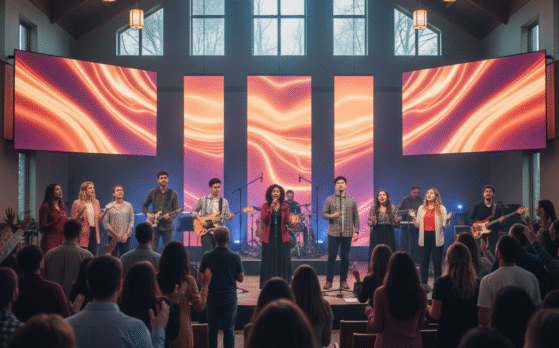
Modern worship vocals keep evolving as young artists draw from indie pop, alternative R&B, film music, and electronic styles. As a result, vocal textures are becoming more experimental—ranging from soft spoken-word phrases and cinematic layered harmonies to bold, gospel-inspired moments that lift the room.
At the same time, as newer generations enter the church, worship vocals continue to mirror their musical world while holding onto one central purpose: authentic connection. Whether gently whispered in prayer or powerfully declared in praise, the voice remains the most intimate instrument of worship.
The Mystic Keys plays a meaningful role in shaping this new wave of worship expression. Through a modern, artist-friendly approach, it helps learners understand both the heart and the technique behind contemporary worship singing.
Along with this, Worship Piano & Singing Lessons Online make it possible for aspiring worship leaders to grow from anywhere. These lessons give students a structured yet creative space to learn how to blend musical skill with spiritual sensitivity—an essential part of today’s worship sound.
For more information and exciting resources about learning music, visit our website at The Mystic Keys. For more music content and exciting offers follow us on
Facebook, Instagram, YouTube, LinkedIn, Twitter, Pinterest, and Threads.