Guitar Scales | 10 Essential Patterns Every Player Must Know
Whether you’re just starting your musical journey or already jamming confidently on stage, knowing guitar scales is one of the most powerful ways to develop technique, build solos, improvise smoothly, and understand music theory in action. Scales create the musical vocabulary of a guitarist — shaping melodies, riffs, fills, and expressive solos across every genre.
Many players begin with memorizing patterns, but the magic truly happens when scales become instinctive. The more familiar they feel under your fingers, the easier it becomes to blend notes effortlessly and express emotion through sound. Let’s take a closer look at the top 10 essential guitar scales every player should know and why mastering them will completely transform your playing.
Major Guitar Scales
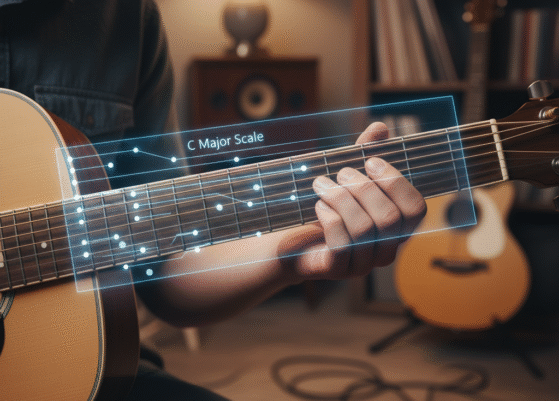
The Major Scale is the foundation of Western music. Almost everything — harmony, intervals, and chord structure — traces back to it. Understanding this scale gives you clarity on how melodies work and how chords relate to each other. Once this scale feels comfortable, navigating other scales becomes easier because they are often derived from it. Playing the Major Scale in multiple positions on the fretboard trains the ear and hand coordination, making improvisation feel natural and musical rather than mechanical.
The Natural Minor Scale
If the Major Scale sounds bright and happy, the Natural Minor Scale adds depth, emotion, and a slightly darker tone. Countless pop and rock songs rely on this sound because it resonates emotionally. As you practice this scale, it opens the door to minor-key improvisation and helps you shape melodies that feel dramatic, introspective, and expressive.
The Major Pentatonic Scale
The Major Pentatonic Scale simplifies the Major Scale by removing two notes, leaving a pattern that sounds clean and universally musical. Its structure avoids tense intervals, which is why it works beautifully for blues-rock leads, folk music, and country playing. Many iconic guitar solos were built entirely from this scale because of its smoothness and melodic flexibility.
The Minor Pentatonic Scale
If there’s one scale every guitarist learns early, it’s the Minor Pentatonic. It is the heartbeat of blues, rock, and metal solos. This scale feels natural under the fingers, especially in box patterns, which makes it a favorite for improvisation. As your confidence grows, bending notes within this scale adds personality and grit to your sound.
The Blues Guitar Scales
When you take the Minor Pentatonic and add just one extra note — known as theblue note — the entire mood shifts. Suddenly, a solo becomes raw, emotional, and soulful. The Blues Scale captures imperfection in the most beautiful way, which is why players like B.B. King and Stevie Ray Vaughan used it to turn simple phrases into unforgettable musical statements.
The Harmonic Minor Scale
This scale introduces a mysterious, exotic, and almost classical character.The raised seventh note inside the pattern creates a dramatic pull toward the root, making it perfect for metal, classical guitar, and fast, expressive runs. The Harmonic Minor Scale challenges players to think beyond typical rock phrasing and step into more sophisticated melodic territory.
Melodic Minor Guitar Scales
Compared to the Harmonic Minor Scale, the Melodic Minor feels smoother and slightly jazzy. It combines classical beauty with modern flexibility. Many advanced players love this scale because it bridges different musical styles.When exploring this scale across the fretboard, new harmonic colors and solo shapes begin to emerge, especially in jazz, fusion, and progressive rock.
The Dorian Mode
Instead of thinking of it as just another scale, the Dorian Mode feels like a variation of the minor sound — but fresher and more balanced. It creates asoulful mood that fits perfectly in funk, jazz, and alternative rock.Playing Dorian encourages guitarists to explore phrasing rather than simply running through scale shapes, which builds musical maturity.
The Mixolydian Mode
The Mixolydian Mode is bright like the Major Scale, but with a relaxed and bluesy flavor. This is the scale behind countless classic rock and improvisational jam-band solos. It lets playersexpress both melodic structure and improvisational freedom,especially over dominant chords. Once you internalize the Mixolydian sound, chord progressions with tension and release start to make much more sense.
The Phrygian Mode
If you’re searching for a sound that feels exotic, intense, and dramatic, the Phrygian Mode is where your creativity will thrive. Its Spanish, Middle-Eastern-inspired character makes it a favorite among metal and flamenco guitarists.As you experiment with this scale, the emotional range immediately feels different — darker but full of character.
How The Guitar Scales Shape Your Musical Voice
Learning these scales is only the beginning. What truly matters is how you apply them. Playing slowly, experimenting with phrasing, bending, slides, vibrato, and connecting scale shapes across the fretboard all help transform theory into artistry. With consistent practice, scales become part of your musical identity rather than patterns you memorize — something platforms like Guitar Lessons Online or personalized programs such as The Mystic Keys can help reinforce in a structured way.
Mastery isn’t about speed — it’s about expression. These ten scales give you the tools to expressevery shade of emotion, from joyful to melancholic, fiery to reflective. The guitar becomes more than an instrument — it becomes a voice.
So tune your guitar, pick one scale at a time, and explore. Every note you play brings you one step closer to trulyunderstanding music at a deeper level — and eventually, to playing with confidence, freedom, and creativity.
For more information and exciting resources about learning music, visit our website at The Mystic Keys. For more music content and exciting offers follow us on