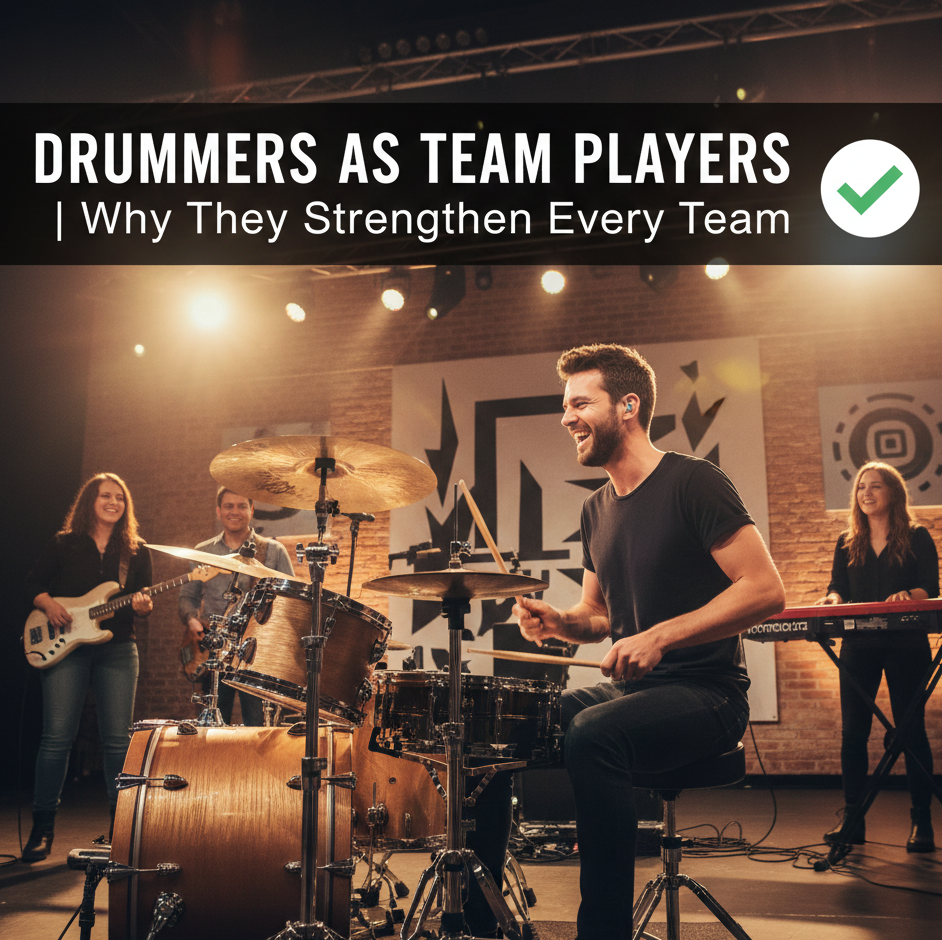
Drummers as Team Players | Why They Strengthen Every Team
When people think of leadership in music, they often imagine the vocalist commanding the stage or the guitarist stepping into the spotlight. Rarely does the phrase Drummers as Team Players: come to mind first. The drummer, seated behind cymbals and toms, is seldom the image associated with visible authority. Yet anyone who has spent time inside a rehearsal room knows a quiet truth: when the drummer is steady, the entire band feels steady. When the drummer listens, adjusts, and supports, everyone performs better.
In fact, the more closely you observe how a band truly functions, the clearer this becomes. Across genres—from the timeless swing of The Beatles guided by Ringo Starr, to the intricate rhythmic landscapes shaped by Rush drummer Neil Peart—great music has always depended on great drumming. What stands out in each case is not merely technical brilliance, but something deeper: collaboration in motion.
Seen through that lens, the drummer’s role begins to feel less peripheral and far more central. Drummers are, by design, team players. The qualities that make them indispensable in a band—attentiveness, steadiness, adaptability—are the very traits that elevate any team environment, whether corporate, creative, academic, or athletic.
So if we look beyond the spotlight and into the structure holding everything together, the value of the drummer becomes impossible to ignore. Let’s explore why.

Drummers as Team Players | The Pulse That Holds Everything Together
At its most fundamental level, a drummer provides time. Rhythm is not decoration—it is structure. Without it, music drifts. The bass may groove, the guitar may shimmer, and the vocals may soar, but without a reliable pulse, cohesion dissolves.
Rather than dominating the soundscape, the drummer anchors it. This demands consistency and discipline. Even when adrenaline kicks in or the room energy shifts, there is a conscious effort not to rush ahead or drag behind. The center must be held, no matter what swirls around it.
Within a team context, that steadiness becomes emotional and operational stability. Someone has to keep things moving at a sustainable pace, ensure deadlines are met without panic, and prevent chaos when pressure builds. Early on, drummers learn that speed is meaningless without control—and that steady progress beats erratic brilliance every time.

Drummers as Team Players | Listening as a Leadership Skill
Contrary to popular belief, drumming is as much about listening as it is about playing. Execution alone does not make a great drummer. Real-time responsiveness—to a vocalist’s phrasing, to a guitarist’s dynamic shifts, to subtle tempo fluctuations—defines excellence.
Recordings by Dave Grohl during his time with Nirvana reveal this beautifully. The drumming never overshadows the song; instead, it elevates it. Fills arrive exactly where they are needed—never prematurely, never indulgently. Such sensitivity grows from deep, intentional listening.
In team environments, that same attentiveness fosters trust. Space opens up for others to contribute fully. Miscommunication decreases. Friction softens. Through rhythm, drummers are trained to listen beneath the surface—to tone, timing, and nuance—and that awareness naturally strengthens group synergy.
Drummers as Team Players | Supporting Without Seeking Spotlight
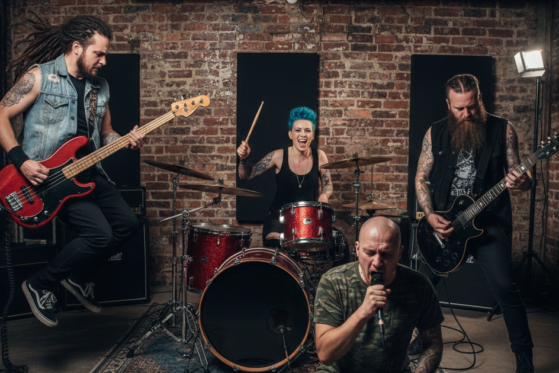
Positioned at the back of the stage, drummers often remain partially hidden from the audience. Complaints about visibility are rare; in fact, distance from the spotlight often reshapes how success is defined. Over time, collective achievement begins to matter more than individual recognition.
From this physical and symbolic positioning, humility naturally takes root. Competing with the lead vocalist is never the goal; supporting them is. When the singer shines, the band shines. Likewise, during a guitar solo, dynamics shift subtly to frame the moment rather than overpower it. The drummer’s satisfaction comes not from standing out, but from holding everything together.
This mindset extends far beyond the stage. Professional teams operate on the same principle. Collaboration begins to unravel when individuals chase credit instead of shared outcomes. By instinct, drummers prioritize the whole over the individual, understanding that recognition follows cohesion—not the other way around. Success, therefore, is measured not by applause directed at them, but by how seamlessly the group performs together.
Drummers as Team Players | Adaptability Under Pressure
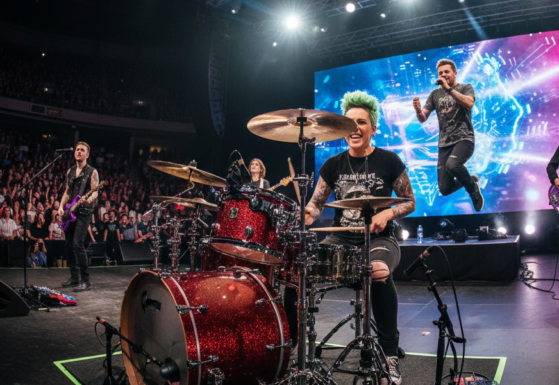
Unpredictability defines live performance. A microphone may fail. A guitarist might skip a bar. Tempo can surge unexpectedly. In those moments, the drummer becomes the stabilizing force.
Through a subtle correction in tempo, a well-placed cymbal crash, or a grounding groove, alignment is restored. The fluid adaptability of Sheila E. across genres demonstrates that versatility is relational as much as technical. Reading the room and responding instinctively are part of the craft.
Outside music, projects rarely unfold exactly as planned. Deadlines shift. Goals evolve. Obstacles appear without warning. Teams thrive when someone can pivot smoothly without panic. Because music demands real-time adjustment, drummers develop resilience that naturally strengthens any collaborative environment.

Drummers as Team Players | Communication Beyond Words
Constant communication happens behind the drum kit, even in silence. For instance, a raised stick signals an entry, while a shift in hi-hat intensity hints at a dynamic change. Likewise, a drum fill often acts as a transition cue, guiding the structure and flow through rhythm rather than speech.
Through these subtle signals, drummers cultivate acute awareness. They quickly read body language, intuitively sense shifts in energy, and make split-second decisions about when to simplify or build. Over time, this responsiveness becomes second nature.
In collaborative settings, these skills translate directly to teamwork. Much of what influences productivity lies beneath spoken dialogue—emotional tone, pacing, and unspoken tension all shape outcomes. Those who can read these subtleties and respond thoughtfully help prevent conflict and strengthen cohesion. In essence, rhythm trains drummers to operate with exactly that heightened sensitivity, connecting action and awareness seamlessly.
Discipline and Practice Behind the Scenes
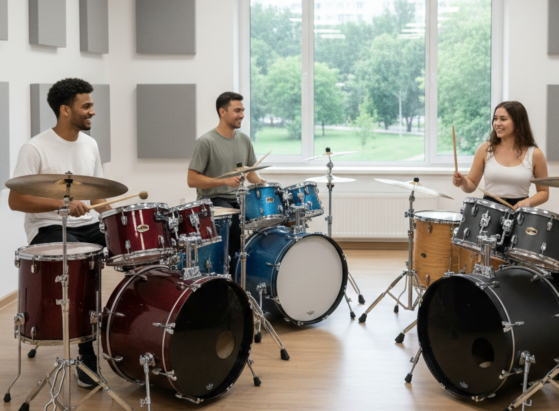
Spontaneity may appear effortless from the outside, but it rests on relentless preparation. Precision timing comes from hours spent with a metronome, and coordinating all four limbs demands patience, focus, and repetition.
Over time, that repetition transforms into refinement. Mastery, therefore, is built quietly—far from the spotlight. What may look instinctive on stage is, in truth, the result of structured discipline practiced behind the scenes.
Because of this, the drummer’s mindset naturally extends beyond music. Teams benefit enormously from that same ethic. Preparation elevates performance, consistency builds reliability, and steady commitment to improvement sets a powerful example. In this way, the discipline inseparable from drumming often strengthens every collaborative space the drummer steps into.
Emotional Intelligence and Group Dynamics
Music is, at its core, emotional expression. Navigating the arc of a song requires sensitivity—knowing when to intensify, soften, or leave space. Overplaying can overwhelm a tender moment, while underplaying may flatten a powerful climax.
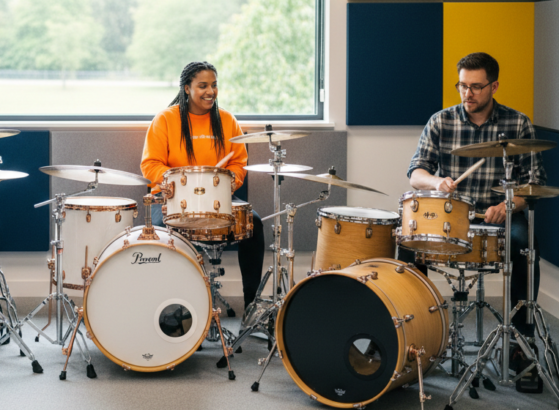
This sensitivity doesn’t stay confined to the music itself. In rehearsals, drummers naturally notice shifts in group mood—fatigue, tension, or bursts of excitement—and adjust accordingly.
Because of this, strong teams benefit from members with high emotional intelligence. Those who can read and respond to subtle cues help maintain morale and build trust. Drummers, trained to interpret emotional signals within a song, often carry that perceptiveness into teamwork, enhancing collaboration and cohesion.
Creating Space for Others to Shine
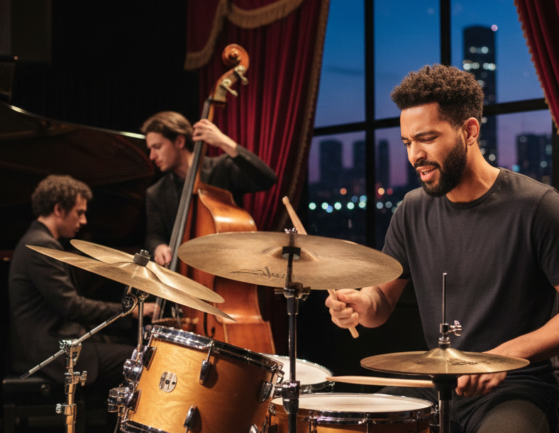
Silence is as significant as sound. In fact, what gives rhythm its emotional depth is not just the beat itself, but the breathing room around it. The rests between beats give shape to the music, allowing intensity to rise and fall naturally. Without that intentional space, everything becomes cluttered, overwhelming both performer and listener.
Because of this, restraint becomes a form of strength rather than limitation. Power in drumming is not only about striking harder or playing faster; it is about discernment. Knowing when not to play is just as important as knowing what to play, and often far more difficult.
That same principle carries seamlessly into collaborative environments. When every voice competes to be heard, clarity fades. Stepping back, however, can be transformative. Leadership sometimes means speaking; at other times, it means listening with full attention. Contribution may take the form of action—or of creating room for someone else’s idea to flourish. Over time, this instinct for balancing presence with space fosters mutual respect, psychological safety, and genuine empowerment within a team.
The Invisible Architecture of Success
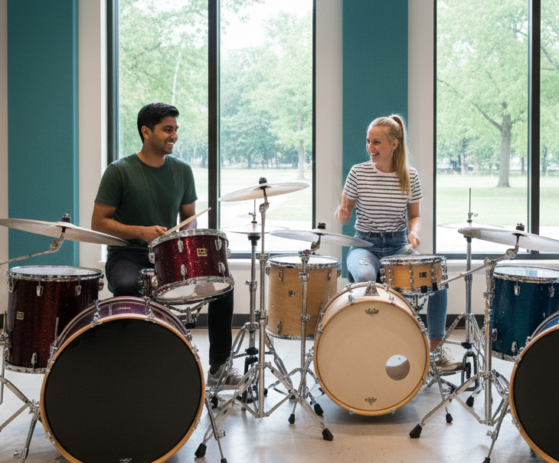
Applause rarely isolates the rhythm section. Yet remove the drums, and the structure collapses. Stability disappears. Momentum fades.
This same principle plays out beyond the stage. In many successful teams, leaders and star performers often draw the spotlight, but the steady contributors hold everything together. Those who manage processes, maintain structure, and keep work flowing may not receive the loudest recognition. Still, they actively create the conditions that allow everyone else to excel.
True impact does not depend on constant visibility. Strong influence works quietly, consistently, and at a foundational level. Drummers prove that every time they sit behind the kit and drive the entire group forward.
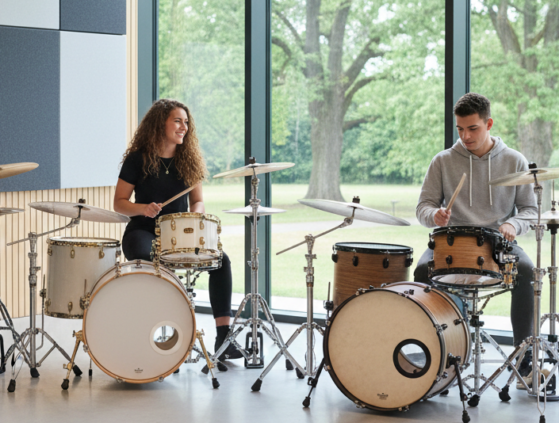
Beyond Music | The Transferable Power of Rhythm
Lessons from drumming extend far beyond the stage. Over time, patience grows through disciplined practice, attentiveness deepens through collaboration, and courage emerges from learning how to lead without overpowering others. What begins as rhythm training slowly becomes character training.
Because of this, in a culture that often celebrates individual acclaim, rhythm serves as a quiet reminder of collective harmony. The very qualities that seem understated—stability, listening, adaptability, humility—are in fact the ones that sustain long-term success.
This is precisely what we nurture at The Mystic Keys. Through our Drums Lessons Online, students do more than master patterns; they learn how to support, respond, and grow within a shared musical space. Even in a virtual setting, teamwork is not an add-on—it is the foundation.
When viewed through that lens, it becomes clear that every thriving team—whether in a startup office, a research lab, a sports arena, or a creative studio—needs someone who keeps the pulse steady and ensures everyone moves forward together.
That, ultimately, is the drummer’s gift.
And that is why drummers, more than we often realize, strengthen every team they are part of.
For more information and exciting resources about learning music, visit our website at The Mystic Keys. For more music content and exciting offers follow us on
Facebook, Instagram, YouTube, LinkedIn, Twitter, Pinterest, and Threads.