Drum Rudiments | The Top 10 Essential Patterns Every Drummer Should Know
Every great drummer—whether playing rock, jazz, gospel, metal, or classical percussion—builds their skill on one foundation: drum rudiments. These patterns are the fundamental vocabulary of drumming. Just like a guitarist practices scales or a pianist practices finger exercises, drummers practice rudiments to develop speed, control, technique, accuracy, and creativity.
If you want to become a solid, confident, and expressive drummer, mastering the top essential rudiments is non-negotiable. This guide breaks down the 10 most important drum rudiments, explains how they work, why they matter, and how to practice them effectively.
What Are Drum Rudiments?
Drum rudiments are fundamental sticking patterns that help drummers develop precision, strength, coordination, rebound control, and rhythmic discipline.
Originally created for military drumming, these patterns have evolved into the universal language of modern drumming across all genres:
If you want to improve:
Hand speed
Stick control
Drum fill creativity
Independence and endurance
then mastering drum rudiments is the best place to start.
1. Single Stroke Roll
The single stroke roll is the most fundamental rudiment and the starting point for all drummers.
Sticking Pattern:
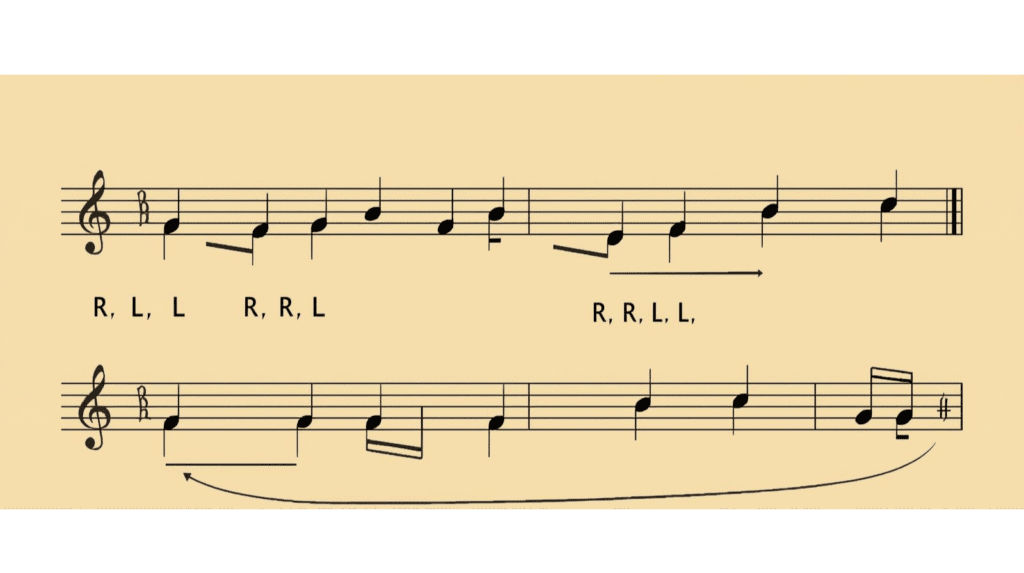
R L R L R L (or reversed)
What It Teaches:
Hand speed
Even sound
Stick control
Why It’s Important:
Almost every groove, fill, and drum part uses some form of alternating strokes. This rudiment builds a clean, fast, and controlled hand technique.
Practice Tip:
Start slow at 60–80 BPM and gradually increase speed. Focus on making both hands sound equal.
2. Double Stroke Roll
This roll teaches drummers how to produce two strokes per hand.
Sticking Pattern:
R R L L R R L L
What It Teaches:
Rebound control
Wrist-to-finger transition
Smooth rolling technique
Why It’s Important:
Double strokes appear everywhere—from marching-style patterns to flowing fills and snare rolls.
Practice Tip:
Keep the second stroke relaxed and let the stick rebound naturally.
3. Paradiddle
One of the most musical rudiments, perfect for grooves and fills.
Sticking Pattern:
R L R R | L R L L
What It Teaches:
Hand independence
Accent control
Flow between single & double strokes
Why It’s Important:
Paradiddles help you transition around the kit fluidly and create dynamic patterns.
Practice Tip:
Accent the first note of each group to build rhythmic clarity.
4. Flam
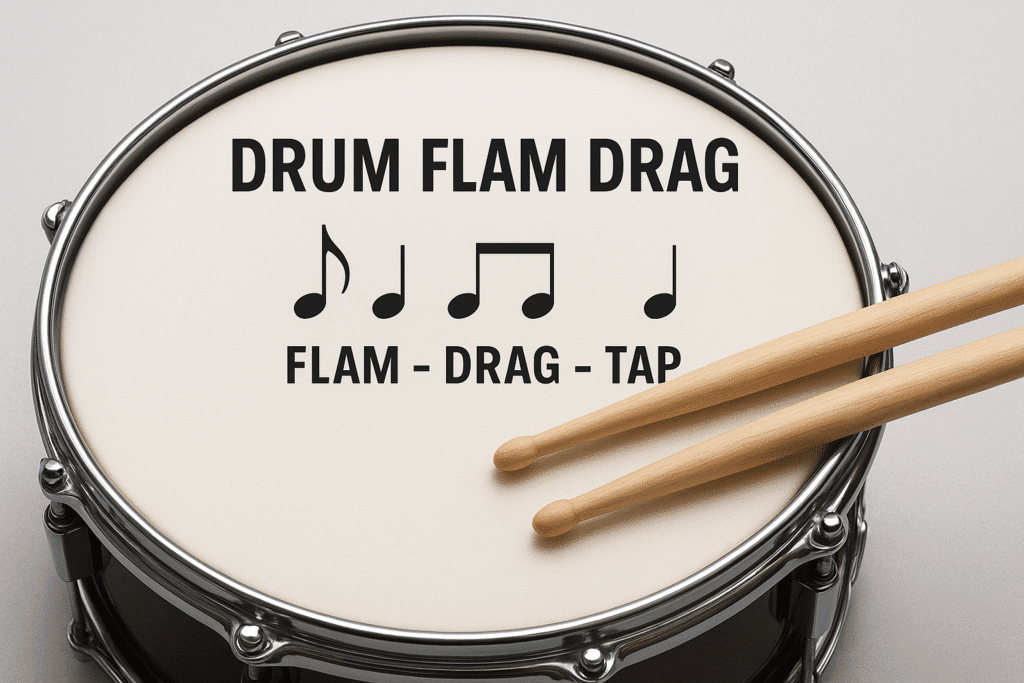
A flam consists of a primary note with a controlled grace note before it.
Sticking Pattern:
lR or rL (small letter = grace note)
What It Teaches:
Coordination
Stick height control
Accent shaping
Why It’s Important:
Flams add thickness and character to snare hits, making grooves and fills sound fuller.
Practice Tip:
Keep the grace note low; the main note should be significantly higher.
5. Flam Tap
A combination of a flam followed by a tap using the same hand.
Sticking Pattern:
lR R | rL L
What It Teaches:
Control of flams at faster tempos
Smooth transitions
Rhythmic stability
Why It’s Important:
Flam taps appear in marching, worship drumming, and creative snare work.
Practice Tip:
Keep the timing tight—don’t let the grace note become too early.
6. Drag (Ruff)
A drag is like a mini-double-stroke before a main note.
Sticking Pattern:
rrR or llL
What It Teaches:
Finger control
Light touch
Smooth embellishments
Why It’s Important:
Drags add texture and character to fills and snare grooves.
Practice Tip:
Keep the drag strokes soft and controlled—not loud.
7. Five-Stroke Roll
An essential roll used across many musical styles.
Sticking Pattern:
R R L L R or L L R R L
What It Teaches:
Roll control
Dynamic shaping
Clean endings
Why It’s Important:
It’s a popular fill pattern in worship, rock, jazz, and marching.
Practice Tip:
End the rudiment with a strong, controlled accent.
8. Single Paradiddle-Diddle
A flowing, circular rudiment perfect for tom fills.
Sticking Pattern:
R L R R L L
What It Teaches:
Smooth motion
Flow and speed
Creative phrasing around the kit
Why It’s Important:
Great for six-note groupings in fills and solos.
Practice Tip:
Practice in triplet feel for maximum smoothness.
9. Flam Accent
A three-note group starting with a flam.
Sticking Pattern:
lR L R | rL R L
What It Teaches:
Timing precision
Flam consistency
Accent articulation
Why It’s Important:
It’s a great tool for building musical-sounding flam combinations.
Practice Tip:
Use a metronome on triplet subdivisions.
10. Double Paradiddle
A longer paradiddle pattern used for advanced coordination.
Sticking Pattern:
R L R L R R | L R L R L L
What It Teaches:
Lengthened sticking patterns
Phrase development
Movement around the drums
Why It’s Important:
Helps you create rhythmic variations in grooves and longer fills.
Practice Tip:
Move each group of four notes to a different drum.
Drum rudiments aren’t just exercises—they are the vocabulary of drumming. By mastering these 10 essential patterns, you will improve:
Speed
Endurance
Coordination
Timing
Musical creativity
Whether you’re a beginner building a foundation or an advanced drummer sharpening your skills, consistent rudiment practice will transform your playing.
Intersted in learning music with us? Register now
For more information and exciting resources about learning music, visit our website at The Mystic Keys. For more music content and exciting offers follow us on
Facebook, Instagram, YouTube, LinkedIn, Twitter, Pinterest, and Threads.