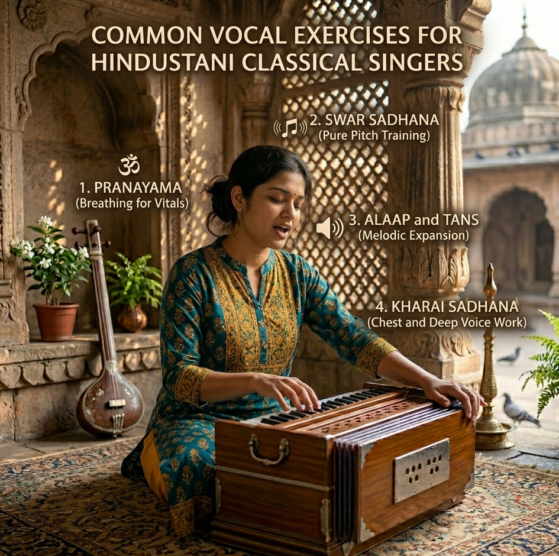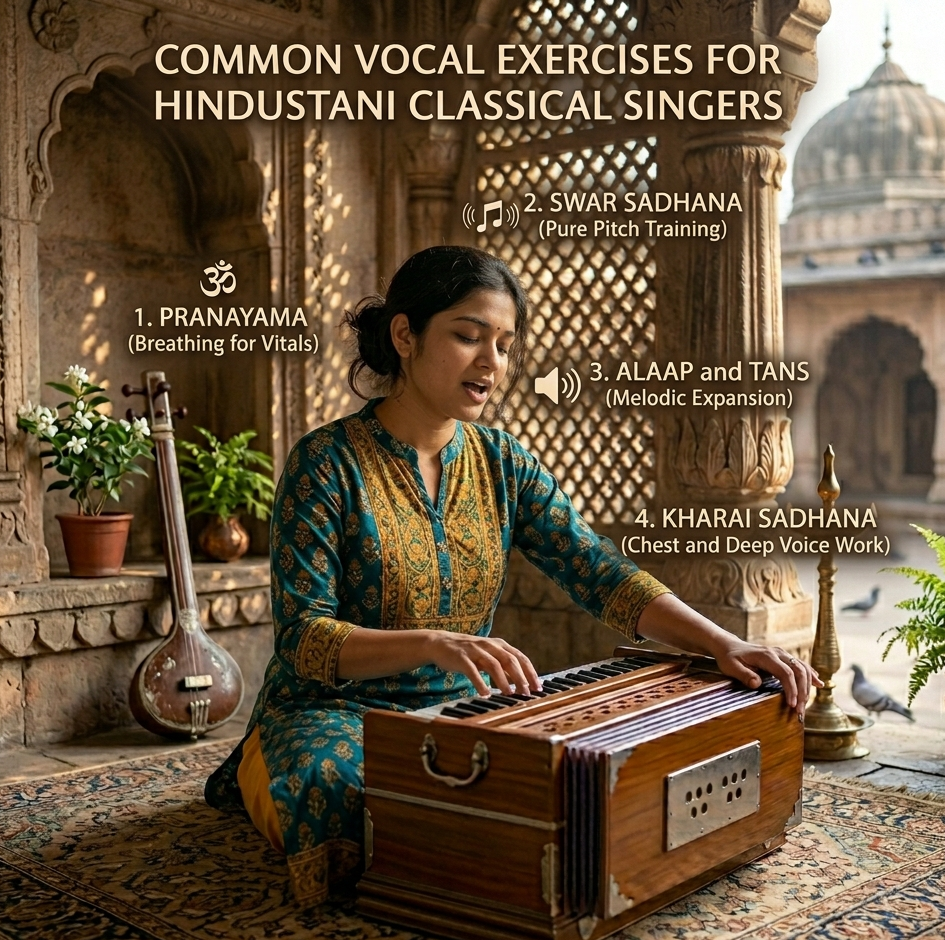
Common Vocal Exercises for Hindustani Classical Singers
Hindustani classical music is not simply about singing notes accurately—it is about shaping sound with intention, patience, and emotional depth. A strong voice in this tradition develops gradually through disciplined practice, mindful listening, and common vocal exercises that strengthen both technique and expression over time. Vocal training therefore becomes less about speed and more about consistency, allowing singers to build stability, sensitivity, and confidence through regular riyaaz.
Regular practice of foundational exercises helps singers cultivate pitch stability, breath control, tonal clarity, and flexibility across octaves. Over time, these exercises form the backbone of improvisation, enabling artists to explore ragas with confidence and sensitivity. Understanding the purpose behind each exercise also makes daily riyaaz more meaningful and productive.
Let us explore some of the most essential vocal exercises that support the growth of Hindustani classical singers at every stage of learning.
Common Vocal Exercises | Swar Sadhana
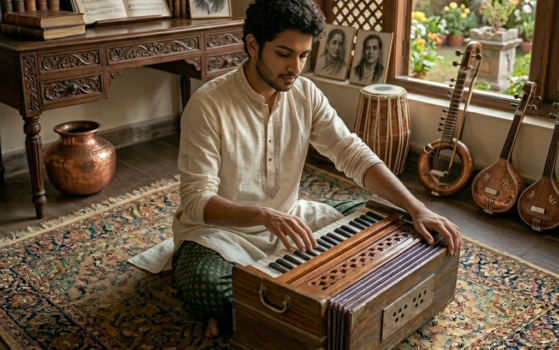
Every journey into Hindustani classical music begins with swar sadhana, the disciplined practice of individual notes. This stage may appear simple from the outside, yet it holds tremendous importance in building tonal accuracy and voice placement. Sustaining each note steadily helps singers internalize pitch and develop control over their vocal resonance.
Instead of rushing through scales, learners are encouraged to dwell on each swar carefully. A well-placed “Sa,” for instance, becomes the anchor around which the entire melodic structure revolves. Gradually, the voice begins to settle into its natural range, allowing transitions between notes to feel more effortless and stable.
Consistency in swar practice also improves listening ability. As singers repeat notes slowly, they begin to notice subtle variations in tone quality and tuning. That awareness later supports more advanced improvisational techniques.
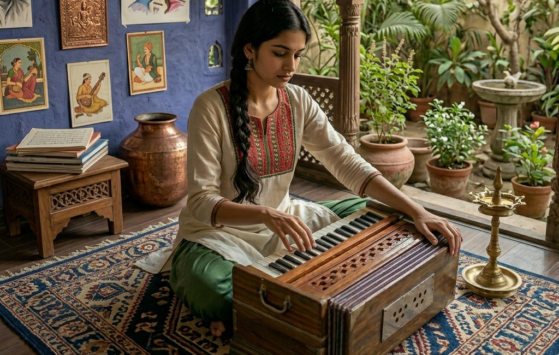
Practicing Alankars for Flexibility and Precision
Once the voice becomes comfortable with individual swaras, structured note patterns known as alankars help improve agility. These patterned exercises train the voice to move smoothly between notes while maintaining clarity and rhythm.
Through repeated practice of ascending and descending combinations, singers learn to maintain even tonal quality across transitions. Over time, the voice becomes capable of executing complex melodic phrases without strain or hesitation. Because alankars are practiced in different speeds, they also strengthen rhythmic coordination alongside pitch control.
Gradual variation in tempo further encourages singers to stay attentive while practicing. Rather than repeating patterns mechanically, thoughtful execution transforms these exercises into powerful tools for musical development.
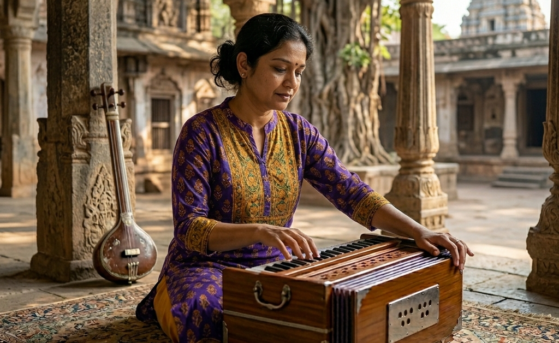
Common Vocal Exercises | Sustaining Notes for Breath Control
Strong breath support forms the foundation of expressive singing. Sustained-note practice allows singers to manage airflow more efficiently while maintaining a steady tone throughout each phrase. Controlled breathing ensures that musical lines remain connected and expressive rather than fragmented.
Long-note exercises often begin with holding a single swar comfortably before extending the duration gradually. As breath stability improves, singers notice increased confidence while performing slower compositions. Even intricate improvisations begin to feel more natural when breath flow remains consistent.
Regular attention to breath-based exercises also reduces vocal strain. Instead of forcing sound from the throat, singers learn to support tone from deeper respiratory engagement, resulting in greater vocal endurance during extended practice sessions.
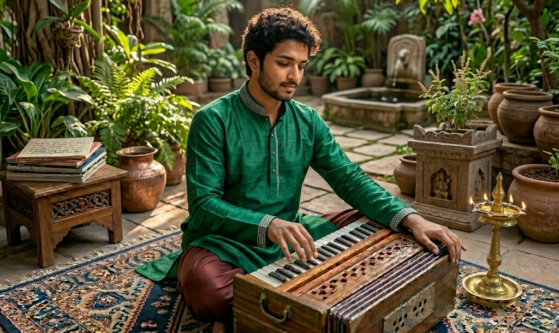
The Role of Aakar Practice in Tone Development
Among the most widely practiced vocal exercises in Hindustani classical training is aakar practice, where notes are sung using the open vowel sound “aa.” This technique encourages clarity of tone while helping singers maintain uniform resonance across their range.
Aakar singing allows the voice to open naturally without unnecessary tension. As the sound travels freely, singers begin to experience improved projection and tonal richness. With continued practice, transitions between registers become smoother and more controlled.
Because vowel-based singing highlights subtle tonal inconsistencies, it also sharpens listening awareness. Over time, singers develop a balanced and resonant voice capable of supporting both slow elaboration and faster passages.
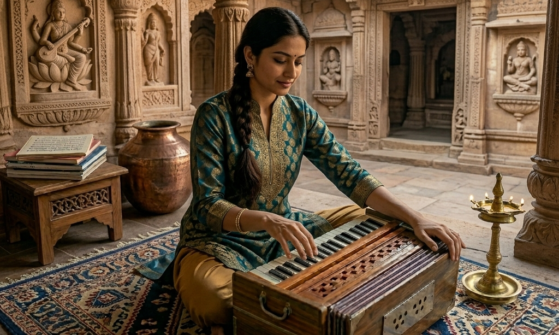
Developing Control Through Meend Practice
Smooth gliding between notes is a defining feature of Hindustani classical music. Known as meend, this graceful transition requires patience and refined pitch sensitivity. Practicing slow slides between swaras helps singers understand the emotional connection between notes rather than treating them as isolated sounds.
Instead of jumping abruptly from one pitch to another, meend encourages continuity. That sense of flow brings depth to raga expression and enhances the aesthetic quality of performance. As singers grow comfortable with these transitions, improvisational exploration becomes more expressive and natural.
Careful attention during meend practice also strengthens vocal flexibility. Over time, the voice responds more readily to subtle melodic movements that define classical interpretation.
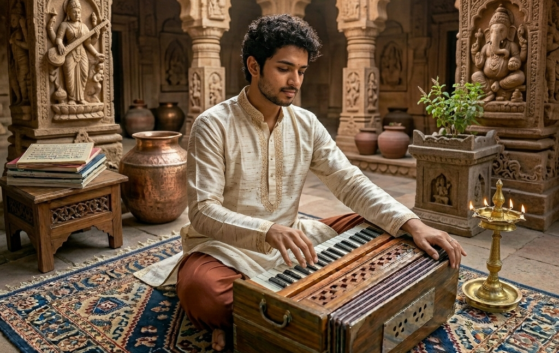
Common Vocal Exercises | Kharaj Practice for Voice Stability
Lower-octave training, often referred to as kharaj practice, plays a vital role in building vocal depth and resonance. Early morning sessions are traditionally considered ideal for this exercise, as the voice remains relaxed and responsive during that time.
Singing lower notes slowly helps develop tonal richness while strengthening breath support. Gradually, singers begin to experience greater control across their full vocal range. A stable lower register also supports upper-octave exploration by creating a balanced tonal foundation.
Regular kharaj practice enhances vocal maturity. As the resonance deepens, singers notice improved steadiness even in demanding compositions.
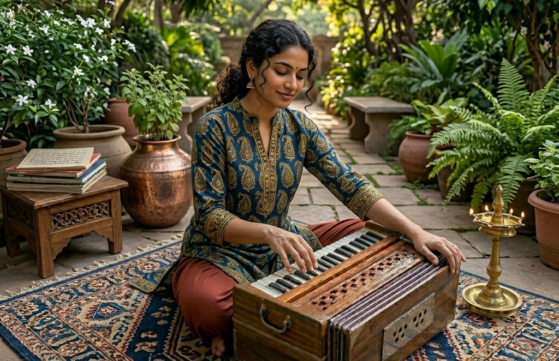
Practicing Sargam for Clarity and Speed
Sargam exercises combine note pronunciation with melodic movement, helping singers maintain clarity while navigating faster passages. Because each swar is articulated distinctly, this practice strengthens coordination between voice and mind.
As tempo increases gradually, singers develop confidence in executing intricate patterns. Precision becomes easier to maintain when note transitions remain clear and controlled. Over time, this clarity supports improvisational passages during performance.
Thoughtful sargam practice also encourages rhythmic awareness. Instead of focusing only on pitch, singers learn to balance melodic accuracy with timing.
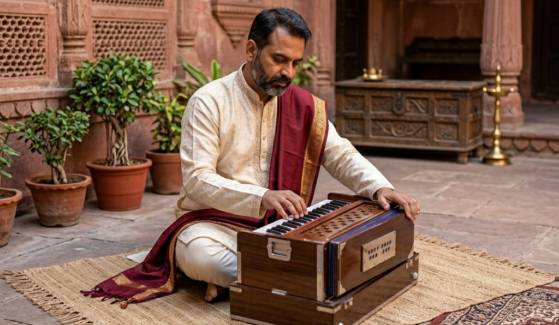
Common Vocal Exercises | Palta Practice in Daily Riyaaz
Palta exercises introduce structured variations within scale patterns, encouraging flexibility and creative thinking. These patterns challenge singers to adapt quickly while maintaining tonal stability.
Through repeated exploration of different palta combinations, the voice becomes more responsive to changing melodic directions. Gradually, singers develop the confidence required for spontaneous improvisation within ragas.
Regular palta practice also strengthens memory and concentration. Because each variation requires attention to both pitch and sequence, singers become more mentally engaged during riyaaz sessions.
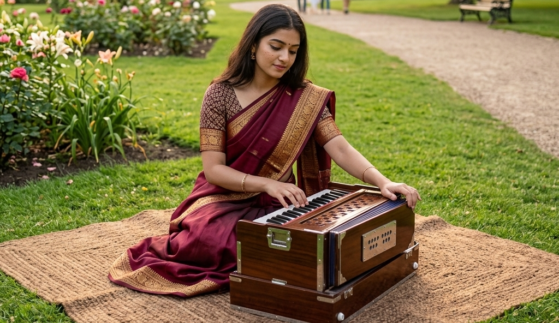
The Value of Consistent Riyaaz
All vocal exercises become meaningful only when practiced regularly. Consistency transforms simple repetitions into powerful tools for musical growth, allowing singers to strengthen both technique and confidence gradually. Rather than seeking quick results, learners benefit far more from steady and patient engagement with foundational practices that support long-term musical development.
Over time, daily riyaaz builds not only technical strength but also a deeper emotional connection with music. As the voice begins responding more naturally to melodic movement and raga expression, singers discover greater freedom and authenticity in their performance. Guided practice and structured learning can make this journey even more rewarding, especially when supported by experienced teachers and a thoughtful curriculum.
At The Mystic Keys, our Hindustani Vocal Lessons Online are designed to help students develop these essential skills through systematic riyaaz routines, personalized guidance, and carefully structured vocal exercises suited for learners at different stages. With dedication, the right direction, and consistent practice, every riyaaz session becomes a meaningful step toward deeper musical understanding and confident artistic expression.
For more information and exciting resources about learning music, visit our website at The Mystic Keys. For more music content and exciting offers follow us on
Facebook, Instagram, YouTube, LinkedIn, Twitter, Pinterest, and Threads.