Classical vs Contemporary Violin Styles
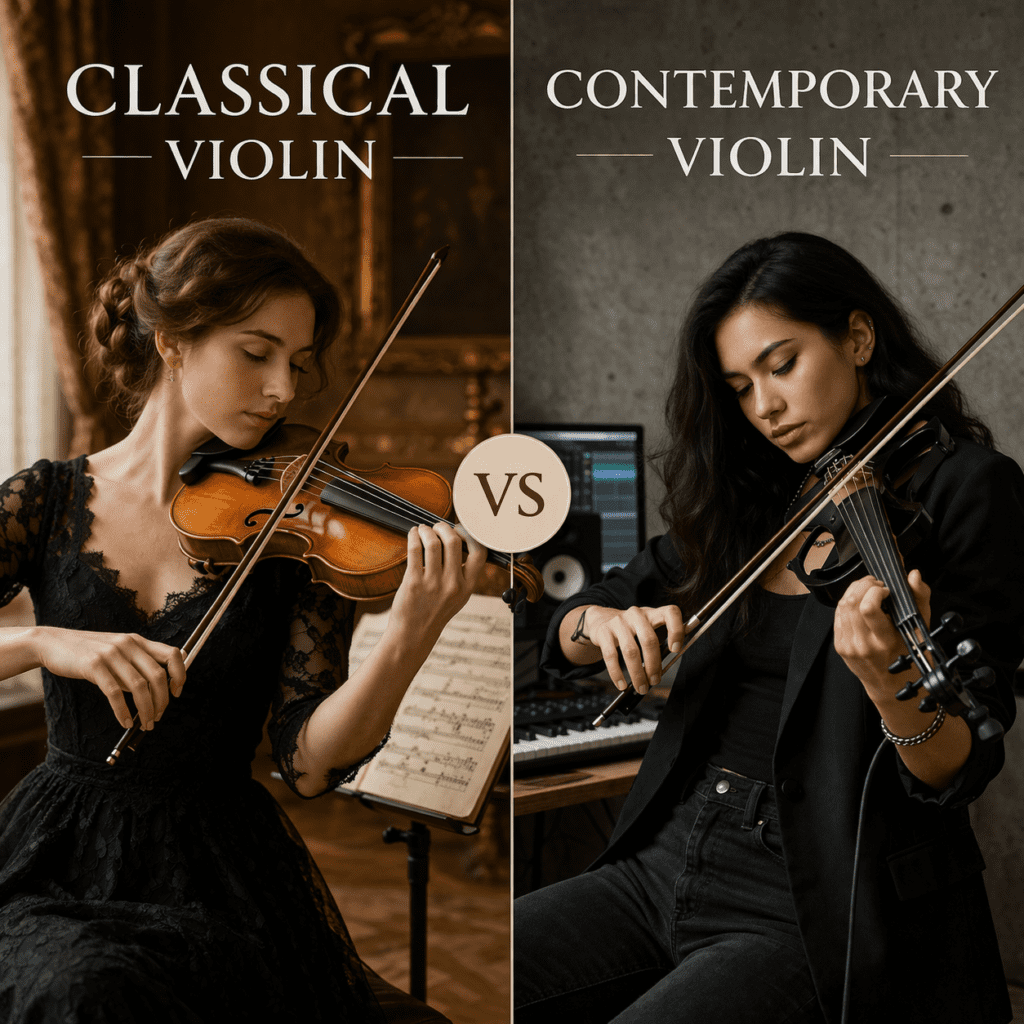
The violin is one of the most expressive and versatile instruments in the world. For centuries, it has been central to many musical traditions, from orchestras performing classical masterpieces to modern artists exploring contemporary genres. When learning violin, musicians often encounter two broad stylistic approaches: classical violin and contemporary violin styles. Understanding Classical Violin vs Contemporary Violin Styles is essential for musicians who want to explore the full potential of this instrument. While both share the same instrument, their techniques, musical goals, performance styles, and repertoire differ significantly.
Understanding the differences between classical violin vs contemporary violin styles helps students choose the right learning path and develop a deeper appreciation for the instrument. In this guide, we will explore the key distinctions, techniques, musical characteristics, and learning approaches that define these two important violin traditions.
The Foundations of Classical Violin Style
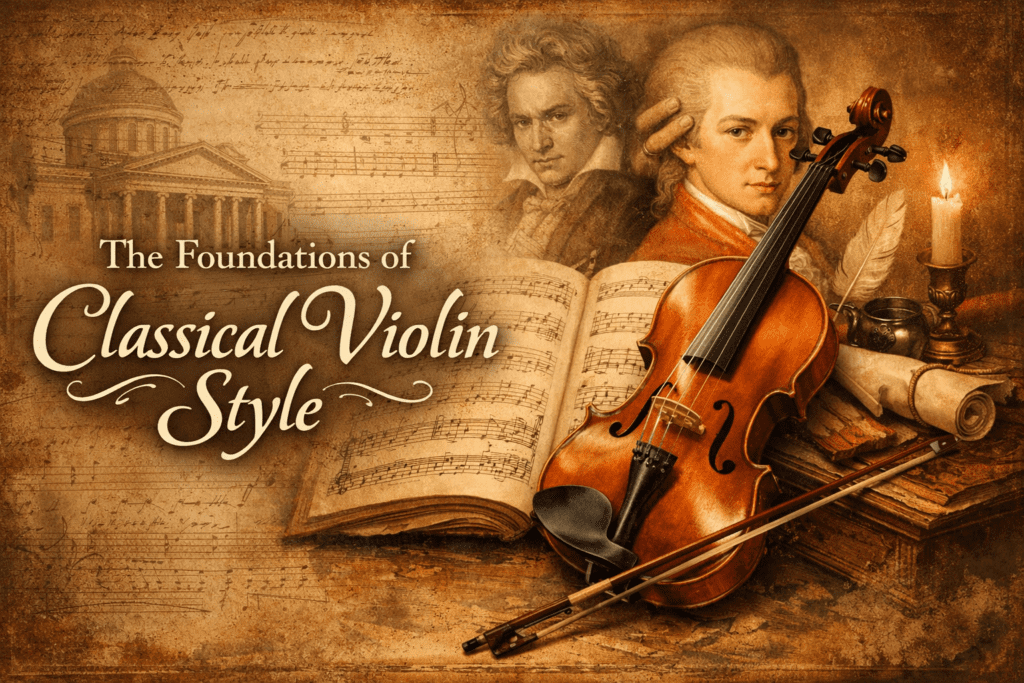
Classical violin refers to the traditional style developed within Western classical music. This approach focuses on precision, technical mastery, and faithful interpretation of written compositions.
The foundations of classical violin playing were established between the Baroque, Classical, and Romantic periods, with legendary composers such as Bach, Mozart, Beethoven, and Tchaikovsky writing iconic violin works that are still performed today.
In classical violin training, students learn to read sheet music accurately and reproduce compositions exactly as written. The emphasis is on maintaining correct posture, proper bow control, precise intonation, and refined tone production.
Key characteristics of classical violin include:
• Strict adherence to musical notation
• Structured compositions and orchestral performance
• Emphasis on tone quality and technical discipline
• Use of traditional techniques such as vibrato, legato, and staccato
• Performance in orchestras, chamber groups, and solo recitals
Classical violin training also involves years of technical exercises, scales, études, and repertoire study. This disciplined approach builds strong fundamentals that allow musicians to perform complex compositions with accuracy and expression.
What Defines Contemporary Violin Styles?
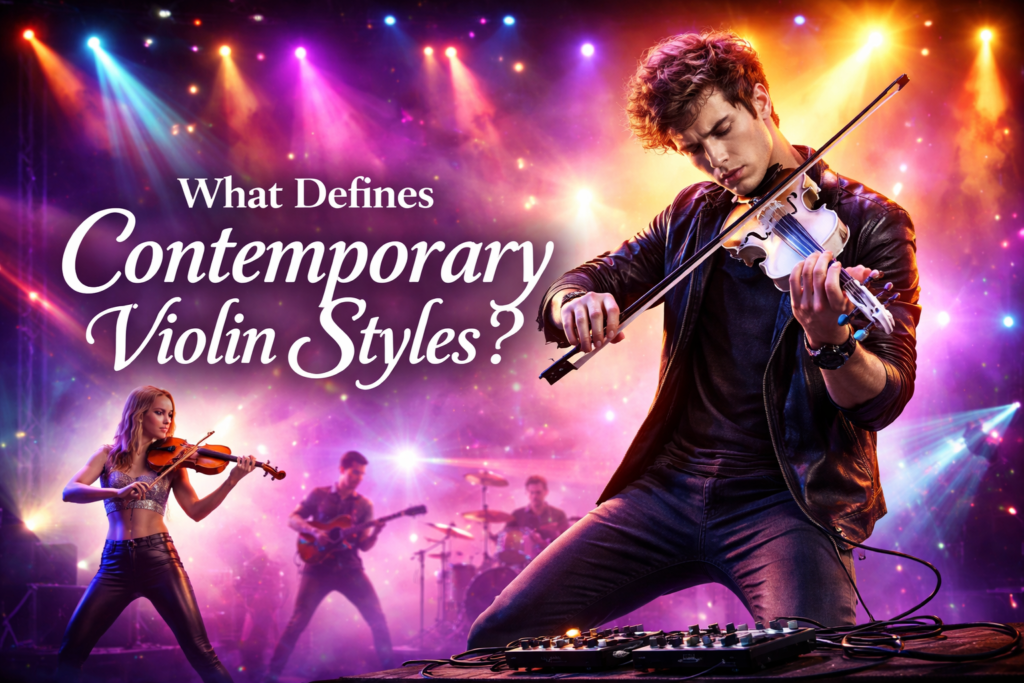
Contemporary violin styles represent a more modern and flexible approach to violin playing. Rather than strictly following classical traditions, contemporary violinists explore a wide range of musical genres and creative techniques.
Contemporary violin can be found in genres such as:
• Pop music
• Rock
• Jazz
• Folk
• Film music
• Electronic music
• Fusion genres
In contemporary violin playing, musicians often prioritize creativity, improvisation, and stylistic interpretation. Unlike classical violinists who usually perform written compositions, contemporary violinists may create their own arrangements or improvise during performances.
Modern technology has also influenced contemporary violin performance. Electric violins, looping pedals, and digital effects allow musicians to expand the sonic possibilities of the instrument.
Some defining features of contemporary violin include:
• Improvisation and personal expression
• Flexible interpretation of music
• Use of amplification and electronic effects
• Collaboration with bands and modern ensembles
• Integration with popular music styles
This modern approach has helped the violin remain relevant in today’s music industry, making it an exciting instrument for modern performers and audiences alike.
Key Technical Differences Between classical vs contemporary violin
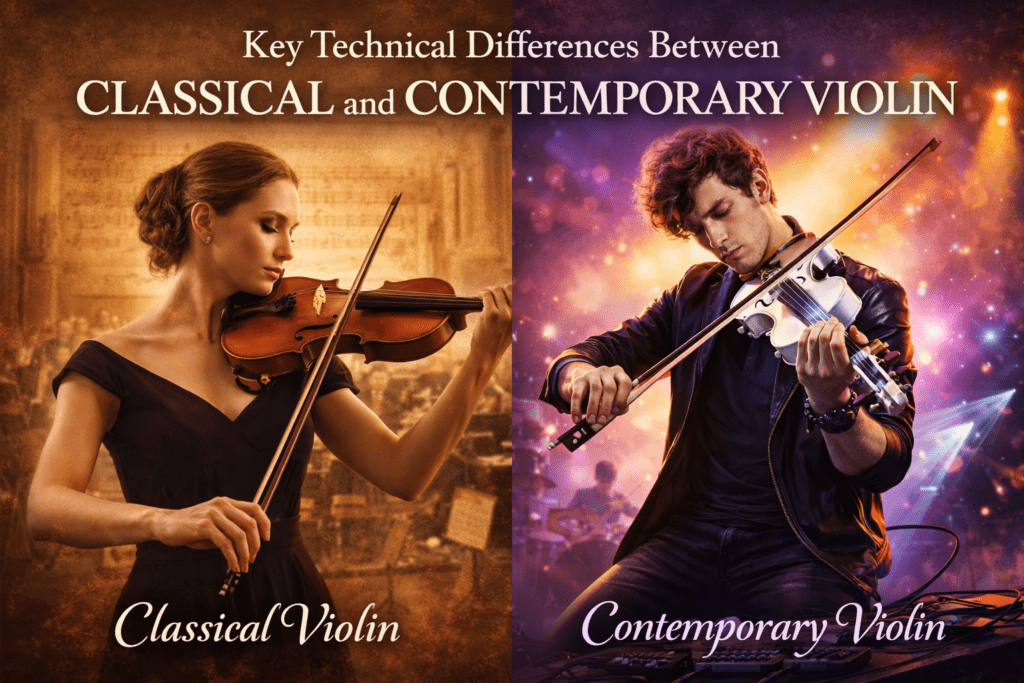
Although both styles use the same instrument, the techniques and playing methods differ significantly between classical and contemporary violin.
Bowing Techniques
Classical violin places strong emphasis on traditional bow strokes such as détaché, spiccato, martelé, and legato. Each bowing style serves a specific purpose in shaping musical phrasing and articulation.
In contemporary violin, bowing techniques may be less rigid. Players often adapt their bowing to match the rhythm and style of genres like pop, jazz, or folk.
Vibrato Usage
In classical violin, vibrato is carefully controlled and used to enhance tone and emotional expression. Students spend years mastering vibrato techniques to achieve a warm and consistent sound.
Contemporary violinists may use vibrato more freely or stylistically depending on the genre. For example, folk violinists may use minimal vibrato, while pop violinists may use wider vibrato for expressive effect.
Rhythm and Groove
Classical music typically follows structured tempo and rhythm patterns defined by the composer.
Contemporary violin styles, however, often emphasize groove and rhythmic feel, especially in genres like jazz and pop where improvisation plays a key role.
These technical differences highlight how classical violin prioritizes precision and tradition, while contemporary violin encourages adaptability and creativity.
Differences in Repertoire and Musical Structure: Classical vs Contemporary Violin
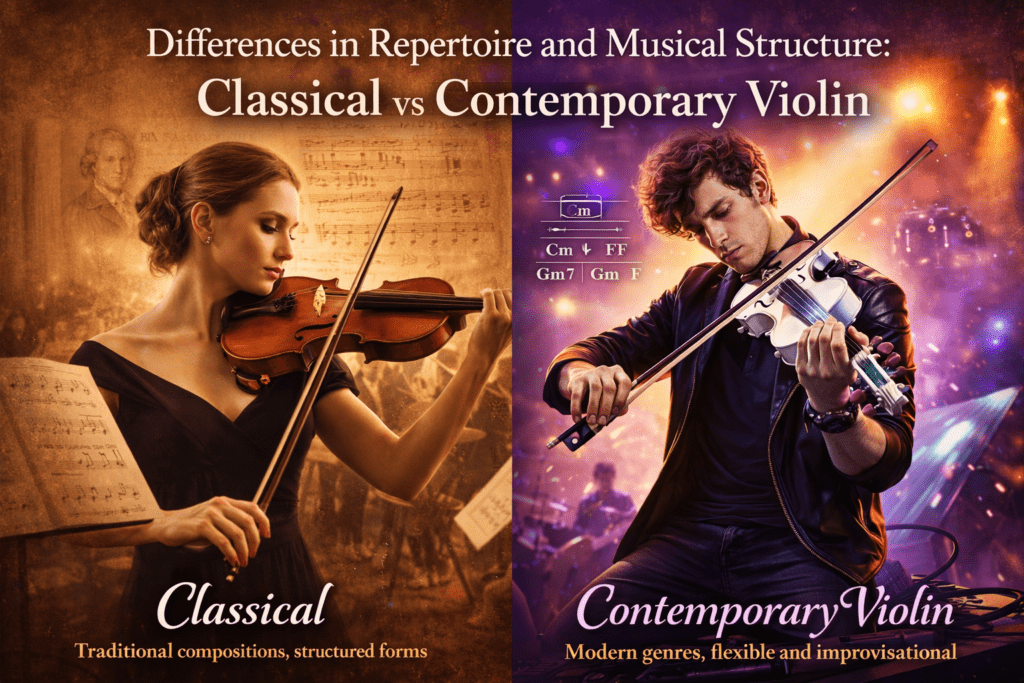
Another major difference between classical violin and contemporary violin styles lies in the repertoire they perform.
Classical violinists typically perform works composed by famous composers from earlier musical periods. These pieces are written in detailed notation and require musicians to interpret the composer’s intentions with accuracy.
Examples of classical violin repertoire include:
• Violin concertos
• Sonatas
• Symphonies
• Chamber music
Contemporary violinists, on the other hand, often perform music from modern genres. They may play arrangements of popular songs, film scores, or original compositions created for modern audiences.
Contemporary repertoire often includes:
• Pop and rock arrangements
• Jazz improvisations
• Film and television soundtracks
• Folk and cultural music traditions
• Experimental and fusion styles
Because contemporary violin music is less restricted by traditional notation, performers have greater freedom to interpret and personalize their performances.
Performance Settings and Musical Roles in Classical vs Contemporary Violin
Classical and contemporary violinists also perform in different musical environments.
Classical violinists commonly perform in:
• Symphony orchestras
• Chamber ensembles
• Solo classical recitals
• Opera orchestras
In these settings, the violinist usually performs as part of a structured ensemble where each musician follows the conductor and written score.
Contemporary violinists perform in a wider range of environments, including:
• Live bands
• Studio recordings
• Film music production
• Pop concerts
• Music festivals
The violinist may take on a more flexible role in these performances, sometimes acting as a soloist, improviser, or collaborator within a band.
These different performance contexts shape how musicians approach technique, expression, and audience interaction.
Learning Path: Classical vs Contemporary Violin – Which Style Should Students Choose?
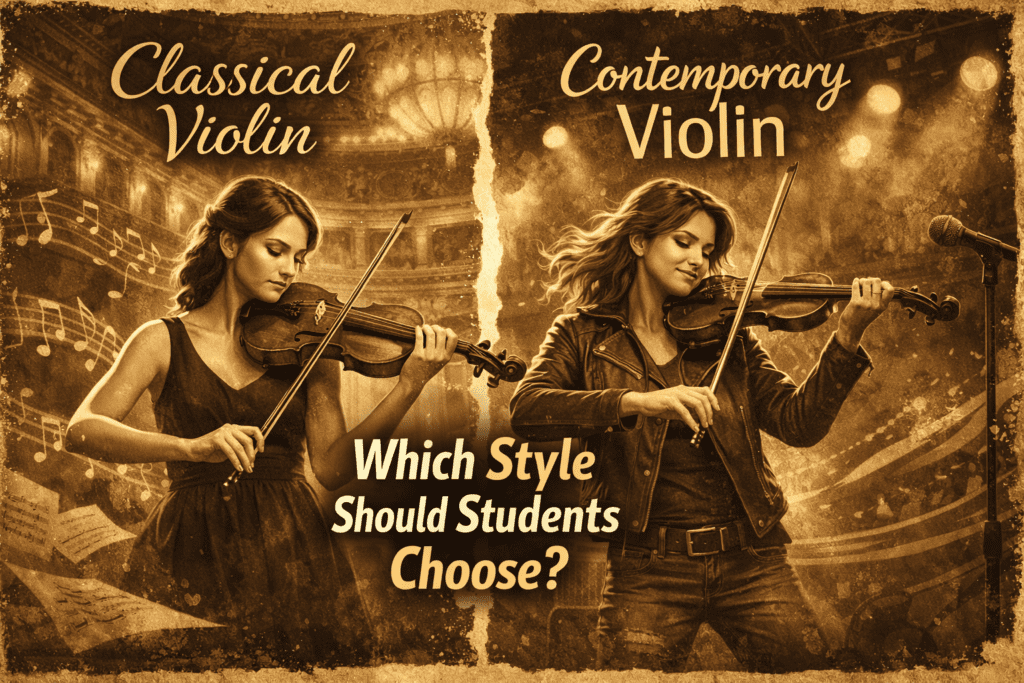
For beginners, choosing between classical violin and contemporary violin styles often depends on their musical goals.
Classical violin training provides a strong technical foundation. Learning classical techniques improves tone production, bow control, sight reading, and musical discipline. Many professional violinists recommend starting with classical training before exploring other genres.
However, students interested in modern music may feel more inspired by contemporary violin styles. Playing pop songs, film music, or improvisational pieces can make learning the instrument more engaging and creatively rewarding.
In reality, many violinists today combine both approaches. A solid classical foundation paired with contemporary creativity allows musicians to become versatile performers who can adapt to many musical situations.
Online learning platforms and modern music schools now offer violin lessons that integrate both classical techniques and contemporary performance styles.
Classical vs Contemporary Violin: Why Both Styles Matter in Modern Music
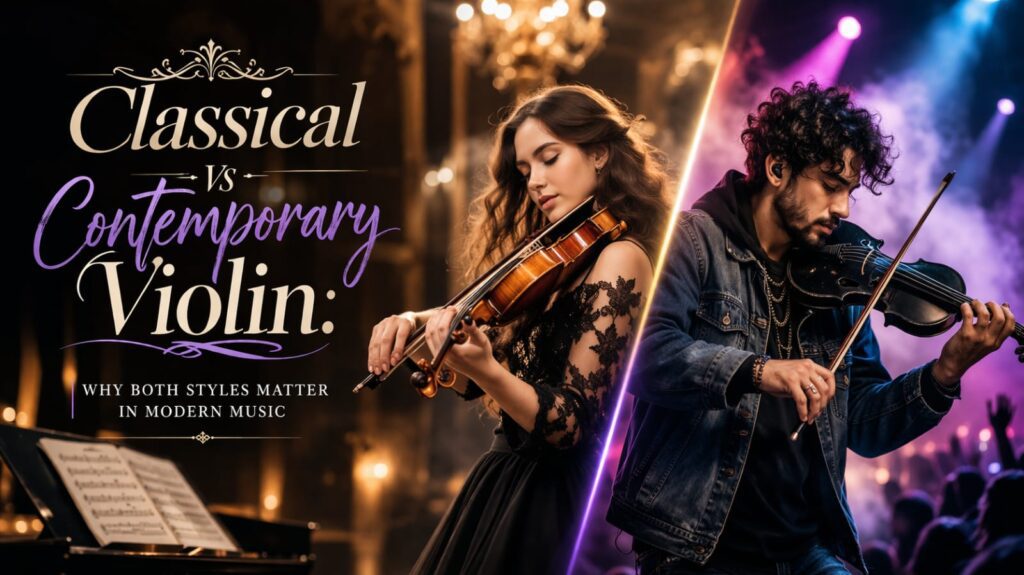
Rather than viewing classical and contemporary violin as opposing approaches, it is more helpful to see them as complementary musical traditions.
Classical violin represents centuries of musical development, discipline, and artistic refinement. It provides the technical skills and musical understanding necessary to master the instrument.
Contemporary violin keeps the instrument evolving by introducing new genres, technologies, and creative performance methods. It allows violinists to connect with modern audiences and explore new artistic possibilities.
Together, these styles demonstrate the incredible versatility of the violin. Whether performing a classical concerto or a modern film soundtrack, the violin continues to inspire musicians and listeners across the world.
Conclusion
The comparison of classical violin vs contemporary violin styles reveals how a single instrument can serve many musical purposes. Classical violin emphasizes tradition, technical precision, and interpretation of historic compositions, while contemporary violin focuses on creativity, improvisation, and modern musical expression.
Both styles offer unique artistic opportunities for violinists. By understanding their differences and strengths, musicians can choose the path that best matches their interests and musical goals.
For aspiring violinists, learning both classical fundamentals and contemporary techniques can open the door to a rich and versatile musical journey. If you are interested in developing these skills from the comfort of your home, you can Violin Lessons online with The Mystic Keys and receive structured guidance from experienced instructors.
For more information and exciting resources about learning music, visit our website at The Mystic Keys. For more music content and exciting offers follow us on
Facebook, Instagram, YouTube, LinkedIn, Twitter, Pinterest, and Threads.