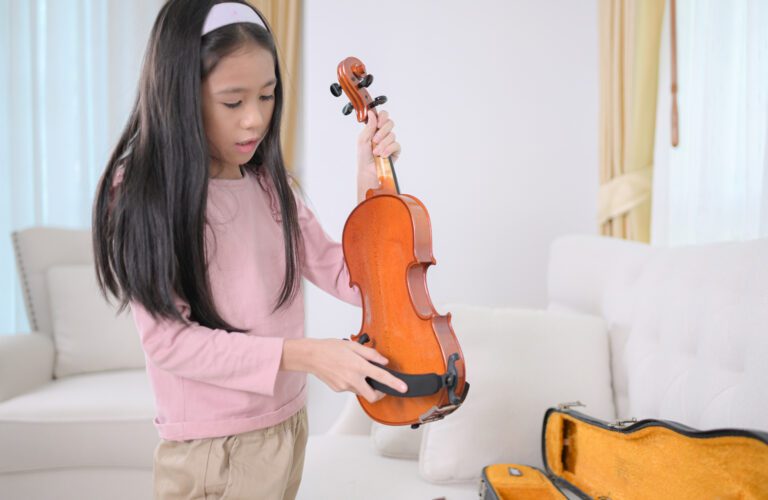
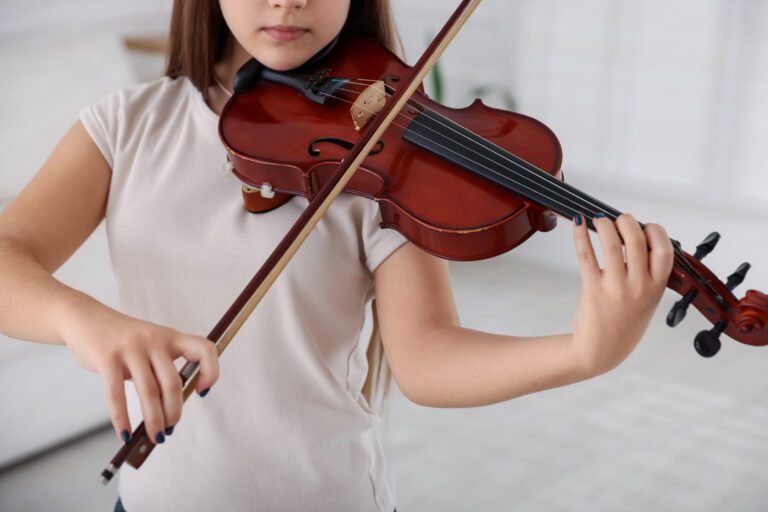
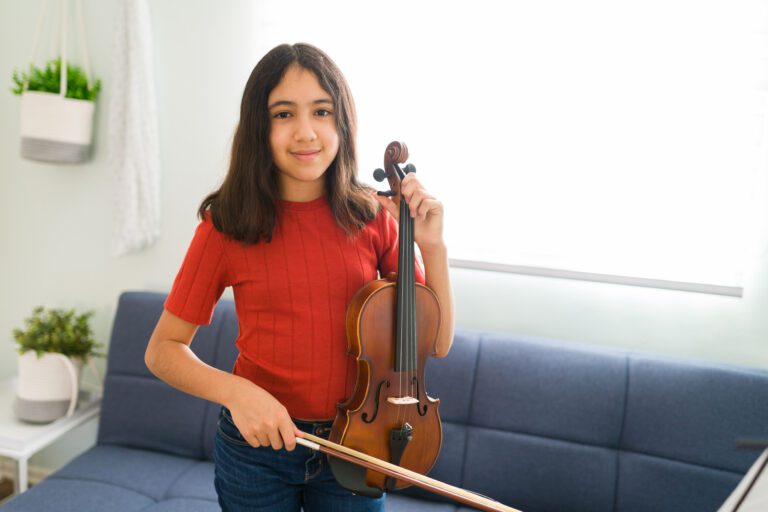
Choosing the right violin size for beginners is one of the most important steps in a successful musical journey. Many students and parents assume that violin size depends only on age, but the reality is more detailed and practical. The correct size influences posture, comfort, sound quality, and long-term progress. When beginners start with a properly fitted instrument, learning becomes easier, more enjoyable, and more effective.
For many learners, frustration in the early stages often comes from using an instrument that is too large or too small. This can lead to tension, poor technique, and even loss of motivation. Understanding the basics of choosing the right violin size for beginners helps students develop correct habits from the beginning and supports faster musical growth.
This guide explains how violin sizes work, why they matter, and how to make the best choice for beginners.
Why Violin Size Matters More Than You Think
Unlike many other instruments, violins are available in multiple sizes. This is because young learners and even adults have different arm lengths, hand sizes, and physical comfort levels.
Choosing the right violin size for beginners ensures:
Comfortable playing posture
Better hand positioning
Improved tone and control
Reduced physical strain
Faster technical development
A well-fitted violin allows students to focus on music instead of struggling with physical discomfort.
Understanding Standard Violin Sizes
Violins are categorized into several standard sizes to suit different learners.
Common sizes include:
1/16
1/10
1/8
1/4
1/2
3/4
4/4 (full size)
These sizes refer to the body length of the violin rather than the total instrument length. Beginners often move through multiple sizes as they grow.
How to Measure Violin Size Correctly
Age-based selection is not always accurate. The most reliable method involves measuring the student’s arm length.
Steps to measure:
Extend the left arm fully to the side
Measure from the neck to the middle of the palm
Compare the measurement with violin size charts
This method provides a more personalized and comfortable fit.
General Age and Size Guidelines
Although measurement is best, general guidelines help beginners understand options.
Typical recommendations:
Ages 3 to 5: 1/16 or 1/10
Ages 5 to 7: 1/8
Ages 7 to 9: 1/4
Ages 9 to 11: 1/2
Ages 11 to 13: 3/4
Teens and adults: 4/4
However, these are only starting points and should be confirmed through physical fitting.
Signs That a Violin Is Too Large
An oversized instrument creates technical challenges.
Common signs include:
Difficulty reaching the scroll
Strained shoulders
Poor posture
Limited finger mobility
These issues slow progress and increase injury risk.
Signs That a Violin Is Too Small
A violin that is too small may feel comfortable but can limit development.
Indicators include:
Over-bent wrist
Restricted sound projection
Poor tone quality
Proper sizing ensures balance between comfort and control.
The Role of Comfort in Early Learning
Comfort plays a key role in motivation and consistency.
When beginners feel comfortable:
Practice becomes enjoyable
Confidence increases
Progress accelerates
This makes choosing the right violin size for beginners essential for long-term success.
Students can learn effectively from home with expert guidance.
Building Confidence Through the Right Instrument
A well-fitted violin encourages:
Better sound
Positive practice habits
Performance confidence
This strengthens both musical and personal development.
Long-Term Benefits of Starting Correctly
Early decisions influence future success.
Students who begin with the right violin develop:
Strong technique
Healthy posture
Musical confidence
Lifelong interest in music
This foundation supports advanced learning.
Conclusion
Choosing the right violin size for beginners is a critical step that shapes comfort, technique, and motivation. A properly fitted instrument helps students develop strong foundations and enjoy their musical journey from the start.
At The Mystic Keys, students receive expert guidance, personalized instruction, and structured learning pathways that support both beginners and advanced learners. For those starting their journey, Violin Lessons Online provide the flexibility and professional support needed to grow confidently.
For more information and exciting resources about learning music, visit our website at The Mystic Keys. For more music content and exciting offers follow us on