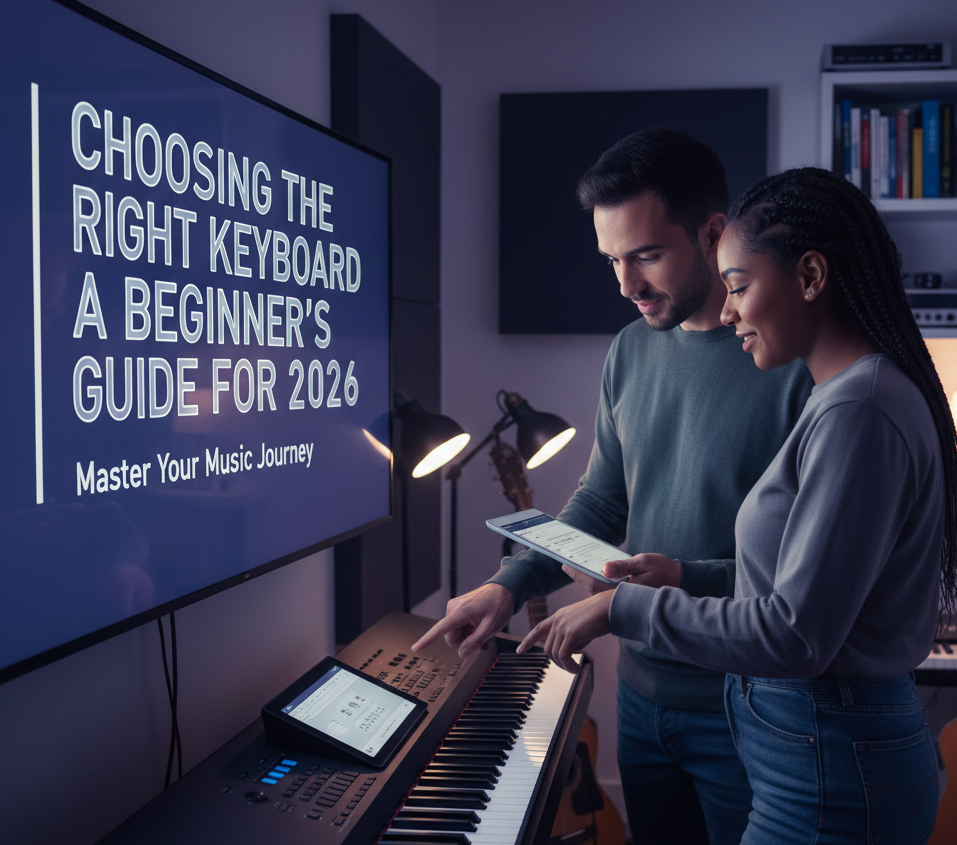
Choosing the Right Keyboard | A Beginner’s Guide for 2026
Choosing the Right Keyboard can feel overwhelming, especially in 2026, as technology, features, and options continue to expand rapidly. When you walk into a music store or browse online, you immediately encounter terms like touch sensitivity, weighted keys, polyphony, and MIDI compatibility. For a beginner, this flood of information can quickly feel confusing and intimidating.
This guide simplifies that journey. Whether you are buying a keyboard for yourself or for a child, this blog walks you through everything you need to know—step by step—so you can make a confident, informed decision that supports musical growth from day one.
Choosing the Right Keyboard Based on Your Musical Goal
Before looking at brands, models, or prices, it’s important to pause and think about why you want a keyboard. Your purpose will strongly influence what kind of instrument suits you best.
If your goal is to learn piano seriously, perhaps with classical training in mind, you’ll need a keyboard that closely mimics the feel and response of an acoustic piano. On the other hand, if you’re interested in casual playing, songwriting, or exploring modern sounds, a more versatile and lightweight keyboard may be ideal.
Similarly, beginners who plan to play pop, film music, or experiment with digital music production may benefit from features that go beyond traditional piano sounds. By identifying your musical direction early on, you can avoid spending money on features you don’t need—or missing out on ones that would truly help you.

Choosing the Right Keyboard by Understanding the Number of Keys
One of the first things you’ll notice when choosing a keyboard is the number of keys. Keyboards typically come with 49, 61, 76, or 88 keys.
For beginners, this choice should balance comfort and practicality. While 88-key keyboards replicate a full piano and are excellent for long-term learning, they are also larger and heavier. In contrast, 61-key keyboards are compact, easy to manage, and more than sufficient for beginners who are just starting out.
As a general rule, if space and budget allow, opting for a keyboard with more keys gives you room to grow. However, if portability and convenience matter more, starting smaller is perfectly acceptable in the early stages of learning.
Choosing the Right Keyboard with Proper Touch Sensitivity
Touch sensitivity is one of the most important features for beginners, yet it’s often overlooked. A touch-sensitive keyboard responds differently depending on how softly or firmly you press the keys, much like an acoustic piano.
This feature plays a crucial role in developing proper finger control and musical expression. Without it, every note sounds the same, regardless of how you play, which can limit musical growth.
In 2025, most beginner-friendly keyboards include touch sensitivity as a standard feature. Choosing a keyboard with this capability ensures that your playing feels more dynamic and expressive from the very beginning.

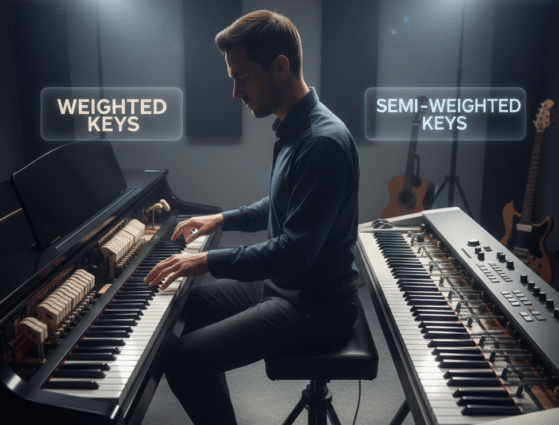
Choosing the Right Keyboard | Weighted vs. Semi-Weighted Keys
As you explore keyboards, you’ll come across terms like weighted and semi-weighted keys. These describe how closely the keys resemble the resistance of an acoustic piano.
Weighted keys are designed to feel heavier and more piano-like, making them ideal for students who plan to transition to an acoustic piano later. Semi-weighted keys, meanwhile, offer a lighter touch and are often preferred by beginners who want comfort and flexibility.
For absolute beginners, semi-weighted or touch-sensitive keys usually strike the right balance. They are easier on the fingers while still offering enough resistance to build technique over time.
Choosing the Right Keyboard with the Right Sounds and Learning Features
Modern keyboards in 2026 come packed with built-in sounds, rhythms, and learning tools. While it may be tempting to choose a keyboard with hundreds of voices, quantity isn’t always the key factor.
High-quality piano tones should be your priority. Additional sounds like strings, organs, or synths can add fun and variety, but they should complement—not distract from—your learning.
Many beginner keyboards also include lesson modes, split keyboards, metronomes, and recording features. These tools can be incredibly helpful for practice, especially if you’re learning independently or alongside online lessons.
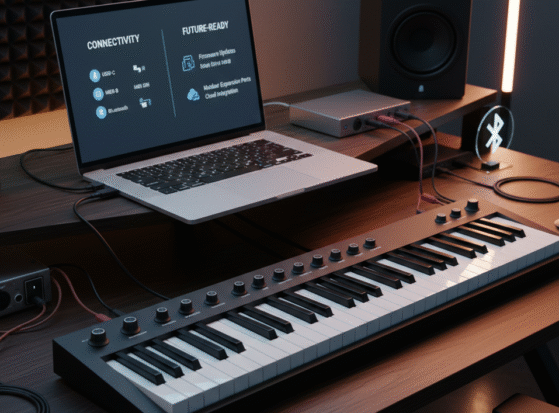
Connectivity | Staying Future-Ready
One of the biggest advancements in keyboards today is connectivity. In 2026, most keyboards support USB-MIDI, allowing them to connect seamlessly with computers, tablets, and learning apps.
This opens the door to interactive lessons, recording software, and digital music production. Bluetooth connectivity is also becoming more common, making wireless connections easier than ever.
Even if you don’t plan to use these features immediately, having a keyboard that supports modern connectivity ensures your instrument remains relevant as your skills and interests evolve.
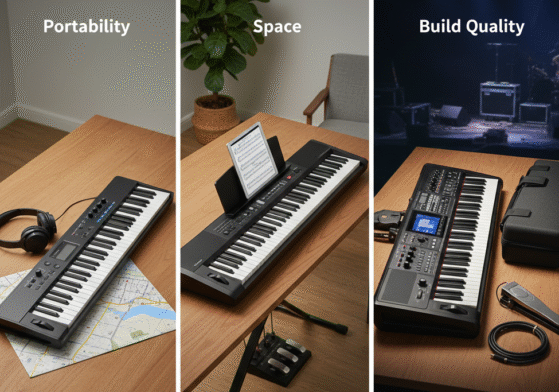
Portability, Space, and Build Quality
Practical considerations matter just as much as musical ones. Think about where the keyboard will be placed and how often it may need to be moved.
If you’re short on space or plan to travel with your instrument, a lightweight and compact keyboard is a smart choice. However, sturdiness should not be compromised. A well-built keyboard not only lasts longer but also feels more satisfying to play.
In many cases, investing in a basic stand and a comfortable bench can significantly improve posture and practice quality, especially for beginners.
Budget | Finding the Right Balance
Budget plays a major role in any purchase, and keyboards are no exception. The good news is that in 2026, beginners have access to excellent keyboards across a wide price range.
Rather than choosing the cheapest option, focus on value. A slightly higher investment often brings better sound quality, improved key action, and useful learning features. These elements can make the learning process smoother and more enjoyable.
Remember, a keyboard is not just an instrument—it’s a learning companion. Choosing wisely can keep you motivated and inspired for years to come.

Final Thoughts | Start Simple, Think Long-Term
Choosing the right keyboard as a beginner becomes easy when you approach it with clarity and intention. By understanding your musical goals, focusing on essential features, and planning for future growth, you can select an instrument that truly supports your learning. At The Mystic Keys, our Keyboard Classes Online help beginners make confident choices while building a strong musical foundation from the very start.
In 2025, beginner keyboards are more powerful, accessible, and learner-friendly than ever before. Choose a keyboard that feels comfortable and inspiring, and let your skills grow naturally with the right guidance. After all, the best keyboard is the one that motivates you to sit down, practice, and play every single day.
Intersted in learning music with us? Register now
For more information and exciting resources about learning music, visit our website at The Mystic Keys. For more music content and exciting offers follow us on
Facebook, Instagram, YouTube, LinkedIn, Twitter, Pinterest, and Threads.