Building Worship Confidence | Piano and Singing Assurance
Learning worship piano and singing is more than hitting the right notes or strumming the perfect chord. It’s about building worship confidence—guiding people into a space where they can connect spiritually, feel uplifted, and experience true reverence. Naturally, as you start this journey, one question often arises:
How long will it take to feel truly confident?
The answer isn’t simple. Confidence in worship music isn’t just about time; it grows through skill, practice, experience, and spiritual engagement. Some begin to feel it within months, while for others, it takes years.
Let’s explore what shapes this journey and how confidence develops, step by step.
Understanding What “Confidence” Really Means in Worship
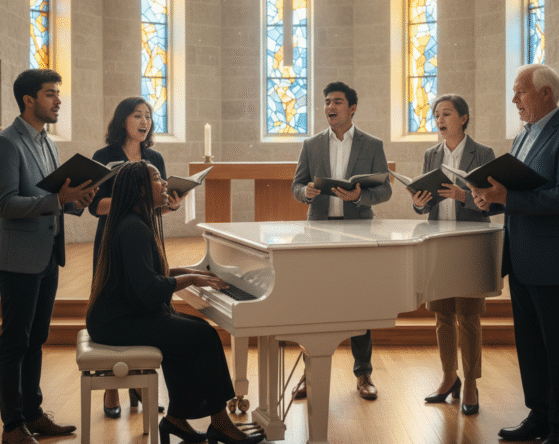
Before we talk about timelines, it’s important to clarify what confidence actually looks like. In worship, confidence is less about perfection and more about presence and poise.
True worship confidence means:
Continuing smoothly even after mistakes.
Focusing on worship rather than self-consciousness.
Feeling prepared and spiritually grounded.
Maintaining calm under pressure.
It’s not about never making errors—it’s about handling them gracefully and keeping your heart and mind centered on leading others in worship.
Building Worship Confidence | The First 3–6 Months
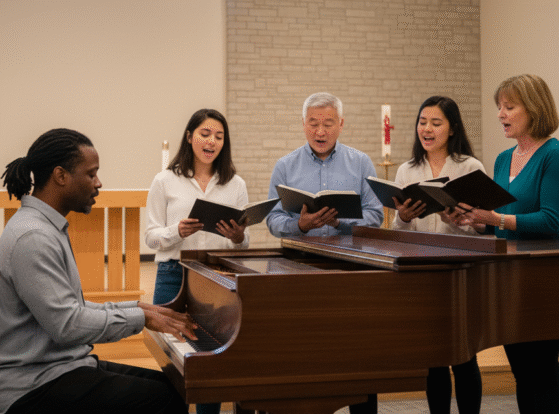
In the initial months, the focus is on building the foundation. For piano, this includes learning basic chord progressions, rhythm patterns, and smooth transitions. For singing, it means controlling pitch, mastering breath, and improving vocal stability.
During this stage, confidence may feel fragile. You may:
Second-guess chord changes.
Struggle to sing while playing.
Feel nervous about leading others.
Consistency is key. Daily practice of 20–45 minutes can help you start feeling stable. By the end of six months, you may notice your fingers and voice responding more naturally—even if full confidence hasn’t arrived yet. This early foundation is essential for long-term growth.
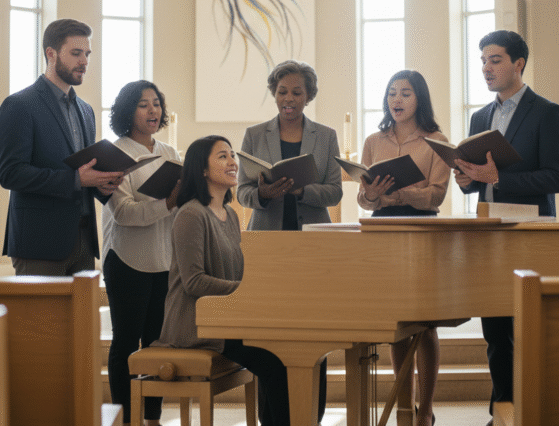
Deepening Worship Confidence | 1–3 Years
After one to three years of consistent practice, confidence grows not just technically but spiritually. You can play songs fluently, control dynamics, and add subtle fills. More importantly, you develop presence—an ability to sense the room, adapt to the congregation, and respond intuitively.
This is the stage where mistakes no longer define you. You trust your preparation and ability to adapt. Many worship musicians describe this season as when confidence finally feels natural rather than forced.
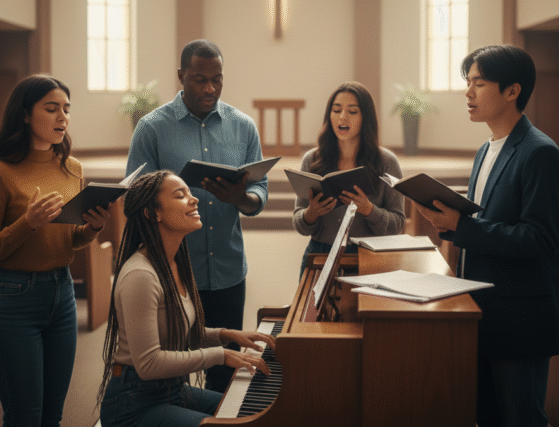
1–3 Years | Deepening Musical and Spiritual Confidence
After one to three years of steady practice, your growth becomes less about survival and more about depth.
Technically, you are now able to:
Play common worship progressions fluently.
Add fills and dynamic variations.
Maintain vocal stability over longer sets.
More importantly, your spiritual confidence strengthens. You focus less on mechanics and more on the room and the congregation. You sense when to extend a chorus, pause, or soften a moment, leading with presence rather than fear.
This is the stage where many worship musicians feel truly confident. Mistakes no longer shake your flow, and you trust both your preparation and your ability to adapt.
Factors That Influence Building Worship Confidence
While the general timeline provides guidance, each journey is unique. Key factors include:
Practice Consistency: Regular practice strengthens technical skill and mental assurance.
Prior Musical Experience: A background in piano, choir, or singing accelerates growth.
Performance Exposure: Leading others—even in small gatherings—builds emotional confidence quickly.
Mindset and Self-Talk: Viewing mistakes as learning opportunities fosters resilience.
These factors can either accelerate or slow the development of worship confidence.
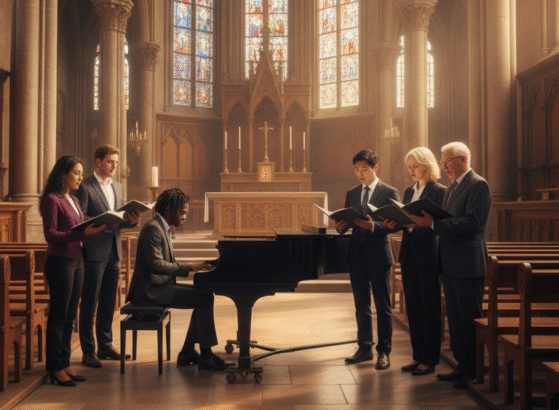
The Unique Challenge of Playing and Singing Together
Coordinating piano playing and singing at the same time presents a unique challenge. Your brain is juggling multiple tasks—your hands navigating chords, your voice staying on pitch, your memory recalling lyrics, and your heart remaining spiritually present.
At first, this can feel overwhelming, and it’s common to feel like your mind is constantly racing. However, with consistent practice and repetition, these elements begin to sync naturally. Gradually, playing and singing together shifts from a conscious effort to an almost automatic flow.
As this coordination takes hold, your confidence grows noticeably. Leading worship no longer feels like a balancing act; instead, it becomes intuitive, allowing you to focus more on the spiritual connection with the congregation. For many, reaching this level of ease takes an additional 6–12 months—but when it clicks, the sense of breakthrough is profound and transformational.

Spiritual Confidence | The Heart of Worship Leadership
True worship confidence is not only musical—it is spiritual. You may be technically proficient yet feel hesitant or self-conscious. Spiritual confidence grows when you:
Connect deeply with lyrics.
Engage in personal prayer and devotion.
Focus on serving rather than performing.
Shifting attention from “How do I sound?” to “How can I serve?” naturally eases fear and builds lasting confidence.
Signs You Are Building Worship Confidence
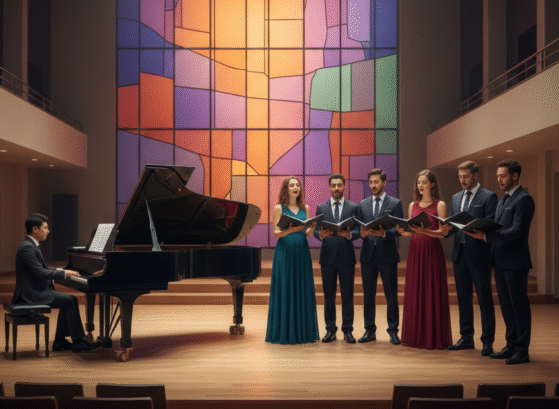
Sometimes, growth happens so gradually that it can be easy to overlook. You might notice it in small but meaningful ways: perhaps you recover gracefully from a mistake without losing focus, or you can maintain the tempo steadily even under pressure. You may find that your body feels more relaxed while playing, and that you’re willing to step forward and lead others, even in smaller gatherings. These subtle changes add up over time, and confidence quietly accumulates—so much so that one day, almost without realizing it, leading worship feels completely natural and effortless.

A Realistic Timeline
If you practice consistently and expose yourself to real worship settings:
6–12 months: Basic comfort and emerging confidence.
1–3 years: Solid, natural confidence in leading worship.
Beyond 3 years: Refinement, depth, and full presence as a worship musician.
Even seasoned leaders continue growing—confidence doesn’t end with perfection; it simply means fear no longer dominates.

Final Thoughts | Confidence Is a Journey, Not a Deadline
If you’re just beginning your journey, remember that every confident worship pianist and singer once stood exactly where you are now—unsure, nervous, and full of questions. The key is not to rush, but to take one step at a time.
Rather than asking, “How long will it take to feel confident?” try shifting your focus toward actionable steps that build lasting skill and assurance:
Practice consistently—even short daily sessions add up over time.
Grow a little each month—celebrate small improvements and milestones.
Serve others through music—let your heart lead, not just your fingers or voice.
At The Mystic Keys, our Worship Piano & Singing Lessons Online are designed to guide you through this journey with structured learning, personal mentorship, and spiritual encouragement. By combining consistent practice, thoughtful guidance, and heartfelt worship, you will gradually reach a place where playing, singing, and leading worship feels natural, calm, and deeply fulfilling.
Confidence in worship music is never a finish line—it’s a journey. And with the right support and dedication, that journey becomes both joyful and transformative.
For more information and exciting resources about learning music, visit our website at The Mystic Keys. For more music content and exciting offers follow us on
Facebook, Instagram, YouTube, LinkedIn, Twitter, Pinterest, and Threads.