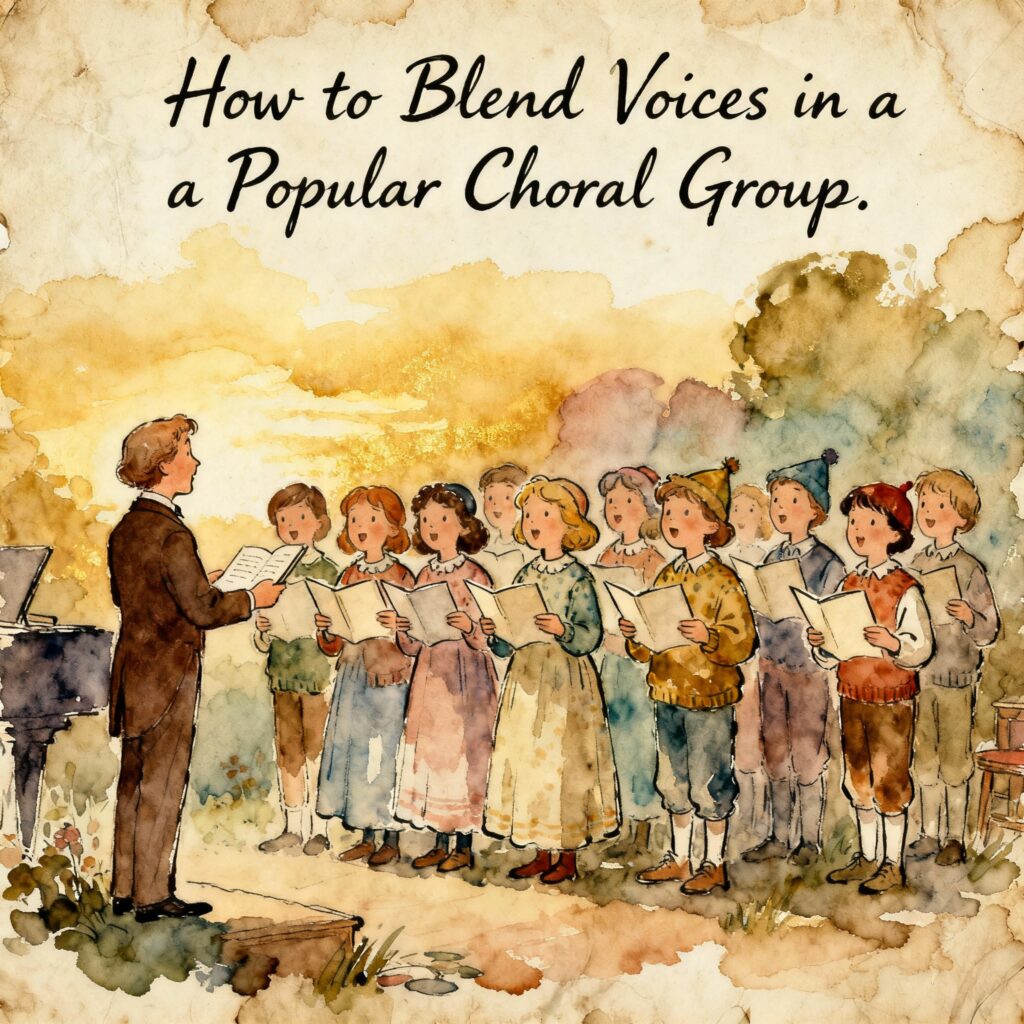
How to Blend Voices in a Popular Choral Group
To blend voices in a popular choral group is one of the most important skills a singer can develop. Unlike solo singing, choral performance depends on unity rather than individuality. When voices blend well, the audience hears a single, rich sound instead of multiple separate singers. This sense of cohesion is what gives popular choral music its emotional impact and professional polish.
Many choirs struggle with blend not because of lack of talent, but because blending requires awareness, discipline, and teamwork. This guide explores practical techniques that help singers blend voices in a popular choral group while maintaining musical expression and clarity.

Understanding What Vocal Blend Really Means
To blend voices in a popular choral group, singers must first understand what blend actually is. Vocal blend occurs when individual voices match in tone, volume, pronunciation, and musical intention.
A blended choir:
Sounds unified rather than layered
Maintains balance across all sections
Supports the song style without overpowering
Blend does not mean suppressing your voice completely. It means adjusting your sound so it complements the group instead of standing apart from it.
Listening as the Foundation of Choral Blend
The most important skill to choral group is listening. Strong choral singers listen more than they sing.
Effective listening helps singers:
Match pitch accurately
Adjust volume naturally
Stay rhythmically aligned
Instead of focusing only on your own part, listen to the voices around you. Pay attention to how your sound fits into the overall texture of the choir. Blend improves immediately when singers prioritize group sound over personal projection.

Matching Tone for a Unified Choral Sound
Tone matching is essential to blend voices. Even when singers sing the correct notes, differences in tone can make the choir sound uneven.
To improve tone matching:
Adjust brightness or warmth to match your section
Avoid overly heavy or breathy tones
Sing with relaxed, supported airflow
Popular choral music often requires flexibility in tone. Learning to adapt your vocal color based on the song style helps the choir maintain consistency throughout the performance.

Balancing Volume Across the Choral Group
Volume control plays a major role when learning to blend voices in a popular choral group. Singing louder does not make the choir sound stronger; balance does.
Healthy volume balance involves:
Singing at a level that matches your section
Pulling back when harmony needs support
Allowing the melody to lead naturally
When every singer adjusts their volume with intention, the choir achieves clarity without strain or dominance.
Singing With Unified Vowel Shapes
Vowel consistency is a subtle but powerful way to blend voices in a popular choral group. Even slight differences in pronunciation can disrupt blend.
To unify vowels:
Match mouth shape within your section
Follow the conductor’s vowel choices
Avoid exaggerated diction unless stylistically required
Unified vowels help pitches align more accurately and create a smoother, more polished choral sound.

Staying Rhythmically Tight as a Group
Rhythmic unity is essential to blend voices in a popular choral group, especially in contemporary and pop-style choral arrangements.
Rhythmic alignment improves when singers:
Breathe together before entrances
Release consonants at the same time
Stay aware of tempo changes
When rhythm is tight, the choir sounds confident and professional, even in complex arrangements.
Respecting Section Roles Within the Choir
Every section plays a unique role when trying to blend voices. Sopranos, altos, tenors, and basses each contribute differently to the overall texture.
Strong choral blend comes from:
Staying within your section’s role
Avoiding unnecessary embellishments
Trusting the arrangement
Understanding how your part supports the whole allows the choir to sound balanced and intentional.

Adapting Blend for Popular Music Styles
Popular choral music requires a different approach to blend compared to classical repertoire. To blend voices in a popular choral group, singers must adapt to stylistic demands.
This includes:
Clear but natural diction
Controlled use of vibrato
Dynamic contrast without vocal strain
Blend in pop choral music should feel contemporary and expressive while remaining unified.
Rehearsal Techniques That Improve Vocal Blend
Rehearsals are where singers truly learn to blend voices in a popular choral group. Focused rehearsal techniques make a noticeable difference.
Effective methods include:
Sectional rehearsals for tone matching
Singing passages softly to improve listening
Recording rehearsals to identify blend issues
Consistent rehearsal habits help singers internalize blend and apply it confidently during performances.

Avoiding Common Blending Mistakes in Choirs
Certain habits can prevent singers from learning how to blend voices in a popular choral group effectively.
Common mistakes include:
Singing with a soloist mindset
Ignoring conductor cues
Overusing vibrato in group passages
Awareness of these issues allows singers to correct them early and improve ensemble sound.
Developing Long-Term Blend as a Choral Singer
Learning to blend voices in a popular choral group is a long-term skill that develops with experience and patience. Strong choral singers are flexible, observant, and musically aware.
Growth happens when singers:
Stay open to feedback
Practice mindful listening
Prioritize unity over individuality
Over time, blend becomes instinctive rather than forced.
Conclusion: Creating One Voice From Many
To blend voices in a popular choral group is to transform individual singers into a single musical expression. When tone, volume, rhythm, and intention align, the choir delivers performances that feel powerful, emotional, and professional.
Strong vocal blend elevates popular choral music and allows the message of the song to connect deeply with listeners. With focused practice and musical awareness, any choral group can achieve a cohesive and memorable sound.
For musicians looking to strengthen ensemble awareness and musical sensitivity, structured training through Vocal-based Piano Lessons Online at The Mystic Keys can support skills that enhance listening, harmony, and group performance across choral settings.
Intersted in learning music with us? Register now
For more information and exciting resources about learning music, visit our website at The Mystic Keys. For more music content and exciting offers follow us on
Facebook, Instagram, YouTube, LinkedIn, Twitter, Pinterest, and Threads.