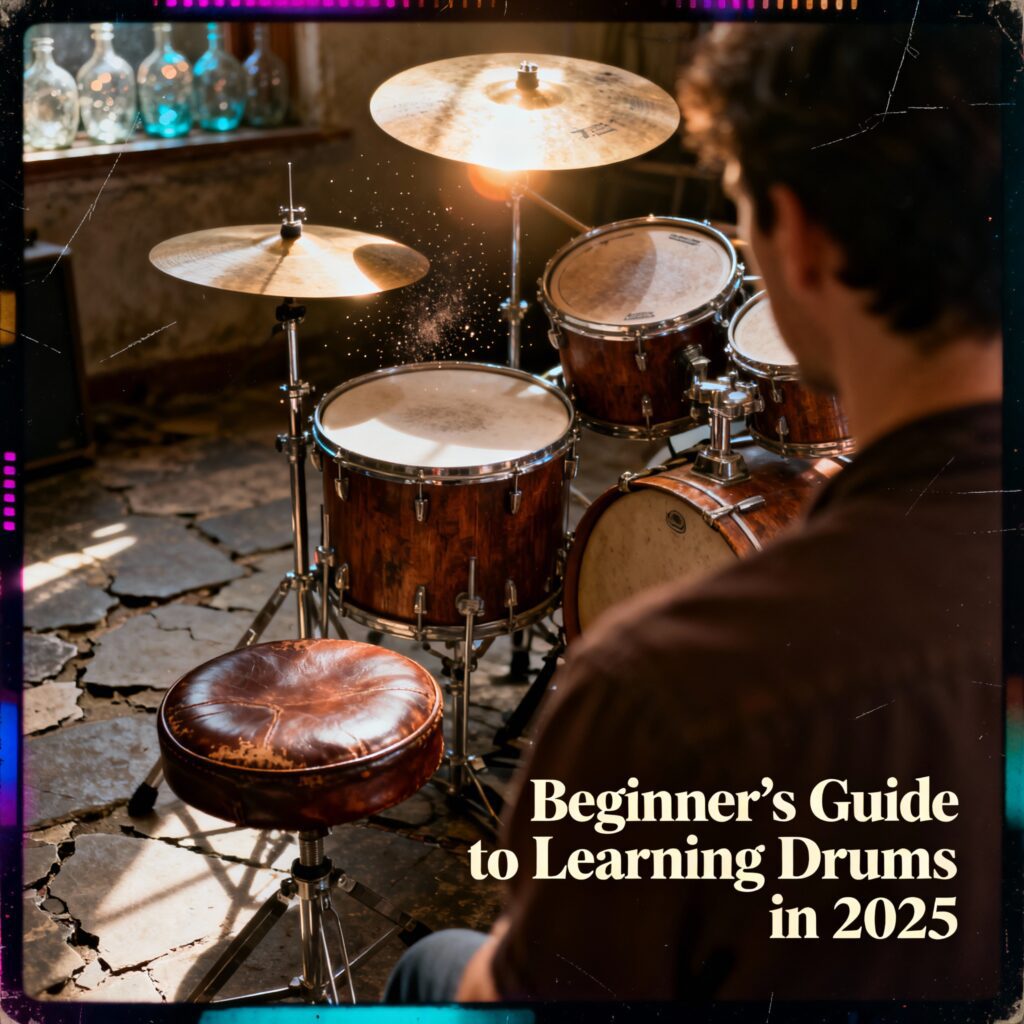
Beginner’s Guide to Learning Drums in 2025
Learning to play the drums has become easier, more accessible, and more exciting than ever. With new technology, interactive learning platforms, digital practice tools, and hybrid teaching methods, beginners can start strong and progress faster. This beginner’s guide to learning drums gives you everything you need to begin your drumming journey confidently — from choosing your instrument to mastering rhythms, reading notation, practicing effectively, and staying motivated.
Whether you’re an absolute beginner, a young student, or an adult learning drums for the first time, this guide will help you build a solid foundation for long-term growth.

Why Drums Are One of the Best Instruments to Learn in 2025
Drums are powerful, expressive, and incredibly fun. They’re central to almost every genre — pop, rock, gospel, R&B, EDM, worship, jazz, and world music. With the rise of online learning and digital tools, beginners can now learn drums even without a full acoustic drum kit.
Reasons Drums Are Easier to Learn in Today’s Era
Access to high-quality online drum lessons
Affordable electronic drums for quiet practice
Apps that guide timing, rhythm, and technique
AI-based feedback tools for accuracy
Video recording features for self-evaluation
Full drum courses designed for total beginners
Benefits of Learning Drums
Improves timing and coordination
Builds focus and discipline
Enhances musical awareness
Strengthens creativity
Boosts confidence
Provides physical activity
Helps relieve stress and boosts mood
In 2025, drumming is not just a musical skill — it’s a lifestyle hobby with mental, physical, and creative rewards.
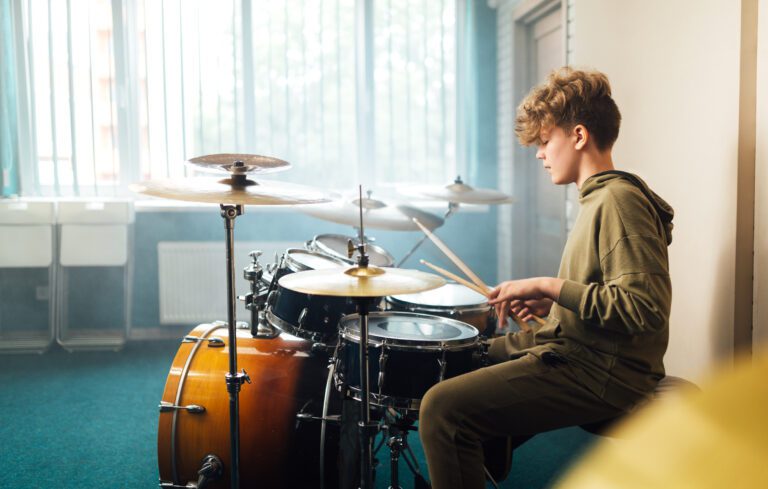
Choosing the Right Drum Setup as a Beginner
One of the biggest challenges beginners face is deciding which drum setup to start with. Today’s options are more flexible than ever.
Acoustic Drum Set
An acoustic kit gives you the classic, powerful drum sound and dynamic range.
Advantages
Authentic drum feel
Full control over dynamics
Ideal for band practice and live playing
Rich tone that helps develop ear training
Considerations
Loud, may disturb neighbors
Requires space
Needs tuning and maintenance
More expensive initially
Electronic Drum Set
Electronic kits have become extremely popular for beginners, especially in apartments and smaller homes.
Advantages
Quiet practice with headphones
Built-in coach features
Metronome, backing tracks, and learning tools
Compact and easy to set up
Works with learning apps
Affordable beginner-friendly models
Considerations
Different rebound from acoustic drums
Requires electricity
May limit dynamic expression depending on model
Practice Pad Setup
If you’re on a tight budget, you can start with just a practice pad and sticks.
Benefits
Cheapest way to begin
Helps develop stick control
Ultra-quiet practice
Highly portable
What You Learn on a Practice Pad
Grip and stroke fundamentals
Rudiments
Timing with a metronome
Basic rhythm building
A practice pad is not a full drum kit, but it is an excellent starting tool for solid technique.
Essential Equipment Every Drum Beginner Needs
To follow this beginner’s guide effectively, you need the right gear. Here’s the complete list for 2025.
Basic Gear Checklist
Drum kit (acoustic or electronic)
Drumsticks (5A is ideal for beginners)
Practice pad
Metronome or metronome app
Drum stool / throne
Headphones (for electronic kits)
Drum key (for tuning)
Music stand
Stick bag
Optional Gear That Helps Growth
Recording device
Drum mute pads
Backing track loops
Foot pedal upgrades
Beginner drum books
Ear protection (for acoustic kits)
Being prepared with the right tools saves frustration and boosts learning speed.
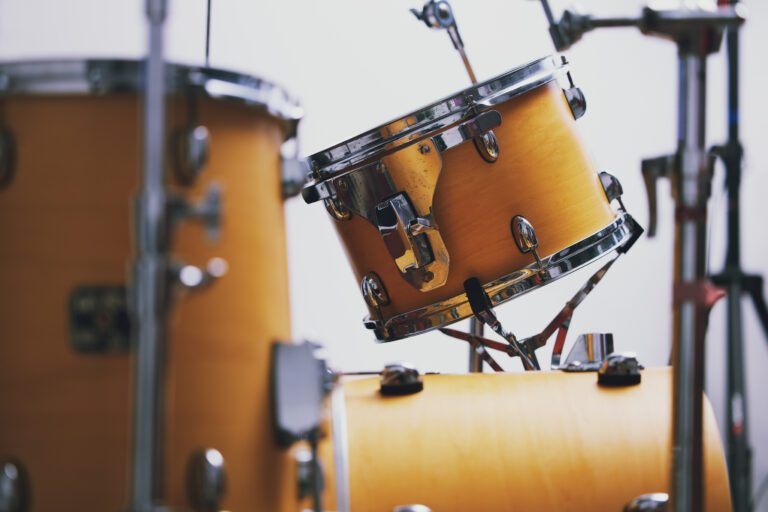
Learning the Basics: Your First Drum Skills
Drumming is built on fundamentals. Master these, and you can play almost every genre and song.
Understanding Stick Grip and Posture
Proper technique prevents injury and improves speed, tone, and accuracy.
Foundational Technique Points
Sit upright with relaxed shoulders
Keep wrists flexible
Hold sticks lightly, not tightly
Use wrist movement for soft notes
Use arm motion for louder notes
Keep your back straight
Place the drum throne at a comfortable height
Correct posture leads to better endurance and more expressive playing.
Developing Timing and Rhythm
Drums are the heartbeat of a band. Your timing is your greatest strength.
How to Build Solid Timing
Practice daily with a metronome
Count rhythms out loud
Learn subdivisions: quarter, eighth, sixteenth
Slow down when learning new patterns
Tap your foot on the downbeats
Record yourself to check accuracy
Drumming is 70% rhythm awareness and 30% movement — timing is everything.
Basic Drum Notation for Beginners
You don’t need to become an expert reader immediately, but notes help you grow faster.
Reading Fundamentals
Bass drum = bottom of staff
Snare drum = middle of staff
Hi-hat = top with an “x”
Quarter notes = steady beats
Eighth notes = twice as fast
Rests = silence beats
Measure = group of beats
Understanding notation lets you learn thousands of songs and drum exercises.
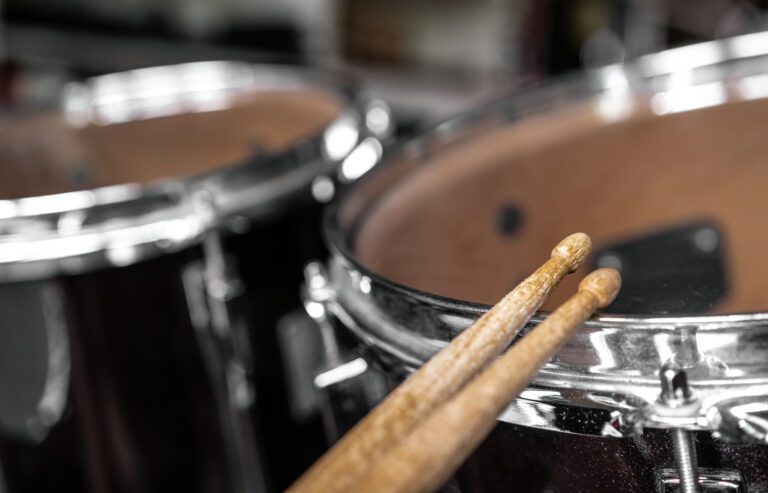
Your First Drum Beats and Patterns
Once you understand rhythm, it’s time to play beats! These are the essential first patterns.
Beginner Drum Patterns
Basic Rock Beat:
Kick – Snare – Kick – SnareStraight 8th-Note Beat
Kick/Snare Variation Beat
Hi-Hat Open/Close Beat
Simple Worship Beat
Basic Pop Groove
Why These Beats Matter
They appear in most modern songs
They teach coordination
They build timing and groove
They help beginners play real music early
Within a few weeks, beginners can play full songs using these patterns.
Mastering Drum Rudiments in 2025
Rudiments are the building blocks of drumming. They teach stick control, speed, and precision.
Core Rudiments Every Beginner Must Learn
Single Stroke Roll
Double Stroke Roll
Paradiddle
Flams
Drags
Why Rudiments Are Essential
Improve hand independence
Strengthen wrist control
Build accuracy and endurance
Form the foundation of fills
Create clean technique
Even 10 minutes of rudiments daily can dramatically improve your playing.

Modern Tools and Apps for Drum Learning in 2025
Technology has revolutionized drum learning. These tools boost speed, accuracy, and motivation.
Top Learning Apps
Melodics
Drumeo
Moises
Rhythmicity AI
Metronome+
YouTube structured drum lessons
Benefits of Digital Tools
Real-time feedback
Guided practice sessions
Play-along backing tracks
Step-by-step learning paths
Timing accuracy analysis
Apps make drum learning more interactive and efficient.
Playing Drums in a Band or Worship Team
By 2025, many beginners join bands earlier because learning tools are better and confidence grows faster.
Skills Needed for Playing in a Group
Keeping a steady tempo
Listening to others
Playing simply — not overplaying
Following cues
Supporting the song
Drummers are leaders — your groove guides everyone.
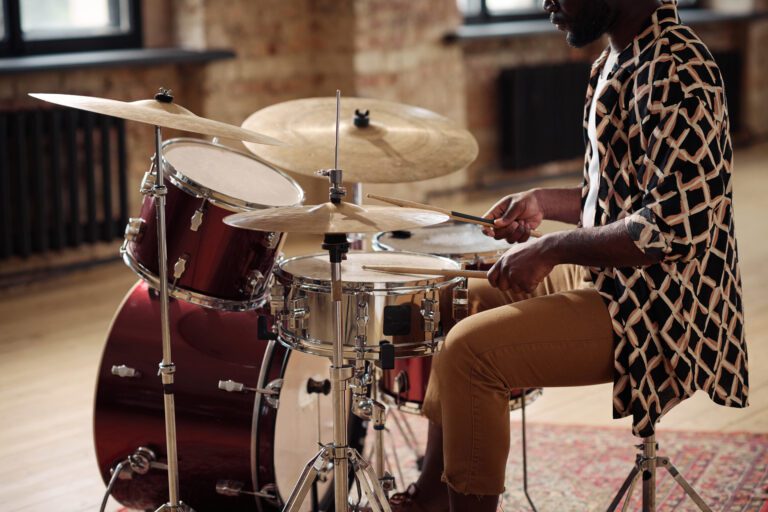
Beginner’s guide to learning drums
Motivation is key to long-term success.
Ways to Stay Inspired
-
Set weekly goals
-
Celebrate milestones
-
Join drumming communities
-
Record monthly videos
-
Learn your favorite songs
-
Practice with friends
Passion grows when you see improvement.
Conclusion
Drumming is one of the most rewarding instruments to learn, and with modern technology, structured practice methods, and accessible equipment, beginners can progress faster than ever. This beginner’s guide to learning drums in 2025 gives you everything you need to start confidently — from choosing your setup to mastering techniques, playing songs, and building your first grooves. With commitment and consistency, you’ll quickly develop the skills to play in bands, worship teams, or even record your own music.
Your drumming journey begins with one decision — pick up the sticks and start today.
For more information and exciting resources about learning music, visit our website at The Mystic Keys. For more music content and exciting offers follow us on
Facebook, Instagram, YouTube, LinkedIn, Twitter, Pinterest, and Threads.