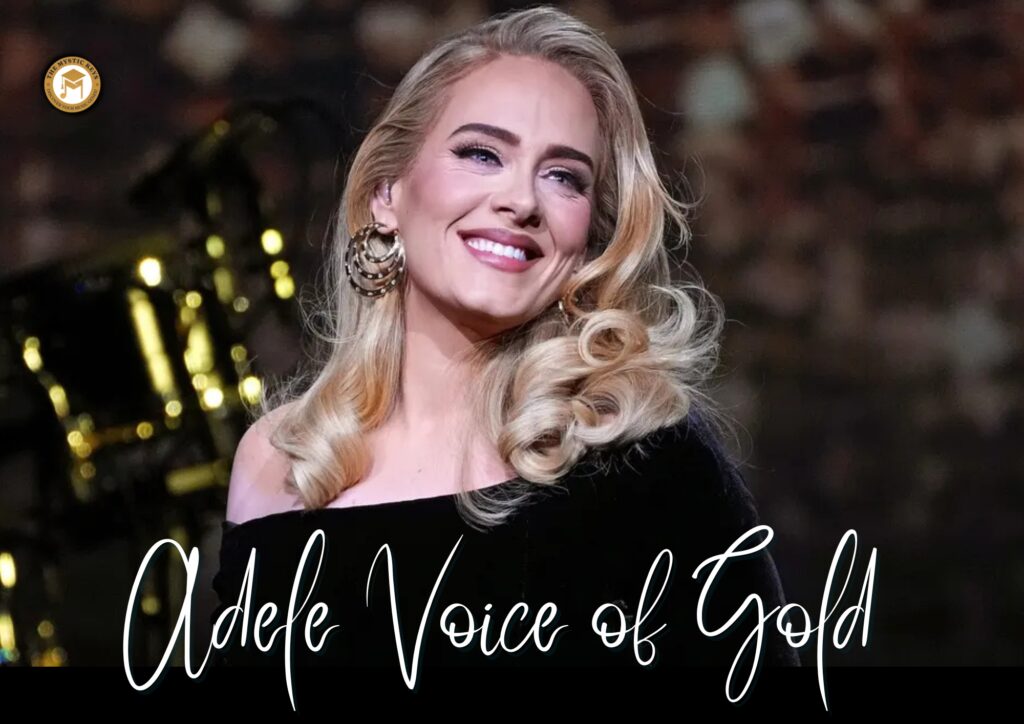
Adele Voice of Gold | The Emotion Behind Every Note
When Adele Laurie Blue Adkins opens her mouth to sing, the world seems to pause. Conversations fade, crowds fall silent, and for a fleeting moment, everything else melts away, leaving only the sound of undeniable truth — a voice so human, so intimately tied to emotion, that it feels like a mirror reflecting our own hearts. Adele voice doesn’t just carry melodies; it weaves stories — stories of heartbreak, loss, resilience, and love, laid bare in their most vulnerable and authentic form.
This impact becomes even more profound when considered in the context of today’s music landscape. In an era dominated by production-heavy tracks, auto-tuned vocals, and fleeting trends, Adele’s artistry stands in remarkable contrast. Her voice emerges as raw, unfiltered, and soul-stirring, commanding attention not through embellishment but through pure, emotional resonance. It is this quality that has earned her the title of “golden” — not for superficial glamour, but for a rare, enduring purity that deepens with time, transcends fleeting trends, and leaves a lasting impression on all who listen.

The Unique Sound | Anatomy of Adele Voice
Adele voice belongs to that rare category that can’t quite be replicated. Technically, she is classified as a lyric mezzo-soprano, capable of navigating a range that stretches from a grounded, resonant lower register to a powerfully soaring upper range. But beyond the range and resonance, what truly defines her voice is its texture — smoky, soulful, and slightly raspy, like emotion itself brushing against the air.
Her voice possesses a certain gravitational pull — one that makes you listen, not because it’s loud, but because it feels true. In songs like Set Fire to the Rain or All I Ask, Adele uses her lower register to build an emotional foundation, then rises to a soaring climax with breathtaking power. Her control is impeccable — she knows exactly when to lean into a phrase, when to let her voice tremble, and when to unleash a storm of emotion.
It’s not only about singing the right notes; it’s about how she shapes them. Adele’s subtle vibrato, the warmth of her tone, and her impeccable sense of phrasing combine to create a sound that feels alive. Every pause, every breath, carries meaning.
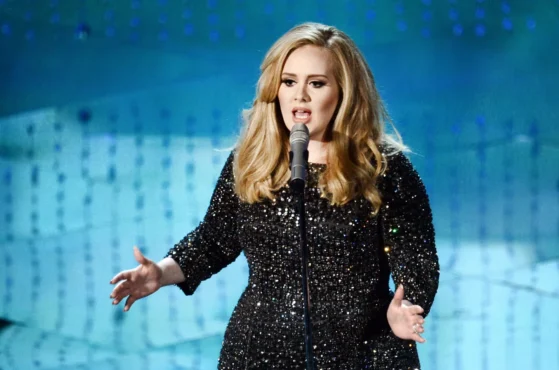
Emotion | The Invisible Thread Behind Every Note
If Adele’s voice is gold, emotion is the fire that shapes it.
Every song she sings feels like a confession — intimate, honest, and deeply personal. She doesn’t just perform; she relives each lyric. Her voice carries heartbreak, vulnerability, and quiet strength. Listeners feel that she isn’t telling a story — she’s living it.
When Adele sang Someone Like You live at the BRIT Awards, she didn’t just sing; she wept. That moment became iconic — a reminder that music connects more than it performs. The tears in her eyes mirrored millions around the world. It wasn’t a performance; it was truth.
That is Adele’s true gift — she dissolves the line between artist and listener. You don’t just hear her voice; you feel it. Adele voice reaches straight to the heart, wrapping pain and hope into sound. It heals broken spirits and awakens memories. Her golden tone turns emotion into art. When Adele voice fills the air, the world listens — and feels every note.

The Science of Emotion in Adele Voice
Science explains why Adele’s songs often make people cry. Musical psychology points to “emotional contagion,” where a singer’s genuine tone makes the listener’s brain mirror the emotion. Adele’s voice, with controlled vibrato, subtle breaks, and dynamic shifts, triggers deep empathy. Her technical skill combined with authentic expression lets listeners not just hear her music, but feel it.
Her phrasing feels unpredictable yet natural, like someone speaking straight from the heart. A slight catch in her throat or a breath between words adds human imperfection that pulls people closer. She doesn’t aim for flawless sound — she aims for truth. That authenticity awakens something primal in the listener — recognition and shared feeling.
Her songs often use simple harmonies and minor keys that evoke nostalgia and longing, giving Adele’s voice the emotional spotlight. The uncluttered production surrounds her vocals with space and warmth. Every sigh, whisper, and cry she releases becomes part of the story — a story her voice tells better than words ever could.

A Journey Through Heartbreak and Healing
Adele’s discography mirrors her own life’s evolution — from youthful heartbreak to mature self-reflection. Her debut album, 19, introduced a young woman discovering love and its fragility. 21 was an emotional thunderstorm — a raw expression of pain, heartbreak, and empowerment that resonated with millions. 25 reflected on nostalgia, forgiveness, and closure, while 30 became a deeply introspective album that explored motherhood, identity, and acceptance.
Each album isn’t just a musical project — it’s a diary set to melody.
And through every era, her voice has evolved — growing warmer, deeper, and more emotionally intricate. The maturity in her tone mirrors the maturity of her experiences. It’s not just about vocal training; it’s about life lived, love lost, and lessons learned.
When Adele sings, you feel the years she’s carried — the laughter, the tears, the sleepless nights, and the silent moments of strength. That’s what gives her voice its golden hue — it’s aged by emotion.

The Technical Brilliance of Adele Voice
While emotion drives her artistry, Adele’s technique anchors it. She is a master of breath control, allowing her to sustain powerful notes without strain. Her posture, phrasing, and diaphragmatic support contribute to her signature tone — strong yet fluid.
A key to her expressive singing lies in her dynamic range — the way she moves from a near-whisper to a room-filling belt within a single phrase. This dynamic variation mirrors the ebb and flow of emotion itself, keeping listeners engaged.
Her use of vocal breaks—those delicate cracks or flips in tone—is intentional. Instead of hiding them, Adele lets them live within her performances, turning what could be considered flaws into moments of vulnerability. It’s a vocal choice that aligns perfectly with her emotional transparency.
Despite a serious vocal cord surgery in 2011, Adele made a stunning comeback, performing with even greater control and nuance. She learned to protect her voice, emphasizing healthy technique and mindful projection, without losing her emotional authenticity — a testament to her resilience and professionalism.

Adele’s Cultural Resonance | Beyond the Charts
Adele’s impact extends far beyond commercial success. While she has sold millions of records, won countless awards, and filled stadiums across the globe, her true legacy lies in the emotional culture she has cultivated — one that resonates deeply with listeners of all kinds.
In a music landscape often dominated by digital perfection and manufactured trends, she has reintroduced the power of vulnerability, showing that raw, unfiltered emotion can be both compelling and beautiful. Her songs have become part of our shared memories, accompanying life’s most poignant moments — from weddings and breakups to quiet, introspective nights when we seek comfort. In these instances, Adele transforms from a performer into something more intimate: a companion who understands our hearts.
Moreover, her music transcends age, culture, and background, connecting listeners through universal emotions that everyone can relate to. At the same time, she stands as a beacon of authenticity, openly resisting fleeting industry trends and remaining true to her voice and artistic vision. By doing so, she demonstrates that sincerity and emotional truth often resonate far more powerfully than spectacle or superficial perfection.

The Magic of Adele Voice Live
Watching Adele live is an experience that headphones can’t capture. Her concerts have a raw intimacy — she laughs, jokes, and sometimes even forgets lyrics, yet the moment she sings, the entire room transforms.
Take Glastonbury 2016, for example. Standing before thousands, she belted Someone Like You, and as the audience joined in, her voice blended with theirs, turning individual sorrow into collective unity. It was a perfect example of how her music connects people on a profound level.
Her candid humor between songs adds another layer to the experience, creating a contrast with her emotional intensity. This blend of laughter and tears makes her performances feel deeply human — a celebration of all the emotions we carry but rarely show.

The Legacy of Gold
To call Adele’s voice “gold” is to acknowledge its dual nature — rare and radiant, yet forged through fire. Like gold that must undergo refining to truly shine, Adele’s artistry has been shaped by life experiences, resilience, and unwavering honesty.
This process of refinement is reflected in the influence she wields today. Across generations, young artists study her phrasing, vocal control, and emotional delivery, while older listeners draw comfort from her authenticity. Critics, fans, and fellow musicians alike see her as one of the defining voices of the 21st century.
Yet, beyond technical mastery and acclaim, what truly sets Adele apart is her ability to capture the essence of music itself. Her voice reminds us that music is not just sound, but feeling — the kind that makes you close your eyes, let a melody fill the air, and realize that someone else truly understands your heart.
It is this rare combination of skill, sincerity, and emotional resonance that elevates her voice beyond performance. And ultimately, that’s why Adele’s voice will forever be remembered as a voice of gold — not merely for its brilliance, but for its profound power to move and heal.
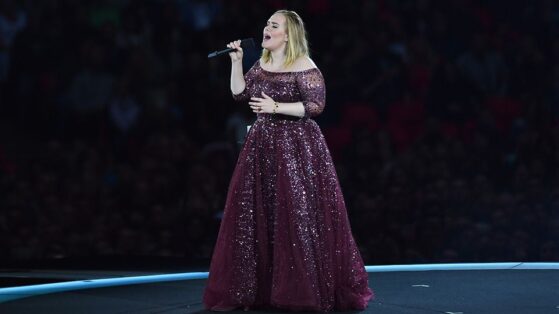
Conclusion | Adele Voice as a Human Experience
Adele voice is a mirror — it reflects listeners’ emotions. In every note, there is honesty; in every pause, meaning. She does not just sing; she opens doors to human experience.
Her voice of gold is more than beauty. It is courage — the courage to feel, express, and connect. At The Mystic Keys, we teach students to use their voices to convey real emotion. Adele voice shows that the strongest instrument is the human heart, and we help students unlock its power.
Her tone carries heartbreak, hope, and strength in every phrase. Students learn to shape their voice like Adele, balancing power and vulnerability. Each lesson encourages expression, not just technique. Her singing inspires confidence and emotional depth. At The Mystic Keys, we help every student find their unique voice.
For more information and exciting resources about learning music, visit our website at The Mystic Keys. For more music content and exciting offers follow us on
Facebook, Instagram, YouTube, LinkedIn, Twitter, Pinterest, and Threads.