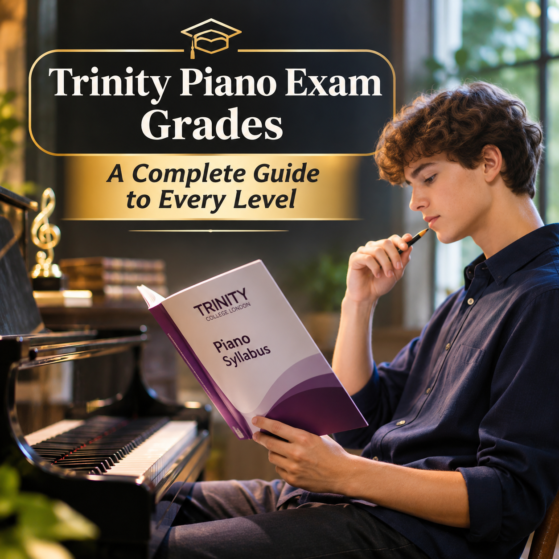
How to Prepare for a Trinity College London Piano Examination
Introduction
Preparing for a trinity piano examination is an exciting milestone in every music student’s journey. It gives learners an opportunity to demonstrate their musical abilities, improve their technical skills, and gain confidence through structured preparation. However, performing well in an examination requires more than simply learning a few piano pieces. Students must develop accuracy, musical expression, rhythm, technical control, and the ability to perform confidently under examination conditions.
The Trinity College London Piano Examination provides students with an opportunity to demonstrate their musical development through a structured assessment. Whether a student is preparing for an Initial grade or progressing towards the higher grades, having a clear practice routine and understanding the examination requirements can make the experience much more manageable.
With the right guidance, consistent practice, and a well-planned preparation strategy, students can approach their examination with greater confidence.
Let’s explore how to prepare effectively for a Trinity College London Piano Examination and develop the skills needed for a successful performance.

1. Understanding the Trinity Piano Examination Structure
Before beginning preparation, students should understand how their chosen examination is organised. Knowing what to expect helps them divide their practice time effectively and avoid overlooking important sections.
Trinity College London offers different examination formats, including face-to-face examinations and digital examinations. The requirements can vary depending on the format and pathway selected.
For the standard Classical and Jazz graded piano face-to-face examination, the main components include:
Three performance pieces: Students prepare three pieces selected according to the relevant syllabus.
Technical work: This includes scales and arpeggios, along with three technical exercises.
Supporting tests: Students complete two supporting tests according to their grade and the available options.
For Initial to Grade 5 face-to-face examinations, students can choose two supporting tests from sight reading, aural, improvisation, and musical knowledge. For Grades 6–8, sight reading is compulsory, alongside a choice between aural and improvisation.
Digital examinations have different pathways. The Technical Work pathway includes pieces and technical work, while the Repertoire-only pathway focuses on four performance pieces without a separate technical work section.
Students should always check the current syllabus for their chosen grade and examination format before starting preparation.
2.Choosing Pieces for Your Trinity Piano Examination
Selecting the right repertoire is one of the most important steps in preparing for a piano examination. Students should choose pieces that match their technical abilities while allowing them to demonstrate musical expression and performance skills.
Trinity College London offers a variety of repertoire choices across different musical styles. Students can explore classical, jazz, contemporary, and other musical genres, depending on the syllabus.
When selecting examination pieces, consider the following:
Technical difficulty: Choose pieces that match the student’s current ability and can be performed accurately with sufficient preparation.
Musical variety: Select pieces that demonstrate different musical styles, moods, and techniques.
Personal interest: Students are more likely to remain motivated when they enjoy the music they are learning.
Performance potential: Choose pieces that allow students to demonstrate dynamics, articulation, rhythm, and musical interpretation.
Students should also ensure that their selected pieces appear in the correct Trinity repertoire list or meet the syllabus requirements for their examination.
Learn Trinity Piano Examination Each Piece in Small Sections
Instead of trying to master an entire composition at once, divide it into smaller sections.
Start by practising a few bars at a comfortable tempo. Focus on the notes, fingering, rhythm, and hand coordination before gradually combining the sections.
This approach makes challenging passages easier to manage and reduces the likelihood of developing incorrect playing habits.
3. Develop Strong Piano Technique
Technical ability plays an important role in a piano examination. Students need to demonstrate control, accuracy, flexibility, and confidence while playing different musical passages.
Even when a student knows all the examination pieces, weak technique can affect the quality of the performance.
Some important areas to focus on include:
Correct finger positioning.
Finger independence and flexibility.
Hand coordination.
Wrist movement and relaxation.
Accurate articulation.
Consistent tone production.
Smooth transitions between musical passages.
Students should avoid rushing through technical exercises simply to finish them. Each exercise should be practised carefully, with attention to accuracy and control.
A good technical foundation makes difficult musical passages easier to perform and helps students maintain consistency throughout the examination.
4. Practise Scales and Arpeggios Regularly
Scales and arpeggios are important elements of piano training. They help students understand musical patterns, improve finger coordination, and become familiar with different keys.
During Trinity piano examination preparation, students should practise the scales and arpeggios specified in their current grade syllabus.
Here are some effective ways to practise them:
Begin slowly to maintain accurate notes and fingering.
Practise hands separately before combining them when appropriate.
Gradually increase the tempo without sacrificing accuracy.
Learn the required patterns from memory where the syllabus specifies this.
Practise regularly instead of leaving technical work until the final weeks.
Students should also understand the musical purpose behind these exercises. Scales and arpeggios are not simply examination requirements; they provide building blocks for understanding melodies, chords, and harmony.
5. Prepare the Technical Exercises Carefully
Alongside scales and arpeggios, Trinity’s piano syllabus includes technical exercises designed to develop different aspects of piano playing.
These exercises help students work on skills such as tone production, balance, voicing, coordination, and finger and wrist flexibility.
To prepare effectively:
Read the instructions for each exercise carefully.
Identify the specific technique being assessed.
Practise difficult sections slowly.
Pay attention to the required articulation and dynamics.
Work on maintaining a balanced and controlled sound.
Practise the complete exercise regularly.
Students should understand that technical exercises are not just about playing the correct notes. They also demonstrate how effectively a pianist can control sound and movement.
6. Improve Sight-Reading Skills
Sight reading involves performing a piece of music that the student has not practised beforehand. It tests the ability to recognise musical notation, understand rhythm, and respond to unfamiliar musical patterns.
For Trinity face-to-face piano examinations, sight reading is one of the supporting test options for Initial to Grade 5 and becomes compulsory from Grade 6 onwards.
Many students find sight reading challenging because they are accustomed to practising familiar pieces repeatedly. However, this skill improves with regular exposure to unfamiliar music.
How to Practise Sight Reading
Read the notes before beginning to play.
Identify the key signature and time signature.
Look for repeated patterns and familiar musical phrases.
Observe the rhythm before playing.
Maintain a steady pulse instead of stopping after every mistake.
Practise short, unfamiliar musical extracts regularly.
The goal is not to play every note perfectly on the first attempt. Students should focus on maintaining musical continuity and responding confidently to the notation.
7. Develop Strong Aural Skills
Aural skills involve listening carefully and recognising different musical elements. They are essential for becoming a well-rounded musician and are also included among the supporting test options in Trinity’s face-to-face examinations.
During an aural test, candidates listen to a musical extract played by the examiner and respond to questions about features such as dynamics, articulation, texture, and style.
Students can improve their listening abilities through regular exercises.
For example:
Listen to short musical extracts and identify changes in volume.
Recognise whether a melody moves upwards or downwards.
Identify differences between major and minor sounds.
Pay attention to rhythmic patterns.
Listen for changes in articulation and musical character.
Practise describing the mood and style of a piece.
Aural preparation should be a regular part of music lessons rather than something students attempt only before the examination.
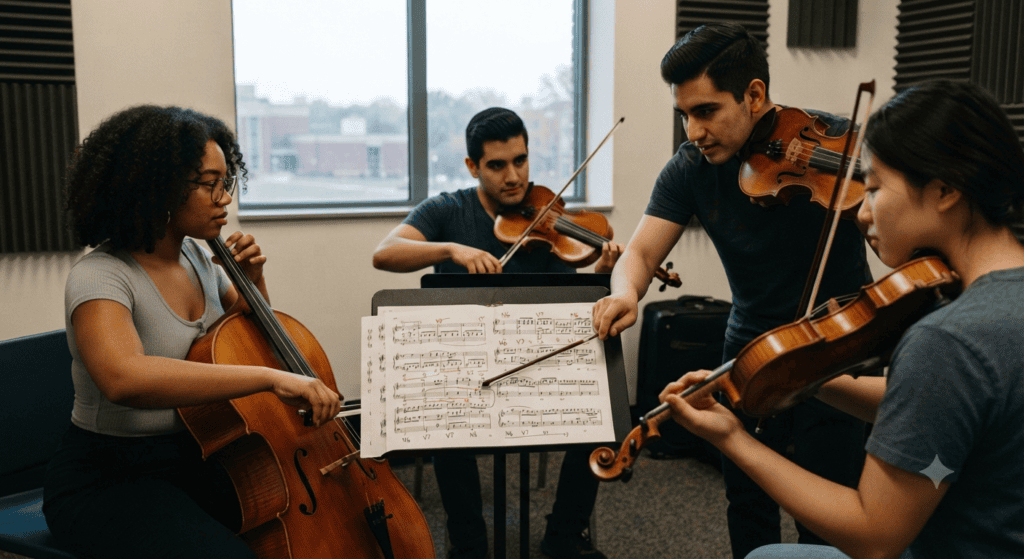
8. Practise Musical Expression and Interpretation
Playing the correct notes is important, but a musical performance should communicate more than technical accuracy.
Students must learn how to interpret a composition and bring its musical character to life.
Expression involves several elements, including dynamics, articulation, phrasing, tempo, and tone quality.
For example, a gentle melody may require a softer touch and smooth phrasing, while a lively composition may need more energy and rhythmic precision.
To improve musical expression:
Follow the dynamic markings in the score.
Pay attention to phrasing and musical direction.
Practise contrasts between loud and soft passages.
Avoid playing every section with the same intensity.
Listen to different interpretations while developing an individual musical approach.
Students should aim to perform each composition with both technical control and musical understanding.
9. Create a Consistent Piano Practice Schedule
One of the most effective ways to prepare for an examination is to follow a realistic and consistent practice routine.
Practising for several hours on one day and then avoiding the piano for the rest of the week is generally less effective than shorter, regular sessions.
A balanced practice schedule should include different examination components.
For example:
| Practice area | Suggested time |
|---|---|
| Examination pieces | 20 minutes |
| Scales and arpeggios | 10 minutes |
| Technical exercises | 10 minutes |
| Sight reading or aural practice | 10 minutes |
| Reviewing difficult sections | 10 minutes |
This is an example routine rather than a fixed requirement. Students can adjust the duration according to their grade, ability, and available practice time.
The most important thing is to practise consistently and give sufficient attention to every examination component.
10. Learn to Perform Under Examination Conditions
Knowing how to play a piece during a regular practice session is different from performing it in front of an examiner.
Some students become nervous during examinations, which can affect their concentration, timing, and confidence.
One way to manage this is to practise performing under conditions that resemble the actual examination.
Students can:
Perform their pieces from beginning to end without stopping.
Ask a teacher or family member to act as an audience.
Record practice performances and review them.
Practise entering, getting comfortable at the piano, and beginning confidently.
Avoid restarting every time a small mistake occurs.
Practise maintaining composure when something does not go as planned.
Mock examinations can also help students become familiar with the experience of performing several prepared sections in sequence.
11. Manage Examination Nerves and Build Confidence
Feeling nervous before a piano examination is completely normal. Even well-prepared students may experience anxiety when performing in front of an examiner.
The key is to develop a positive approach to preparation and understand that an examination is an opportunity to demonstrate musical progress.
Here are some ways to manage performance anxiety:
Prepare well in advance: Avoid leaving difficult pieces or technical exercises until the final few days.
Practise deep breathing: Take a few slow breaths before beginning the performance to help settle your mind.
Focus on the music: Concentrate on the opening notes, rhythm, and musical expression rather than worrying about the final result.
Accept small mistakes: A minor mistake does not mean the entire performance has gone wrong. Learn to continue playing confidently.
Maintain a positive mindset: Remind yourself of the time and effort you have invested in preparation.
Confidence develops through familiarity, practice, and experience.
12. Review the Examination Requirements Before the Exam Day
As the examination approaches, students should review the syllabus and make sure they understand the requirements for their particular grade and format.
A final preparation checklist can help avoid unnecessary confusion.
Confirm that all selected pieces meet the current syllabus requirements.
Review the required scales, arpeggios, and technical exercises.
Practise the selected supporting tests if taking a face-to-face examination.
Check the examination format and appointment details.
Follow the instructions for the relevant digital or face-to-face assessment.
Ensure the piano or keyboard is ready for practice and recording, where applicable.
Get sufficient rest before the examination.
Students taking digital examinations should also check Trinity’s recording and submission instructions in advance. Technical problems can create unnecessary stress if they are left until the last moment.
How The Mystic Keys Helps Students Prepare for Piano Examinations
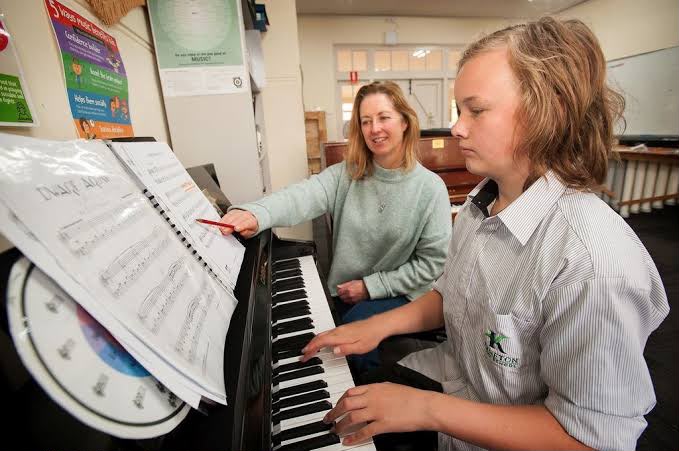
At The Mystic Keys, we understand that preparing for a graded piano examination requires structured learning, regular practice, and individual guidance. Our online piano lessons help students develop essential skills such as note reading, scales, arpeggios, rhythm, technique, and musical expression. With personalised instruction from experienced music educators, students can work on their examination pieces, strengthen challenging areas, and build confidence at their own pace. Whether a learner is preparing for their first graded examination or progressing towards advanced levels, The Mystic Keys provides a supportive learning environment that encourages consistent improvement and a deeper understanding of music. Our goal is not simply to help students prepare for an examination, but to develop capable, confident musicians who enjoy their musical journey.
Conclusion
Preparing for a Trinity College London Piano Examination requires more than memorising musical pieces. Students need to develop technical accuracy, musical expression, listening abilities, sight-reading skills, and performance confidence.
A structured practice routine, careful repertoire selection, and consistent guidance can make the preparation process more effective and enjoyable.
Every student progresses at a different pace, so preparation should be based on individual strengths and areas that need improvement. With patience, dedication, and the right teaching support, students can approach their examination with confidence and make meaningful progress as pianists.
At The Mystic Keys, we believe every examination is an opportunity to learn, grow, and celebrate musical development.
For more information and exciting resources about learning music, visit our website at The Mystic Keys. For more music content and exciting offers follow us on
Facebook, Instagram, YouTube, LinkedIn, Twitter, Pinterest, and Threads,