
10 Effective Choir Rehearsal Techniques for Better Performances
Introduction
Using effective choir rehearsal techniques can help singers improve vocal accuracy, develop stronger harmonies, and perform confidently as a team. Whether you lead a school choir, church choir, community ensemble, or professional vocal group, structured rehearsals make it easier to identify weaknesses and work towards a polished performance.
A successful choir rehearsal involves more than singing through songs repeatedly. It requires focused warm-ups, clear instructions, active listening, rhythmic precision, and constructive feedback. By introducing the right techniques, choir directors can make rehearsals more productive while helping singers enjoy the learning process.
In this guide, we explore 10 effective choir rehearsal techniques that can improve vocal blend, timing, expression, and overall ensemble performance.

1. Start With Effective Choir Rehearsal Warm-Ups
A good warm-up prepares the voice and body for singing. Beginning with vocal exercises helps singers develop breath control, pitch accuracy, and flexibility before tackling challenging repertoire.
Try including:
Gentle humming exercises.
Simple ascending and descending scales.
Breath-control exercises.
Short rhythmic and articulation patterns.
Start within a comfortable vocal range and gradually increase the difficulty. Avoid pushing singers to produce loud or high notes before their voices are ready.
Rehearsal tip: Keep warm-ups purposeful by connecting them to the musical challenges in the songs you will practise that day.
2. Use Sectional Rehearsals to Improve Choir Harmony
Sectional rehearsals allow sopranos, altos, tenors, and basses to practise their individual parts separately before singing together.
This approach is particularly helpful when a song includes complex harmonies, independent melodies, or difficult entrances.
During sectional practice:
Rehearse difficult passages slowly.
Identify notes that singers consistently miss.
Practise entrances and cut-offs.
Repeat challenging intervals.
Encourage singers to listen for their own part without losing awareness of the music.
Once each section becomes more confident, bring the entire choir together and focus on blending the parts.
3. Practise Rhythm and Timing With a Metronome
Consistent timing helps a choir sound unified. Even when individual singers know their notes, differences in tempo can make the ensemble sound unsettled.
A metronome can help singers develop a shared sense of pulse, especially when learning syncopated rhythms or complicated passages.
Use these steps:
Begin at a manageable tempo.
Clap or speak the rhythm before singing.
Practise difficult rhythmic patterns separately.
Sing the passage with the metronome.
Gradually increase the tempo when the choir performs accurately.
Once the rhythm is secure, practise without the metronome to develop natural musical phrasing while maintaining a steady pulse.
4. Improve Pitch Accuracy Through Active Listening
Active listening is one of the most important choir rehearsal techniques because singers must hear how their notes relate to the rest of the ensemble.
Encourage choir members to listen to neighbouring vocal parts rather than concentrating exclusively on their own voices.
Useful exercises include:
Sustaining a chord and listening for balanced harmony.
Singing one part while listening to another.
Matching a reference pitch before beginning a phrase.
Repeating short melodic intervals.
Identifying moments when the harmony sounds unstable.
The goal is to help singers recognise their role within the overall sound. Better listening often leads to more accurate tuning and smoother harmonies.
5. Break Difficult Songs Into Smaller Sections
Trying to master an entire song in one rehearsal can overwhelm singers and waste valuable practice time.
Instead, divide the music into manageable sections, such as verses, choruses, transitions, and endings.
For each section:
Identify the most difficult notes or rhythms.
Practise slowly and accurately.
Repeat the passage until it becomes more secure.
Connect it to the section that follows.
Revisit it later to check consistency.
This method helps singers focus on specific challenges before putting the entire piece together.
Rehearsal tip: Spend more time on sections that need improvement rather than repeatedly singing passages the choir already performs confidently.

6. Develop Better Vocal Blend and Balance
A choir sounds unified when singers balance their individual voices and listen to the ensemble.
Vocal blend does not mean everyone must sound identical. Instead, singers should adjust their tone, volume, and vowel shapes to create a cohesive group sound.
To improve vocal blend:
Encourage singers to listen across their section.
Practise matching vowel sounds.
Avoid letting one voice overpower the group.
Maintain consistent tone quality.
Balance louder and softer vocal sections.
Choir directors can also ask singers to listen for the overall chord rather than focusing only on their own notes.
7. Use Dynamics to Create More Expressive Performances
Dynamics help communicate emotion and make a performance more engaging. A choir that sings every phrase at the same volume may sound technically accurate but lack musical contrast.
During rehearsals, identify where the music should become softer, louder, more intense, or more delicate.
Practise:
Pianissimo: Very soft singing.
Piano: Soft singing.
Mezzo-forte: Moderately loud singing.
Forte: Loud singing.
Crescendos and diminuendos: Gradual increases and decreases in volume.
The choir should also maintain pitch accuracy and clear diction while changing dynamics.
Encourage singers to connect dynamic decisions with the meaning of the lyrics and the emotional direction of the music.
8. Improve Diction and Pronunciation
Clear diction helps audiences understand the words and meaning of a song. When consonants are inconsistent or vowels differ significantly between singers, the choir can sound unclear.
Practise important words and phrases separately before singing them at full tempo.
Try these techniques:
Speak the lyrics together in rhythm.
Practise difficult consonant combinations.
Match vowel shapes across the choir.
Coordinate final consonants and word endings.
Sing the phrase slowly before returning to the intended tempo.
Pay particular attention to the beginning and end of words, as these are common places for singers to become unsynchronised.
Clear diction should support the musical line rather than interrupt it.
9. Record Rehearsals and Review Performance Progress
Recording a rehearsal gives singers and directors an opportunity to hear the ensemble from an audience’s perspective.
During a rehearsal, singers may focus so intensely on their own parts that they miss balance problems, uneven phrasing, or unclear lyrics.
A simple recording can help identify these issues.
After listening, ask:
Are the vocal sections balanced?
Is the tempo consistent?
Are the lyrics understandable?
Do the dynamics sound intentional?
Are entrances and endings coordinated?
Which sections need further practice?
Choose one or two areas to improve in the next rehearsal rather than trying to fix everything at once.
Recording should be used constructively, helping singers recognise progress as well as areas for development.
10. Practise Stage Presence and Performance Readiness
A polished choir performance depends on more than correct notes. Singers must also demonstrate confidence, focus, and awareness of the conductor and audience.
Include short performance simulations during rehearsals.
Ask singers to practise:
Standing with balanced posture.
Maintaining attention on the conductor.
Beginning and ending together.
Remaining focused between songs.
Communicating the emotion of the music.
For competition preparation, rehearse the complete programme without unnecessary interruptions. This helps singers become familiar with the sequence and manage performance nerves.
The aim is to make the final performance feel prepared, coordinated, and musically engaging.
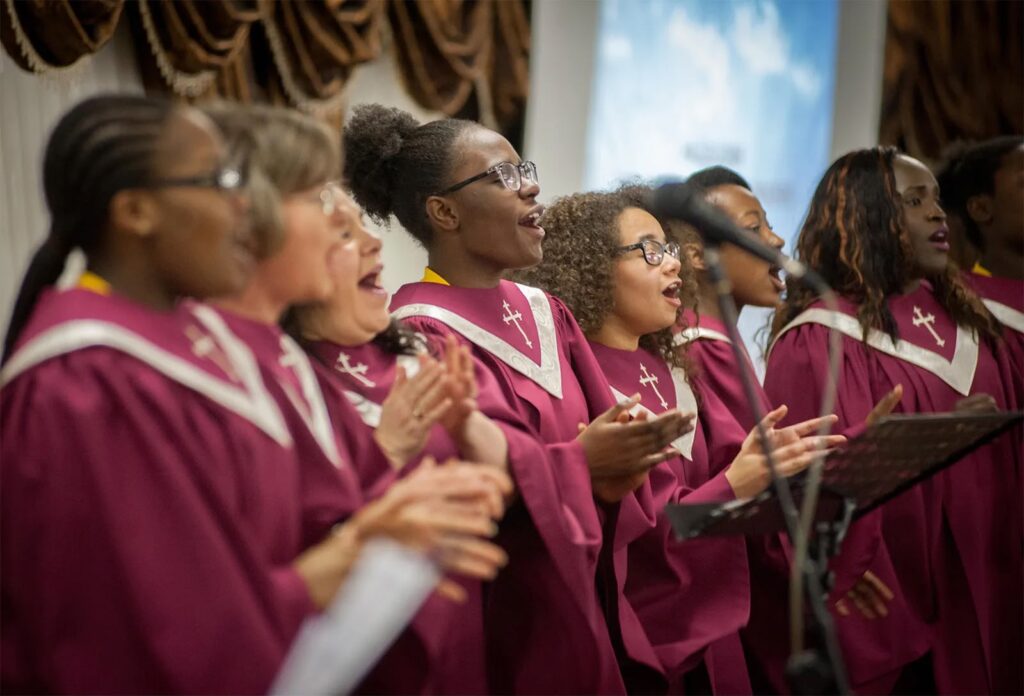
How to Make Choir Rehearsals More Productive
Even the best choir rehearsal techniques work best when rehearsals are well organised.
Use a simple rehearsal plan that includes:
A short vocal warm-up.
Review of previously learned repertoire.
Focused practice of difficult sections.
Work on dynamics, diction, and balance.
A full run-through of selected pieces.
A brief review of progress and next steps.
Share clear goals with the choir before each rehearsal. When singers know what they are working towards, they can participate more actively and practise more effectively between sessions.
Common Choir Rehearsal Mistakes to Avoid
Avoid these common habits that can reduce rehearsal effectiveness:
Spending too long on warm-ups without connecting them to the repertoire.
Repeating songs without identifying specific problems.
Ignoring quieter vocal sections.
Practising only notes while neglecting dynamics and diction.
Giving feedback that is too vague to act on.
Rushing through difficult passages.
Leaving no time to review progress.
A focused rehearsal should give singers a clear understanding of what improved and what they need to work on next.
How The Mystic Keys Helps Singers Improve Their Musical Skills
At The Mystic Keys, structured music education can help singers develop the skills needed for confident group performances. Regular vocal practice and guided learning can support pitch accuracy, breath control, rhythmic awareness, diction, and musical expression.
These foundational skills are valuable for choir members preparing for concerts, church services, school events, and competitions. With consistent practice and constructive guidance, singers can become more confident contributors to an ensemble.
The Mystic Keys supports musical growth through personalised online training, including Worship Piano & Singing Lessons Online, helping learners develop their skills, confidence, and musical expression.
Conclusion
The 10 effective choir rehearsal techniques for better performances covered in this guide focus on the skills that help a choir sing as one: warm-ups, sectional practice, timing, listening, vocal blend, dynamics, diction, and performance preparation.
By setting clear goals and practising challenging sections with intention, choir directors can make rehearsals more productive and help singers develop greater confidence.
The most effective rehearsals are not necessarily the longest. They are the ones where every singer understands the music, listens to the ensemble, and works towards a shared musical goal.
For more information and exciting resources about learning music, visit our website at The Mystic Keys. For more music content and exciting offers follow us on
Facebook, Instagram, YouTube, LinkedIn, Twitter, Pinterest, and Threads