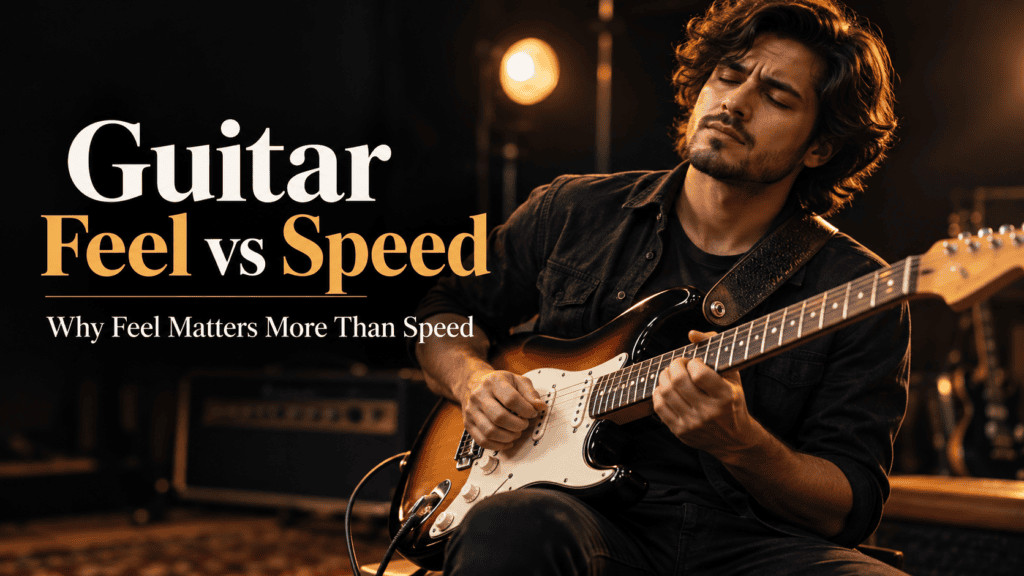
Guitar Feel vs Speed Why Feel Matters More Than Speed
Many guitar players believe that playing faster is the secret to becoming a great guitarist. However, understanding Guitar Feel vs Speed is essential for developing musical expression and becoming a skilled guitarist. They spend hours practising scales, learning difficult solos, and improving their finger movements. While speed is an important skill, it is not the only thing that makes a guitarist sound impressive.
Have you ever listened to a guitar solo that gave you goosebumps, even though it contained only a few notes? That is the power of musical expression. Great guitarists understand that music is not just about how quickly they can play but also about how they make listeners feel.
Understanding guitar feel vs speed can help you improve your technique, develop your musical identity, and create performances that connect with your audience.
What Is the Difference Between Guitar Feel and Speed?
Guitar speed refers to how quickly you can play notes, scales, riffs, and solos. It requires finger coordination, picking accuracy, and technical control.
Guitar feel is about how you play those notes. It includes timing, rhythm, dynamics, phrasing, tone, and emotional expression.
Imagine two guitarists playing the same melody. The first plays every note quickly and accurately but without much variation. The second uses gentle bends, pauses, changes in volume, and carefully controlled notes.
Although the second guitarist plays more slowly, the performance may sound more expressive and memorable.
Both skills are valuable, but understanding guitar feel helps you turn technical ability into meaningful music.
Why Does Guitar Feel Matter More Than Speed?

Speed can impress an audience, but feel helps listeners connect with a performance. A guitarist who understands musical expression knows when to play softly, when to build intensity, and when to leave space between notes.
Here are some important reasons why feel matters.
1. Feel Makes Music More Emotional
Music can communicate happiness, sadness, excitement, peace, and many other emotions. Guitarists use techniques such as bending, vibrato, and dynamics to express these feelings.
A slow guitar solo can sound powerful when every note is played with intention. A fast solo can also communicate emotion, but speed alone does not guarantee an expressive performance.
Before practising a melody, think about the feeling you want to create. This helps you make musical choices rather than simply playing the correct notes.
2. Good Timing Creates a Strong Groove
Timing is one of the most important elements of guitar feel. It helps you play comfortably with a song’s rhythm and stay connected with other musicians.
A guitarist with good timing can make a simple chord progression sound exciting. They understand how to emphasise beats, maintain a steady pulse, and work with the bass and drums.
To improve your timing, practise with a metronome or drum backing track. Begin at a comfortable tempo and focus on playing each note evenly. As your control improves, experiment with different rhythms and accents.
3. Expressive Playing Makes Simple Notes Memorable
You do not need complicated scales or fast runs to create a memorable guitar performance.
Bends, slides, vibrato, and pauses can give even a simple melody a distinctive character. Holding a note and allowing it to ring naturally can sometimes create more emotion than playing a long sequence of fast notes.
Try playing a short melody in different ways. Use softer dynamics, longer notes, and pauses to discover how small changes can transform the mood.
4. Feel Helps You Develop Your Own Style
Every guitarist has a different musical personality. Some prefer smooth melodies, while others enjoy blues-inspired bends, powerful rock riffs, or rhythmic acoustic playing.
Developing feel helps you discover what makes your playing unique.
Listen to different guitarists and observe their phrasing, tone, and timing. Instead of copying only their speed, pay attention to how they communicate musical ideas.
Over time, these listening habits can help you develop a style that reflects your own musical preferences.
What Can We Learn from Famous Guitarists?
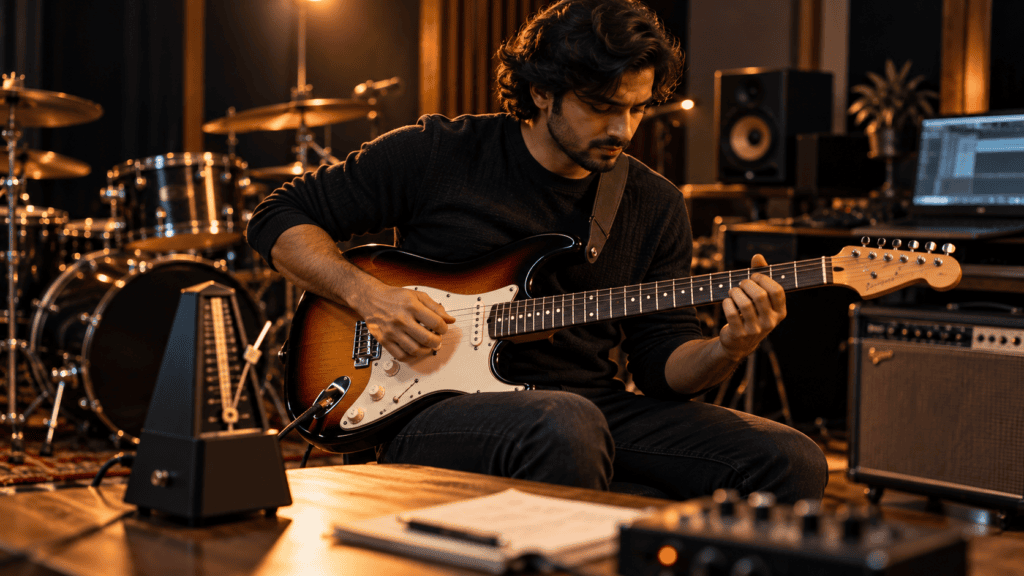
Many celebrated guitarists demonstrate that musical expression is just as important as technical ability.
B.B. King was known for expressive blues phrasing and distinctive vibrato. His playing shows how a few carefully shaped notes can communicate powerful emotions.
David Gilmour, known for his work with Pink Floyd, is admired for melodic solos, sustained notes, and expressive bends. His playing demonstrates how silence and space can make a musical phrase more powerful.
Jimi Hendrix combined technical creativity with expressive bends, distinctive tone, and innovative phrasing. His style illustrates how technique can support a unique musical voice.
Eric Clapton has demonstrated the expressive possibilities of blues guitar through his phrasing, dynamics, and tone.
These musicians have different approaches, but they share an important lesson: technical ability becomes more meaningful when it serves the music.
Listen to one of your favourite guitar solos and notice how the musician uses pauses, sustained notes, and changes in intensity. You may discover that the most memorable moments are not always the fastest ones.
How to Improve Guitar Feel Before Increasing Speed
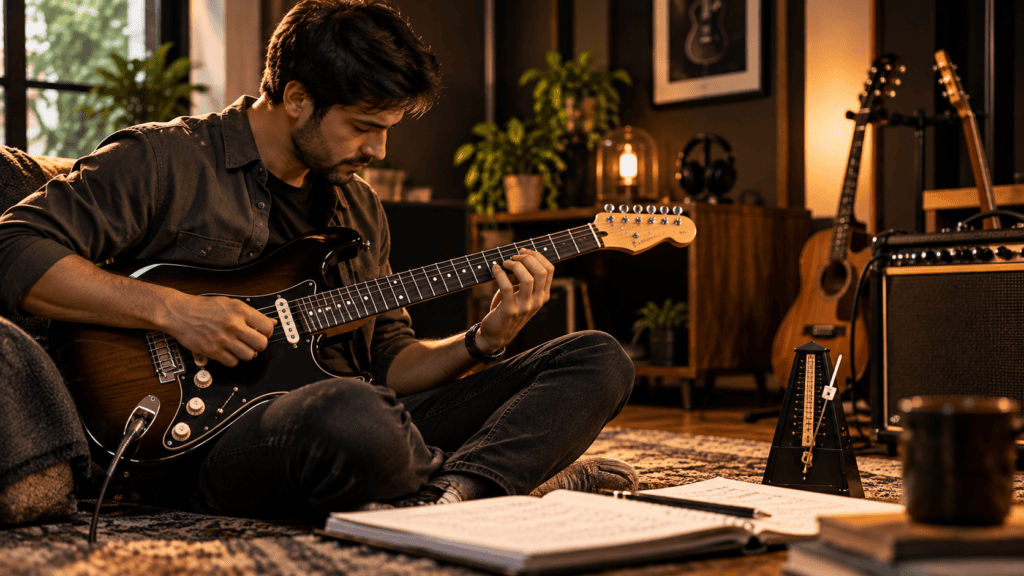
If you want to improve your guitar playing, you do not need to stop practising speed. Instead, develop accuracy and expression before increasing the tempo.
Exercise 1: Play Slowly and Listen Carefully
Choose a simple melody or scale. Play each note clearly and pay attention to its duration, volume, and tone.
Avoid rushing through difficult sections. Focus on making the passage sound controlled and musical.
Exercise 2: Practise with a Metronome
Set your metronome to a comfortable tempo and play one note per beat. When you can maintain steady timing, try playing two notes per beat.
Increase the tempo gradually without sacrificing accuracy or relaxation.
Exercise 3: Practise Bends and Vibrato
Choose a comfortable note on your guitar and practise bending it to the correct pitch. Use a tuner to check your accuracy.
Next, practise adding controlled vibrato to a sustained note. Listen to how these techniques change the character of the sound.
Exercise 4: Experiment with Dynamics
Play a short musical phrase softly, then repeat it with more intensity. Try gradually increasing and decreasing the volume.
This exercise helps you understand how dynamics can make a melody more expressive.
Exercise 5: Learn a Guitar Solo by Ear
Choose a short solo that matches your current skill level. Listen to small sections and try to reproduce not only the notes but also their timing, length, and expression.
Notice where the guitarist pauses, holds a note, or changes the intensity. These details are essential to developing musical feel.
How Should You Balance Guitar Feel and Speed?
The best approach is to develop both skills together. Speed helps you perform technically demanding passages, while feel allows you to communicate musical ideas clearly.
A balanced practice routine might include:
10 minutes: Finger exercises, scales, and picking technique.
10 minutes: Rhythm, timing, bends, vibrato, and phrasing.
15 minutes: Learning songs or guitar solos.
5 minutes: Recording your playing and reviewing your progress.
Adjust this routine according to your skill level and available practice time. Consistent, focused practice is more valuable than rushing through exercises without listening carefully.
Whenever you increase the tempo, keep your hands relaxed and your notes clear. If your playing becomes tense or uneven, slow down and rebuild control.
Remember, the goal is not simply to play faster. It is to play with greater confidence, precision, and expression.
Learn Expressive Guitar Playing with The Mystic Keys

Developing good guitar feel takes time, regular practice, and careful listening. Learning with an experienced teacher can help you improve your timing, correct technical problems, and understand how to express yourself through music.
At The Mystic Keys, students can explore online guitar lessons tailored to their experience and musical goals. Whether you are a complete beginner or looking to improve your lead guitar skills, structured lessons can help you build a strong musical foundation.
With personalised guidance, regular feedback, and consistent practice, you can develop both technical control and expressive playing.
Explore The Mystic Keys to learn more about online music lessons.
Understanding guitar feel vs speed can change the way you approach guitar practice. Playing quickly is a valuable skill, but it is only one part of becoming a complete guitarist.
Timing, tone, dynamics, phrasing, and emotional expression transform individual notes into music that people enjoy and remember.
Start slowly, listen carefully, and practise with intention. As your technique improves, focus on using it to communicate something meaningful through your instrument.
Ready to improve your guitar playing? Explore Guitar Lessons Online with The Mystic Keys and learn how to combine technique, confidence, and musical expression.
Intersted in learning music with us? Register now
For more information and exciting resources about learning music, visit our website at The Mystic Keys. For more music content and exciting offers follow us on
Facebook, Instagram, YouTube, LinkedIn, Twitter, Pinterest, and Threads.