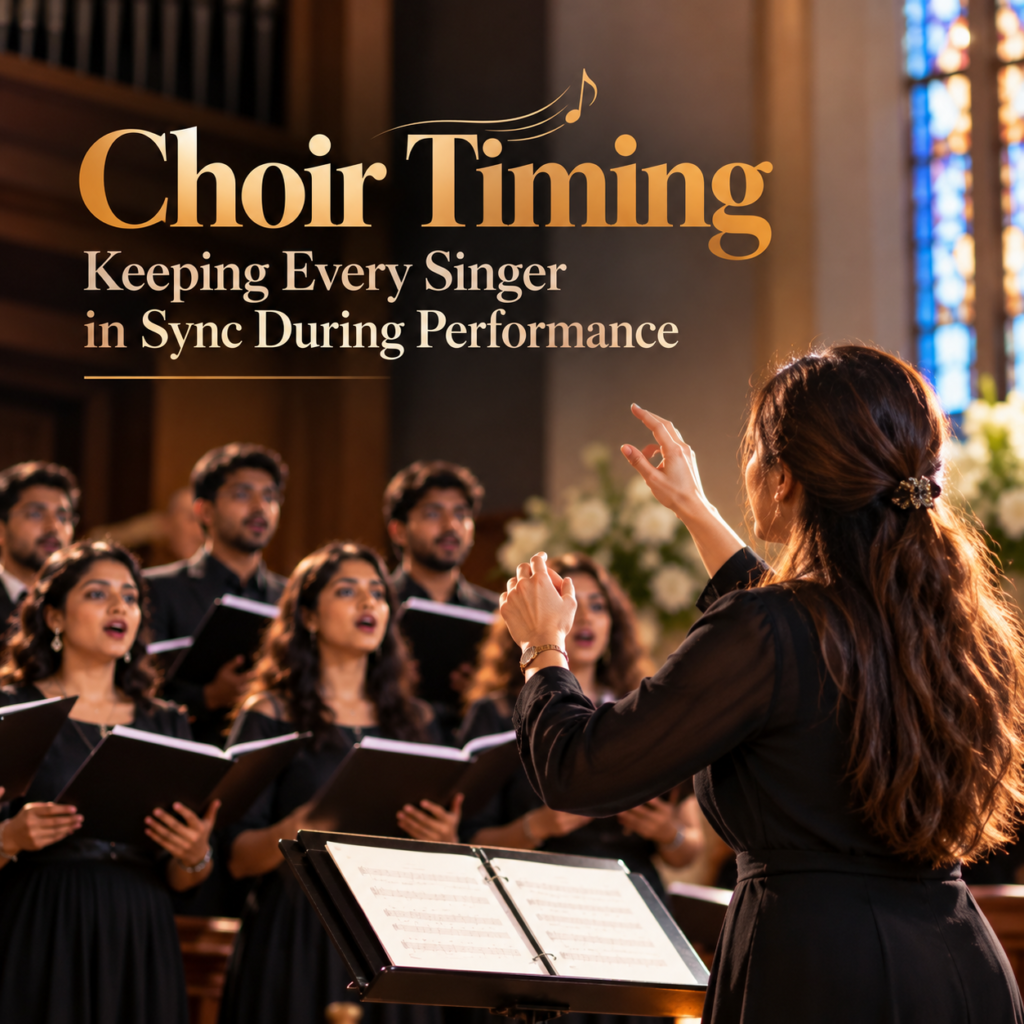
Choir Timing | Keeping Every Singer in Sync During Performance
A choir performance brings individual voices together to create a beautiful musical experience. Every singer contributes a unique tone, expression, and interpretation. However, the real magic happens when all voices move together in harmony. Choir timing plays a vital role in achieving this unity, ensuring that every singer enters at the right moment and ends each phrase together. With precise timing and coordination, a choir can deliver a polished performance that captivates its audience.
Maintaining consistent timing can be challenging when several singers perform different vocal parts. Even a slight delay can affect the rhythm and disturb the harmony. Therefore, choir timing involves more than singing at the same speed. It requires careful listening, rhythmic awareness, and coordination with the conductor.
Whether performing in a concert hall, participating in a competition, or recording an online choir performance, singers must stay connected. With regular practice and clear communication, they can develop the skills needed for a seamless performance.

Understanding the Importance of Timing in a Choir
Timing forms the foundation of a well-coordinated choir. While pitch determines the accuracy of notes, timing ensures they begin and end together. It also helps singers maintain the correct duration of each note. When everyone follows the same rhythmic structure, the music sounds cohesive and balanced.
Consider a choir performing a slow, expressive song. If a few singers enter too early, the musical phrases may lose their natural flow. Similarly, inconsistent timing during an upbeat arrangement can weaken the rhythm. Even when every singer knows the correct notes, poor coordination can affect the overall performance.
Beyond musical accuracy, consistent timing builds confidence. Singers who understand their entrances, note durations, and releases can focus more on expression. Consequently, timing connects technical precision with artistic performance.
Choir Timing | Following the Conductor to Stay in Sync
Following the conductor is one of the most effective ways to maintain choir timing. The conductor guides singers through entrances, pauses, tempo changes, and endings. Although singers practise their individual parts, the conductor brings everything together during the performance.
Conductors use hand movements and gestures to communicate the beat. A downward movement may indicate a particular beat, while a preparatory gesture signals an upcoming entrance. Changes in these movements can also indicate shifts in tempo or musical intensity.
However, following a conductor requires more than occasional glances. Singers must remain aware of the conductor while reading sheet music and listening to other voices. This balance becomes especially important during pauses, tempo changes, and expressive passages.
During rehearsals, singers should practise recognising conducting cues. They must learn to anticipate entrances and respond to gestures confidently. Over time, these signals become familiar. As a result, the choir can stay coordinated through challenging musical passages.

Developing a Strong Sense of Rhythm
Although the conductor provides essential guidance, every singer needs an individual understanding of rhythm. A choir becomes more reliable when members can recognise the beat internally. This skill reduces their dependence on external cues.
Rhythmic awareness begins with understanding the song’s structure. Singers should become familiar with its time signature, tempo, note values, and rests. Recognising the rhythmic pattern helps them anticipate where notes and phrases belong.
One useful technique involves clapping exercises. Before singing a difficult passage, the choir can clap the rhythm together. Counting aloud helps singers identify longer notes, shorter notes, and rests. This exercise separates rhythmic learning from the additional challenge of singing the correct pitches.
Once the rhythm becomes familiar, singers can gradually introduce the melody and lyrics. A metronome can also help them maintain a steady tempo. However, it should support musical understanding rather than replace attentive listening. Expressive choral music sometimes requires natural changes in tempo.
As rhythmic confidence improves, singers become better equipped to maintain their parts. They can also respond more effectively to the choir’s overall pulse.
Choir Timing and the Art of Listening to Other Singers
A successful choir depends on active listening as much as accurate singing. Each performer must remain aware of their own vocal line. At the same time, singers should listen to the other sections. This awareness helps maintain balance and prevents individual groups from drifting out of sync.
For example, sopranos may carry the main melody while altos provide supporting harmonies. If the altos focus only on their own parts, their timing may gradually become disconnected. Similarly, bass singers must maintain a steady rhythmic foundation without rushing ahead.
To improve coordination, rehearsals should encourage singers to listen beyond their own sections. The conductor can practise each vocal part separately before combining them. This approach helps singers understand how their rhythms fit into the complete arrangement.
Once individual sections become comfortable, the choir can perform the parts together. The conductor can then identify passages where timing differs. Singers should learn to recognise the complete musical texture without losing confidence in their own parts.
Importantly, listening does not mean copying the loudest singer. Instead, performers must balance their individual responsibilities with awareness of the ensemble. This approach helps every section contribute accurately and naturally.

Practising Entrances, Pauses, and Endings
Starting together, navigating silence, and finishing together are essential aspects of choir timing. Even an otherwise accurate performance can lose its unity through an uneven entrance. An inconsistent ending can create a similar problem.
Entrances require careful attention to preparatory beats and conducting gestures. Before beginning a phrase, singers should know exactly when their parts start. Some entrances occur immediately, while others follow a rest or begin on a particular beat. Repeated practice helps singers anticipate these cues.
Pauses present another challenge because singers must maintain the internal pulse without producing sound. The music continues moving forward during a rest. Therefore, every performer must know when the next entrance occurs. Counting silently can prevent premature entries and unnecessary hesitation.
Endings require equal precision. Singers must coordinate the duration of sustained notes and the release of final consonants. Releasing too early can weaken the harmony, while holding a note too long may disrupt the intended effect. Following the conductor’s release gesture helps everyone finish together.
Rather than repeating an entire song, choirs can isolate these challenging moments. Focused practice allows singers to correct mistakes before they become habits. Gradually, entrances, pauses, and endings become more consistent.
Maintaining Choir Timing During Tempo Changes
Not every choir performance follows a steady tempo. Many arrangements include gradual accelerations, slower passages, and expressive pauses. These variations require singers to adjust together without losing the musical flow.
Such changes can be difficult because singers may interpret the music differently. Some may speed up during an exciting passage, while others slow down during a lyrical phrase. Without shared guidance, the choir can gradually lose coordination.
To prevent this, singers should study the musical score carefully. They must understand where tempo changes occur and how each transition should sound. During rehearsals, the conductor can establish these changes clearly. Practising the passages before and after each transition also makes them easier to manage.
Singers should avoid anticipating a tempo change before the conductor indicates it. Responding too early can cause different sections to move at different speeds. This becomes particularly noticeable when several vocal lines overlap.
With repeated practice, tempo changes become more natural. Instead of interrupting the rhythm, they become expressive elements of the music. The choir can then maintain coordination while conveying the intended emotion.

The Role of Breathing in Effective Choir Timing
Breathing plays an important role in maintaining consistent choir timing. When singers breathe at different moments, phrases may become uneven. Sustained harmonies can also lose their continuity. Coordinated breathing helps the choir maintain a smooth musical line.
A shared preparatory breath, often guided by the conductor, signals the beginning of a phrase. This physical cue helps singers align their entrances. It also prepares them to support the first note with confidence.
However, coordinated breathing does not mean everyone must inhale simultaneously throughout the song. Long passages may require staggered breathing to maintain continuous sound. In these situations, singers should plan their breaths carefully. This prevents unnecessary gaps and protects the harmony.
Breath planning should therefore form part of regular rehearsals. Singers can mark suitable breathing points in their scores. Practising phrase beginnings and endings together also improves consistency.
Ultimately, good breathing supports both vocal control and musical coordination. It allows singers to approach each phrase with greater awareness and confidence.
Common Timing Problems and How to Correct Them
Even experienced choirs encounter timing difficulties. These problems often arise when learning unfamiliar arrangements or performing under pressure. Identifying their causes helps singers correct them more effectively.
One common issue is rushing. Singers may speed up when they become excited or nervous. They might also rush through difficult passages without realising it. Practising with a metronome and watching the conductor can help maintain a steady tempo.
Dragging presents the opposite challenge. Singers may slow down unintentionally, particularly during sustained notes or expressive passages. Counting internally and practising transitions between phrases can restore the intended pace.
Uneven consonants can also make a choir sound rhythmically inaccurate. If singers pronounce the beginnings or endings of words at different times, the entire phrase may sound uncoordinated. Practising consonants together helps improve clarity. Consistent vowel sounds also contribute to a more unified vocal tone.
Distraction is another common problem. Singers may lose timing while concentrating on sheet music or listening to another section. Regular practice under realistic performance conditions can improve concentration. Recording rehearsals also reveals problems that singers may not notice while performing.
Rather than correcting every issue at once, the conductor can identify the most disruptive problem. The choir can then isolate the relevant passage and practise it repeatedly. This focused approach makes improvement easier and helps singers understand what needs to change.

Using Technology to Improve Choir Timing
Technology offers useful opportunities to practise coordination, particularly when singers cannot meet in person. Digital tools can support rhythm training, provide reference recordings, and help performers learn their individual parts.
A metronome app can help singers practise difficult rhythms at a comfortable speed. They can gradually increase the tempo as their accuracy improves. Recorded accompaniment tracks also help singers understand how their parts fit into the complete arrangement.
Rehearsal recordings provide another valuable learning resource. By listening together, singers can identify uneven entrances, inconsistent tempos, and poorly coordinated endings. This makes it easier to recognise areas that need further practice.
For online choirs, shared recordings and individual practice tracks are particularly useful. Each singer can rehearse independently before participating in a coordinated recording. Clear instructions about tempo, entrances, pauses, and endings are essential.
However, singing together through a live video call presents additional challenges. Audio latency can cause singers to hear one another with a delay. Consequently, the conductor’s gestures and other singers’ voices may not reach everyone simultaneously.
For polished remote recordings, singers often record their parts separately. They follow a common reference track or guide recording to maintain consistent timing. The individual recordings can then be aligned during editing.
Although this method differs from performing together in person, the musical principles remain the same. Every singer must follow the shared tempo, recognise important cues, and maintain rhythmic accuracy. Used thoughtfully, technology can extend rehearsal opportunities and strengthen individual preparation.
Building a Consistent Choir Rehearsal Routine
Improving choir timing requires regular, purposeful practice. A single intensive rehearsal before a performance rarely provides enough time to develop reliable coordination. Instead, a structured routine helps singers improve gradually.
Each rehearsal can begin with a short warm-up involving clapping, counting, and simple rhythmic patterns. These exercises prepare singers to focus on the beat before tackling more demanding vocal work. The choir can then practise difficult passages, paying particular attention to entrances, rests, and tempo changes.
Once these sections become reliable, singers should perform them at the intended tempo. Singing the entire piece helps everyone understand how individual passages connect. It also reveals timing problems that may remain unnoticed during isolated exercises.
Recording selected rehearsals can provide valuable feedback. Singers can review the recordings together and discuss the choir’s overall coordination. They can identify whether the tempo remains consistent and whether the final release sounds unified.
This process should encourage constructive feedback rather than criticism. When singers understand the purpose behind each exercise, they are more likely to remain engaged. Gradually, the same skills become easier to apply during performances.
Above all, rehearsals should balance technical accuracy with musical enjoyment. A supportive environment encourages singers to learn from mistakes and develop confidence together.

Bringing Every Voice Together for a Confident Performance
Great choir timing requires rhythmic awareness, attentive listening, and consistent practice. When singers understand their parts, follow the conductor, and recognise musical cues, they perform with greater confidence. Regular rehearsals also help improve entrances, breathing, tempo, and endings. With teamwork and preparation, every voice contributes to a smooth, balanced, and harmonious performance.
At The Mystic Keys, musicians can strengthen their musical skills through guided learning and dedicated practice. Developing rhythm, coordination, and expression helps singers contribute more confidently to an ensemble.
Worship Piano & Singing Lessons Online offer opportunities to improve vocal confidence, musical awareness, and coordination between singing and accompaniment. These skills support better timing, stronger performances, and a more connected musical experience.
For more information and exciting resources about learning music, visit our website at The Mystic Keys. For more music content and exciting offers follow us on
Facebook, Instagram, YouTube, LinkedIn, Twitter, Pinterest, and Threads,