

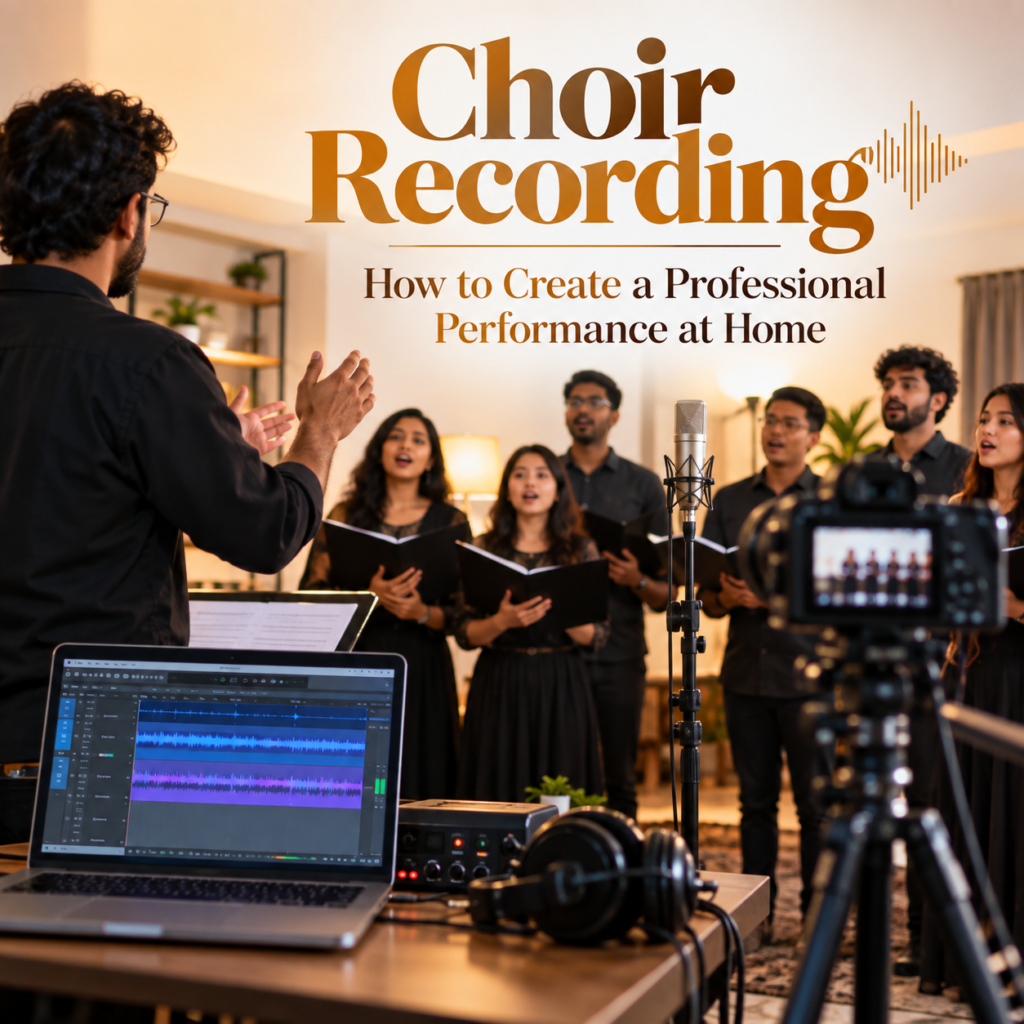
Choir Recording | How to Create a Professional Performance
A choir performance can sound powerful in a rehearsal room, where the combined voices naturally fill the space. However, creating a professional choir recording that captures the same energy requires much more than simply placing microphones in front of the singers and pressing Record. From vocal preparation and microphone placement to acoustics, ensemble balance, performance direction, and post-production, every element plays an important role in shaping the final sound.
A professional choir recording brings together vocal preparation, ensemble balance, microphone technique, acoustics, performance direction, and careful post-production. Every voice needs to contribute to the overall sound without overpowering the others, while the recording should still preserve the emotion and character of a live choir.
Whether you are recording a school choir, church choir, professional ensemble, or a group preparing for an online performance, the goal remains the same: create a recording that sounds unified, clear, expressive, and engaging.

Choir Recording Starts With Strong Musical Preparation
The quality of a choir recording is largely determined before anyone enters the recording space. Even excellent microphones and professional editing cannot completely fix an ensemble that is struggling with pitch, timing, pronunciation, or dynamics.
A well-prepared choir should already be comfortable with the melody, harmonies, lyrics, entrances, cut-offs, breathing points, and changes in dynamics. Rehearsals should also focus on how the individual sections work together rather than simply learning their own parts.
This is particularly important because recording makes small inconsistencies much easier to notice. A slightly late entrance or an uneven vowel may disappear during a large live performance, but it can become surprisingly noticeable when captured by a microphone.
For that reason, the final rehearsal should feel less like learning and more like performing. The singers should know what they are singing, where they need to listen, and how their part contributes to the complete musical picture.
Choose the Right Recording Space
The room itself becomes part of the recording. A choir recorded in a naturally resonant space can have warmth, depth, and atmosphere, while an unsuitable room may produce excessive echo, harsh reflections, or a dull and lifeless sound.
Large halls, auditoriums, churches, and purpose-built recording spaces can work beautifully because they often provide natural acoustic depth. However, the largest room is not automatically the best choice. Too much reverberation can blur harmonies and make lyrics difficult to understand.
Before recording, listen carefully to the room from different positions. Ask the choir to sing a short section while someone listens from the intended microphone position. Pay attention to whether the sound feels balanced and whether consonants remain clear.
Once the space has been selected, unnecessary background noise should also be reduced. Air-conditioning systems, fans, traffic, footsteps, buzzing equipment, and outside conversations can become surprisingly distracting in a finished recording.

Choir Recording Requires a Balanced Choir Arrangement
Microphone placement can only work effectively when the singers themselves are positioned thoughtfully.
A common approach is to arrange the choir in sections, such as soprano, alto, tenor, and bass, while considering the number of singers in each group. Stronger voices may need to be positioned differently from quieter voices so that one section does not dominate the recording.
Height can also make a difference. Risers or stepped platforms allow singers at the back to project more clearly without forcing them to sing louder. At the same time, singers should maintain enough space to breathe comfortably and hear one another.
The arrangement should support communication between the singers. Choir members need to hear the surrounding parts because ensemble singing depends heavily on listening. When everyone can hear the musical balance around them, maintaining pitch, timing, and dynamics becomes much easier.
Use Microphones Strategically
A professional choir recording does not necessarily require a microphone for every singer. In many situations, a carefully positioned stereo microphone setup can capture a natural and cohesive ensemble sound.
The microphone arrangement depends on the size of the choir, the room, the desired sound, and the recording equipment available. Stereo techniques can provide a sense of width while preserving the relationship between the choir and its acoustic environment.
Microphone height and distance are particularly important. Placing microphones too close can make individual voices overly prominent and reduce the sense of ensemble. Moving them too far away, however, may cause the recording to lose clarity and introduce too much room sound.
The best position is usually the result of listening and testing rather than following a fixed measurement. Record a short passage, listen back carefully, make a small adjustment, and repeat until the choir sounds balanced and natural.

Choir Recording Needs Careful Vocal Balance
A professional choir recording should sound like one musical instrument made up of many voices.
That does not mean every singer must sound identical. Instead, the different vocal colours should blend into a unified sound while the individual sections remain distinguishable when the music requires it.
Balance becomes especially important when the arrangement changes. A section carrying the melody may need greater presence, while supporting harmonies should remain slightly behind it. When the musical texture becomes quieter, singers need to maintain control rather than allowing the sound to disappear.
Dynamics should also be intentional. A choir recording becomes much more expressive when the ensemble can move naturally from delicate passages to powerful climaxes. Simply singing everything at the same volume can make even a technically accurate performance feel flat.
Focus on Pronunciation and Diction
Clear diction is one of the most overlooked aspects of choir recording.
When several voices sing the same lyrics simultaneously, consonants can easily become blurred. Words that sound perfectly understandable during rehearsal may become unclear once the voices, room acoustics, and recording equipment are combined.
The choir should therefore pay attention to consonant timing, vowel shape, word endings, and pronunciation. Final consonants need to be coordinated so that they sound together rather than arriving at different moments.
At the same time, diction should never become exaggerated. The objective is not to make every consonant sound harsh, but to create enough clarity for the listener to understand the words while preserving a smooth vocal blend.

Choir Recording Benefits From Multiple Takes
Even a well-rehearsed choir may not deliver a perfect performance in a single take. Recording several complete takes gives the conductor and recording team options while keeping the performance natural.
Each take should be treated as a real performance rather than simply a technical exercise. Encourage the singers to maintain their energy, expression, posture, and musical focus from beginning to end.
If a particular section contains a mistake, it may also be possible to record that passage separately. However, excessive editing can create inconsistencies in tone, timing, room ambience, and vocal energy.
The strongest recordings usually come from performances that are already musically convincing, with editing used to refine the result rather than construct the entire performance from fragments.
Choir Recording Requires Clear Musical Direction
The conductor plays an important role even when the final recording does not show them.
Clear gestures help singers coordinate entrances, releases, tempo changes, dynamics, and expressive moments. During recording, the conductor also helps maintain consistency between takes.
A good recording session should therefore have clear communication between the conductor, singers, and recording team. Everyone should understand which take is being recorded, where the performance begins, whether a section needs to be repeated, and what changes are required.
This organised approach saves time and keeps the choir focused. Instead of repeatedly stopping because of uncertainty, the ensemble can concentrate on delivering a confident performance.

Create the Right Monitoring Environment
Singers need to hear themselves and the rest of the choir clearly during a recording session.
If monitoring is inadequate, singers may unconsciously change their volume or pitch because they cannot hear the surrounding voices properly. That can affect the blend and make the performance less consistent.
The recording team should therefore ensure that the choir can communicate easily with the conductor and that playback can be checked between takes.
Short playback sessions are particularly useful. They allow everyone to identify issues that may not have been obvious while singing, such as uneven entrances, excessive volume from one section, unclear lyrics, or an overly reverberant room.
Use Editing to Enhance, Not Replace, the Performance
Once recording is complete, post-production begins. This stage can make a significant difference, but editing should support the musical performance rather than make it sound artificial.
Small timing corrections, carefully selected takes, noise reduction, equalisation, compression, and appropriate reverb can help create a polished result. However, too much processing may remove the natural character of the choir.
Pitch correction also needs to be approached carefully. Choir singing depends on the relationship between voices, and aggressive correction can produce an unnatural or disconnected sound.
A good mix should feel effortless. Listeners should notice the music rather than the technology behind it.

Choir Recording Creates Depth Without Losing Clarity
Reverb can give a choir recording the sense of space associated with a concert hall or church. It helps connect individual voices and can make the ensemble sound larger and more immersive.
However, too much reverb can quickly reduce clarity. Lyrics become difficult to understand, harmonies begin to overlap, and entrances can lose definition.
The right balance allows the listener to experience both the voices and the space around them. A carefully controlled amount of ambience can make a recording feel expansive without allowing the sound to become muddy.
Mix the Recording for the Listener
A professional mix should guide the listener through the performance.
Melodies should remain understandable, harmonies should support rather than compete, and important dynamic moments should have enough impact. The overall volume should also remain consistent without removing the natural rise and fall of the music.
Depending on the project, additional instruments may be present alongside the choir. In that case, the vocal arrangement needs even greater attention. Piano, orchestra, percussion, or backing tracks should complement the choir rather than cover important vocal lines.
The final mix should retain the emotional character of the performance. Technical perfection is valuable, but a recording that feels expressive and alive will connect more strongly with its audience.

Choir Recording Requires a Careful Final Review
Before publishing or sharing the recording, listen to the complete version from beginning to end.
Check whether the opening feels clean, whether lyrics remain understandable, whether transitions sound natural, and whether the final chord ends cleanly. Listen for background noises, unexpected volume changes, clipping, excessive reverb, or noticeable edits.
It is also useful to listen through different devices. Headphones can reveal small details, while speakers can provide a better sense of the overall balance. A phone or laptop can also reveal whether the recording remains clear under everyday listening conditions.
Sometimes, taking a short break before the final review makes problems easier to notice. Fresh ears can identify details that become difficult to recognise after repeated listening.
A Professional Choir Recording Is a Team Effort
Creating a professional choir recording is not simply a matter of pressing a record button. It is a collaborative process involving singers, conductor, recording engineer, and sometimes a producer or editor.
The singers bring preparation, blend, expression, and musicality. The conductor shapes interpretation and ensemble coordination. The recording team captures the sound and creates the technical foundation for the final production.
When these elements work together, the result can preserve much more than correct notes. It can capture the energy of the ensemble, the emotion behind the lyrics, and the unique character of the performance.

From Rehearsal Room to Final Recording
A successful choir recording begins long before the microphones are switched on. Strong preparation creates confidence, thoughtful positioning improves balance, suitable acoustics provide depth, and careful recording techniques preserve the natural character of the voices.
From there, tasteful editing and mixing can refine the performance while keeping its authenticity intact. The ultimate goal is not to make the choir sound artificially perfect—it is to make the real musical performance sound its best.
At The Mystic Keys, musical learning goes beyond individual technique, helping students develop confidence, musical expression, listening skills, and the ability to perform as part of an ensemble. For those interested in developing their skills further, Worship Piano & Singing Lessons Online offer personalised guidance in piano, vocals, worship music, and performance, making it possible to learn and grow from wherever you are.
When every singer listens, every section works together, and every technical decision serves the music, a choir recording can transform a live performance into something that audiences can experience again and again.
For more information and exciting resources about learning music, visit our website at The Mystic Keys. For more music content and exciting offers follow us on Facebook, Instagram, YouTube, LinkedIn,
Twitter, Pinterest, and Threads.