
Developing Smooth Fretboard Movement on Guitar
One of the biggest milestones in becoming a skilled guitarist is learning to move effortlessly across the fretboard. Whether you’re playing melodies, solos, scales, or chords, smooth fretboard movement allows your hands to work naturally without unnecessary tension or hesitation. It not only improves technical ability but also helps you play with greater confidence and musical expression.
Many beginners struggle because their fingers lift too far from the strings, their hand position changes constantly, or they rely too much on looking at the fretboard. These habits slow progress and make even simple passages feel difficult. The good news is that smooth movement is a skill that anyone can develop with the right practice techniques.
In this guide, you’ll discover why fretboard movement matters, common mistakes to avoid, and practical exercises that will help you move across the guitar neck with greater speed, accuracy, and control.
Why Fretboard Movement Is Important

Every piece of music requires movement. Whether you’re shifting between chords, playing scales, or performing solos, your ability to move efficiently affects both your speed and your accuracy.
Smooth movement allows you to:
- Change positions confidently.
- Play with better timing.
- Reduce unnecessary hand tension.
- Improve note accuracy.
- Perform longer pieces without fatigue.
Professional guitarists appear relaxed because their movements are efficient rather than rushed.
Efficient Movement Creates Better Performance
The less effort your hands use while moving around the neck, the more energy you can focus on musical expression and dynamics.
Understanding the Guitar Fretboard Movement

Before improving movement, it’s important to understand how the fretboard is organized.
The fretboard is not simply a collection of individual notes. It is a series of repeating patterns that become easier to navigate with experience.
Learning these patterns helps you anticipate where your fingers should move instead of searching for every note individually.
Familiarity Builds Confidence
As your knowledge of the fretboard increases, your movements become smoother because your hands begin to react automatically.
Proper Hand Position Improves Fretboard Movement
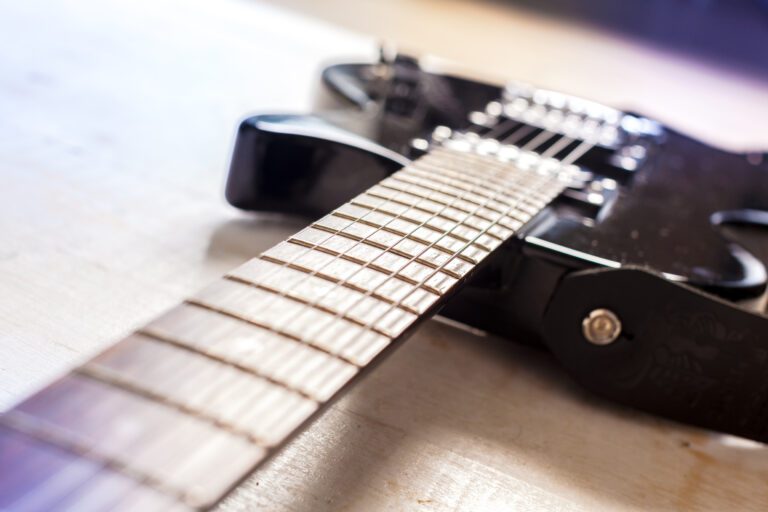
Good technique begins with proper posture.
Your thumb should rest comfortably behind the neck while your fingers remain curved and close to the strings.
Avoid squeezing the neck too tightly, as excessive pressure creates unnecessary tension that limits movement.
A relaxed hand moves much faster than a tense one.
Relaxed Hands Move More Efficiently
Maintaining relaxed muscles allows your fingers to glide naturally between different positions without becoming tired.
Keep Your Fingers Close to the Strings
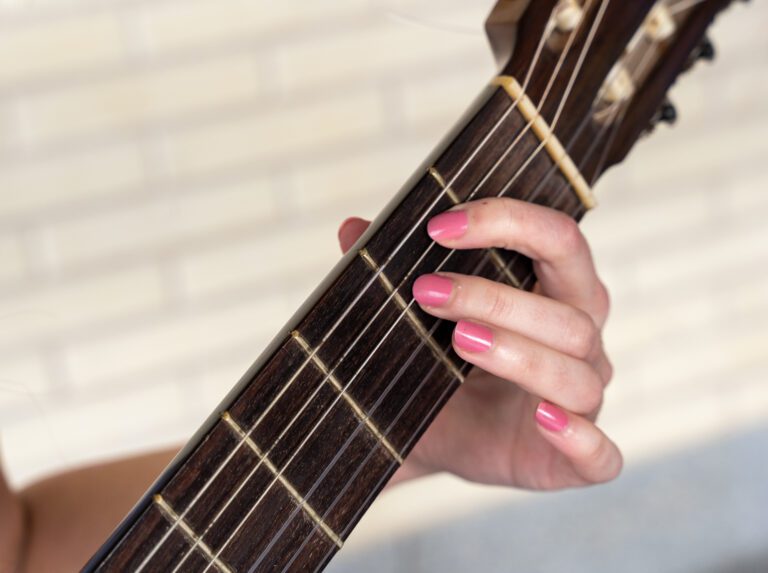
One common beginner mistake is lifting the fingers too far away after playing each note.
Large finger movements waste time and make fast passages more difficult.
Instead, keep your fingers hovering just above the strings whenever possible.
This minimizes unnecessary motion and improves overall efficiency.
Smaller Movements Increase Speed
Professional guitarists often appear fast because they move less, not because they move harder.
Practice Position Fretboard Movement and Shifts Slowly
Moving from one area of the fretboard to another should feel smooth rather than rushed.
Start by practicing slow position shifts while maintaining relaxed hands.
Focus on accuracy before increasing speed.
Gradually your hands will learn the shortest path between positions.
Slow Practice Builds Precision
Playing slowly gives your brain enough time to develop correct muscle memory, resulting in smoother movement later.
Scale Practice Develops Fretboard Movement
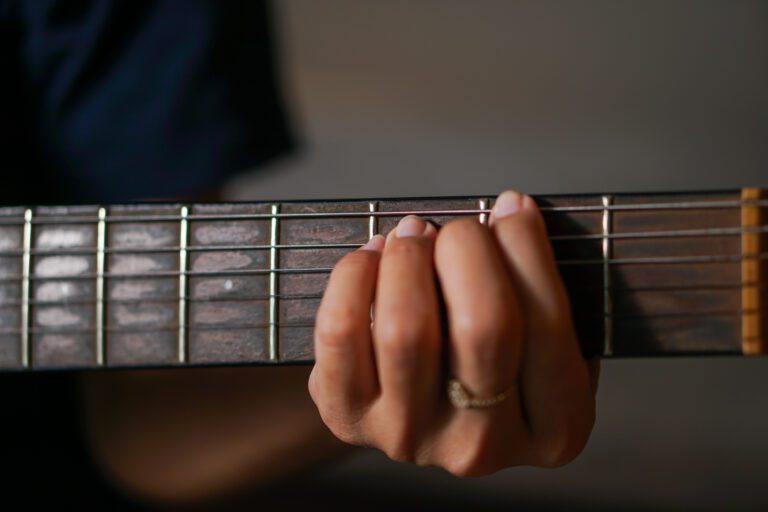
Scales are one of the best tools for improving movement across the guitar neck.
Rather than simply memorizing finger patterns, pay attention to how your hand shifts between different positions.
Practice scales:
- Slowly
- With a metronome
- In multiple keys
- Across different fretboard positions
These exercises improve both coordination and familiarity with the instrument.
Scales Build Muscle Memory
Repeated scale practice teaches your fingers to move naturally without excessive thought.
Finger Independence Improves Fretboard Movement
Each finger should develop the ability to move independently.
Many beginners unintentionally move several fingers together, reducing speed and control.
Exercises that isolate each finger strengthen coordination and improve accuracy.
Chromatic exercises are particularly effective for developing independence.
Strong Fingers Create Smooth Transitions
Independent fingers allow complex passages to feel easier and more controlled.
Learn to Look Fretboard Movement

Many guitarists make the mistake of focusing only on the note they are currently playing.
Instead, train yourself to anticipate the next position before arriving there.
This mental preparation allows smoother transitions and fewer interruptions during performances.
Anticipation Improves Accuracy
Looking ahead gives your brain extra time to prepare the next movement, making difficult passages feel more comfortable.
Use a Metronome for Better Control
A metronome helps develop consistent timing while improving movement accuracy.
Begin at a comfortable tempo.
Only increase the speed after you can perform every exercise accurately.
Rushing before mastering the movement often leads to sloppy technique.
Consistency Is More Important Than Speed
Fast playing naturally develops when movements become controlled and efficient.
Avoid Fretboard Movement Common Mistakes
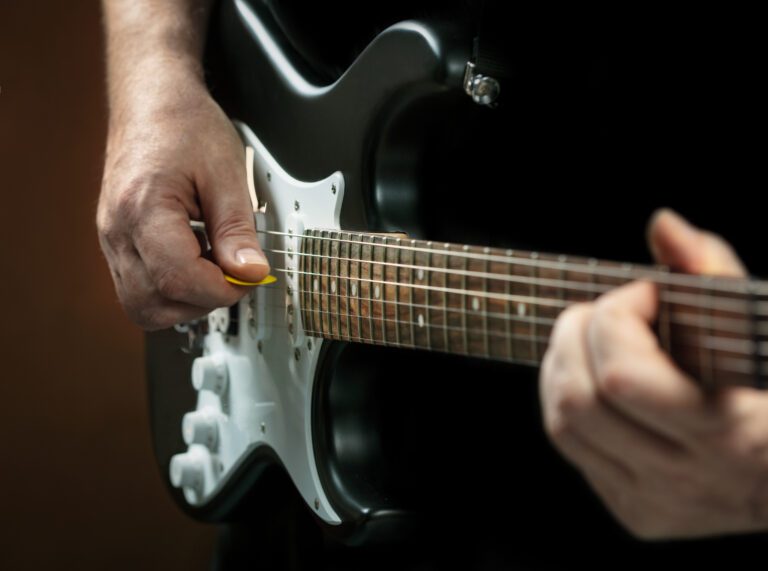
Many players slow their progress by repeating the same habits.
Some common mistakes include:
- Gripping the neck too tightly.
- Lifting fingers too high.
- Practicing too fast.
- Ignoring proper posture.
- Looking constantly at the fretboard.
- Skipping warm-up exercises.
Correcting these habits early makes long-term improvement much easier.
Good Habits Produce Better Results
Small technical improvements accumulate over time and create significant changes in overall performance.
Practice Fretboard Movement Every Day
Consistent practice is far more effective than occasional long practice sessions.
Even twenty minutes each day helps develop stronger muscle memory and smoother movement.
A balanced practice routine may include:
- Finger warm-ups
- Chromatic exercises
- Scale practice
- Position shifts
- Songs using different fretboard areas
Regular repetition gradually transforms difficult movements into natural habits.
Daily Practice Creates Lasting Improvement
Steady practice helps your hands move confidently without conscious effort.
Applying Smooth Fretboard Movement to Songs

Technical exercises are important, but they become truly valuable when applied to real music.
Choose songs that encourage movement across different areas of the neck.
As your confidence grows, gradually explore more challenging pieces that require wider position shifts and faster passages.
Every new song becomes an opportunity to strengthen your technique while developing musical expression.
Real Music Builds Real Skills
Combining exercises with songs makes practice more enjoyable while reinforcing practical playing techniques.
Fretboard Movement Conclusion
Developing fretboard movement is one of the most important steps toward becoming a confident guitarist. Smooth transitions, relaxed hands, accurate finger placement, and consistent practice all contribute to faster, cleaner, and more expressive playing. Rather than focusing only on speed, prioritize efficient movement and solid technique. Over time, your hands will move naturally across the fretboard, allowing you to concentrate on making music instead of thinking about every note.
At The Mystic Keys, our personalized Guitar Lessons Online help students master fretboard navigation, finger independence, scales, position shifts, rhythm, and lead guitar techniques through one-on-one instruction. Whether you’re a beginner or an advancing guitarist, our experienced teachers will guide you toward smoother movement, better technique, and greater confidence on the guitar.
For more information and exciting resources about learning music, visit our website at The Mystic Keys. For more music content and exciting offers follow us on
Facebook, Instagram, YouTube, LinkedIn, Twitter, Pinterest, and Threads.