Learning Music at Any Age | Is It Ever Too Late?
Music has an incredible way of touching lives. It can lift your mood after a difficult day, bring back cherished memories, or give you the confidence to express emotions that words often cannot. For many people, learning music is a dream they carry for years. However, that dream is frequently accompanied by a lingering question: “Am I too old to start now?”
The simple answer is no.
Although many famous musicians began their journey in childhood, countless others discovered their passion much later in life. Every year, thousands of adults and senior learners pick up a guitar, sit at a piano, enroll in vocal lessons, or explore a new instrument for the very first time. Their stories prove that music is not limited by age but inspired by curiosity, dedication, and the willingness to learn.
Rather than focusing on when you should have started, it is far more rewarding to focus on where you can begin today. Whether you are 18, 35, 50, or even 70, your musical journey can still be meaningful, enjoyable, and deeply fulfilling.

Why People Believe They Are “Too Late”
Many adults hesitate to learn music because they compare themselves with professionals who have spent decades mastering their craft. Social media often showcases child prodigies and highly skilled performers, making beginners feel as though they have already missed their opportunity.
However, this comparison overlooks an important truth.
Most people are not learning music to become international concert performers. Instead, they want to enjoy playing their favorite songs, sing confidently, reduce stress, perform at family gatherings, accompany their children, or simply fulfill a lifelong dream.
Moreover, adulthood brings advantages that children often lack. Adults usually understand the value of discipline, appreciate structured learning, and remain committed because the decision to learn is entirely their own. Consequently, they often practice with greater intention and consistency.
Instead of asking whether you started too late, ask yourself why you want to learn. Your motivation matters far more than your age.

The Science Behind Learning Music at Any Age
One of the biggest myths surrounding music education is that the brain becomes incapable of learning new skills after childhood. Fortunately, neuroscience tells a very different story.
The human brain possesses an incredible ability known as neuroplasticity, which allows it to create new neural connections throughout life. Whenever you learn new chords, memorize melodies, improve rhythm, or develop finger coordination, your brain is actively adapting and strengthening these connections.
Although children may absorb certain concepts more quickly, adults compensate with better analytical thinking, stronger focus, and greater patience. Furthermore, adults often understand musical theory more easily because they can relate new concepts to previous learning experiences.
As a result, progress remains entirely possible at any stage of life. While the pace may differ from one individual to another, meaningful improvement continues regardless of age.

Learning Music Is Not a Race
One reason many beginners quit early is because they expect rapid results. After only a few weeks of practice, they become frustrated when they cannot perform complex songs.
Yet music has never been about speed.
Even experienced musicians continue learning throughout their lives. Every new style, technique, rhythm, or composition presents another opportunity to grow. Therefore, comparing your first month of learning with someone else’s ten years of experience serves no purpose.
Instead, celebrate small milestones.
Perhaps you finally played your first chord progression smoothly. Maybe you learned an entire song without mistakes. Perhaps your vocal control improved enough to sing confidently in front of your family.
These achievements deserve recognition because they represent genuine progress.
Over time, these seemingly small victories combine into remarkable musical ability.
Adults Often Learn More Efficiently Than They Think
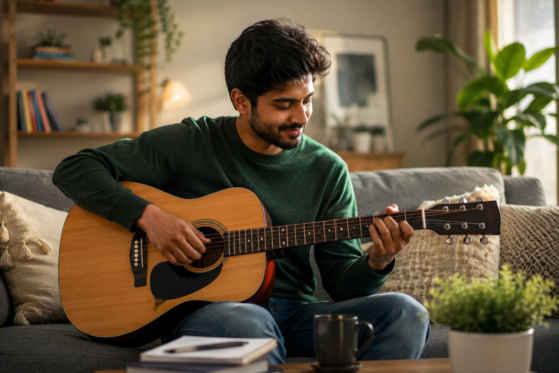
Many people assume children naturally outperform adults in every aspect of music education. Surprisingly, this is not always true.
Adults generally understand instructions more clearly, ask thoughtful questions, and recognize the importance of regular practice. They are also better at identifying mistakes and actively working to improve them.
Additionally, mature learners often possess stronger listening skills. They appreciate musical expression, recognize subtle emotional differences in performances, and connect deeply with the music they play.
Another significant advantage is purpose. Unlike children who may attend lessons because their parents enrolled them, adults usually choose music because they genuinely want to learn. Consequently, their motivation often remains stronger and more consistent.
That intrinsic desire becomes one of the greatest predictors of long-term success.

Learning Music Improves More Than Musical Skills
Learning music offers benefits that extend far beyond mastering an instrument or developing vocal technique.
For many adults, music becomes a source of relaxation after busy workdays. It creates a healthy escape from daily responsibilities and allows the mind to focus entirely on creativity instead of stress.
Additionally, regular musical practice strengthens concentration, memory, and problem-solving abilities. Reading notes, coordinating both hands, maintaining rhythm, and listening carefully all engage multiple areas of the brain simultaneously.
Emotionally, music provides an outlet for self-expression that many people discover only later in life. Some learners find renewed confidence through performing, while others simply enjoy the satisfaction of accomplishing something they once believed impossible.
Because of these benefits, music becomes not just a hobby but a valuable lifelong companion.
Technology Has Made Learning Easier Than Ever
Years ago, learning music often required finding a local teacher, traveling for weekly lessons, and adjusting your schedule around fixed class timings.
Today, the learning experience is far more flexible.
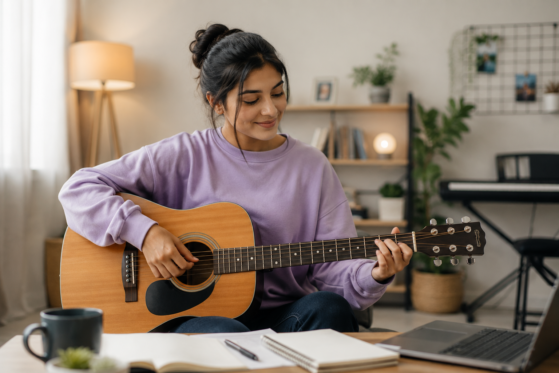
Online music lessons allow students to learn from qualified instructors regardless of their location. Live one-on-one sessions provide personalized guidance, while recorded lessons make it possible to revisit difficult concepts whenever needed.
Furthermore, digital tools such as metronome apps, practice trackers, backing tracks, notation software, and interactive learning platforms help students practice more effectively between lessons.
As a result, even adults with demanding careers or family responsibilities can successfully fit music into their weekly routine.
Consistency has become much easier to achieve.
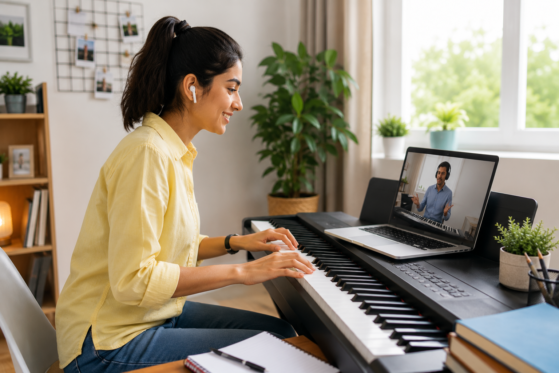
Learning Music on Any Instrument Is Possible
Some people hesitate because they think certain instruments must be learned during childhood.
Fortunately, that belief simply is not true.
Whether your interest lies in piano, guitar, violin, drums, ukulele, flute, or singing, every instrument can be learned as an adult. Naturally, each presents unique challenges. Guitar requires finger strength, piano develops coordination, while singing focuses on breath control and vocal technique.
Nevertheless, these skills are developed through practice rather than age.
Choosing an instrument should therefore depend on your musical interests instead of your birth year.
When learners enjoy the sound of their instrument, they naturally remain more motivated to continue practicing.
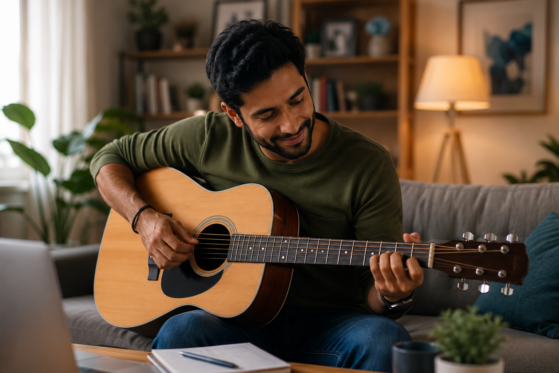
The Biggest Challenge Is Often Mental, Not Physical
Interestingly, the greatest obstacle for many adult learners is rarely their ability to learn.
Instead, it is self-doubt.
Thoughts such as “I’m too old,” “I’ll never be good enough,” or “People will laugh at me” prevent many individuals from even taking the first lesson.
However, every accomplished musician was once a beginner who struggled with simple exercises.
Mistakes are not signs of failure. Rather, they are evidence that learning is taking place.
The sooner learners accept imperfections as part of the journey, the faster they gain confidence and enjoy the process.

Success in Learning Music Looks Different for Everyone
Not every music student dreams of performing on stage.
Some simply want to sing during family gatherings.
Others hope to play worship songs at church, accompany friends, entertain grandchildren, or relax after work by playing their favorite melodies.
Many learners enjoy composing original music, while others find happiness mastering classic songs they have loved for decades.
Each of these goals is equally valuable.
Music should enrich your life, not become another source of pressure or unrealistic expectations.
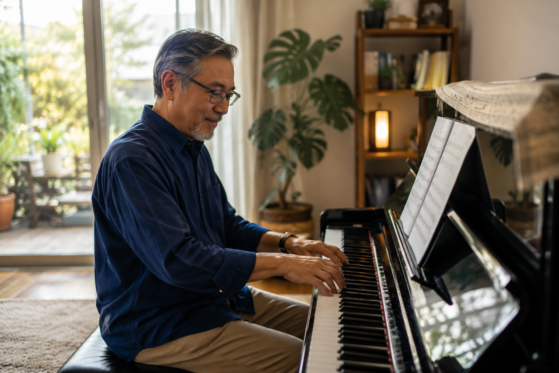
Building a Lifelong Habit of Learning Music
Consistency matters far more than lengthy practice sessions.
Even twenty or thirty minutes of focused practice several times each week can produce impressive progress over time. Rather than waiting for the “perfect” schedule, successful learners make music part of their regular routine.
Additionally, setting achievable goals helps maintain motivation. Learning one new chord, improving a challenging rhythm, or mastering a short section of a song can create a sense of accomplishment that encourages continued practice.
As confidence grows, those small daily efforts gradually transform into significant musical growth.
Eventually, practicing stops feeling like a task and becomes something you genuinely look forward to.

Final Thoughts
So, is it ever too late to learn music?
Absolutely not.
Age may influence how you learn, but it does not determine whether you can learn. Passion, consistency, patience, and the willingness to keep improving matter far more than the number of birthdays you have celebrated.
Every lesson, every practice session, and every new song brings you one step closer to becoming the musician you have always wanted to be. Instead of wondering what might have happened if you had started years ago, embrace the opportunity that exists today.
The perfect time to begin may never arrive—but the best time to start is now.
Whether you dream of singing with confidence, playing your favorite songs on the piano, mastering the guitar, or simply enjoying music in a deeper way, your journey can begin today. After all, music has no age limit. It welcomes every learner with the same promise: the joy of discovering something beautiful, one note at a time.
At The Mystic Keys, we believe music is for everyone, regardless of age or experience. Our personalized one-on-one online lessons are designed to help beginners and experienced learners alike progress at their own pace with the guidance of passionate instructors. No matter when you start, your musical journey is worth taking—and we’re here to help you make every note count.
For more information and exciting resources about learning music, visit our website at The Mystic Keys. For more music content and exciting offers follow us on
Facebook, Instagram, YouTube, LinkedIn, Twitter, Pinterest, and Threads.