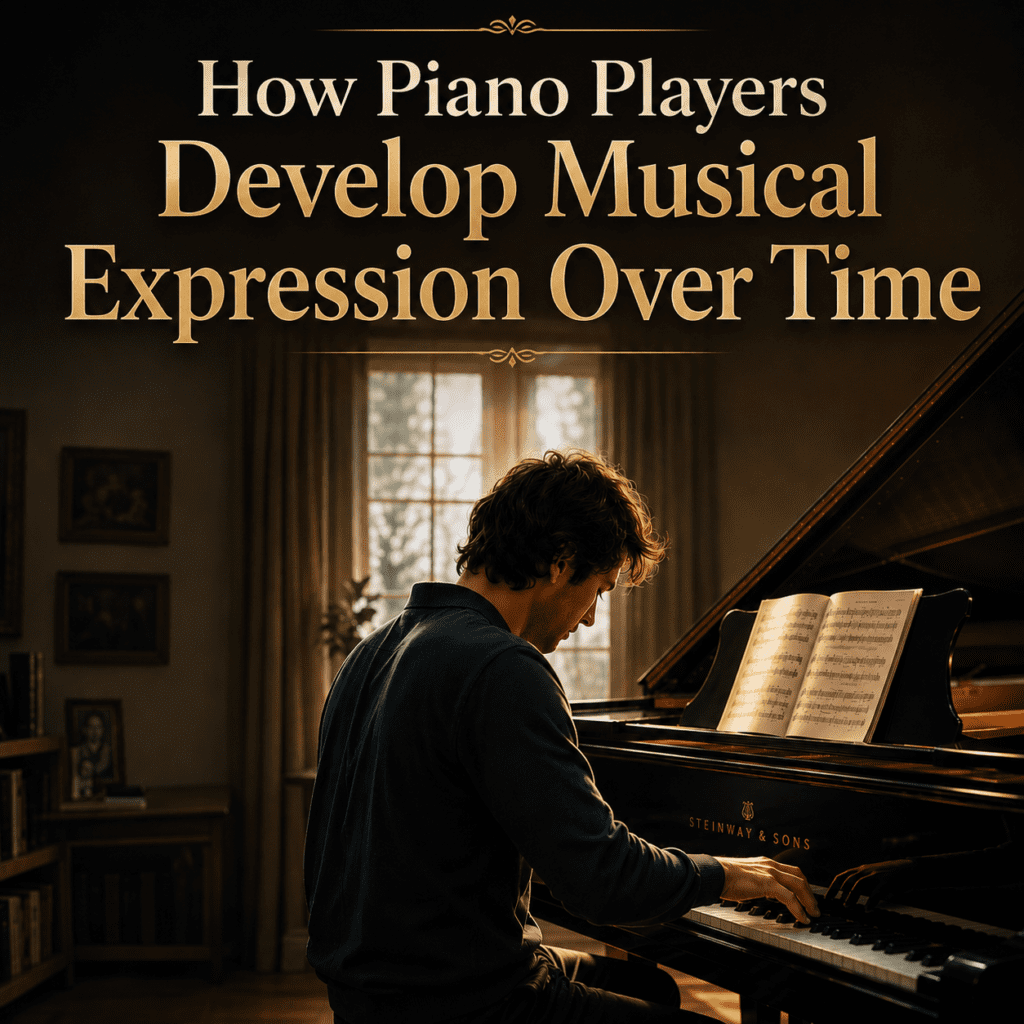
How Piano Players Develop Musical Expression Over Time
Learning piano is not just about pressing the right keys—it is about learning how to speak through music. Musical expression is what gives piano playing its emotional depth, turning simple notes into meaningful storytelling. Every great pianist develops this skill over time through consistent practice, careful listening, technical mastery, and emotional understanding of music. As beginners grow, they gradually move from focusing only on accuracy to exploring tone, dynamics, phrasing, and personal interpretation. This journey of transformation is what shapes a student into a true musician. At The Mystic Keys, piano learning is designed to help students build not only strong technical skills but also the ability to express emotions beautifully through every performance.
1. Understanding How Piano Musical Expression Develops
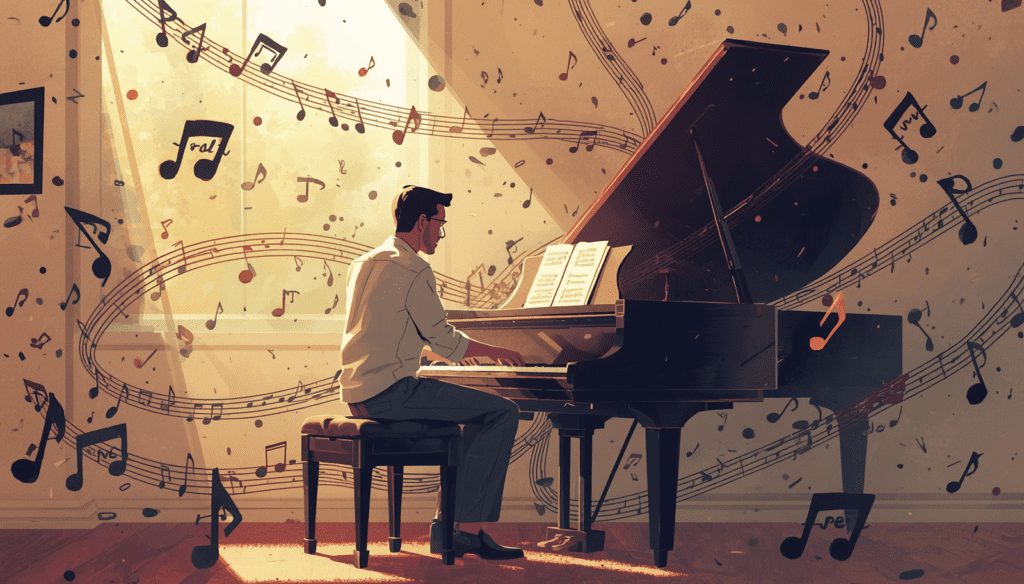
Musical expression is the heart and soul of piano playing. It is what transforms a simple sequence of notes into a powerful emotional experience that connects with the listener on a deeper level. While beginners often focus on playing the correct keys, timing, and rhythm, true musical growth begins when a pianist learns how to express feelings through sound. Expression includes dynamics, tone control, phrasing, articulation, and emotional interpretation of each piece. Over time, piano players move beyond technical accuracy and start shaping music in a way that tells a story, reflects mood, and creates atmosphere. At The Mystic Keys, students are guided to understand that every note has meaning, every silence has weight, and every phrase can communicate emotion when played with intention and awareness.
2.Building Strong Technical Foundations for How Piano Musical Expression Develops
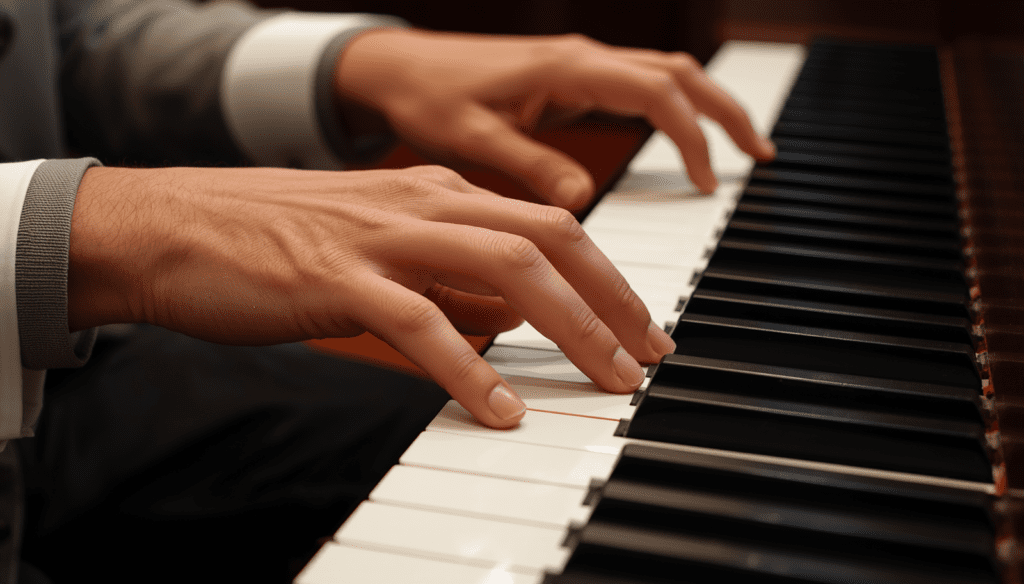
Before a pianist can truly express emotion through music, they must first develop a strong and reliable technical foundation. Technique is the backbone of expressive playing because it allows the performer to focus on music rather than struggle with basic execution. This includes finger strength, hand coordination, proper posture, scale practice, arpeggios, and rhythm control. When these skills are practiced consistently, the hands begin to move naturally and effortlessly across the keyboard. This freedom is essential because it allows the mind to focus on shaping musical phrases instead of worrying about incorrect notes. At The Mystic Keys, structured learning ensures that students build this foundation step by step so that expression becomes a natural outcome of solid technique.
3.Learning Dynamics and Emotional Control in How Piano Musical Expression Develops

One of the most powerful elements of musical expression is dynamics—the ability to control volume and intensity while playing. Piano players gradually learn how to move between soft and loud passages to create contrast, emotion, and depth in their performances. Playing softly can create intimacy, calmness, or sadness, while playing loudly can express excitement, power, or tension. In addition, techniques like crescendos and diminuendos allow musicians to shape emotional arcs within a single phrase. Over time, pianists also learn emotional control, which means they do not just play louder or softer randomly, but intentionally use dynamics to support the story of the music. At The Mystic Keys, students are trained to listen carefully and feel the emotional direction of every piece they play.
4. The Role of Listening and Interpretation
Listening plays a critical role in developing musical expression. Piano players grow significantly when they actively listen to their own playing as well as performances by experienced musicians. This helps them understand how different interpretations of the same piece can completely change its emotional impact. Every pianist develops a unique voice over time, shaped by influences, practice, and personal creativity. Interpretation is about making musical choices—deciding how a phrase should feel, where to slow down, where to emphasize, and how to bring emotion into each section. At The Mystic Keys, students are encouraged to explore different styles and recordings so they can gradually develop their own expressive identity rather than copying others.
5. Practice, Emotion, and Real Performance Experience
Expression does not develop through theory alone; it grows through consistent practice and real performance experience. When pianists practice slowly and mindfully, they begin to notice small details such as tone quality, balance between hands, and emotional flow. Recording practice sessions helps identify areas of improvement and builds self-awareness. However, the most important growth happens during live performance, where students learn to manage nerves, connect with the audience, and express emotion under pressure. Each performance teaches something new about musical communication. At The Mystic Keys, students are given opportunities to perform, helping them transform practice into real artistic expression.
6. The Long Journey Toward Musical Maturity
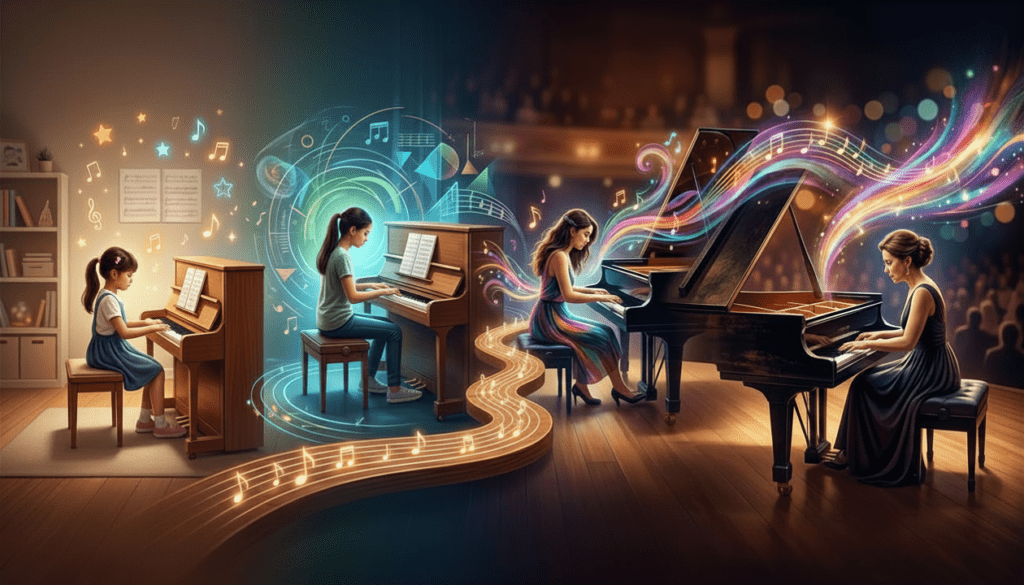
Becoming an expressive pianist is a gradual journey that evolves over time. Beginners first focus on reading notes and maintaining rhythm, while intermediate learners start paying attention to technique and control. As they advance further, they begin to explore interpretation, tone color, and emotional depth. At the professional level, piano playing becomes a form of storytelling, where every note carries meaning and every silence contributes to expression. Musical maturity is achieved when technique and emotion merge seamlessly, allowing the pianist to communicate directly through music. At The Mystic Keys, this journey is supported through structured training that helps students grow step by step into confident and expressive musicians.
Conclusion
Musical expression is not a skill that develops overnight—it is a lifelong journey shaped by practice, listening, emotion, and experience. As piano players grow, they move from simply playing notes to creating meaningful musical stories. With the right guidance, patience, and dedication in a structured Piano lesson online, every student can develop deep expressive ability. The Mystic Keys is committed to helping learners unlock their full musical potential and become truly expressive pianists.
For more information and exciting resources about learning music, visit our website at The Mystic Keys. For more music content and exciting offers follow us on
Facebook, Instagram, YouTube, LinkedIn, Twitter, Pinterest, and Threads.