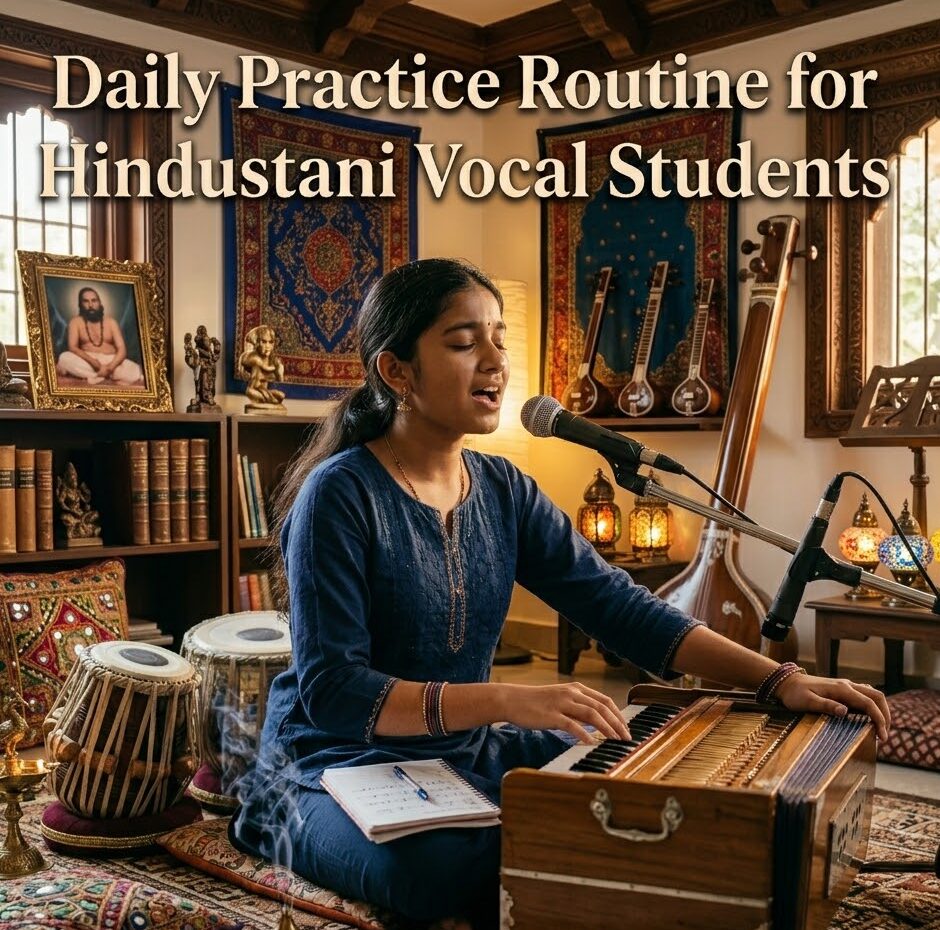
Daily Practice Routine for Hindustani Vocal Students
Learning Hindustani classical vocal music is a journey that demands patience, discipline, and consistency. While talent certainly helps, regular practice remains the true foundation of growth in this art form. A well-structured Daily Practice Routine for Hindustani Vocal Students not only strengthens the voice but also sharpens listening skills, improves musical understanding, and gradually develops confidence in performance.
Many students begin their musical journey with excitement, but over time, maintaining consistency becomes difficult. Some feel overwhelmed by long practice sessions, while others struggle to understand what exactly should be practiced every day. In reality, an effective routine does not always need to be extremely long or exhausting. What matters most is focused and mindful riyaaz carried out with dedication.
A balanced practice routine helps students progress steadily without feeling mentally drained. Moreover, following a structured approach allows singers to build strong fundamentals before moving toward advanced improvisation and performance techniques. As the voice matures through regular training, students begin to experience greater control, emotional expression, and musical clarity.
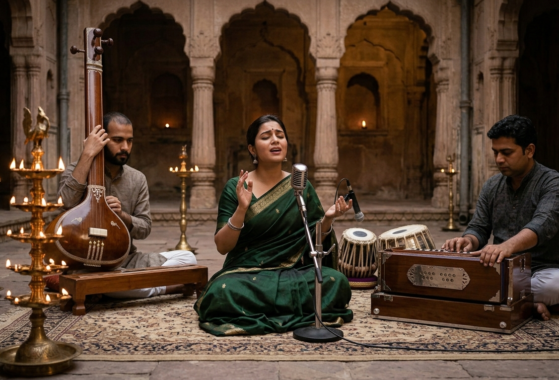
Beginning the Day with Voice Preparation
The early hours of the morning are often considered ideal for Hindustani vocal practice. During this time, the atmosphere is quieter, the mind feels calmer, and the voice is generally more relaxed. Practicing in the morning also improves concentration and helps students connect more deeply with swaras.
Before jumping directly into singing, the voice needs gentle preparation. Simple humming exercises can help warm up the vocal cords gradually. Slow breathing exercises are equally important because breath control plays a major role in sustaining notes and maintaining vocal stability. Rushing into difficult taans or high notes without warming up can strain the voice and reduce vocal flexibility over time.
Once the body and voice feel comfortable, students should begin with basic swara practice. Singing Sa steadily and accurately creates the foundation for the entire session. Gradually moving through the octave with clear pronunciation and proper pitch alignment strengthens intonation and builds confidence.

Daily Practice Routine for Sustained Swar Practice
After warming up, sustained swara practice should become an essential part of daily riyaaz. Long-note practice improves voice stability, enhances breath management, and develops tonal clarity. Instead of focusing on speed, students should aim for purity and steadiness of sound.
Singing each swara slowly allows the ears to identify subtle pitch differences. Over time, this develops stronger listening abilities, which are extremely important in Hindustani music. Students who regularly practice sustained notes often find it easier to maintain sur during complex compositions and improvisations.
Another advantage of slow swara practice is the development of vocal strength. Gradual control over low, middle, and high octaves helps singers avoid unnecessary tension while expanding their vocal range naturally. As consistency increases, the voice starts becoming richer and more expressive.

Daily Practice Routine Through Alankars
Once the voice feels stable, practicing alankars becomes highly beneficial. Alankars are patterned combinations of swaras designed to improve agility, accuracy, and coordination between the mind and voice. They train students to move smoothly across notes while maintaining rhythmic precision.
At the beginner level, simple ascending and descending patterns are usually sufficient. However, as students advance, more complex variations can be introduced to improve flexibility and speed. Singing alankars in different layas also enhances rhythmic understanding and strengthens control over timing.
Rather than treating alankars as mechanical exercises, students should approach them musically. Every note must be sung with clarity and attention. Careful practice eventually improves confidence during improvisation because the voice becomes more comfortable navigating different melodic movements.
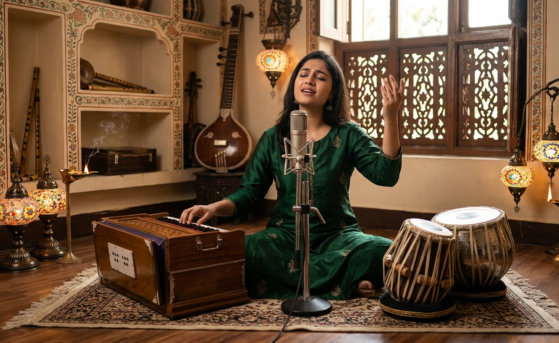
Building a Strong Connection with Raagas
Daily riyaaz should always include focused raag practice. Since raagas form the heart of Hindustani classical music, students must spend time understanding their emotional character, note combinations, and unique movements. Simply memorizing swaras is not enough; one must gradually absorb the mood and personality of each raag.
A good approach is to begin with slow alaap practice. Singing slowly helps students internalize the structure of the raag while improving voice control. During this stage, listening carefully to the tanpura becomes extremely important because it anchors the singer firmly in sur.
As familiarity increases, students can move toward small improvisations within the raag. This stage encourages creativity while strengthening musical confidence. Nevertheless, improvisation should remain disciplined and aligned with the grammar of the raag. Consistent practice eventually helps singers express emotions more naturally through their music.

Daily Practice Routine with Bandish Practice
Bandish practice is another essential element of a complete daily routine. A bandish teaches students how musical concepts come together within a structured composition. Through bandish practice, singers improve their understanding of rhythm, phrasing, pronunciation, and emotional expression.
Instead of singing mechanically, students should pay attention to the meaning and mood of the lyrics. Understanding the emotional context allows the performance to feel more expressive and engaging. In addition, careful attention must be given to taal alignment because rhythmic accuracy is crucial in Hindustani music.
Repeatedly practicing the same bandish also develops musical maturity. Over time, students begin discovering subtle nuances that may not be noticeable initially. Gradual refinement of meend, gamak, and expression adds depth and sophistication to the rendition.
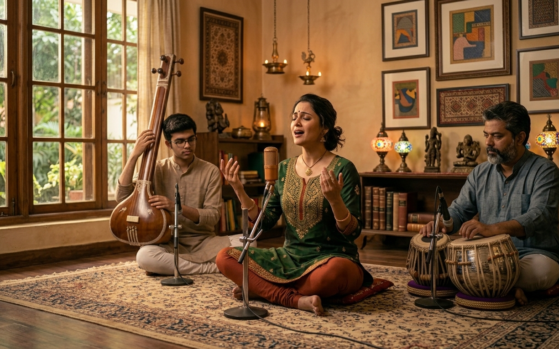
Daily Practice Routine and the Role of Listening
Listening is often underestimated, yet it remains one of the most powerful forms of musical learning. Great musicians develop their artistry not only through singing but also through attentive listening. Students should regularly listen to recordings of respected vocalists to understand voice modulation, improvisation styles, and raag presentation.
Careful listening improves musical sensitivity and broadens artistic understanding. Exposure to different gharanas also helps students appreciate various approaches to the same raag. As a result, their own musical thinking becomes richer and more flexible.
However, listening should never become blind imitation. Every singer has a unique voice and personality. The goal is to learn inspiration, aesthetics, and discipline rather than copying someone else completely.
Managing Practice Duration Effectively
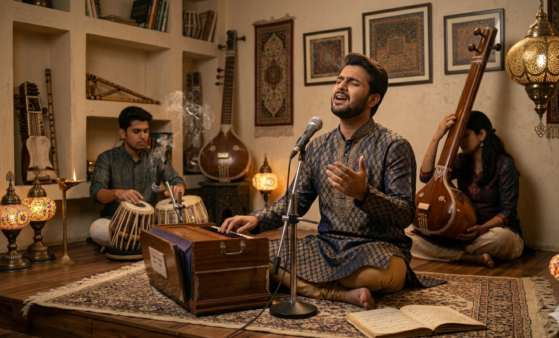
Many students believe that longer practice automatically leads to faster improvement. In reality, quality matters more than duration. Practicing with complete concentration for one focused hour is often more effective than spending several distracted hours singing mechanically.
Beginners can start with shorter sessions and gradually increase practice time as stamina improves. Dividing practice into smaller sections throughout the day can also help maintain freshness and concentration. A balanced routine prevents vocal fatigue while ensuring steady progress.
Rest is equally important for vocal health. Over-practicing without proper recovery may strain the voice and reduce overall efficiency. Therefore, students must learn to recognize the difference between disciplined practice and unhealthy overexertion.
Daily Practice Routine for Maintaining Vocal Health and Discipline
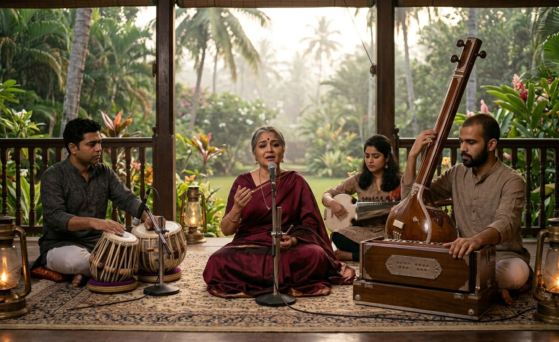
A singer’s voice is delicate and requires proper care. Healthy lifestyle habits play a significant role in vocal development. Adequate sleep, hydration, and balanced nutrition contribute directly to vocal stability and stamina.
Students should avoid shouting excessively or straining the voice unnecessarily. Sudden attempts to sing beyond one’s comfortable range can also cause vocal fatigue. Patience is essential because vocal maturity develops gradually over years of consistent practice.
Mental discipline matters just as much as physical care. Some days may feel highly productive, while others may feel challenging. Nevertheless, continuing riyaaz regularly builds resilience and strengthens musical commitment. Even a short but sincere session helps maintain continuity.
Creating a Personal Connection with Music
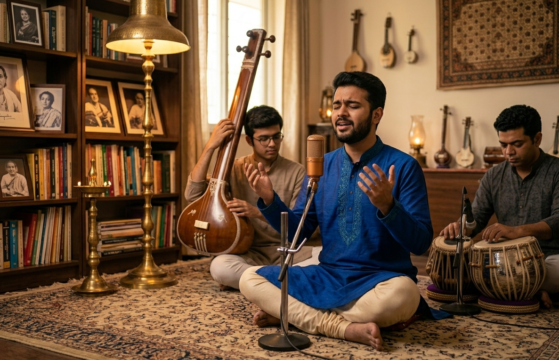
As students continue their daily practice journey, music slowly becomes more than just a subject to learn. Regular riyaaz creates a deeper emotional bond with sound, rhythm, and expression. Over time, singing transforms into a source of peace, focus, and self-discovery.
Every student progresses at a different pace, so comparison should always be avoided. Consistency, sincerity, and patience ultimately matter far more than speed. The purpose of riyaaz is not only technical improvement but also inner musical growth.
Gradually, daily practice shapes both the voice and the personality of a singer. Through disciplined effort and mindful learning, students begin to understand the beauty and depth of Hindustani classical music in a truly meaningful way.
Conclusion
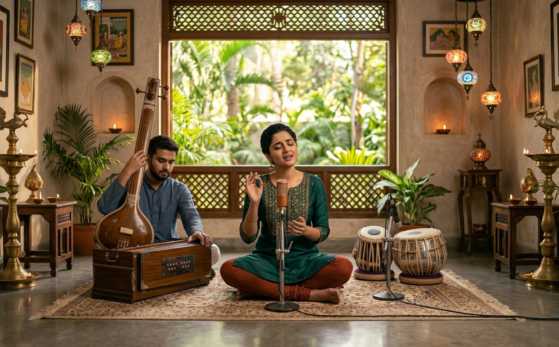
A structured daily practice routine provides Hindustani vocal students with the stability and direction needed for long-term growth. From swara practice and alankars to raag development and bandish training, every aspect of riyaaz contributes to building a strong musical foundation.
Consistency remains the key to success in classical music. Even small daily efforts accumulate into significant progress over time. With patience, dedication, and thoughtful practice, students can steadily develop technical skill, emotional expression, and artistic confidence.
Ultimately, riyaaz is not merely an exercise routine; it is a lifelong relationship with music. The more sincerely one practices, the more rewarding and transformative the journey becomes. For students looking to strengthen their learning journey through expert guidance and flexible training, The Mystic Keys offers comprehensive Hindustani Vocal Lessons Online designed to support consistent practice, musical understanding, and confident vocal development from the comfort of home.
For more information and exciting resources about learning music, visit our website at The Mystic Keys. For more music content and exciting offers follow us on
Facebook, Instagram, YouTube, LinkedIn, Twitter, Pinterest, and Threads.