
Play Ukulele | Master Playing Without Looking at the Fretboard
Play Ukulele with confidence begins by understanding a simple habit most learners develop early on. Learning the ukulele often starts with watching your fingers carefully as they search for the right frets and strings. At first, that habit feels natural and even necessary. Over time, however, constantly looking down can slow your progress, affect your rhythm, and reduce your confidence while performing. The real turning point in your musical journey arrives when your hands begin to remember what your eyes no longer need to guide.
Developing the ability to play without looking at the fretboard is not about speed alone. It is about connection, musical freedom, and trust in your own movement. Once this skill becomes natural, your playing starts to feel smoother, more expressive, and surprisingly effortless.
Let’s explore how this transformation happens and how you can gently train your fingers to lead the way.

Why Playing Without Looking at the Fretboard Matters
Many beginners believe that experienced players simply memorize everything instantly. In reality, confident fretboard movement develops gradually through repeated exposure and awareness.
When your eyes remain fixed on your fingers, several small interruptions enter your playing. Rhythm may hesitate, posture can tighten, and attention shifts away from the sound itself. Music then becomes mechanical instead of expressive.
By contrast, lifting your gaze changes the entire experience. Your ears become more active, your strumming feels steadier, and your connection with listeners improves immediately. Even while practicing alone, playing without constantly checking your fingers encourages a deeper musical relationship with the instrument.
Eventually, your hands begin responding automatically, almost like typing on a keyboard without watching every letter.
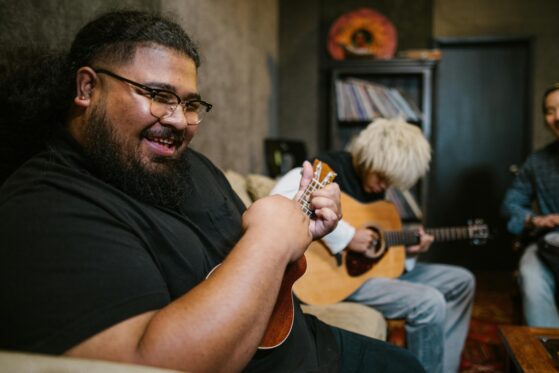
Play Ukulele Confidently by Understanding the Role of Muscle Memory
Muscle memory is one of the most powerful tools available to musicians. Despite its name, it does not actually live in the muscles. Instead, it develops through repeated communication between your brain and your hands.
Each time you practice a chord transition slowly and accurately, your brain records the movement pattern. With consistent repetition, those patterns become smoother and more reliable. Gradually, your fingers begin to move into position even before you consciously think about them.
Confidence grows naturally through this process. Rather than forcing your hands to move faster, allow them to move correctly again and again until they begin to travel familiar paths on their own.
Progress here often feels invisible at first. One day, however, you suddenly realize you played an entire chord change without checking your fingers. That moment marks the beginning of true fretboard independence.

Play Ukulele Better by Starting With Familiar Chord Shapes First
Trying to stop looking at the fretboard too early can feel frustrating. A better approach involves beginning with chords your fingers already recognize.
Simple chords like C, Am, F, and G7 provide excellent starting points because they appear frequently in songs and require manageable finger placement. Practicing transitions between these shapes helps your hands learn spacing naturally.
Instead of rushing through multiple chords, choose two at a time and repeat the transition slowly. Close your eyes for a few seconds during practice and notice how your fingers respond. At first the movement may feel uncertain, yet repeated attempts build confidence steadily.
Soon your fingers begin traveling directly toward the correct frets with less hesitation than before.

Strengthen Your Sense of Touch on the Fretboard
Vision often dominates early learning stages. Still, touch becomes the guiding force once players grow more comfortable with their instrument.
Try noticing how the fret edges feel beneath your fingertips. Pay attention to string spacing and finger pressure as you change chords. These small details help your brain map the fretboard more clearly without relying on sight.
Practicing slowly supports this process beautifully. Quick movements sometimes hide mistakes, while slower repetition reveals exactly how your fingers are landing.
As awareness improves, the fretboard starts feeling familiar in the same way your house feels familiar even when the lights are off.

Keep Your Eyes on the Strumming Hand Occasionally
Many players assume that not looking at the fretboard means never looking anywhere at all. In reality, shifting visual attention wisely improves coordination.
Watching your strumming hand from time to time helps maintain rhythm consistency. It also strengthens your sense of timing and pattern flow. Once both hands feel balanced in awareness, your playing becomes more relaxed and controlled.
Gradually, your eyes begin lifting naturally toward lyrics, sheet music, or even listeners during performance practice. That shift builds stage readiness without extra effort.

Practice Slow Transitions Before Increasing Speed
Speed feels exciting, but accuracy builds confidence.
Working slowly allows your fingers to travel deliberately between chord positions. Each correct movement strengthens the pathway your brain remembers later. Faster playing becomes easier once those pathways are stable.
Set a comfortable tempo and repeat transitions calmly. Focus on smooth motion instead of quick results. Over time, your hands begin moving faster without conscious effort.
Patience here creates the strongest foundation for long-term improvement.
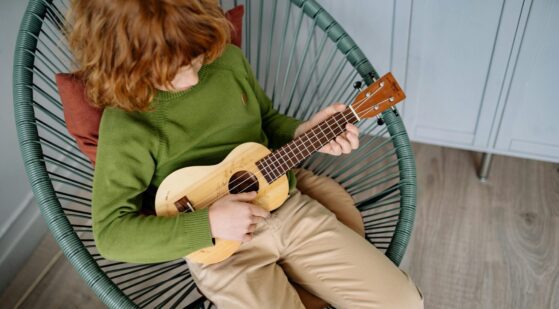
Play Ukulele Naturally by Using Simple Songs to Build Confidence
Exercises are useful, yet songs make learning meaningful.
Choose familiar tunes with predictable chord progressions and practice playing them while reducing how often you look down. At first, glance only when necessary. After several repetitions, try playing an entire line without checking the fretboard at all.
Confidence increases quickly when musical context supports your practice. Rhythm feels steadier, and chord changes begin happening automatically within the flow of the song.
Music itself becomes your guide instead of visual confirmation.

Improve Posture to Support Better Fretboard Awareness
Posture influences more than comfort. It directly affects your ability to navigate the fretboard confidently.
Holding the ukulele at a consistent angle helps your fingers remember distances between frets more accurately. A stable playing position reduces unnecessary hand movement and encourages smoother transitions.
Relaxed shoulders and steady wrist positioning also allow your fingers to land more precisely. Over time, your hands begin recognizing where each chord shape belongs without needing visual reminders.
Small posture adjustments often create surprisingly large improvements.

Play Ukulele With Confidence by Learning to Trust Your Fingers
One of the biggest challenges in learning to play without looking is psychological rather than physical.
Many learners already know the chord shapes but hesitate to rely on memory alone. That hesitation causes extra glances downward even when they are unnecessary.
Confidence grows through small successes. Try playing short sections without looking and celebrate each attempt, even if mistakes appear. Progress happens through repetition, not perfection.
Gradually your fingers begin proving they can handle more responsibility than expected. Trust develops naturally from those experiences.

Practice Performing Without Visual Dependence
Performance-style practice helps accelerate independence from the fretboard.
Sit or stand as if you are playing for someone. Keep your gaze forward and continue playing through small mistakes without stopping. This habit strengthens your ability to stay focused on rhythm and expression rather than correction.
Musicians who practice this way often notice improved confidence very quickly. Their playing begins sounding more connected and expressive because attention shifts toward music instead of mechanics.
Eventually, performing without looking becomes comfortable rather than intimidating.

Play Ukulele Effortlessly as Consistency Turns Awareness Into Freedom
Learning to play the ukulele without looking at the fretboard does not happen overnight. Still, steady practice—especially with structured guidance like Ukulele Lessons Online from The Mystic Keys—transforms uncertainty into familiarity sooner than expected.
Each repetition strengthens your connection with the instrument. Every confident transition reduces hesitation. Over time, your hands begin moving naturally while your attention returns to melody, rhythm, and expression.
That moment when your fingers find their place effortlessly is deeply satisfying. Music begins to flow more freely, and your relationship with the ukulele feels lighter, more intuitive, and far more enjoyable.
Keep practicing patiently, and soon your hands will know exactly where to go—even when your eyes are somewhere else entirely
For more information and exciting resources about learning music, visit our website at The Mystic Keys. For more music content and exciting offers follow us on
Facebook, Instagram, YouTube, LinkedIn, Twitter, Pinterest, and Threads.