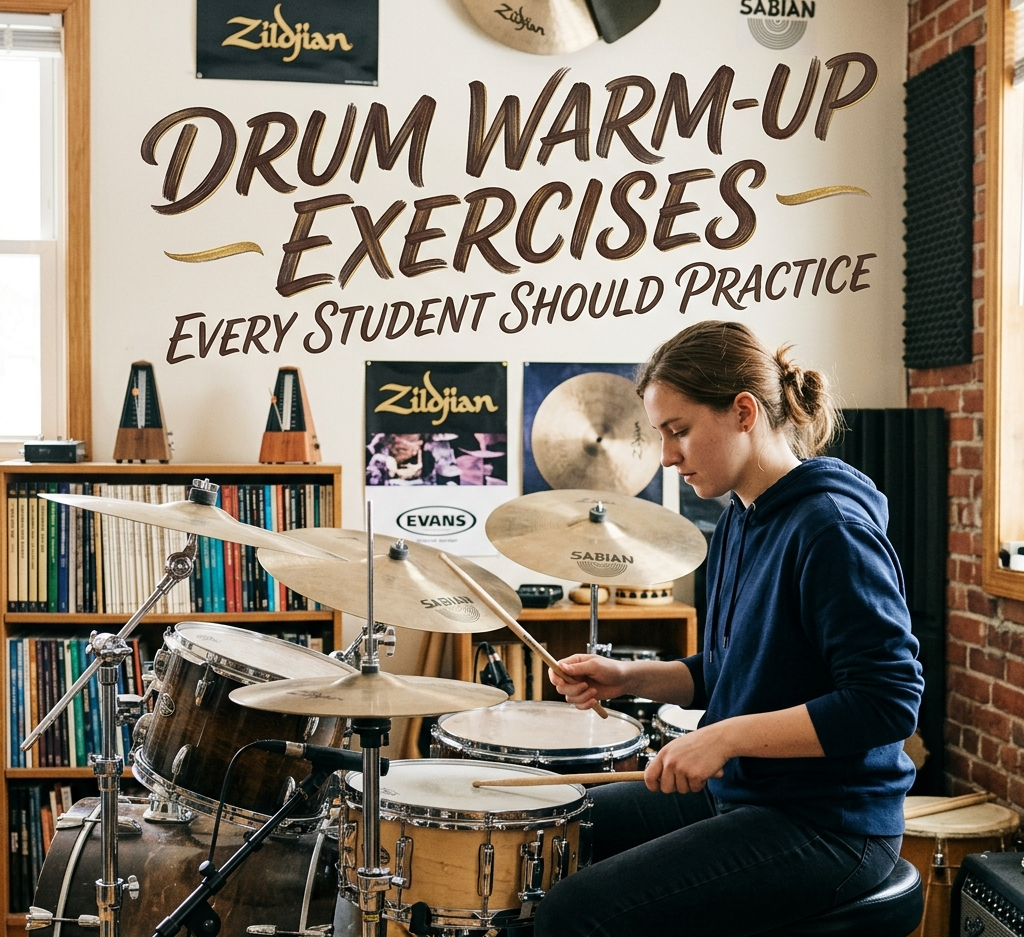
Drum Warm-Up Exercises Every Student Should Practice
Whether someone is just beginning their journey on the drums or has already spent years behind the kit, drum warm-up exercises play a powerful role in shaping technique, confidence, and musical expression. Many students feel tempted to jump straight into songs or performance pieces because that feels more exciting in the moment. However, thoughtful drum warm-up exercises prepare the hands, sharpen the mind, and build the foundation required for steady and consistent improvement over time.
Strong drummers are not created only through practice time—they grow through purposeful practice. A well-designed warm-up routine helps students develop control, endurance, timing, and coordination in a structured yet musical way. Over time, these short exercises become the secret behind smoother performances and greater comfort on the instrument.
Let’s explore the essential drum warm-up exercises every student should include in their daily practice routine.

Why Drum Warm-Ups Matter More Than Students Realize
Warm-ups are often misunderstood as simple hand-loosening activities. In reality, they are technical training sessions disguised as short routines. When practiced regularly, they strengthen muscle memory and improve precision without overwhelming the learner.
Preparation exercises also reduce tension in the wrists and fingers. Relaxed movement allows students to play faster and longer without fatigue. In addition, structured warm-ups help prevent injury, which becomes especially important as practice duration increases.
Another benefit appears in rhythmic stability. Students who warm up properly tend to stay more consistent with tempo and dynamics during actual performance. As a result, confidence improves naturally because the body feels ready before the music even begins.
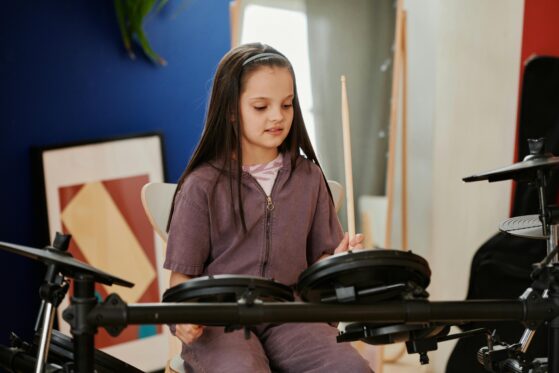
Drum Warm-Up Exercises That Build Strong Stick Control First
Every strong drummer develops reliable stick control first. Without it, even simple grooves can sound uneven or rushed. That is why beginning a practice session with controlled strokes is extremely effective.
Students should start with slow single strokes, focusing on equal height and balanced sound from both hands. The goal is not speed at this stage. Instead, attention should remain on clarity and relaxation. Gradually increasing tempo after consistency is achieved helps build accuracy without tension.
Practicing on a practice pad before moving to the drum kit can make this exercise even more productive. Since pads highlight inconsistencies clearly, learners become more aware of their hand movement and rebound control.
Once this habit becomes part of daily practice, noticeable improvement appears in overall playing stability.

Drum Warm-Up Exercises Using Single Stroke Rolls to Develop Balance
Single stroke rolls are among the most valuable warm-up exercises for any drummer. Alternating hands evenly strengthens coordination and prepares students for nearly every style of drumming.
Beginners often rush this exercise, thinking faster speed means better progress. However, steady tempo matters far more than quick execution. Playing slowly with a metronome encourages accuracy and builds rhythmic discipline from the very beginning.
As control improves, students naturally notice smoother transitions between fills and grooves. Even complex rhythmic passages become easier because the hands learn to respond evenly and confidently.
Over time, this simple exercise transforms into a powerful technical foundation for advanced playing.

Strengthening Control with Double Stroke Rolls
After single strokes feel comfortable, double stroke rolls introduce another layer of coordination. These patterns require each hand to strike twice evenly, which strengthens finger control and rebound awareness.
At first, the second stroke may sound weaker than the first. That reaction is completely normal. With steady practice, both strokes begin to sound balanced and controlled.
Working slowly at the beginning ensures proper movement. Gradual tempo increases help maintain consistency without strain. Eventually, students gain the ability to execute smooth rolls that sound clean and professional.
Because double strokes appear frequently in fills and transitions, mastering them early supports faster progress later.

Drum Warm-Up Exercises That Improve Precision Through Accent Practice
Accent exercises help students develop dynamic awareness, which is often overlooked during early practice sessions. Playing louder notes within a steady pattern teaches the hands to respond with control rather than force.
For example, alternating accented strokes between hands creates stronger independence. This independence allows drummers to shape musical phrases more expressively instead of playing every note at the same volume.
Dynamic variation also improves listening skills. When students begin paying attention to volume differences, their performances sound more musical and intentional.
As a result, even simple rhythms start to feel lively and engaging.

Drum Warm-Up Exercises That Build Timing with Metronome Practice
Timing forms the backbone of drumming. Without it, even technically skilled players struggle to perform confidently with others. That is why warm-ups should always include metronome practice.
Starting exercises at a comfortable tempo encourages steady rhythm. Increasing speed gradually challenges coordination without creating unnecessary tension. Students soon develop the ability to stay locked into the beat naturally.
Practicing with a metronome also prepares learners for ensemble settings. Playing alongside other musicians becomes easier when internal timing is strong and reliable.
Consistency gained during warm-ups often carries directly into performance situations.

Enhancing Coordination Between Hands and Feet
Many students focus only on hand exercises during warm-ups. However, including simple coordination patterns between hands and feet prepares the body for full drum kit playing.
Practicing steady bass drum notes while maintaining hand patterns strengthens independence. Over time, this coordination allows students to perform grooves more comfortably without hesitation.
Simple combinations practiced daily can gradually evolve into complex rhythmic control. Because the brain learns movement patterns through repetition, even short coordination exercises make a noticeable difference.
Eventually, transitions between grooves begin to feel natural rather than challenging.

Increasing Speed Safely and Gradually
Speed development should never feel rushed or forced. Instead, it should grow naturally from relaxed and controlled movements practiced consistently.
Beginning warm-ups at slower tempos ensures accuracy. Once clarity improves, slightly increasing tempo helps the hands adapt comfortably. This gradual progression protects technique while encouraging improvement.
Students often notice that speed improves automatically when relaxation replaces tension. Smooth motion always produces better results than forceful effort.
With patience and regular practice, faster playing becomes a natural outcome rather than a stressful goal.
Ending Warm-Ups with Short Musical Patterns
Before moving into songs or lesson material, ending a warm-up routine with short musical patterns connects technique with creativity. These patterns help students apply exercises in a musical context instead of treating them as isolated drills.
Simple grooves, light fills, or short rhythmic variations work especially well at this stage. The transition from exercises to performance becomes smoother and more enjoyable.
Practice sessions also feel more rewarding when technique leads directly into music making. That sense of connection motivates students to continue improving consistently. ✨

Making Warm-Ups a Daily Habit
Regular warm-up routines do not need to be long to be effective. Even ten to fifteen focused minutes can prepare the hands and mind for meaningful practice, especially when students receive the right structure and guidance through drums lessons online at The Mystic Keys.
Consistency matters far more than duration. Students who follow a structured routine each day usually progress faster than those who practice randomly for longer periods.
Over time, these exercises become second nature. Confidence increases, coordination improves, and musical expression becomes easier to achieve.
Most importantly, warm-ups transform practice into a purposeful and enjoyable experience that supports long-term growth on the drums.
For more information and exciting resources about learning music, visit our website at The Mystic Keys. For more music content and exciting offers follow us on
Facebook, Instagram, YouTube, LinkedIn, Twitter, Pinterest, and Threads.