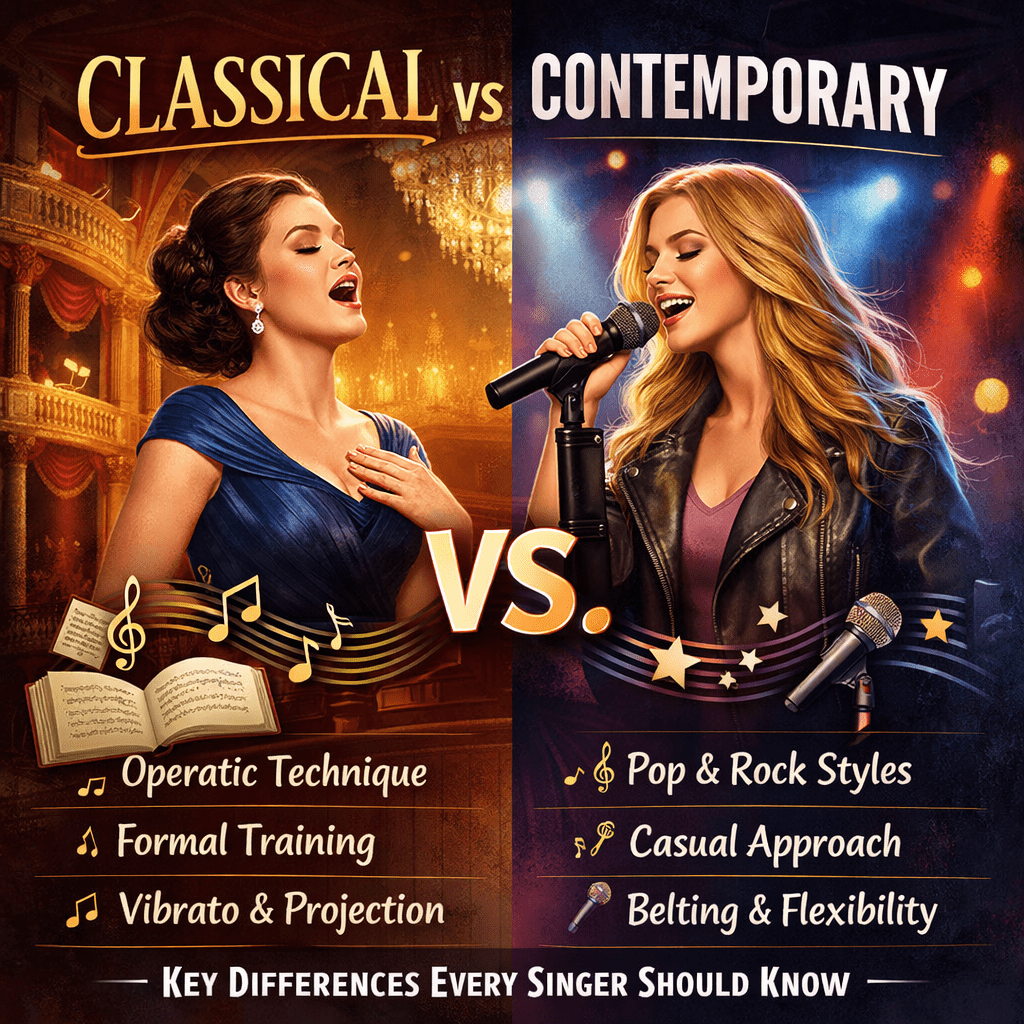
Classical vs Contemporary Singing: Key Differences Every Singer Should Know
Singing has evolved across centuries, cultures, and musical traditions. As music developed, different singing styles emerged to suit various genres, performance spaces, and artistic expressions. Among the many vocal styles in the world, Classical vs Contemporary Singing remains two of the most widely practised and studied approaches. Each style has its own techniques, vocal characteristics, and training methods that shape how a singer produces sound.
Understanding the differences between classical and contemporary singing can help singers choose the right training approach and develop a healthy and versatile voice.
Whether you are an aspiring vocalist, a music student, or someone exploring different vocal styles, learning about these two major singing traditions can greatly improve your understanding of vocal performance.
What is Classical Singing?

Classical singing refers to a traditional vocal style that has been developed and refined over several centuries, especially in Western classical music.
This style is commonly used in opera, choral music, art songs, and classical compositions. Classical vocal training focuses heavily on producing a balanced, resonant, and powerful tone without relying on microphones.
One of the defining characteristics of classical singing is the ability to project the voice across large concert halls or opera houses while maintaining vocal clarity and beauty.
Classical singers spend years training their voices to achieve proper breath control, resonance, and vocal placement.
Historical Background of Classical Singing
The roots of classical singing can be traced back to European musical traditions, particularly during the Baroque, Classical, and Romantic periods.
During these eras, composers wrote music that required singers to produce sustained notes, expressive phrasing, and strong projection. This led to the development of structured vocal techniques that are still taught in classical voice training today.
Opera singers, for example, undergo extensive training to develop the stamina and vocal control required for long performances.
Key Characteristics of Classical Singing
Classical singing involves several distinct technical elements that shape the vocal sound.
1. Resonant Tone Production
Classical singers focus on producing a full, rounded tone that resonates naturally within the body. This resonance helps the voice carry across large performance spaces.
2. Strong Breath Support
Breath control is one of the most important aspects of classical singing. Singers learn to use diaphragmatic breathing to support long phrases and sustained notes.
3. Clear Diction
Because classical music often includes complex lyrics in different languages, clear pronunciation and diction are essential.
4. Natural Projection
Classical singers train their voices to project without microphones, which requires strong vocal technique and resonance.
5. Consistent Vocal Placement
Maintaining consistent tone quality throughout different vocal ranges is an important part of classical vocal training.
What is Contemporary Singing?

Contemporary singing refers to modern vocal styles used in popular music genres such as:
• Pop
• Rock
• Jazz
• Gospel
• R&B
• Musical theatre
• Worship music
Unlike classical singing, contemporary styles often use microphones and sound amplification, which allows singers to experiment with softer vocal textures and stylistic expression.
Contemporary singing focuses more on emotional expression, stylistic interpretation, and personal vocal identity.
Many contemporary singers develop unique vocal styles that reflect their musical influences and artistic personality.
Key Characteristics of Contemporary Singing
Contemporary vocal styles often include a variety of expressive techniques that differ from classical singing.
1. Stylistic Flexibility
Contemporary singers adapt their vocal approach depending on the genre they perform. A jazz singer may use phrasing and improvisation, while a pop singer may focus on tone and vocal runs.
2. Use of Vocal Effects
Modern singers often use stylistic effects such as:
• Vocal riffs and runs
• Breathy tone
• Vocal fry
• Belting technique
These effects help create a distinctive vocal style.
3. Emotional Expression
Contemporary music often prioritises emotional connection with the audience. Singers focus on conveying the message and feeling of the song.
4. Use of Microphones
Microphones allow singers to perform with softer dynamics and subtle vocal textures that may not be possible in classical singing.
Classical and Contemporary Singing | Technical Differences

Although both styles require strong vocal technique, they differ in several key areas.
1. Vocal Tone
Classical singing aims for a uniform, resonant tone, whereas contemporary singing encourages individuality and stylistic variation in tone.
2. Breath Management
Both styles require breath control, but classical singing uses highly structured breathing techniques designed for sustained projection.
Contemporary singers often adapt their breathing depending on the genre and phrasing.
3. Vocal Placement
Classical singers focus on maintaining consistent vocal placement that supports resonance.
Contemporary singers may intentionally shift vocal placement to achieve stylistic effects.
4. Performance Environment
Classical singing traditionally takes place in concert halls or opera houses without amplification.
Contemporary performances often use microphones, studio production, and sound systems.
Vocal Techniques Used in Classical Singing

Classical vocal training includes several exercises designed to develop a strong and balanced voice.
Legato Singing
Legato refers to singing notes smoothly and continuously without breaks between them. This technique creates a flowing musical line.
Vowel Shaping
Classical singers adjust vowel shapes to maintain resonance and tone consistency.
Controlled Vibrato
Vibrato is a natural oscillation in pitch that adds warmth and richness to the voice.
Breath Management
Singers learn to control airflow carefully to sustain long musical phrases.
Vocal Techniques Used in Contemporary Singing

Contemporary singers often use techniques that allow for stylistic variation and expressive performance.
Belting
Belting is a powerful vocal technique commonly used in pop and musical theatre singing.
Vocal Runs
Runs involve quickly moving between notes, often used in R&B and gospel music.
Mixed Voice
Mixed voice combines elements of chest voice and head voice to produce a balanced tone.
Dynamic Variation
Contemporary singers frequently shift between soft and powerful vocal dynamics.
Training Methods for Classical Singers
Classical vocal training typically follows a structured curriculum that includes:
• Scales and vocal exercises
• Breath control techniques
• Sight reading and music theory
• Language pronunciation (Italian, German, French)
• Performance practice
Students gradually build vocal strength and technique through consistent practice and professional instruction.
Training Methods for Contemporary Singers
Contemporary vocal training focuses on flexibility and stylistic interpretation.
Training may include:
• Vocal improvisation exercises
• Genre-specific techniques
• Microphone technique
• Performance skills
• Recording practice
Contemporary singers often develop their skills by studying multiple musical styles.
Classical and Contemporary Singing | Can Singers Learn Both Styles?

Yes, many professional singers learn both classical and contemporary techniques.
Classical training can provide a strong technical foundation, while contemporary training allows singers to explore modern musical styles.
Learning both styles helps singers develop:
• Better vocal control
• Stronger breath support
• Greater vocal range
• Improved musical expression
Many vocal coaches encourage singers to build a balanced skill set that includes elements of both traditions.
Common Misconceptions About Classical and Contemporary Singing Styles
Classical Singing is Not Only for Opera
Although opera is a major part of classical music, classical vocal techniques can benefit singers in many genres.
Contemporary Singing Still Requires Technique
Even though contemporary singing allows more freedom, proper vocal technique is still essential for maintaining vocal health.
Both Styles Require Discipline
Regardless of the style, becoming a skilled singer requires consistent practice and proper training.
Tips for Improving Your Classical and Contemporary Singing Skills

Whether you choose classical or contemporary singing, the following practices can help improve your voice.
Practice Consistently
Regular practice strengthens vocal muscles and improves pitch control.
Warm Up Before Singing
Vocal warm-ups prepare the voice and reduce the risk of strain.
Maintain Good Posture
Proper posture supports breath control and vocal projection.
Listen to Professional Singers
Listening to skilled vocalists can help you understand different vocal styles and techniques.
Work With Experienced Teachers
Guidance from professional instructors can help singers develop correct technique and avoid harmful vocal habits.
Learn Singing Online with The Mystic Keys
Developing your voice becomes much easier when you learn with experienced teachers and structured training.
The Mystic Keys is an online music learning platform where students worldwide learn to sing, play instruments, and study music theory with professional musicians.
Through personalised lessons, guided practice, and performance opportunities, students can build confidence and improve their musical abilities.
Whether you want to explore classical singing techniques or contemporary vocal styles, structured online learning can help you grow as a musician.
Conclusion
Both classical and contemporary singing represent powerful artistic traditions that allow singers to express music in unique ways.
Classical singing emphasises vocal resonance, technical discipline, and projection, while contemporary singing focuses on stylistic expression, emotional communication, and versatility.
Understanding the differences between classical and contemporary singing can help singers choose the right training approach and develop their voice effectively. For those who want to explore and develop these skills further, you can also learn Western vocals online with The Mystic Keys through structured lessons guided by experienced instructors.
With dedication, proper training, and consistent practice, singers can master the techniques of either style—or even combine both to become versatile vocal performers.
For more information and exciting resources about learning music, visit our website at The Mystic Keys. For more music content and exciting offers follow us on
Facebook, Instagram, YouTube, LinkedIn, Twitter, Pinterest, and Threads.