Understanding Musical Phrases in Piano Music
Music is often compared to language. Just as sentences help organize words into meaningful ideas, musical phrases in piano music which organize notes into expressive musical thoughts. For pianists, understanding musical phrases is essential for playing with emotion, clarity, and musicality.
Many beginners focus on playing the correct notes and rhythms, but truly expressive playing comes from recognizing how notes are grouped together into phrases. When pianists understand musical phrasing, their performances become more natural, flowing, and engaging.
In this article, we will explore what musical phrases are, why they are important in piano music, and how pianists can learn to recognize and perform them effectively.
What Is a Musical Phrase?

A musical phrase is a small musical idea made up of several notes that create a complete musical thought. It is similar to a sentence in spoken language.
A phrase usually has:
- A beginning
- A build-up or development
- A conclusion or pause
These phrases help structure music and make it easier for listeners to follow the flow of a piece.
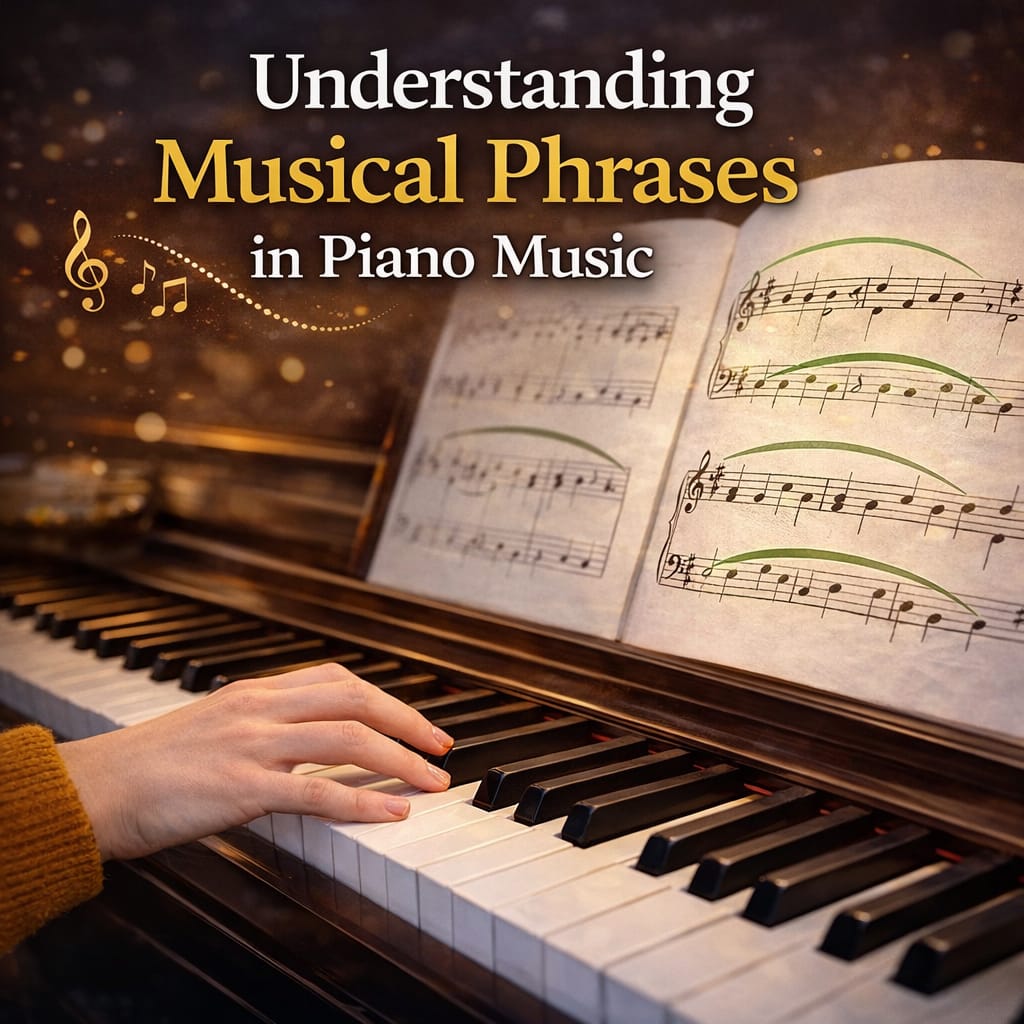
In written music, phrases are sometimes indicated by phrase marks, which look like curved lines placed above or below a group of notes.
Why Musical Phrases Are Important for Pianists
Understanding musical phrases helps pianists play more musically and expressively.
Improves Musical Expression
Phrases guide how a piece should breathe and flow. Instead of playing notes mechanically, pianists can shape the music with dynamics and subtle timing.
Creates Natural Flow
Recognizing phrases helps musicians avoid playing everything with the same emphasis. This creates smoother and more natural musical lines.
Helps Memorization
Breaking music into phrases makes it easier to remember sections of a piece. Pianists can memorize small musical ideas rather than long sequences of notes.
Enhances Interpretation
Understanding phrases allows pianists to highlight important musical moments and communicate the composer’s intention more effectively.
How to Identify Musical Phrases
Recognizing phrases in piano music becomes easier with practice. Here are a few tips to help you identify them.
Look for Phrase Marks
Many pieces include curved phrase markings that show where phrases begin and end. These markings help guide musical interpretation.
Listen for Musical Pauses
Often, a phrase ends where there is a slight pause, longer note, or rest in the music.
Observe Repetition Patterns
Composers frequently repeat similar melodic patterns. These repeated ideas often represent separate musical phrases.
Follow the Melody
In most pieces, the melody naturally forms phrases that rise, develop, and resolve.
How to Play Musical Phrases on the Piano
Recognizing phrases is only the first step. Pianists also need to shape phrases musically while playing.
Use Dynamics
Gradually increasing or decreasing volume can help emphasize the natural direction of a phrase.
Think of Breathing
Just like a singer takes a breath between phrases, pianists should imagine breathing spaces in the music.
Avoid Playing Everything Equally
Not every note should be played with the same emphasis. Highlight important notes that lead the phrase forward.
Use Natural Timing
Slightly relaxing the tempo at the end of a phrase can make the music sound more expressive.
Practice Exercises for Musical Phrasing

Developing phrasing skills requires focused practice.
Practice Singing the Melody
Singing the melody helps you feel the natural flow of musical phrases.
Mark Phrases in Your Sheet Music
Use a pencil to mark where you believe phrases begin and end.
Listen to Professional Performances
Listening to experienced pianists can help you understand how phrases are shaped musically.
Practice Slowly
Playing slowly allows you to focus on the direction and shape of each phrase.
How Piano Lessons Help Develop Musical Phrasing
Learning musical phrasing can be challenging without guidance. A skilled teacher can help students recognize phrasing patterns and apply expressive techniques.
Through structured lessons, students can learn:
- How to interpret phrase markings
- Proper dynamic shaping
- Musical breathing techniques
- Expressive performance skills
These elements help transform basic note-playing into true musical expression.
Final Thoughts
Understanding musical phrases in piano music is a key step toward expressive and musical playing. Phrases help organize music into meaningful ideas, allowing pianists to shape melodies naturally and communicate emotion through their performance.
By learning to recognize phrases and practicing techniques that highlight them, pianists can bring greater depth and artistry to their playing. Over time, musical phrasing becomes an intuitive part of performance, helping musicians connect more deeply with the music they play.

About The Mystic Keys
The Mystic Keys is an online music academy dedicated to helping students develop strong musical skills through personalized instruction. The academy offers one-on-one online lessons for instruments such as Piano Lessons Online, guitar, vocals, drums, Hindustani music, and more. instruments.
Students receive guidance from experienced instructors along with recorded lessons and structured practice plans. This approach helps learners improve technique, musical understanding, and performance confidence.
The academy also prepares students for internationally recognized music certifications from Trinity College London, supporting students in achieving meaningful milestones in their musical journey.
For more information and exciting resources about learning music, visit our website at The Mystic Keys. For more music content and exciting offers follow us on
Facebook, Instagram, YouTube, LinkedIn, Twitter, Pinterest, and Threads.