
Why Consistency Matters More Than Talent in Piano Learning
Learning the piano is an exciting and rewarding journey. However, one important factor that determines success is consistency in piano practice. Many beginners believe that only people with natural musical talent can become good pianists. This belief often discourages students who feel they are not “naturally gifted.”
However, the truth about learning the piano is very different.
In reality, consistency in piano practice is far more important than natural talent. Students who practice regularly improve steadily, develop strong musical skills, and gain confidence over time.
Even the most talented musicians achieved their success through years of disciplined and consistent practice.
If you are beginning your piano journey, understanding the importance of consistent practice can completely change how you approach learning music.
Talent vs Consistency in Piano Learning
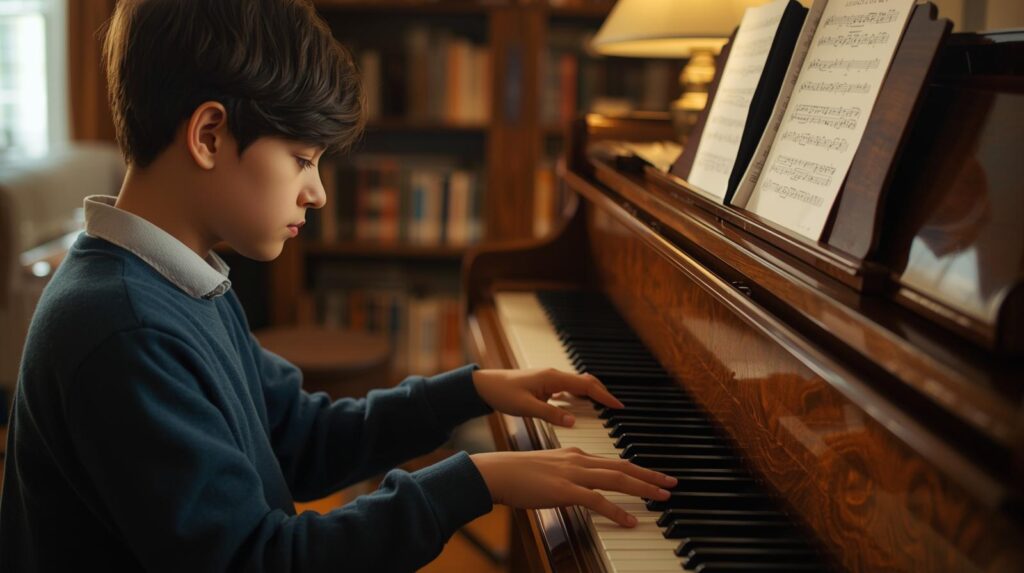
Natural talent may help someone understand music faster in the early stages of learning. Some students may quickly recognize rhythms, melodies, or finger patterns.
But talent alone cannot develop strong piano skills.
Without regular practice, even talented students struggle to improve.
Consistency, on the other hand, builds real musical ability. When students practice the piano regularly, they gradually strengthen their:
Hand coordination
Rhythm and timing
Musical expression
Over time, these improvements create a strong foundation for becoming a skilled pianist.
This is why music teachers often emphasize that consistent practice is the real key to musical success.
How Consistent Piano Practice Improves Skills

1. Builds Muscle Memory
Playing the piano involves many detailed finger movements. Beginners often feel that their fingers are slow or uncoordinated.
However, regular practice helps the fingers remember movement patterns automatically.
This process is known as muscle memory.
When students repeat scales, chords, and simple exercises daily, their fingers begin to move naturally across the keyboard. Eventually, they can play music more smoothly without thinking about every movement.
2. Improves Accuracy and Control
Another important benefit of consistent piano practice is improved accuracy.
Beginners often make small mistakes while playing notes or rhythms. But daily practice allows students to slowly correct those mistakes.
Practicing slowly and carefully helps develop better finger control. Over time, the music becomes clearer, smoother, and more expressive.
3. Develops Strong Musical Understanding
Learning the piano is not just about pressing keys. It also involves understanding different elements of music.
Students who practice consistently become more familiar with important musical concepts such as:
Chords and harmony
Reading sheet music
Music theory basics
A strong understanding of these elements allows students to learn new songs faster and perform them more confidently.
4. Builds Confidence and Motivation
Confidence grows through repetition and progress.
When students practice regularly, they begin to see small improvements in their playing. These improvements motivate them to keep learning and exploring new music.
Eventually, students feel more comfortable performing in front of others, whether for family members, friends, or small recitals.
Why Small Daily Practice Works Better
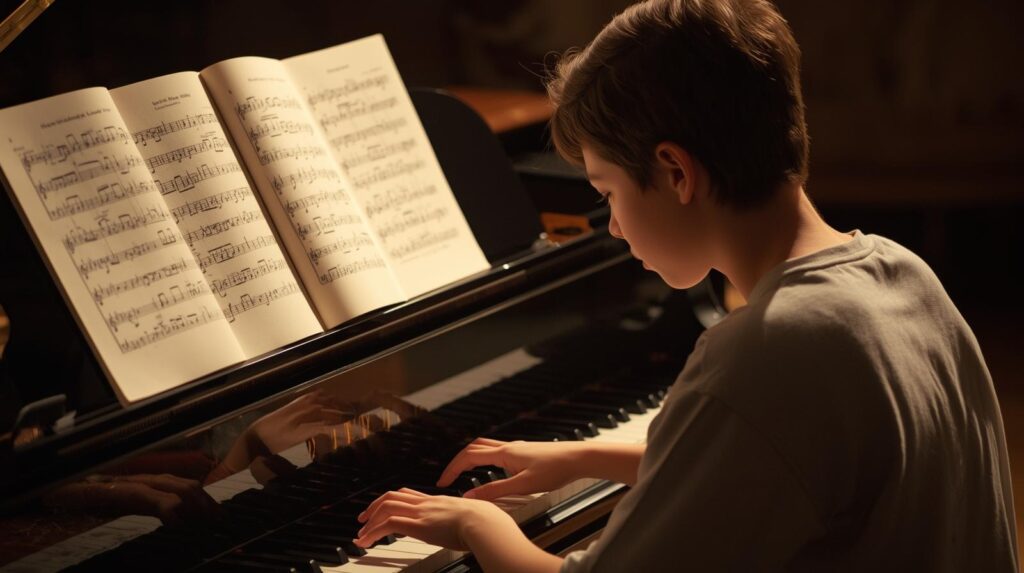
One common mistake beginners make is practicing for long hours occasionally instead of practicing regularly.
For example, practicing for two hours once a week may seem productive, but it is not the most effective learning method.
Music learning works best when practice is consistent and frequent.
Practicing 15–30 minutes every day helps the brain absorb musical patterns more effectively. Short daily practice sessions keep the learning process active and help students retain what they have learned.
Daily practice also prevents students from forgetting previous lessons.
The Long-Term Power of Consistency

Learning the piano is similar to learning a new language or developing any other skill.
At first, progress may feel slow. Beginners might struggle with simple exercises or songs.
However, consistency in piano practice over weeks and months creates remarkable improvement.
Students who practice regularly often look back after a few months and realize how much their playing has improved.
What once felt difficult becomes comfortable and natural.
This long-term progress is the true reward of consistency in piano practice.
Practical Tips to Stay Consistent with Piano Practice

Building a regular practice routine can sometimes be challenging, especially for beginners. Here are some simple strategies to help students stay consistent.
Set a Fixed Practice Time
Choose a specific time each day for piano practice. A fixed routine helps build discipline and makes practice a daily habit.
Start with Short Sessions
Beginners do not need to practice for long hours. Even 15–20 minutes a day can create significant improvement.
Focus on Small Goals
Instead of trying to learn an entire song at once, focus on mastering a small section each day.
Practice Slowly
Playing slowly helps students avoid mistakes and develop better accuracy.
Celebrate Small Progress
Recognizing small improvements helps maintain motivation and keeps learning enjoyable.
The Real Secret Behind Great Pianists

Many people admire professional pianists and assume they were born with extraordinary talent.
In reality, most great musicians reached their level through years of disciplined practice and dedication.
Behind every beautiful piano performance are thousands of hours spent practicing scales, exercises, and musical pieces.
Consistency builds the technical skills, musical understanding, and confidence needed to become a great pianist.
If you are learning the piano, do not worry about whether you are naturally talented.
Talent may provide a small advantage in the beginning, but consistent practice is what truly shapes a musician.
Students who practice regularly develop stronger skills, greater confidence, and a deeper love for music.
The most important step is simple:
Show up every day, practice patiently, and enjoy the journey of learning piano.
Over time, consistency will turn small daily efforts into remarkable musical progress.
If you would like expert guidance and structured practice, our Piano Lessons Online can help you build consistency and learn piano step by step from experienced teachers.
Intersted in learning music with us? Register now
For more information and exciting resources about learning music, visit our website at The Mystic Keys. For more music content and exciting offers follow us on
Facebook, Instagram, YouTube, LinkedIn, Twitter, Pinterest, and Threads.