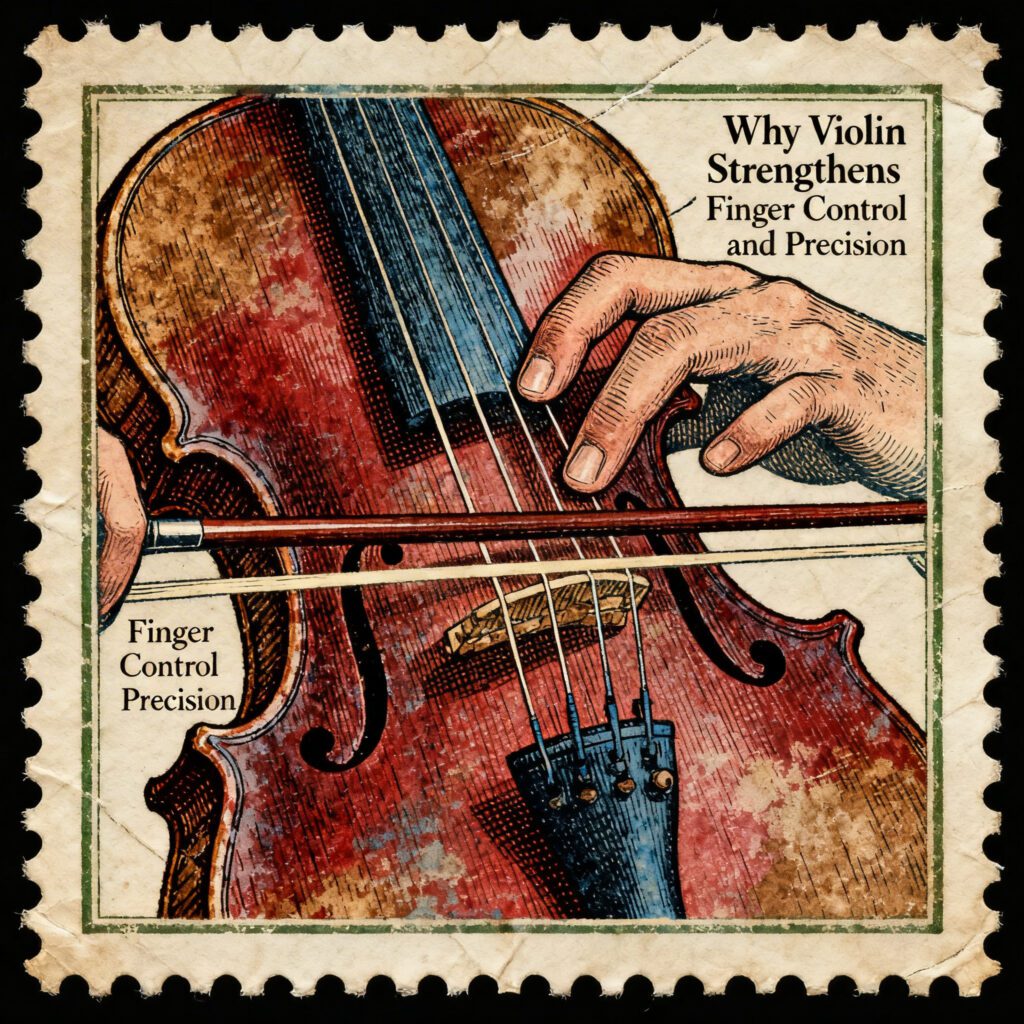
Why Violin Strengthens Finger Control and Precision
In recent years, the growing field of neuroscience and music education has shown how violin strengthens finger control by engaging both the brain and the body in highly coordinated activity. Learning the violin requires precise finger placement, controlled pressure, and rapid yet accurate movements, which significantly enhance fine motor skills and hand coordination. Unlike many other instruments, the violin demands continuous adjustment of pitch and tone through subtle finger movements, making it one of the most effective tools for developing dexterity and precision. As students progress, they not only improve their musical skills but also strengthen neural connections related to focus, memory, and problem-solving. At The Mystic Keys, we regularly observe that consistent violin practice helps learners build discipline, concentration, and physical control, benefits that positively influence academics, daily tasks, and overall personal development.
How violin training improves motor control in music in medicine

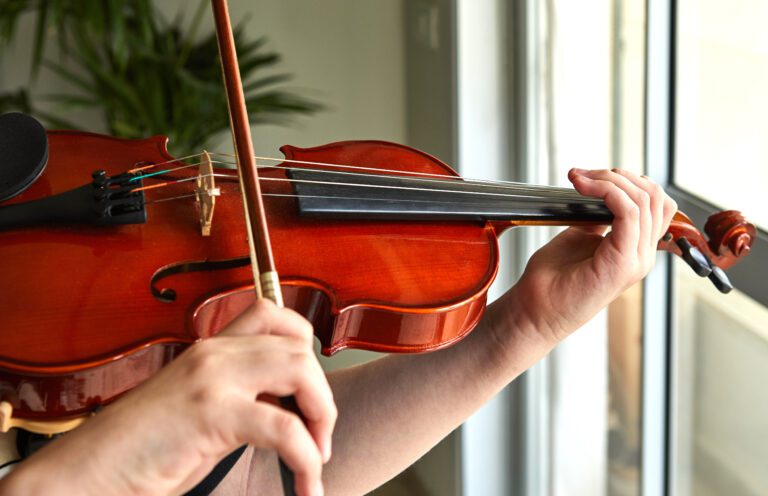
The violin is unique because it requires both hands to perform completely different tasks at the same time. The left hand controls pitch by pressing the strings, while the right hand manages the bow’s movement, speed, and pressure. This dual coordination stimulates complex brain activity and improves neural connections.
Research in neuroscience and music in medicine shows that fine motor activities like violin playing strengthen the brain’s motor cortex. Over time, this enhances finger strength, flexibility, and control. Students who practice regularly develop better hand-eye coordination, which also helps in writing, typing, and other daily activities.
The role of finger independence in violin playing and music in medicine
Finger independence is one of the most important skills violinists develop. Each finger must move separately with accuracy and speed. Unlike many instruments, the violin does not have frets or keys to guide placement. Players must rely on muscle memory and precise finger positioning.
This process trains the brain to create stronger neural pathways. In the context of music in medicine, this skill is linked to improved cognitive flexibility and problem-solving. Students often notice that their reaction time and coordination improve even outside music.
Famous violinists like Itzhak Perlman and Hilary Hahn are known not only for their musical expression but also for their exceptional technical control, which is built through years of focused practice.
How violin strengthens hand muscles and endurance in music in medicine

Playing the violin regularly strengthens small muscles in the fingers, hands, and wrists. These muscles are often underdeveloped in daily life but are essential for precision tasks.
Through structured exercises such as scales, arpeggios, and finger drills, students build stamina and control. This gradual strengthening supports rehabilitation programs in music in medicine, especially for patients recovering from hand injuries or neurological conditions.
Violin practice also improves grip strength and fine motor stability, which benefits children, adults, and seniors alike.
The science behind precision and accuracy in violin performance
Precision in violin playing involves accurate finger placement, controlled bow movement, and rhythmic consistency. These skills are developed through repetition and mindful practice.
Studies in music in medicine suggest that repetitive and focused movements enhance neuroplasticity. This means the brain adapts and becomes more efficient at controlling muscles. Over time, students develop automatic and accurate responses.
This precision is why many educators recommend violin training to young learners. It helps shape brain development during critical growth periods.
Why the absence of frets improves finger accuracy
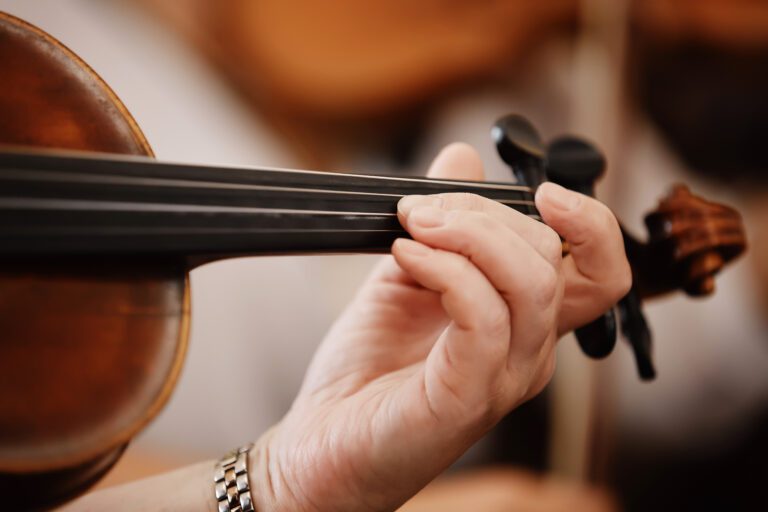
Unlike guitar or keyboard instruments, the violin fingerboard has no visual or physical guides. This forces students to listen carefully and adjust finger placement based on sound.
This constant listening strengthens auditory perception and fine motor adjustment. In Violin Strengthens Finger Control, this process is linked to improved sensory integration and attention skills.
Students learn to make micro-adjustments, which builds patience and awareness. These qualities are essential not only in music but also in academic and professional life.
How violin enhances brain connectivity and coordination
Brain imaging studies have shown that violinists develop stronger connections between the left and right hemispheres. This is due to the complex coordination required between both hands.
The field of Violin Strengthens Finger Control emphasizes that such coordination enhances memory, creativity, and problem-solving abilities. Students who learn the violin often demonstrate better multitasking skills.
This is particularly beneficial for children and teenagers, as it supports academic performance and cognitive development.
The emotional and psychological benefits of finger control training
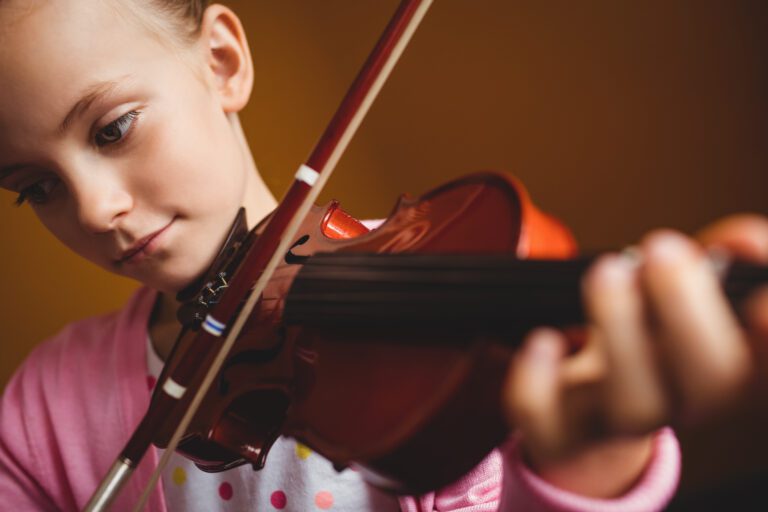
Learning the violin is not only physical but also emotional. The process of mastering difficult techniques builds resilience, confidence, and patience.
In music in medicine, emotional regulation is a major focus. Playing an expressive instrument like the violin helps students process emotions and reduce stress. This contributes to mental well-being and improved focus.
Students also experience a sense of achievement when they overcome technical challenges. This boosts motivation and self-esteem.
How structured violin lessons improve discipline and focus
Consistency is key to developing finger precision. Regular practice routines teach time management, goal setting, and discipline.
At The Mystic Keys, we guide students through structured learning paths that help them build technical skills step by step. This approach ensures steady progress and prevents frustration.
In music in medicine, structured learning is linked to long-term cognitive and emotional benefits.
The importance of slow practice for developing control
Slow practice is one of the most effective techniques for improving finger control. It allows students to focus on accuracy before speed.
This method helps build muscle memory and prevents mistakes from becoming habits. Over time, precision improves naturally.
Slow and mindful practice is also recommended in music in medicine for improving concentration and reducing anxiety.
Why violin is recommended for children’s cognitive development
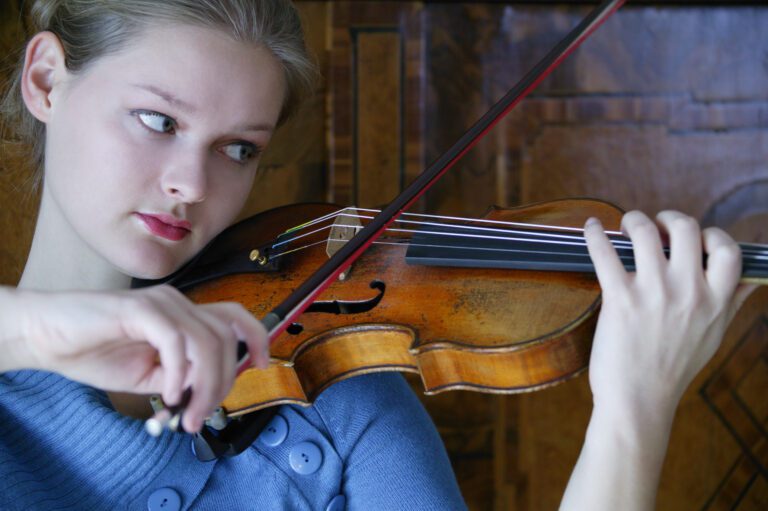
Many parents choose violin training because of its cognitive benefits. The instrument supports memory, attention, and problem-solving skills.
Studies in music in medicine show that early musical training enhances brain development and academic success. Children who learn the violin often demonstrate improved language skills and mathematical ability.
This makes violin learning a valuable investment in a child’s future.
How violin supports rehabilitation and therapy
The therapeutic use of violin and other string instruments is growing in healthcare settings. Music therapists use violin exercises to help patients regain motor control after stroke or injury.
The field of music in medicine highlights how repetitive finger movements stimulate brain recovery and improve coordination.
This approach is also used for individuals with neurological conditions, as it supports brain plasticity and emotional healing.
Tips to improve finger control faster on the violin

Students can accelerate their progress by following simple strategies:
Practice scales daily with a metronome
Focus on finger lifting and placement
Use slow and mindful repetitions
Maintain proper posture and hand position
Record practice sessions to track progress
With consistent effort and guidance, precision improves steadily.
How online violin lessons enhance technical development
Modern technology has made violin learning more accessible. Online lessons allow students to receive personalized guidance, structured exercises, and expert feedback.
At The Mystic Keys, we offer customized training that focuses on finger control, tone quality, and musical expression. This helps students develop both technical and artistic skills.
Online learning also allows flexibility, making it easier for busy students to stay consistent.
Conclusion: The lifelong benefits of violin and music in medicine
The violin is more than just a musical instrument. It is a powerful tool for developing finger control, precision, and cognitive skills. Through consistent practice, students gain coordination, discipline, and emotional balance.
The growing field of music in medicine continues to highlight the importance of musical training in improving brain health and physical abilities. Whether for children, adults, or seniors, learning the violin offers lifelong benefits that extend far beyond performance.
If you want to build strong motor skills, improve focus, and experience the therapeutic power of music, structured learning can make a significant difference. Explore professional training through Violin Lessons Online and begin your journey toward precision, confidence, and musical excellence.
For more information and exciting resources about learning music, visit our website at The Mystic Keys. For more music content and exciting offers follow us on
Facebook, Instagram, YouTube, LinkedIn, Twitter, Pinterest, and Threads.