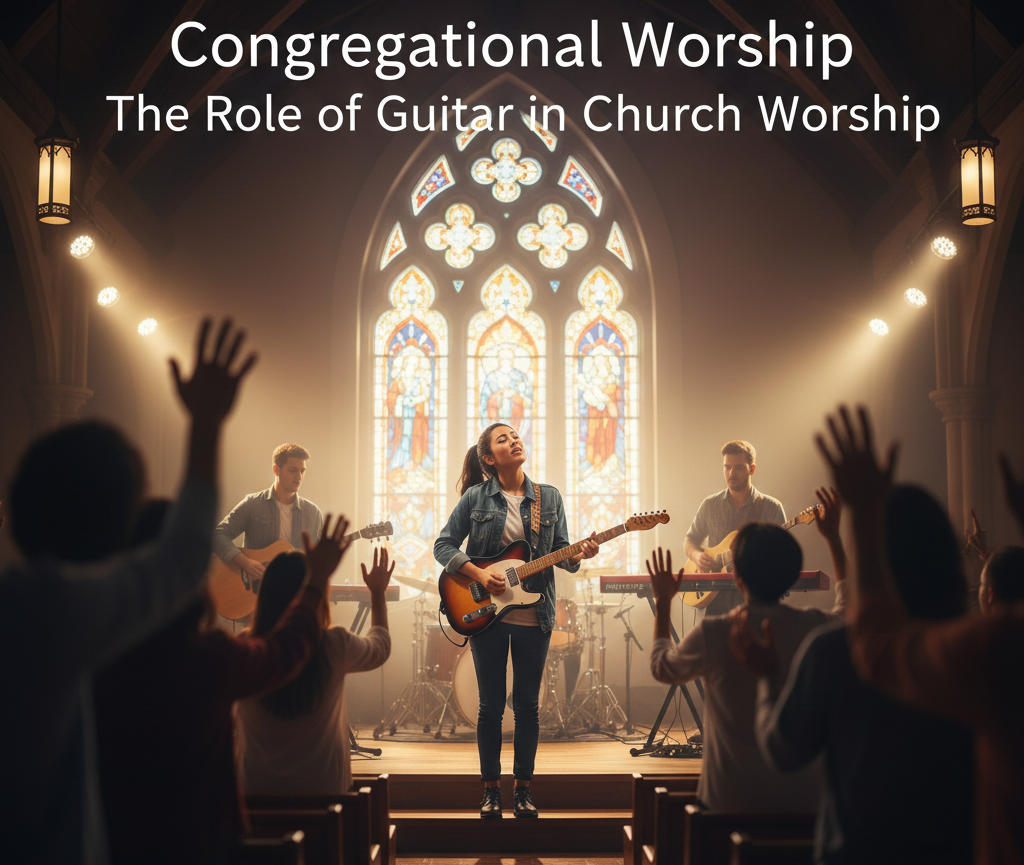
Congregational Worship | The Role of Guitar in Church Worship
Music has always been at the heart of congregational worship. Among the many instruments used, the guitar holds a special place—humble yet powerful, simple yet deeply expressive. Whether acoustic or electric, the guitar has become a bridge between worship leaders and congregations, helping people engage not just with melody, but with meaning. However, leading worship with a guitar is not merely about playing the right chords. It is about understanding motivation—both personal and collective—and how music gently moves hearts toward participation.
To truly grasp how motivation works in congregational worship, we must look beyond technique and focus on purpose, connection, and intention.
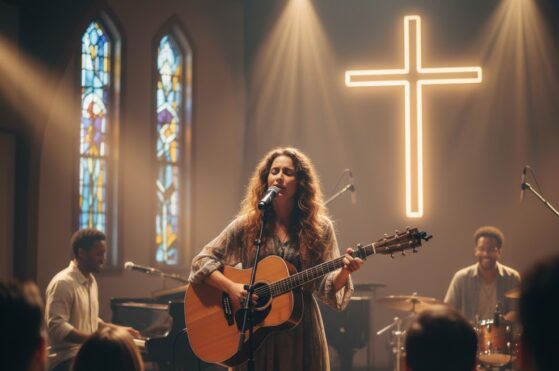
The Guitar’s Role in Congregational Worship | Supporting, Not Performing
At first glance, the guitar appears to be the focal point during worship. It sets the key, establishes rhythm, and supports the melody. Yet, in effective congregational worship, the guitar never seeks attention for itself. Instead, it functions as a servant—supporting voices, guiding tempo, and creating emotional space for reflection and praise.
This distinction is important because motivation in worship does not arise from performance, but from participation. When the guitar is played with restraint and sensitivity, it encourages people to sing rather than listen. The absence of complexity allows the congregation to focus on the words, the prayer, and the shared experience rather than the musician’s skill.
As a result, the guitar becomes an invisible guide—present, steady, and supportive.

Understanding Motivation in Worship Settings
Motivation in congregational worship is fundamentally different from motivation in concerts or musical performances. People are not motivated by applause or admiration. Instead, they are moved by belonging, familiarity, and spiritual resonance.
When a worship leader understands this, their playing naturally adapts. The guitar patterns become predictable enough to feel safe, yet expressive enough to feel alive. Familiar chord progressions help worshippers relax, while gentle dynamic changes guide emotional flow without overwhelming it.
In this environment, motivation arises quietly. People sing because they feel invited, not pressured. They participate because the music makes space for them.

Emotional Alignment | Playing What the Moment Needs
One of the most overlooked aspects of using guitar in worship is emotional alignment. A skilled worship guitarist listens—not just to the band or the singer, but to the room itself. The congregation’s energy, mood, and engagement subtly inform how the instrument is played.
A reflective moment may call for soft fingerpicking or sustained chords, allowing silence to breathe between phrases. A joyful hymn may require rhythmic strumming that lifts energy and unifies voices. When the guitar mirrors the emotional direction of the worship moment, it validates what people are feeling and gently leads them forward.
This emotional alignment is where motivation deepens. People feel understood without words, and that understanding encourages deeper participation.

Simplicity and Confidence in Leading Congregational Worship
Complex guitar playing can impress, but simplicity builds confidence—especially within a congregation. When songs are played with consistent rhythm and clear structure, people feel secure enough to sing louder and more freely.
This confidence is motivational. Congregants are more likely to engage when they know what comes next and feel supported musically. Sudden key changes, unnecessary fills, or unpredictable rhythms can unintentionally create hesitation. Simplicity, on the other hand, invites trust.
Over time, this trust transforms into active involvement, where worship feels less like observation and more like shared expression.

The Worship Leader’s Inner Motivation
Behind every effective worship guitarist lies a deep, personal motivation. The worship leader draws this motivation not from musical ambition, but from a genuine desire to serve and guide others spiritually. When a leader plays with humility and clear intention, the congregation feels it immediately.
In these moments, the guitarist uses the instrument as an extension of prayer rather than as a showcase of skill. The leader shifts focus from “How well am I playing?” to “How deeply are people engaging?” This inner shift directly shapes how the congregation responds.
Authenticity spreads quickly. When service-driven motivation guides the worship leader, it naturally encourages others to participate with sincerity and openness.

Building Collective Momentum Through Consistency
Motivation in congregational worship builds gradually. It does not peak instantly, nor does it rely on dramatic musical changes. Instead, it grows through consistency—consistent tempo, consistent tone, and consistent emotional direction.
The guitar plays a key role here by anchoring the music. Repeated chord patterns and steady rhythms create a sense of continuity. As songs progress, the congregation becomes more comfortable, more confident, and more willing to express themselves.
This collective momentum is subtle yet powerful. It transforms individual voices into a unified sound, strengthening both musical and spiritual connection.

When Technique Serves the Spirit
While technique is important, its true value lies in how well it serves the spirit of worship. Clean chord transitions, proper timing, and controlled dynamics ensure that nothing distracts from the message being conveyed.
When technique supports clarity, motivation flows naturally. People are not distracted by mistakes or confusion. Instead, they remain focused on the lyrics and the shared act of worship. The guitar becomes a steady foundation rather than a focal distraction.
In this way, technique quietly reinforces motivation without ever demanding attention.

The Lasting Impact of Guitar-Led Worship
Guitar-led worship often influences people long after the moment ends. When worship leaders guide a song well, the melody stays with the congregation, returning during personal reflection or prayer. This lasting impact comes from motivated participation rather than musical complexity.
When worship leaders make people feel included and emotionally supported, worship becomes deeply personal. The guitar, in its simplicity, helps shape these moments of lasting connection.
Ultimately, success in using the guitar for congregational worship comes from understanding motivation—not as something to push or control, but as something to gently nurture.

Conclusion | Leading Congregational Worship with Intention and Sensitivity
Using guitar to lead congregational worship requires a delicate balance of musical skill, emotional awareness, and spiritual intention. At The Mystic Keys, we believe true motivation begins when the guitar serves the congregation instead of directing it forcefully. Through simplicity, consistency, and authenticity, the instrument transforms into a powerful medium for unity and heartfelt expression.
When a worship leader plays with sensitivity, the guitar does more than accompany congregational worship—it invites hearts to open, voices to rise together, and shared moments to gain deeper meaning.
That is where motivation truly works—quietly, naturally, and collectively.
Intersted in learning music with us? Register now
For more information and exciting resources about learning music, visit our website at The Mystic Keys. For more music content and exciting offers follow us on
Facebook, Instagram, YouTube, LinkedIn, Twitter, Pinterest, and Threads.