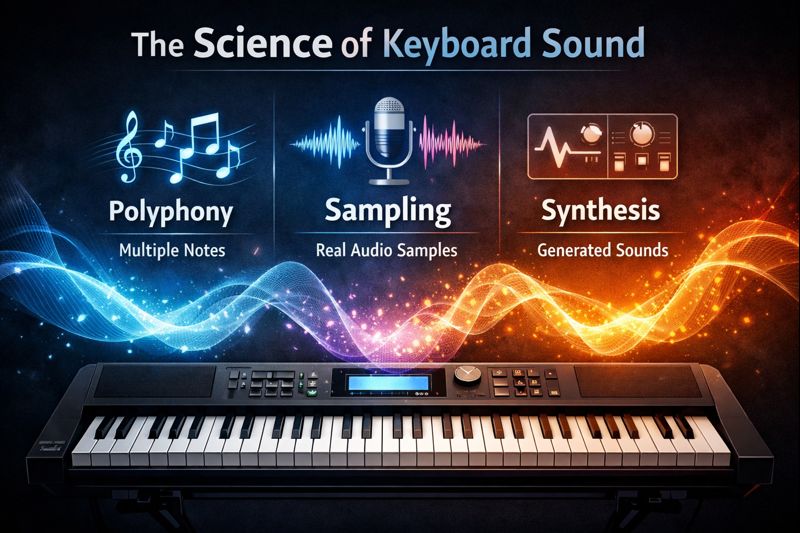
The Science of Keyboard Sound | Polyphony, Sampling, and Synthesis Explained
Modern keyboards and digital pianos may look simple on the outside, but inside they are powered by advanced sound technology. Understanding the science of keyboard sound helps musicians choose the right instrument, improve performance quality, and appreciate how digital music has evolved. This guide explains polyphony, sampling, and synthesis in clear, practical terms—whether you’re a beginner, an intermediate player, or a music educator.
By the end of this article, you’ll know exactly how keyboards create realistic piano tones, rich layers, and expressive sounds.
What Is Polyphony in Keyboards?

Polyphony refers to the number of individual notes a keyboard can produce at the same time. Each note you play—along with sustain pedal usage, layered sounds, or accompaniment—counts toward the polyphony limit.
Why Polyphony Matters
Allows smooth chord playing without dropped notes
Essential for sustain pedal usage
Crucial for layered and split keyboard sounds
Important for recording and live performances
Common Polyphony Levels
32-note polyphony – Entry-level keyboards
64-note polyphony – Basic learning and practice
128-note polyphony – Standard for intermediate players
192–256-note polyphony – Professional and stage keyboards
Higher polyphony ensures natural decay of notes, especially when playing complex pieces.
Understanding Keyboard Sampling Technology
Sampling is the process of recording real acoustic instruments and storing those recordings digitally inside a keyboard. When you press a key, the keyboard plays back a recorded sample of that instrument.
How Sampling Works
A real instrument (like a grand piano) is recorded
Each note is captured at multiple volume levels
Samples are edited and optimized
The keyboard plays these samples when keys are pressed
Multi-Layer and Velocity Sampling
Advanced keyboards use multi-layer sampling, meaning:
Soft key presses trigger gentle samples
Hard key presses trigger brighter samples
This creates realistic dynamics and expression
Advantages of Sampling
Authentic acoustic sound
Natural instrument tone
Ideal for piano, strings, and orchestral sounds
High-quality sampling is what makes digital pianos sound close to real grand pianos.
What Is Sound Synthesis in Keyboards?

Synthesis generates sound electronically rather than using recordings. It creates tones using oscillators, filters, and envelopes.
Types of Synthesis Used in Keyboards
- Subtractive synthesis – Shapes raw waveforms (common in synths)
- FM synthesis – Produces metallic and electric sounds
- Additive synthesis – Builds sound by combining harmonics
- Physical modeling – Simulates real instrument behavior
Benefits of Synthesis
- Unlimited sound design possibilities
- Ideal for electronic music and modern genres
- Lightweight memory usage compared to samples
Synth-based keyboards excel at pads, leads, basses, and experimental sounds.
Sampling vs Synthesis: What’s the Difference?
| Feature | Sampling | Synthesis |
|---|---|---|
| Sound Source | Recorded instruments | Electronically generated |
| Realism | Very high | Moderate to creative |
| Customization | Limited | Extensive |
| Best For | Piano, acoustic sounds | EDM, ambient, sound design |
How Polyphony, Sampling, and Synthesis Work Together

When you play a keyboard:
Polyphony determines how many notes can sound
Sampling provides realistic instrument tones
Synthesis adds creative and electronic textures
High-end keyboards intelligently manage polyphony so important notes aren’t cut off, even during complex performances.
Choosing the Right Keyboard Based on Sound Technology
When buying a keyboard, consider:
Learning & classical music – High-quality sampling + 128 polyphony
Worship & live performance – High polyphony with layered sounds
Electronic music production – Strong synthesis engine
Recording & composing – Combination of sampling and synthesis
Understanding sound technology helps you invest wisely and grow musically.
The Future of Keyboard Sound Technology
Modern keyboards now use:
AI-enhanced sampling
Advanced physical modeling
Higher-resolution audio engines
Cloud-based sound libraries
These innovations continue to blur the line between digital and acoustic instruments.
The science of keyboard sound—polyphony, sampling, and synthesis—is the foundation of how digital keyboards produce music. Knowing how these technologies work empowers musicians to play better, choose smarter, and explore sound creatively.
Whether you’re practicing classical piano, playing worship music, or producing electronic tracks, understanding keyboard sound technology will elevate your musical journey.
interested in learning more about keyboard techniques? Explore our Keyboard classes online.
Intersted in learning music with us? Register now
For more information and exciting resources about learning music, visit our website at The Mystic Keys. For more music content and exciting offers follow us on
Facebook, Instagram, YouTube, LinkedIn, Twitter, Pinterest, and Threads.