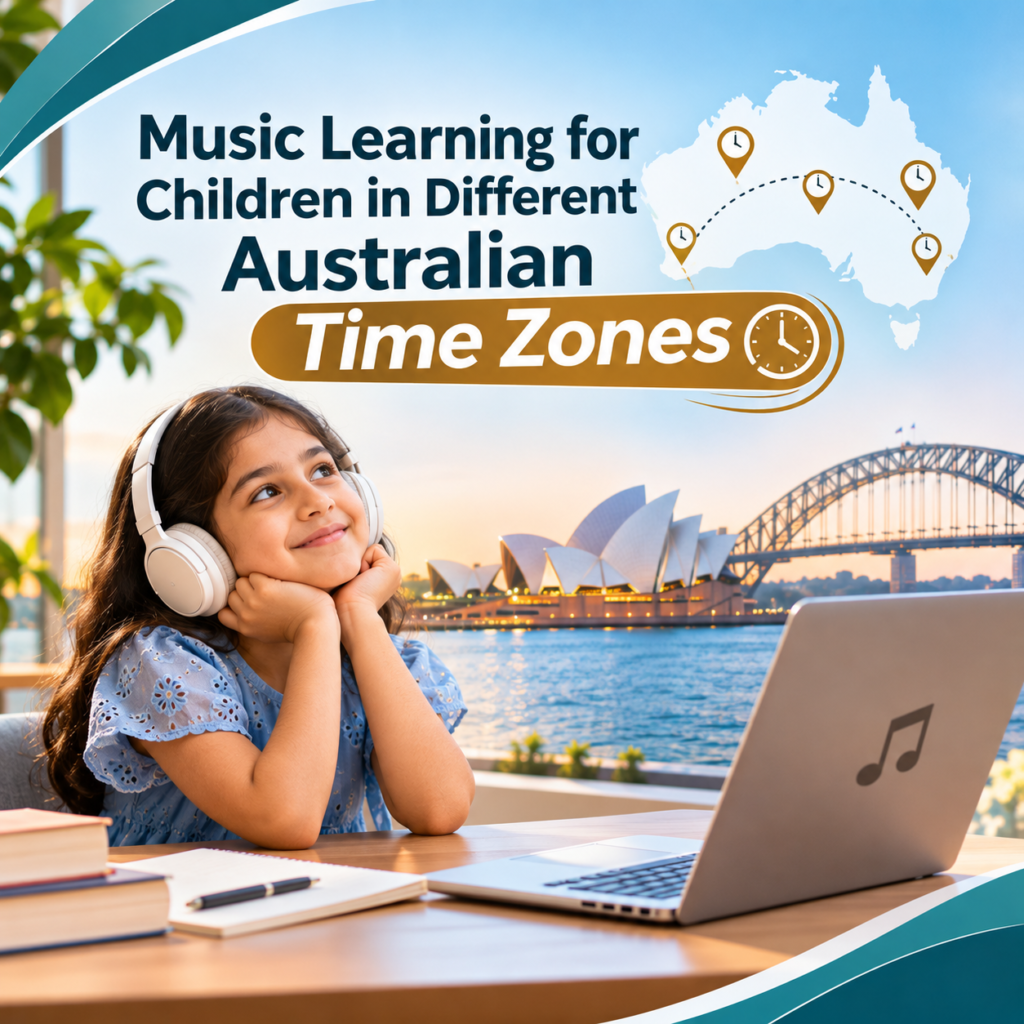
Music Learning for Children in Different Australian Time Zones
Music Learning for Children in Different Australian Time Zones
“Through creative activities and artistic exploration, children can express themselves, develop creativity, and build confidence. Music Learning for Children goes beyond mastering an instrument or exploring vocals; it also helps improve concentration, coordination, discipline, and emotional expression, creating a strong foundation for their overall development.”
However, for families across Australia, scheduling music lessons can sometimes be challenging. Different time zones, school hours, and extracurricular activities make finding a convenient lesson time important.
Fortunately, online music education makes learning more accessible. With flexible scheduling and personalised one-on-one instruction, children can explore music from the comfort of their homes.
At The Mystic Keys, young learners across Australia can enjoy guided online music lessons with experienced tutors, regardless of their location.
Understanding Australian Time Zones for Music Learning for Children
Australia operates across three primary standard time zones: Australian Eastern Standard Time (AEST), Australian Central Standard Time (ACST), and Australian Western Standard Time (AWST).
AEST is followed in Queensland, New South Wales, Victoria, Tasmania, and the Australian Capital Territory during standard time. However, New South Wales, Victoria, Tasmania, and the ACT observe daylight saving and move to Australian Eastern Daylight Time (AEDT).
ACST is followed in South Australia and the Northern Territory. South Australia observes daylight saving, while the Northern Territory follows the same time throughout the year.
AWST is followed in Western Australia, which does not observe daylight saving.
These differences matter when arranging online music lessons. For instance, a lesson scheduled for 5:00 PM in Sydney will not take place at the same local time in Perth or Adelaide.
Therefore, understanding the local time zone helps parents coordinate lessons conveniently and avoid scheduling confusion.
Why Online Music Lessons Are Ideal for Children Across Australia
Children often have busy routines involving school, homework, sports, and other activities. Travelling to a music academy after a long school day can make their schedules even more demanding.
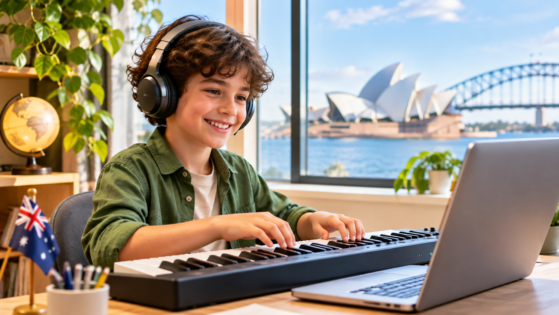
Online music lessons offer a convenient alternative by bringing professional instruction directly into the home. Children can learn through live interactive sessions without spending additional time travelling.
Moreover, online learning gives families access to experienced music tutors beyond their immediate neighbourhood. Even children living in regional or remote Australian locations can explore quality music education.
Another advantage is personalised attention. One-on-one lessons allow tutors to understand each child’s abilities, learning pace, and musical interests.
At The Mystic Keys, students attend individual online sessions through Zoom or Google Meet, making music education accessible across different Australian locations.
Finding the Right Music Lesson Schedule for School-Going Children
Choosing a suitable lesson time is just as important as selecting the right instrument. Children learn better when they are relaxed, attentive, and not overwhelmed by other commitments.
For most school-going children, weekday afternoons and early evenings can be convenient. However, the ideal timing depends on school hours, homework, and extracurricular activities.
For example, a child in Sydney may prefer lessons after homework, while a student in Perth might find an earlier evening session more suitable.
Weekends can also provide additional flexibility, especially for children with packed weekday schedules. Saturday and Sunday lessons allow families to plan music education without interfering with regular school activities.
Rather than choosing a time simply because it is available, parents should consider when their child is most focused and enthusiastic.

How Daylight Saving Time Affects Music Learning for Children
Daylight saving time is another important consideration for Australian families arranging recurring online lessons.
During daylight saving, several states move their clocks forward by one hour. These include New South Wales, Victoria, Tasmania, South Australia, and the ACT. Queensland, Western Australia, and the Northern Territory do not observe daylight saving.
Consequently, the time difference between Australian cities changes during certain months. For example, Perth and Sydney have a two-hour difference during standard time, increasing to three hours when Sydney observes daylight saving.
This can affect regular lesson schedules, particularly when students and tutors are located in different time zones.
To avoid confusion, parents should confirm lesson timings whenever daylight saving begins or ends. Sharing the student’s city and local time zone also helps ensure accurate scheduling.
At The Mystic Keys, lesson timings are coordinated according to student and teacher availability, helping families manage online sessions conveniently.
Choosing the Right Musical Instrument for Your Child
Once scheduling is considered, parents can focus on selecting an instrument that matches their child’s interests and curiosity.
Every child connects with music differently. Some enjoy exploring piano melodies, while others are fascinated by guitar rhythms, energetic drum patterns, or the expressive sounds of the violin.
Piano and keyboard lessons introduce children to melodies, chords, scales, rhythm, and music theory. They also help develop coordination between both hands.
Guitar lessons help young learners explore melodies, chords, and rhythmic patterns while improving finger coordination and musical expression.
Violin lessons develop listening skills, pitch accuracy, bowing techniques, and musical discipline through regular guided practice.
Drum lessons are ideal for children who enjoy rhythm and energetic music. They help improve timing, coordination, and concentration.
Vocal lessons encourage children to explore their voices while developing pitch, breathing techniques, and vocal control.
Ultimately, choosing an instrument should be an enjoyable experience. When children learn something they genuinely love, they are more likely to remain motivated.

The Importance of Personalised One-on-One Music Lessons
Every child learns music differently. Some understand musical concepts quickly, while others need additional time to develop practical techniques.
This is why personalised instruction is important for children’s musical development.
During one-on-one lessons, tutors can focus entirely on the student’s progress. They can adjust teaching methods, provide individual feedback, and introduce new concepts at a comfortable pace.
Furthermore, individual attention gives children the confidence to ask questions, make mistakes, and improve without feeling pressured to match another student’s progress.
At The Mystic Keys, lessons are tailored to each student’s age, experience, interests, and learning objectives. Students also receive class recordings and supplementary materials to support their practice between sessions.
Making Music Practice a Part of Your Child’s Daily Routine
Regular lessons provide guidance, but practice between sessions is equally important. It allows children to revisit musical concepts, strengthen techniques, and gradually improve their performance.
However, practice should not feel like another school assignment. Parents can encourage a simple routine that fits naturally into their child’s day.
For younger beginners, even 10 to 15 minutes of focused practice can be a useful starting point. Practice time can gradually increase as their interest and abilities develop.
Parents can also make learning enjoyable by encouraging children to play familiar melodies or perform recently learned songs for family members.
Most importantly, consistency matters more than practising for long hours occasionally. Short, regular sessions help children develop better musical habits.

How Parents Can Support Music Learning for Children
Parents play an important role in creating a positive learning environment. Their encouragement helps children remain interested and confident throughout their musical journey.
Providing a quiet practice space, keeping the instrument accessible, and maintaining a consistent lesson schedule can make a meaningful difference.
For online classes, parents should also ensure a stable internet connection, a suitable device, and a comfortable learning environment.
At the same time, realistic expectations are essential. Musical development takes time, and children may occasionally struggle with challenging techniques or compositions.
Recognising small achievements, such as completing a song or mastering a new scale, encourages children to keep learning with enthusiasm.
Music Learning for Children Across Australia with The Mystic Keys
Finding suitable music lessons should not depend on geographical location. Whether your family lives in Sydney, Melbourne, Brisbane, Adelaide, Perth, Canberra, Hobart, or Darwin, online music education makes professional instruction more accessible.
The Mystic Keys offers personalised online music lessons for children and learners across different age groups. With experienced tutors, individual attention, and flexible scheduling based on teacher and student availability, students can explore music at a comfortable pace.
From piano, guitar, violin, and drums to Western vocals, Hindustani and Carnatic music, learners can explore different musical disciplines through guided instruction.
Classes are conducted live through Zoom or Google Meet. Students can also access lesson recordings and supplementary learning materials to continue practising between sessions.
Whether your child is a beginner or already has some musical experience, the right guidance can make learning more structured, enjoyable, and rewarding.

Conclusion
Music education can play a valuable role in children’s development by encouraging creativity, concentration, discipline, and confidence.
Although Australia’s different time zones and daylight saving arrangements can make scheduling challenging, online music lessons help families overcome geographical barriers.
By choosing suitable lesson timings, selecting an instrument that matches their child’s interests, and encouraging regular practice, parents can create a strong foundation for musical growth.
With personalised guidance from The Mystic Keys, children across Australia can learn, practise, and develop their musical abilities from home.
Let your child’s musical journey begin with the right guidance, the right rhythm, and a schedule that works for your family.
Explore online music lessons with The Mystic Keys and make music a meaningful part of your child’s growing years.
For more information and exciting resources about learning music, visit our website at The Mystic Keys. For more music content and exciting offers follow us on
Facebook, Instagram, YouTube, LinkedIn, Twitter, Pinterest, and Threads.