

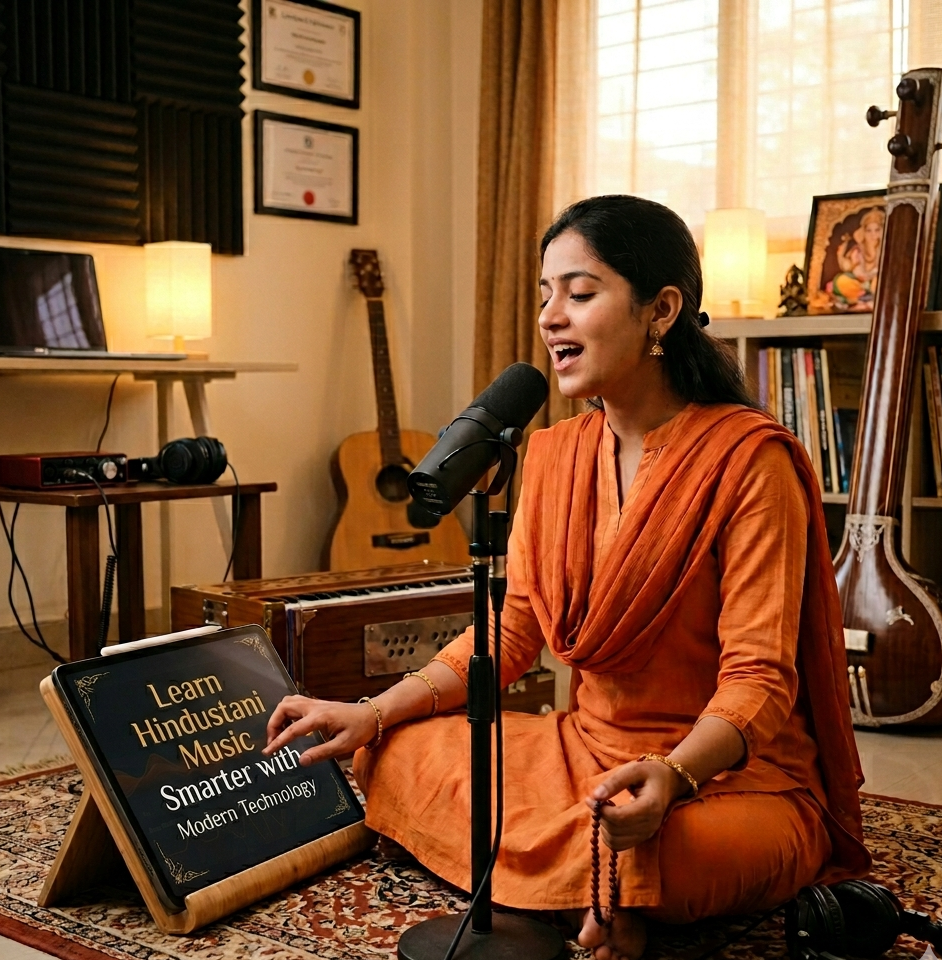
Learn Hindustani Music Smarter with Modern Technology
Learn Hindustani Music Smarter with Modern Technology
Learn Hindustani Music through a tradition that has been lovingly passed from one generation to the next through the beautiful guru–shishya parampara, where learning happened through listening, observation, and years of dedicated practice under a teacher’s guidance. Even today, that timeless approach continues to remain the soul of classical training. At the same time, modern learners now have access to powerful technological tools that make the journey more structured, engaging, and efficient without taking away the depth of tradition.
Rather than replacing tradition, modern technology strengthens it. Students can now practise more accurately, revisit lessons anytime, and develop confidence faster than ever before. With the right balance between discipline and digital support, learning Hindustani music becomes both deeper and smarter.
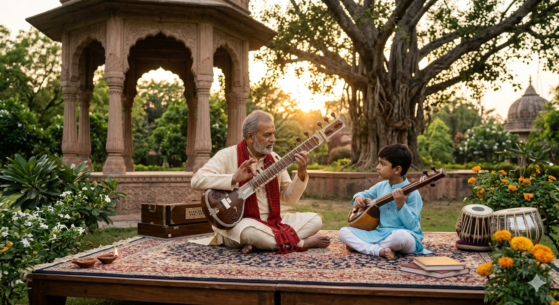
The Changing Landscape to Learn Hindustani Music Today
Learning music once required physical proximity to a teacher and long hours of memorization without many supporting resources. Progress depended heavily on memory and repetition alone. Today’s students benefit from tools that help them visualize swaras, refine pitch accuracy, and practise independently between lessons.
Technology has made classical music more accessible without reducing its depth. Learners from different cities, countries, and backgrounds can now connect with experienced teachers and structured lessons from anywhere. Because of this shift, consistency in practice has become easier to maintain even with busy schedules.
Most importantly, students can now take greater ownership of their musical journey while still receiving expert guidance.

Using Tanpura and Riyaz Apps to Learn Hindustani Music Better
One of the biggest advantages of modern learning is the availability of high-quality digital tanpura apps. Earlier, students depended on physical tanpuras or harmoniums to maintain pitch reference during practice. Today, mobile applications provide perfectly tuned drone support anytime and anywhere.
Regular practice with a digital tanpura strengthens pitch stability and helps learners internalize swaras more naturally. Over time, this improves listening ability and tonal control, which are essential in Hindustani music.
In addition to tanpura support, many riyaz apps now include tempo control features that allow students to gradually increase speed without losing clarity. Structured repetition becomes easier when learners can practise at comfortable tempos before moving forward.
Consistency improves dramatically when the right tools are always available within reach.
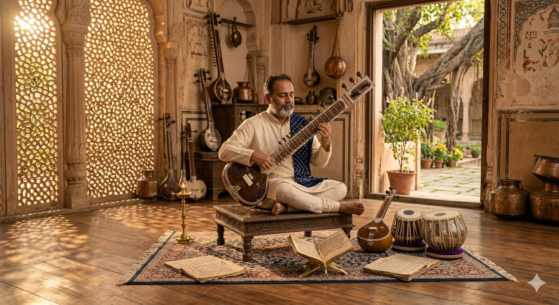
Online Lessons That Bring Guru Guidance Closer
Personal interaction with a teacher remains the heart of classical music learning. However, online lessons have made that connection possible across distances that once limited access to quality training.
Students can now attend classes from home while still receiving individual attention and corrections. Recorded lesson access further strengthens understanding because learners can revisit important demonstrations whenever required. Instead of depending only on memory, they now have the ability to reinforce concepts multiple times.
Confidence grows naturally when learners understand that support from their teacher is always available, even outside the classroom setting.
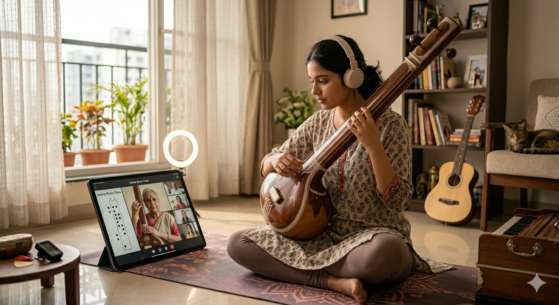
Visual Learning Methods to Learn Hindustani Music More Clearly
Hindustani music has always been an auditory tradition, but visual aids can significantly enhance comprehension for modern learners. Notation displays, swara charts, and lesson recordings help students recognize patterns more clearly.
When learners see musical structures alongside hearing them, retention improves. Complex concepts such as alankars, raag movements, and rhythmic variations become easier to understand with guided visual reinforcement.
Such tools are especially helpful for beginners who are still developing listening sensitivity and tonal awareness.
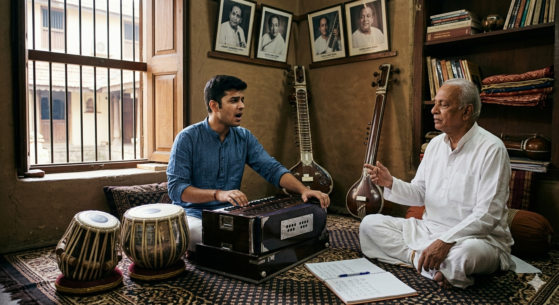
Recording Practice Sessions for Faster Improvement
Self-evaluation is one of the most powerful learning techniques available today. Recording practice sessions allows students to hear their own singing objectively and notice areas that require improvement.
Many learners discover pitch inconsistencies or rhythm gaps only after listening to themselves carefully. Awareness creates faster correction, which leads to steady progress over time.
Teachers also benefit from reviewing recordings between sessions, allowing them to guide students more precisely during the next lesson.
Technology makes reflection easier, and reflection makes improvement faster
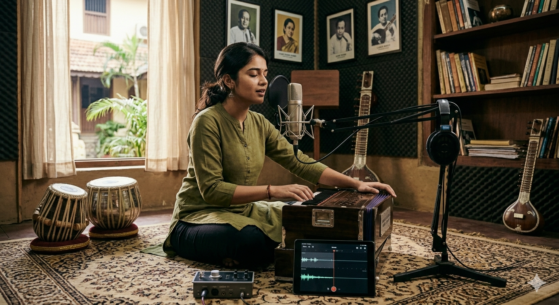
Learning Rhythm with Digital Tabla Support
Rhythm training plays an essential role in Hindustani music, yet practising with live tabla accompaniment is not always possible during daily practice sessions. Digital tabla applications solve this challenge by providing reliable rhythmic support at adjustable tempos.
Students can practise bandish sections repeatedly while maintaining correct laya. Gradual tempo increases help develop confidence without creating unnecessary pressure.
As rhythmic understanding improves, musical expression naturally becomes more balanced and controlled.
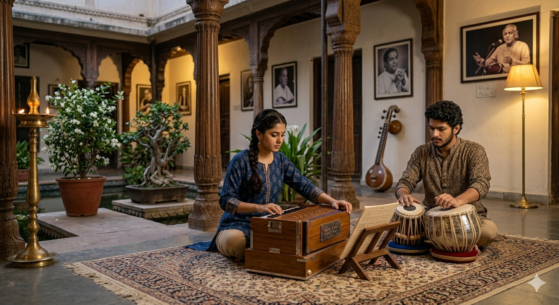
Access to Rare Performances and Musical Inspiration
Earlier generations learned mainly through live concerts or recordings that were difficult to obtain. Today’s learners can explore performances by legendary artists through online archives and curated listening platforms.
Exposure to different styles encourages deeper appreciation of raag interpretation and presentation techniques. Listening regularly helps students absorb subtle nuances that cannot always be explained verbally during lessons.
Such inspiration plays a powerful role in shaping musical sensitivity and artistic identity.

Tracking Progress to Learn Hindustani Music More Effectively
Technology has also introduced smarter ways to track progress. Lesson recordings, digital practice logs, and guided learning modules help students observe their improvement clearly over time.
Motivation increases when learners can recognize how far they have progressed. Small achievements become visible milestones rather than unnoticed steps in a long journey.
Structured learning builds confidence while maintaining the patience required for classical training.
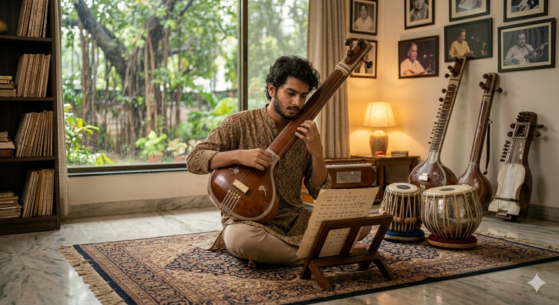
Blending Tradition with Innovation for the Best Results
The beauty of Hindustani classical music lies in its depth, discipline, and emotional richness. Technology does not replace these qualities. Instead, it supports learners in maintaining regular practice, improving accuracy, and staying connected with guidance and inspiration throughout their musical journey.
When traditional teaching methods combine with modern tools, students truly experience the best of both worlds. The learning process becomes more flexible while still preserving the authenticity and spirit of classical training.
With dedication, curiosity, and the right support system, anyone can begin learning Hindustani music more effectively than ever before. At The Mystic Keys, thoughtfully designed Hindustani Vocal Lessons Online help students stay connected to tradition while benefiting from structured digital support and guided practice methods that fit comfortably into modern routines.
Modern technology has opened new doors for learners, yet the essence of music learning remains beautifully unchanged. The joy of discovering each swara step by step and building a lifelong connection with the art form continues to make the journey deeply meaningful and rewarding.
For more information and exciting resources about learning music, visit our website at The Mystic Keys. For more music content and exciting offers follow us on
Facebook, Instagram, YouTube, LinkedIn, Twitter, Pinterest, and Threads.