

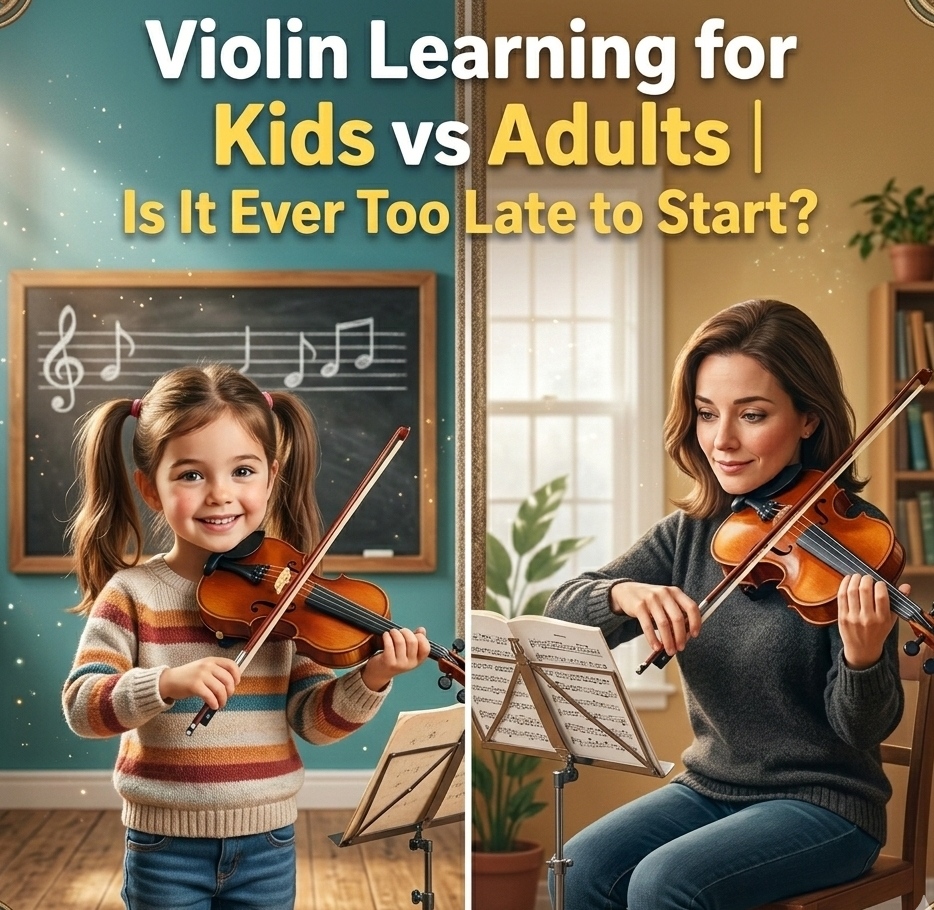
Violin Learning for Kids vs Adults | Is It Ever Too Late to Start?
Violin Learning for Kids vs Adults | Is It Ever Too Late to Start?
The violin has long been admired for its expressive voice and emotional depth. From delicate melodies to powerful orchestral passages, it is an instrument that can speak almost like the human voice. Because of this remarkable character, violin learning often attracts people who want to experience music in a deeply expressive way. However, many assume that violin learning must begin very early in life. Parents frequently enroll their children in lessons believing that childhood is the only ideal time to start the journey.
Yet a different question frequently arises among adults: Is it too late to start learning the violin now? Some hesitate because they think their fingers are less flexible, their learning speed is slower, or that the discipline required might be overwhelming.
In reality, violin learning looks different for children and adults—but different does not mean impossible. Each stage of life brings its own advantages, challenges, and unique rewards. Understanding these differences helps learners approach the violin with realistic expectations and greater confidence.
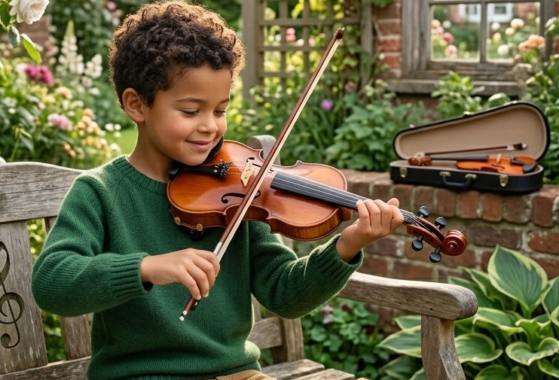
Why the Violin Often Starts in Childhood
Across music schools and conservatories, a large number of violinists begin their journey during childhood. This pattern exists for several reasons related to development, environment, and learning style.
Children possess remarkable neurological flexibility. Their brains are still forming strong connections, which makes it easier to develop coordination between hearing, finger movement, and bow control. Because violin playing demands precision in both hands simultaneously, this early adaptability can be extremely helpful.
Another factor lies in time and routine. Young learners often have structured schedules built around school and extracurricular activities. Regular lessons, daily practice, and consistent guidance from teachers create an environment where gradual improvement becomes part of everyday life.
At the same time, children tend to approach music with curiosity rather than pressure. They experiment freely, make mistakes without much hesitation, and slowly build muscle memory through repetition. Over the years, this natural playfulness evolves into technique and musical understanding.
Nevertheless, beginning early does not automatically guarantee mastery. Motivation, guidance, and consistent practice matter far more than age alone.
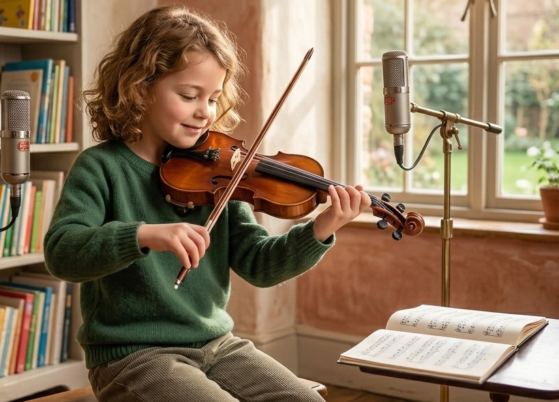
The Unique Strengths Children Bring to Violin Learning
When children learn the violin, they often absorb musical skills in ways that feel almost instinctive. Listening closely to pitch, imitating a teacher’s demonstration, and gradually internalizing rhythm can happen very naturally.
Memory also plays a significant role. Younger students frequently memorize pieces quickly and rely on repetition rather than analytical thinking. Because of this approach, technical habits become deeply ingrained over time.
Equally important is the long learning horizon. A child who begins violin at age seven potentially has many years to refine technique before reaching adulthood. During this extended period, foundational skills such as posture, intonation, and bow control develop slowly but steadily.
Still, children do face their own obstacles. Attention spans may fluctuate, and motivation sometimes depends heavily on encouragement from parents or teachers. Progress can stall if practice becomes inconsistent or overly pressured.
Even with these challenges, early exposure helps many young learners form a lifelong relationship with music.
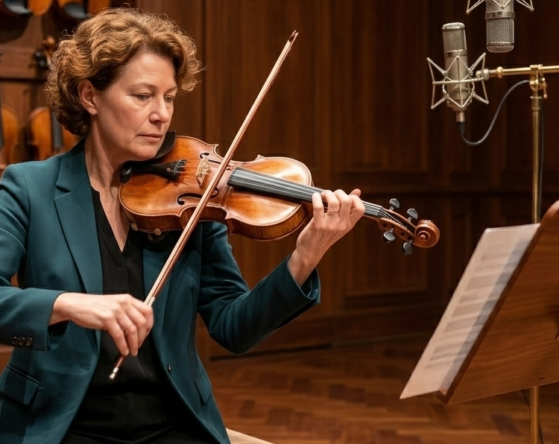
What Makes Adult Violin Learning Different
Adults who begin learning the violin step into the process with a completely different perspective. Unlike children, they bring life experience, discipline, and a clearer sense of purpose.
Most adults choose the violin because they genuinely want to learn it. This intrinsic motivation often becomes a powerful driving force. Instead of practicing because a parent insists, adult learners usually practice because they find the instrument fascinating or emotionally fulfilling.
Another advantage lies in cognitive maturity. Adults can understand musical theory, structure, and technique more quickly through explanation. When a teacher describes bow distribution or finger placement, an adult learner can analyze the reasoning behind it.
Furthermore, adults tend to approach practice with greater focus. Even if practice time is limited due to work or family responsibilities, the sessions are often intentional and goal-oriented.
Of course, certain challenges do appear. Muscle flexibility may take longer to develop, and coordination between both hands might initially feel awkward. Adults sometimes become self-critical when progress seems slow. However, patience and consistent practice gradually overcome these obstacles.
The learning curve may be different, yet the musical journey remains equally meaningful.
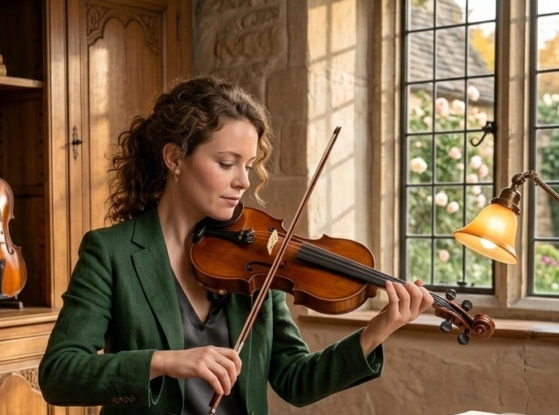
Comparing Progress | Children vs Adults
Progress in violin learning cannot be measured by age alone. Instead, it reflects the combination of practice quality, instruction, and individual dedication.
Children typically improve through gradual immersion. They might not consciously understand every technical detail, but their bodies slowly absorb the mechanics of playing. Over years of repetition, tone production and finger accuracy become second nature.
Adults, in contrast, often experience bursts of understanding followed by periods of adjustment. An adult student might grasp the concept of vibrato quickly yet require more time for the hand to physically adapt. Intellectual comprehension arrives sooner, while physical execution sometimes lags behind.
Despite these differences, both groups move toward the same musical destination. Children build technique through long-term familiarity, while adults construct it through awareness and deliberate practice.
Neither path is inherently superior. Each reflects the learner’s stage of life and personal approach to music.
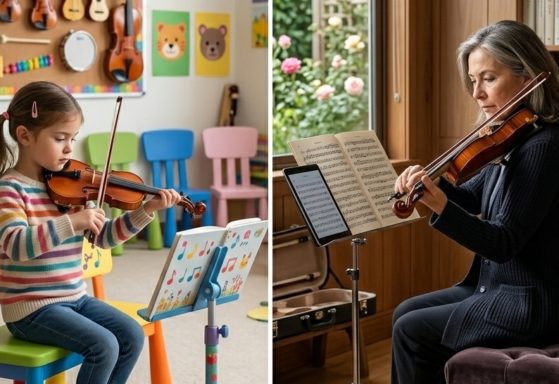
The Emotional Rewards of Learning Violin at Any Age
Beyond technique and progress, violin learning offers something deeper: emotional expression and personal fulfillment.
For children, the violin often becomes a gateway to creativity. Performing in school concerts, participating in ensembles, and sharing music with friends can build confidence and social connection.
Adults, on the other hand, frequently describe violin learning as a rediscovery of creativity. After years focused on careers or responsibilities, returning to music provides a sense of balance and relaxation. Playing even a simple melody can bring surprising joy.
Music also stimulates the mind. Learning new pieces challenges memory, coordination, and listening skills. Over time, the violin becomes more than an instrument—it becomes a form of personal expression.
Whether the student is eight or forty-eight, the emotional impact of making music remains remarkably similar.
Is It Ever Too Late to Start the Violin?
The idea that violin must begin in childhood is largely a myth rooted in professional performance culture. Many famous soloists indeed started very young, but professional virtuosity is not the only reason to learn music.
For most people, the violin represents creativity, learning, and enjoyment rather than competition. Adults across the world successfully begin violin lessons in their thirties, forties, and even later. While they may not pursue concert careers, they often achieve satisfying levels of musical ability.
What truly matters is consistent practice, good instruction, and realistic expectations. Progress might be slower at first, but persistence gradually transforms unfamiliar movements into natural technique.
Every musician starts somewhere. The first note played on a violin always sounds uncertain—regardless of the player’s age.
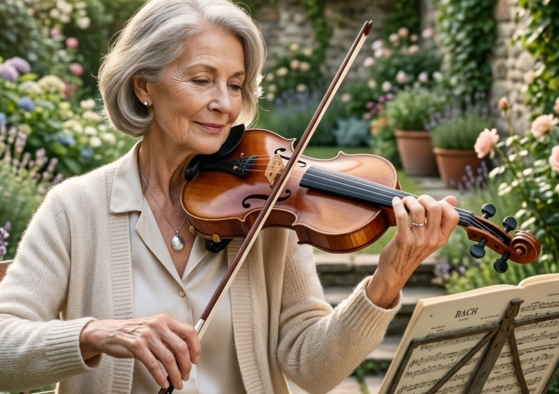
Embracing the Journey of Learning
Ultimately, violin learning is not a race against time. It is a process of exploration, patience, and discovery.
Children grow alongside the instrument, shaping their skills over many years. Adults approach it with intention and curiosity, turning each lesson into a meaningful personal achievement. Both journeys carry unique challenges, yet both lead to the same rewarding experience: the ability to create music.
Instead of asking whether it is too late to start, a more meaningful question might be this: Are you willing to begin?
Because once the bow touches the strings and the first melody emerges, age becomes far less important than the joy of learning itself. With the right guidance and supportive instruction, anyone can take that first step with confidence. Platforms like The Mystic Keys, through their Violin Lessons Online, make it easier than ever for both children and adults to begin their violin journey from anywhere in the world, learning from experienced teachers while progressing at a comfortable pace.
For more information and exciting resources about learning music, visit our website at The Mystic Keys. For more music content and exciting offers follow us on
Facebook, Instagram, YouTube, LinkedIn, Twitter, Pinterest, and Threads.