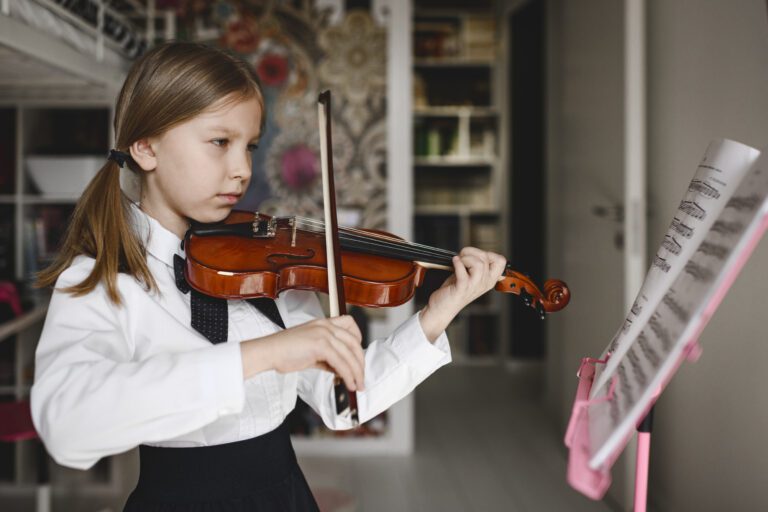
Worship Music for Kids | Learning Piano & Singing with Faith
Worship Music for Kids | Learning Piano & Singing with Faith
Music shapes childhood in powerful and lasting ways. The songs children learn early often stay with them for decades, resurfacing in moments of joy, reflection, or even difficulty. When those songs are rooted in faith — especially through Worship Music for Kids — they become more than melodies; they become foundations that guide, comfort, and inspire for years to come.
Worship music for kids creates a meaningful space where musical education and spiritual growth develop side by side. Through piano lessons and singing practice, children gain technical ability while also learning how to express gratitude, hope, and trust. Over time, this beautiful blend of artistry and belief helps form character, confidence, and creativity.

Why Worship Music for Kids Matters in Early Development
From the earliest years, children respond instinctively to rhythm and repetition. Long before abstract ideas make sense, melody captures attention and emotion. Worship music for kids takes advantage of this natural openness to gently introduce themes of love, kindness, forgiveness, and faith.
Timeless songs such as Jesus Loves Me and This Little Light of Mine communicate profound truths in simple, memorable language. Because children sing these lyrics repeatedly, the messages begin to settle into their hearts almost effortlessly.
Beyond spiritual meaning, early exposure to worship music strengthens memory, language development, and emotional awareness. Singing about gratitude helps children identify positive emotions, while songs about trust provide reassurance during uncertain moments. In addition, incorporating worship songs into daily routines — perhaps before bedtime or during family prayer — builds comforting habits that children associate with safety and belonging.
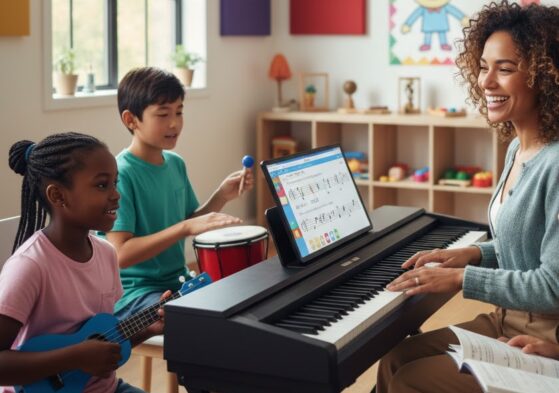
Learning Piano Through Worship Music for Kids
The piano offers structure, clarity, and expressive potential for young learners. Its visual layout makes musical patterns easier to understand, and its wide range allows children to explore both melody and harmony from the beginning. When worship music for kids becomes central to piano lessons, each practice session carries deeper purpose.
Beginners might start with simple melodies, gradually adding left-hand chords to create fuller sound. Playing a gentle arrangement of Amazing Grace introduces steady rhythm and chord transitions. As skills develop, contemporary worship pieces such as Way Maker can be simplified to match their ability, keeping motivation high.
Technical growth naturally follows. Finger strength improves, coordination becomes smoother, and reading skills expand. At the same time, children discover that their practice has meaning beyond mastering notes. Sitting at the piano may become a quiet moment of reflection or a way to support family worship time. Instead of feeling like a routine assignment, practice transforms into a meaningful expression of faith.
Confidence builds gradually as children realize they can accompany others or perform for small gatherings. With each completed piece, they gain not only musical ability but also a sense of accomplishment and contribution.
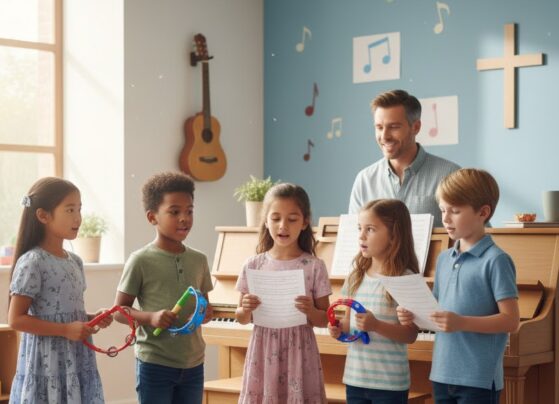
Singing Worship Music for Kids | Building Voice and Confidence
For many children, singing feels natural and joyful. Without needing an instrument, they can participate fully and immediately. Worship music for kids channels that enthusiasm into structured vocal development while keeping the experience uplifting.
Learning to sing involves posture, breath control, pitch accuracy, and clear pronunciation. These technical elements grow steadily through consistent practice. At the same time, meaningful songs such as 10,000 Reasons (Bless the Lord) and Good Good Father, when adapted for young voices, help children articulate gratitude and trust in words they can understand.
Group singing adds another enriching layer. Within a choir or family setting, children practice listening carefully, blending harmonies, and maintaining rhythm together. Cooperation becomes just as important as vocal strength. Through these shared experiences, they learn that worship is both personal and communal.
Gradually, even reserved children may find the courage to lead a verse or sing with greater projection. Encouragement from parents and teachers plays a crucial role in this transformation. With support and patience, singing becomes not just an activity but a source of joy and self-belief.

Blending Piano and Singing for Deeper Learning
Combining piano and singing deepens musical understanding in powerful ways. Coordinating voice with hand movements strengthens multitasking skills and sharpens rhythmic awareness. Children begin to recognize how melody interacts with harmony, gaining a fuller appreciation of musical structure.
At first, balancing both elements can feel challenging. However, small steps — such as playing simple chords while singing a familiar chorus — make the process manageable. Gradual progress reinforces perseverance and determination.
This combination also shifts children from participants to leaders. Instead of merely joining in, they guide the musical flow. Such responsibility fosters maturity and pride in their development. Creative exploration often follows, with some children experimenting with chord variations or composing short melodies of their own.
Through this integrated approach, worship music for kids becomes a dynamic learning journey rather than a single skill set.
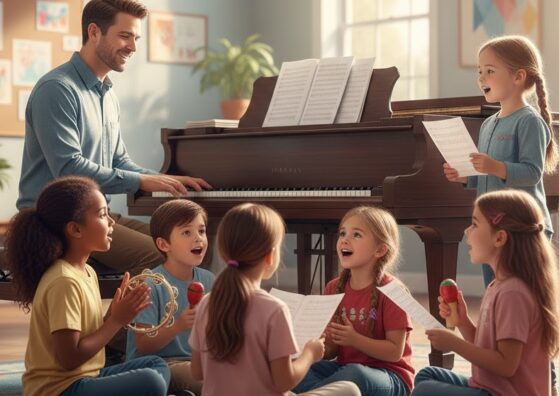
Long-Term Benefits of Worship Music for Kids
The influence of faith-based music education extends well beyond childhood lessons. Consistent practice instills discipline and time management. Performing builds confidence and poise. Meaningful lyrics nurture empathy and emotional awareness.
In addition, children who engage deeply with worship music often develop strong listening skills and collaborative habits. Participation in group settings teaches leadership as well as humility. Over time, these qualities support success in academics, relationships, and future endeavors.
As the years pass, the songs learned in childhood may resurface during significant life moments. A familiar hymn played softly or sung quietly can bring comfort and clarity. Early musical memories, rooted in faith, continue to inspire long after formal lessons end.

Encouraging a Positive Environment for Worship Music for Kids
A supportive environment is essential for sustained growth. Progress flourishes where encouragement outweighs criticism and patience replaces pressure. Parents and teachers who celebrate effort rather than perfection help children feel safe to explore and improve.
Setting realistic goals keeps learning manageable. Short, consistent practice sessions are often more effective than long, overwhelming ones. Discussing the meaning behind lyrics deepens emotional connection, while offering small opportunities to share music builds confidence naturally.
Above all, authenticity matters. When adults model sincere enjoyment of worship music, children sense that faith-filled expression is genuine and joyful. This authenticity inspires lasting engagement far more effectively than obligation ever could.

A Melody That Lasts a Lifetime
Worship music for kids is ultimately about planting seeds that will grow over time. Through piano practice and heartfelt singing, children discover discipline, creativity, and spiritual depth. Each note played and each lyric sung contributes to a foundation that can support them throughout life.
With resources like The Mystic Keys and their Worship Piano & Singing Lessons Online, children can access guided instruction that blends musical skill with faith-based learning. These lessons make it easy to practice from home while connecting with meaningful worship music designed for young learners.
What begins as a simple lesson may evolve into a lifelong melody — one that continues to echo with faith, purpose, and joy. With consistent practice and encouragement, every child has the opportunity to turn their music into a powerful expression of both talent and devotion.
For more information and exciting resources about learning music, visit our website at The Mystic Keys. For more music content and exciting offers follow us on
Facebook, Instagram, YouTube, LinkedIn, Twitter, Pinterest, and Threads.