

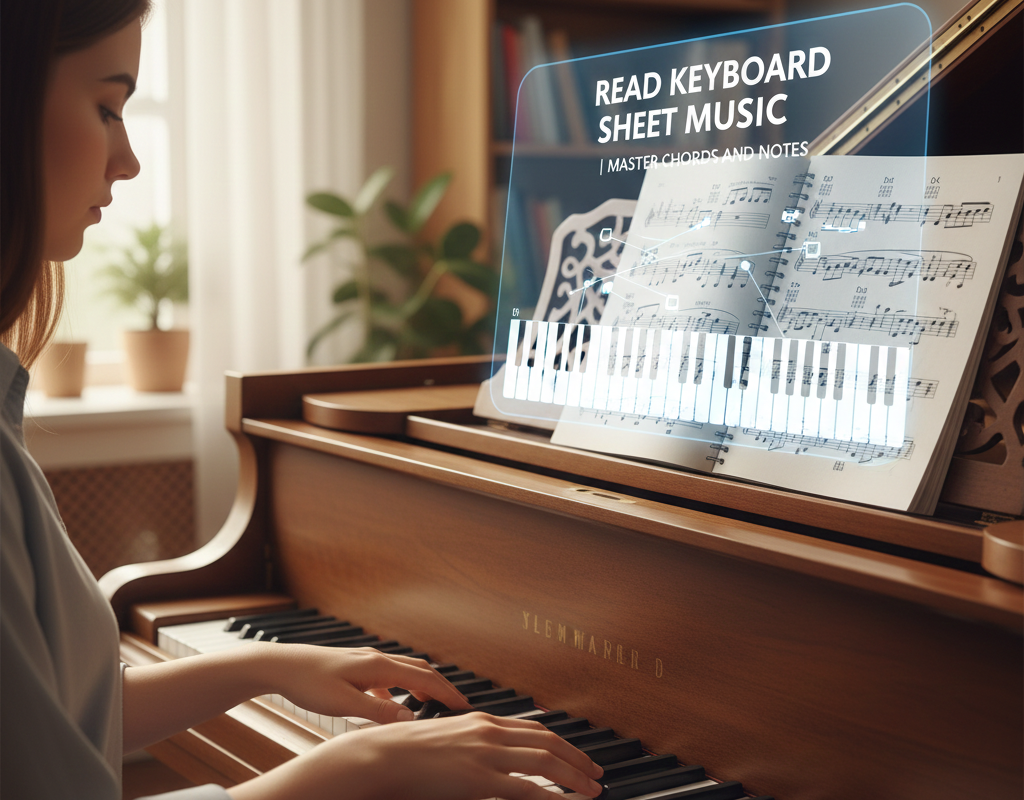
Read Keyboard Sheet Music | Master Chords and Notes
Read Keyboard Sheet Music | Master Chords and Notes
Learning to read keyboard sheet music and chord charts opens a new world of musical expression. Whether you’re just starting your musical journey or transitioning from playing by ear, the ability to read keyboard sheet music will give you the tools to learn songs faster, explore new styles, and communicate with other musicians confidently. At first glance, sheet music may appear complex and filled with symbols, lines, and numbers, but once you understand the logic behind the layout, everything begins to make sense. Meanwhile, chord charts offer a simpler way to interpret music—especially popular songs—allowing more freedom and creativity. Together, both systems provide a solid foundation for becoming a versatile keyboard player.
Understanding the Musical Staff
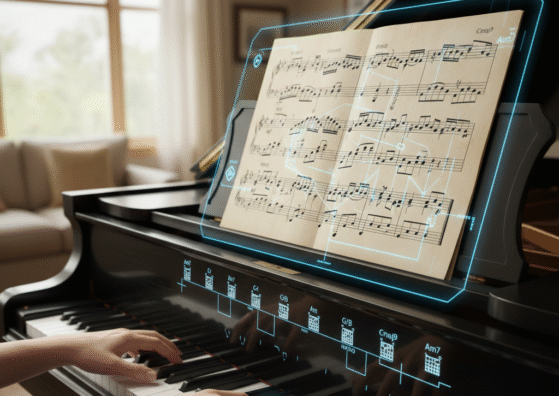
Keyboard sheet music is written on a structure called the staff, which consists of five horizontal lines and four spaces. Each line and space represents a musical pitch, and these positions are identified using clefs. For keyboard players, the most common clefs are the treble clef for the right hand and the bass clef for the left hand. The treble clef generally covers higher notes—melodies and lighter tones. The bass clef, on the other hand, anchors the lower notes and often supports the harmony or rhythm.
As you begin reading, you’ll notice that notes sit on or between these lines in various shapes. The placement tells you which key to press, while the shape and style of the note tell you how long to hold it. It gradually becomes intuitive: your eyes begin to track patterns instead of individual notes. Over time, you’ll stop thinking and start recognizing.
Navigating Keys and Accidentals to Read Keyboard Sheet Music Confidently
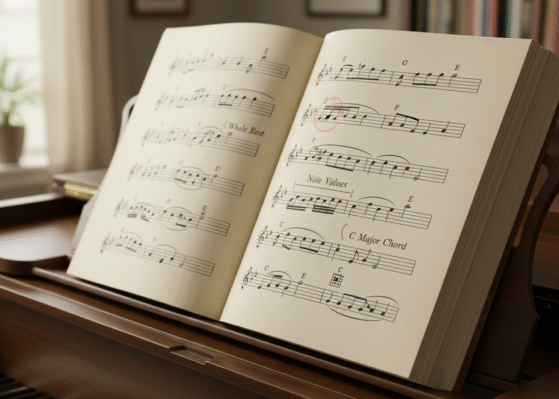
Once you understand the layout of the staff, the next focus is interpreting rhythm. Music isn’t just about which notes you play; it’s also about when and for how long. Notes such as whole notes, half notes, quarter notes, and eighth notes reveal the timing. The presence of rests—symbols that indicate silence—helps shape phrasing and space between sounds.
Near the beginning of a piece, you’ll find the time signature, usually written as two stacked numbers. This small detail sets the rhythmic framework. For instance, 4/4 means there are four beats per measure and a quarter note equals one beat. Meanwhile, 3/4 creates a waltz-like feel, and 6/8 often gives a smooth rolling groove. As your eyes move across the score, you begin to recognize rhythmic patterns as confidently as letter patterns in reading language.
Key Signatures and Accidentals
Another element that helps define music is the key signature, found near the clef, containing sharp (#) or flat (♭) symbols. These symbols tell you which notes are raised or lowered throughout the piece. Instead of altering every note individually, the key signature creates consistency. Understanding it helps you identify whether a piece feels bright, dark, joyful, or dramatic.
However, music loves exceptions, and this is where accidentals appear—small sharp, flat, or natural symbols placed beside a note that temporarily changes its pitch. The natural sign, for instance, cancels a sharp or flat for a specific measure. These details give music nuance and color, making reading more like storytelling than decoding math.
Hand Coordination and Expression
Reading sheet music is not only about the notes; it’s about creating flow. As your hands take their roles—melody on the right, harmony or bassline on the left—you’ll begin recognizing chord shapes, recurring patterns, and intervals. Your ability to read while playing becomes smoother as muscle memory develops.
Dynamic markings guide emotional expression. Terms like piano (soft), forte (loud), crescendo (gradually louder), and legato (smooth) add character to a performance. These markings help transform notes into music that feels alive.

Using Chord Charts While You Read Keyboard Sheet Music
While sheet music gives a detailed blueprint, chord charts take a more flexible approach. In many pop, rock, worship, and jazz songs, you’ll see the song structure broken down into lyrics or measures with chords written above them. Instead of reading individual notes, you interpret the symbol representing a harmony—such as C, Am, Fmaj7, or G7.
Each chord symbol tells you exactly which set of notes to play together. Major chords sound bright and open, while minor chords feel emotional or moody. Seventh chords add color and sophistication, while suspended chords create tension that resolves beautifully. With practice, chord shapes become familiar, and you’ll find yourself switching between them fluidly.
Unlike sheet music, chord charts encourage creativity. You can choose whether to play full chords, arpeggios, rhythmic patterns, or a mixture depending on the style. This flexibility makes chord charts especially useful for live performance, improvisation, and songwriting.
Combining Sheet Music and Chord Charts
The real magic happens when you blend both systems. Sheet music sharpens precision, timing, and technique. Chord charts nurture improvisation, flexibility, and real-time musical communication. Once you understand the language of both, you’ll be able to:
Learn classical pieces using full notation
Play pop songs effortlessly with chord symbols
Create your own arrangements
Jam or accompany other singers and musicians
Over time, reading becomes as natural as speaking. Instead of guessing, you’ll approach music with confidence and creativity.

Read Keyboard Sheet Music and Make it Your Own
Reading keyboard sheet music and chord charts is a skill that grows steadily with practice. The more you expose yourself to different styles and formats, the more fluent you become. By enrolling in Keyboard Classes Online – with The Mystic Keys, you can learn at your own pace with expert guidance, making it easier to start slowly, remain patient, and celebrate small victories—whether it’s recognizing a new symbol, reading without hesitation, or switching smoothly between chords. Every step brings you closer to musical independence.
Soon, you’ll no longer feel like you’re decoding symbols—you’ll feel like you’re speaking music, confident at the keys and ready to explore your full musical potential.
For more information and exciting resources about learning music, visit our website at The Mystic Keys. For more music content and exciting offers follow us on
Facebook, Instagram, YouTube, LinkedIn, Twitter, Pinterest, and Threads.